MarketLens
What Does the SEC's New Crypto Stance Really Mean

Key Takeaways
- The SEC and CFTC's joint interpretation on March 17, 2026, definitively classifies 16 major crypto assets, including Ethereum, XRP, and Solana, as digital commodities, not securities.
- This landmark regulatory clarity, alongside a new token taxonomy, is poised to unlock significant institutional capital and foster innovation within the U.S. crypto market.
- While a major step forward, the market still awaits the passage of the CLARITY Act and further rulemaking on safe harbor exemptions to solidify this pro-innovation stance.
What Does the SEC's New Crypto Stance Really Mean?
The U.S. crypto landscape just experienced a seismic shift. On March 17, 2026, the Securities and Exchange Commission (SEC), joined by the Commodity Futures Trading Commission (CFTC), issued a joint interpretation that unequivocally states "most crypto assets are not themselves securities." This isn't just a subtle tweak; it's a fundamental reorientation of regulatory philosophy, moving away from the previous administration's broad application of the Howey Test to almost all digital assets. SEC Chairman Paul Atkins explicitly criticized the former approach, emphasizing the need for clear lines rather than persistent ambiguity.
This joint action provides a coherent token taxonomy, categorizing digital assets into five distinct groups: digital commodities, digital collectibles, digital tools, stablecoins, and digital securities. Crucially, it clarifies that only digital securities—essentially tokenized versions of traditional investments—fall squarely within the SEC's regulatory purview. This distinction marks a significant departure, signaling a more pragmatic and less expansive view of the SEC's jurisdiction over the burgeoning digital asset space.
The interpretation goes further, addressing long-standing uncertainties around key crypto activities. Protocol mining, protocol staking, airdrops, and the wrapping of non-security crypto assets are now explicitly classified as not involving the offer and sale of a security. This clarity removes a major regulatory overhang that has stifled innovation and participation in these fundamental aspects of decentralized finance for years. It’s a clear invitation for builders and entrepreneurs to innovate with greater confidence within the United States.
CFTC Chairman Michael S. Selig echoed this sentiment, highlighting that the interpretation ends "far too long" a wait for clear guidance. The coordinated stance between the two agencies, further solidified by a Memorandum of Understanding signed just days prior, aims to create a harmonized regulatory environment. This collaborative approach is designed to allow the crypto industry to flourish, providing a stable and predictable "rules of the road" for market participants, from innovators to individual investors.
Which Crypto Assets Are Now Officially Commodities?
In a historic move, the SEC and CFTC jointly classified 16 specific crypto assets as digital commodities, ending years of legal limbo and regulatory uncertainty. This definitive list includes some of the largest and most widely traded cryptocurrencies: XRP, Ethereum (ETH), Solana (SOL), Cardano (ADA), Chainlink, Avalanche, Polkadot, Stellar, Hedera, Litecoin, Dogecoin (DOGE), Shiba Inu, Tezos, Bitcoin Cash, Aptos, and Algorand. Bitcoin (BTC), already widely considered a commodity, is also explicitly named as such in the broader interpretive release.
This classification is a game-changer for these assets, providing a clear legal framework that has been desperately sought by investors and institutions alike. For XRP, it effectively closes the chapter on years of legal battles and the cloud of uncertainty surrounding its status. Similarly, projects like Solana and Avalanche, which had previously faced scrutiny, now have a significantly clearer path for wider institutional participation and product development. The inclusion of meme tokens like Dogecoin and Shiba Inu also signals a broad acceptance that high-activity assets, regardless of their origin story, can fall under the commodity umbrella.
The definition provided by the agencies for a digital commodity is key: it's a crypto asset intrinsically linked to and deriving its value from the programmatic operation of a functional crypto system, as well as supply and demand dynamics, rather than from expectations of profit derived from the essential managerial efforts of others. This distinction is crucial, as it shifts the focus from the centralized efforts of an issuer to the decentralized, programmatic nature of the network itself. This framework will likely serve as a blueprint for future classifications.
The immediate market reaction to this news, while influenced by broader macro factors like the Fed holding rates, saw some of these newly clarified commodities experiencing volatility. Bitcoin, for instance, dropped below $72,000 to $71,353.13, down 3.49% on the day, while Ethereum fell 5.55% to $2,189.30. Solana also saw a 5.09% dip to $89.83. Despite these short-term price movements, the long-term implications of regulatory clarity are overwhelmingly positive, paving the way for sustained growth and broader adoption as institutional players gain confidence.
How Will This Impact Institutional Adoption and Market Innovation?
The newfound regulatory clarity is a powerful catalyst for institutional adoption, effectively removing a major roadblock that has kept significant capital on the sidelines. Banks, asset managers, and traditional financial exchanges now have a defined framework to operate within, replacing years of hesitation with clearer entry points. This shift is expected to unlock a wave of new trading products, custody services, and broader capital allocation into these newly classified digital commodities. We can anticipate a future where interest spreads well beyond just Bitcoin and Ethereum, as the 16 additional tokens now carry a recognized legal status.
Consider the ripple effect: with a clear commodity classification, the path for more exchange-traded products (ETPs) like spot ETFs for Ethereum, Solana, or XRP becomes significantly smoother. While the SEC has already opened the door to spot Bitcoin and Ether ETFs, this broader classification could accelerate the approval process for other assets. This institutional embrace means deeper liquidity, more sophisticated market infrastructure, and ultimately, greater stability for the crypto market as a whole. It’s a maturation event, moving crypto from the fringes to a more integrated role within global finance.
Beyond traditional finance, this clarity fosters innovation within the crypto ecosystem itself. The explicit classification of staking, mining, and airdrops as outside securities law provides a green light for developers and projects. This means less fear of enforcement actions for core decentralized finance (DeFi) activities, encouraging more robust protocol development and greater participation from users. Entrepreneurs can now build with a clearer understanding of the regulatory boundaries, reducing legal overhead and accelerating product-market fit.
The SEC also previewed potential safe harbor exemptions for crypto startups, a move that could be transformative for emerging projects. Chairman Atkins indicated that proposed rules are coming "in the coming weeks" for startups worth up to $5 million experimenting with crypto assets in their first four years, and for entrepreneurs raising up to $75 million via investment contracts involving certain crypto assets. These exemptions would provide a crucial sandbox for innovation, allowing new ventures to develop without immediate, onerous regulatory burdens, fostering a vibrant startup scene in the U.S.
What Are the Remaining Hurdles and Future Regulatory Outlook?
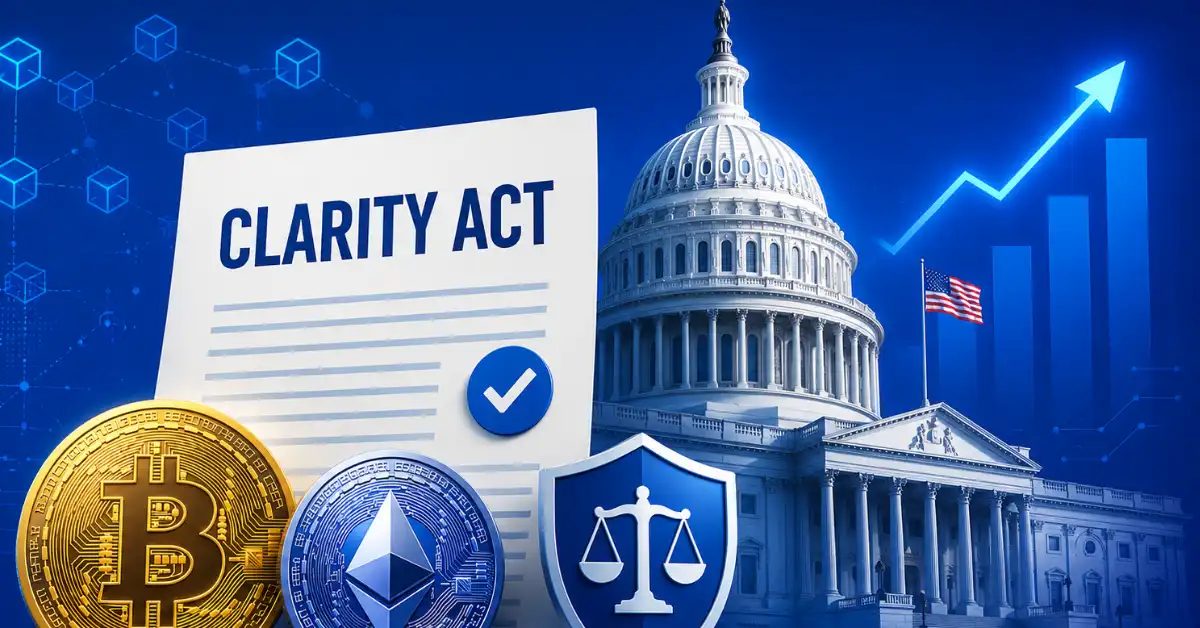
While the March 17 interpretation represents a monumental leap forward, the journey toward a fully harmonized and permanent regulatory framework is not yet complete. The most significant outstanding piece of the puzzle is the CLARITY Act, a digital asset market structure bill designed to enshrine these commodity versus security classifications into statute. The bill has made progress, passing the House in July 2025 and clearing the Senate Agriculture Committee in January 2026, but it still requires a markup by the Senate Banking Committee before it can become law.
The SEC's current interpretation, while binding, is an agency action that could theoretically be challenged or altered by a future administration. The passage of the CLARITY Act would provide legislative permanence, solidifying the "rules of the road" and making them far more resilient to political shifts. Until then, market participants will operate under the current interpretation, but with an eye on Washington for the final legislative push. This ongoing legislative process introduces a degree of uncertainty, even amidst the current clarity.
Another area to watch is the specifics of the safe harbor exemptions previewed by Chairman Atkins. While the concept is highly welcomed, the devil will be in the details of the proposed rules, expected in the coming weeks. The scope, eligibility criteria, and duration of these exemptions will significantly impact their effectiveness in fostering innovation. The industry will be scrutinizing these proposals to ensure they are practical and truly enable experimentation without creating new regulatory traps.
Furthermore, the interpretation clarifies that even "non-security crypto assets" can become subject to investment contract rules under certain circumstances, particularly if issuers make representations that create an expectation of profit from managerial efforts. This nuance means that ongoing vigilance is required from projects and investors to ensure that marketing and development efforts do not inadvertently reclassify an asset. The SEC's stance that investment contracts can "come to an end" also introduces a dynamic element, where an asset's classification can evolve over time based on the issuer's actions and market expectations.
How Should Investors Position Themselves in This Evolving Landscape?
For investors, this regulatory clarity offers a much-needed foundation for making more informed decisions in the crypto market. The explicit classification of 16 major assets as digital commodities reduces the risk of future enforcement actions that could severely impact their value. This de-risking makes these assets potentially more attractive to a broader range of investors, particularly those in traditional finance who prioritize regulatory certainty. It’s a strong signal to "build in the United States," as CFTC Chairman Selig put it.
Investors should consider diversifying their crypto portfolios to include some of these newly clarified digital commodities, especially those with strong fundamentals and established ecosystems. Assets like Ethereum, Solana, and XRP, now with clear commodity status, could see increased institutional inflows and product development. While current market conditions show some downward pressure—Bitcoin at $71,353.13 and Ethereum at $2,189.30—the long-term narrative for these assets is significantly strengthened by this regulatory shift.
It's also crucial to understand that while many assets are now commodities, the SEC still retains jurisdiction over "digital securities" and investment contracts. Investors should exercise due diligence on newer, less established tokens, particularly those that promise returns based heavily on the efforts of a central team. The Howey Test, while less broadly applied, remains relevant for assessing new offerings. The SEC's new taxonomy is a guide, not a blanket exemption for all digital assets.
Finally, keep an eye on legislative developments, particularly the CLARITY Act, and the upcoming safe harbor proposals. These will further shape the long-term regulatory environment and could present new investment opportunities or risks. The market is dynamic, and while the current regulatory pivot is overwhelmingly positive, staying informed about ongoing policy changes will be key to navigating the evolving digital asset landscape successfully.
The U.S. has finally laid down clear rules for a significant portion of the crypto market, fostering an environment ripe for innovation and institutional engagement. This landmark decision marks a new chapter for digital assets, inviting both builders and investors to confidently participate in the future of finance. While legislative permanence is still on the horizon, the current clarity provides a robust foundation for growth and mainstream adoption.
Want deeper research on any stock? Try Kavout Pro for AI-powered analysis, smart signals, and more. Already a member? Add credits to run more research.
Related Articles
Is the SEC Really Changing Quarterly Reporting
Category
You may also like

If the CFTC “only does Bitcoin,” why did it just invite crypto's biggest CEOs into the room?

Is ‘bailing out Bitcoin' possible? U.S.

Ripple Sends New Letter To The SEC: What It Could Mean For XRP
Breaking News
View All →Featured Articles
Top Headlines

Nvidia Price Target Raised to $325: Wall Street Says $1 Trillion Blackwell Revenue Is Coming
Qnity Collaborates with NVIDIA to Accelerate Innovation for Semiconductor and Advanced Electronics Materials

Nvidia is quietly building a multibillion-dollar behemoth to rival its chips business

The Best AI Stocks to Invest $1,000 in Right Now