Key Takeaways
- AutoDrive Robotics' pilot program with a major e-commerce retailer could be a pivotal moment, validating its robust autonomy platform for high-stakes commercial logistics.
- The autonomous last-mile delivery market is projected to reach $2.35 trillion by 2032, driven by surging e-commerce demand and the urgent need for cost-efficient, reliable solutions.
- While significant technical and regulatory hurdles remain, AutoDrive's proven track record in defense and industrial applications provides a unique competitive edge for scaling commercial deployments.
What Makes AutoDrive Robotics' E-commerce Pilot a Game-Changer?
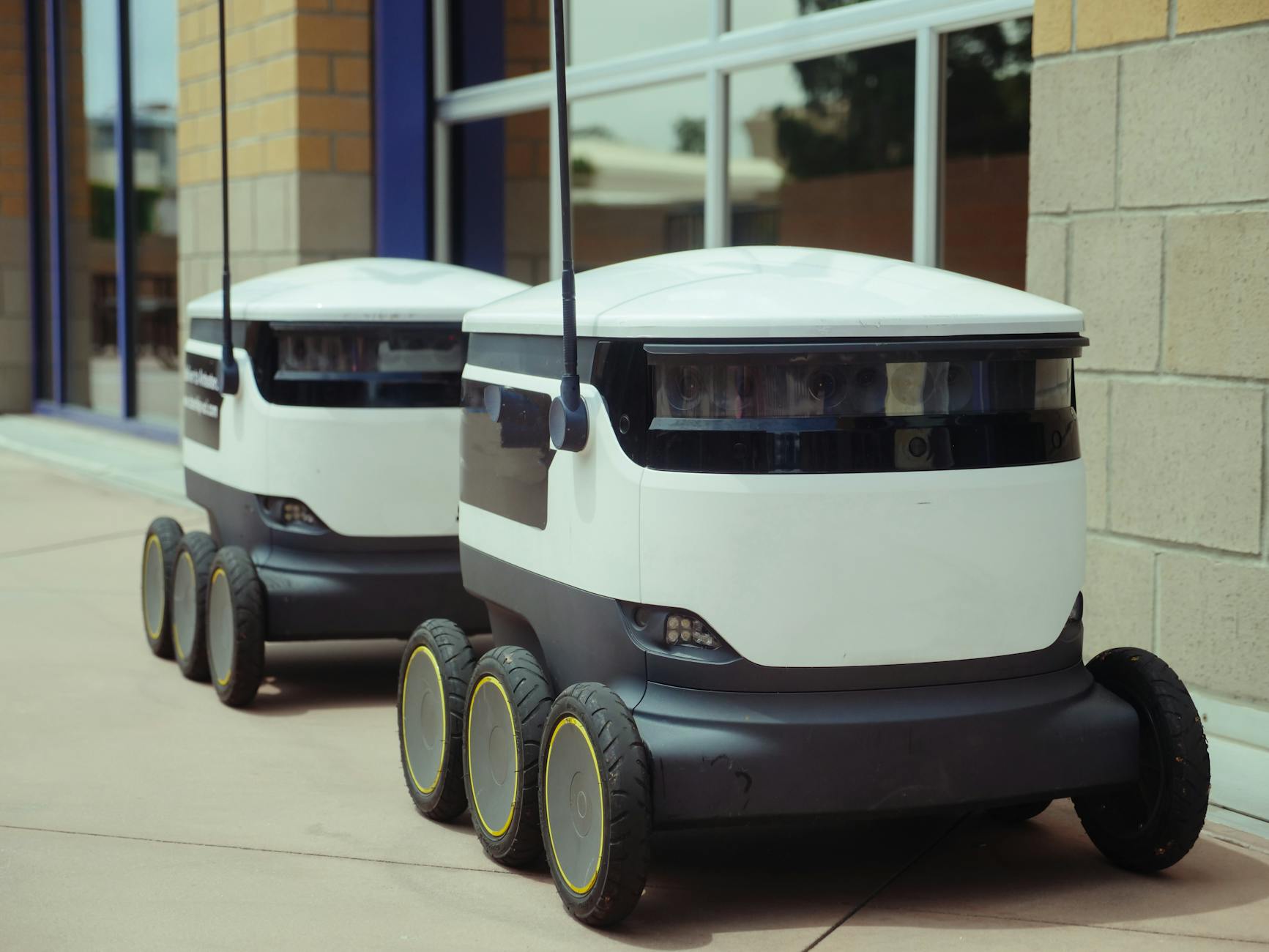
AutoDrive Robotics is currently engaged in a critical pilot program with a leading e-commerce retailer, deploying its autonomous last-mile delivery vehicles. This initiative isn't just another test run; it represents a significant inflection point for the company, potentially accelerating its commercialization trajectory and validating its robust autonomous driving system in a high-volume, real-world logistics environment. Success here could unlock substantial growth, transitioning AutoDrive from a specialized defense and industrial player to a formidable force in the burgeoning e-commerce delivery sector.
The significance of this pilot cannot be overstated. For years, autonomous vehicle (AV) technology has been lauded for its potential, yet widespread commercial adoption, especially in complex urban logistics, has remained elusive. AutoDrive's system, known simply as AutoDrive, has already proven its mettle in demanding environments, from battlefields to distribution centers and ports across over 10 countries. This existing pedigree in "complex environments" suggests a level of maturity and reliability that many pure-play last-mile startups are still striving to achieve.
This pilot program positions AutoDrive Robotics at the forefront of a major industry shift. The e-commerce giant's decision to partner with AutoDrive underscores a growing confidence in the company's ability to deliver on the promise of autonomous logistics. It's a strategic move for the retailer, too, seeking to leverage advanced robotics to enhance delivery speed, cut last-mile costs, and elevate customer experience. For AutoDrive, it’s a chance to demonstrate that its battle-hardened technology can seamlessly translate to the fast-paced, consumer-facing world of online retail.
The implications for AutoDrive's future are profound. A successful pilot would not only provide invaluable operational data and refine its commercial offerings but also serve as a powerful endorsement, attracting further partnerships and investment. It could pave the way for a "fleet-as-a-service" model, where AutoDrive provides its technology on a per-mile or per-hour basis, lowering entry barriers for other businesses looking to integrate autonomous delivery without heavy upfront investments. This strategic pivot from defense to broad commercial application could be the catalyst for exponential growth.
Why is the Autonomous Last-Mile Delivery Market Ripe for Disruption?
The global autonomous vehicle market, valued at approximately $121.78 billion in 2022, is projected to explode to $2,353.93 billion by 2032, exhibiting a staggering compound annual growth rate (CAGR) of 35%. This explosive growth is largely fueled by the insatiable demand for faster, more cost-effective last-mile deliveries, a segment where traditional methods are increasingly strained by labor shortages, rising wages, and urban congestion. E-commerce, in particular, has created a new standard for rapid delivery, with same-day and even one-hour windows becoming commonplace, pushing retailers to seek innovative solutions.
Major retailers are not just considering, but actively pursuing, partnerships with autonomous vehicle companies. Over 70% of major retailers are reportedly exploring such collaborations for last-mile deliveries, recognizing automation as a necessity to remain competitive. Companies like Walmart have already expanded autonomous delivery services to over 20 U.S. states through partnerships, demonstrating the growing confidence in this technology's scalability and efficiency. This trend highlights a clear market pull for proven autonomous solutions.
The pandemic inadvertently accelerated this shift, as delivery services saw a massive spike while traditional ride-hailing declined. This period underscored the resilience and potential of autonomous delivery, which can fundamentally change how goods move from warehouses to front doors. Automation offers significant benefits, including potential reductions in operating costs, improved asset utilization, and a crucial mitigation of persistent driver shortages that plague the logistics industry. For sectors with tight margins and high demand for on-time performance, autonomy promises efficiencies that traditional fleets simply cannot match.
Cities are also eager to integrate autonomous delivery, viewing it as a solution to urban issues like reducing carbon emissions, alleviating traffic congestion, and optimizing future city planning. Pilot programs in over 60 cities worldwide, with more than 500 public-private projects active, are designed to test how autonomous delivery can fit into existing infrastructure. This widespread interest from both retailers and municipalities creates a fertile ground for companies like AutoDrive Robotics to scale their operations and capture significant market share.
How Does AutoDrive's Technology Stand Out in a Crowded Field?
AutoDrive Robotics distinguishes itself through its proprietary AutoDrive system, an industry-leading autonomous driving platform specifically engineered for "complex environments." Unlike many competitors focused solely on urban road networks, AutoDrive boasts a proven track record across diverse terrains, from "roads, back country, and battlefield terrain" to distribution centers, ports, and intermodals. This versatility is a critical differentiator, demonstrating a level of robustness and adaptability that is highly desirable for varied commercial logistics needs.
A core strength of AutoDrive is its ability to operate in GPS-denied environments. This capability, often a requirement for military applications, translates directly into enhanced reliability for commercial use cases where GPS signals can be weak, jammed, or unavailable, such as within large warehouses, dense urban canyons, or underground facilities. The system achieves this through specialized hardware and software, including advanced navigation units built in-house, which combine LiDAR-centric perception with stereovision and structure-from-motion approaches where active sensors are restricted.
The AutoDrive system is also designed with a modular, open, and scalable architecture, making it "vehicle-platform and payload agnostic." This flexibility allows it to be integrated into a wide range of delivery vehicles, from small last-mile robots to larger vans or trucks, without requiring extensive re-engineering. This adaptability significantly reduces deployment costs and time, enabling quicker scaling across different fleet types and operational requirements for e-commerce partners. The system manages dynamic driving tasks in real-time, encompassing localization, perception, behavior generation, and command and control communications.
Furthermore, AutoDrive operates under the watchful eye of TerraLink, Forterra’s autonomous vehicle management platform. TerraLink provides comprehensive command and control, ensuring safe and efficient AV operations. This integrated system approach, combining advanced autonomy with a robust management platform, offers a complete end-to-end solution. The company's continuous improvement and real-time hardening on diverse terrains mean its technology is constantly evolving, addressing challenges like static and dynamic obstacle avoidance, mission re-pathing, and multi-vehicle convoys, all crucial for reliable commercial deployment.
What Could Success in the Pilot Mean for AutoDrive's Commercial Growth?
A successful pilot program with a major e-commerce retailer would be a monumental validation for AutoDrive Robotics, signaling its readiness for widespread commercial deployment. This isn't merely about proving technical feasibility; it's about demonstrating operational reliability, cost-effectiveness, and scalability in a demanding, high-volume commercial setting. Such a victory would immediately elevate AutoDrive's profile, moving it from a specialized defense contractor to a front-runner in the rapidly expanding autonomous last-mile delivery market.
The most immediate impact would be on revenue models. AutoDrive could transition from project-based contracts to a "fleet-as-a-service" (FaaS) model, charging per mile or per hour for its autonomous capabilities. This subscription-based revenue stream offers greater predictability and scalability, attracting a broader range of logistics partners who want to leverage autonomy without the prohibitive upfront capital expenditure of owning and maintaining an autonomous fleet. This model has proven successful for other AV companies, lowering entry barriers and accelerating adoption.
Moreover, a successful pilot would unlock significant partnership opportunities. Major retailers, keen to replicate the efficiency gains, would likely line up to integrate AutoDrive's technology into their own logistics networks. This could lead to multi-year contracts, similar to Serve Robotics' agreement to deploy up to 2,000 delivery robots across multiple U.S. markets. Such large-scale deployments would rapidly expand AutoDrive's operational footprint, driving economies of scale and further refining its autonomy stack through real-world data collection.
Beyond direct revenue, a successful pilot would significantly enhance AutoDrive's valuation and investor appeal. It would de-risk future investments, demonstrating a clear path to profitability and market leadership. The ability to leverage its defense-hardened technology for commercial applications creates a powerful narrative, suggesting superior reliability and safety compared to competitors. This dual-use capability positions AutoDrive uniquely, offering investors exposure to both stable government contracts and high-growth commercial markets, potentially leading to substantial upside.
What Are the Key Hurdles AutoDrive Must Overcome for Scalable Deployment?
While the commercial prospects for AutoDrive Robotics are compelling, the path to scalable deployment is fraught with significant challenges. The autonomous vehicle industry, despite its rapid progress, still grapples with technical, regulatory, operational, and social hurdles that demand urgent and deep attention. AutoDrive, like all players, must navigate these complexities to truly capitalize on its pilot success.
Technologically, handling "edge cases" remains one of the hardest challenges. Autonomous vehicles rely on perception models trained on vast datasets, but unusual scenarios like emergency vehicles, construction zones, or unpredictable human behavior can still stump even advanced systems. While teleoperation allows human operators to remotely intervene, this support must be robust, low-latency, and integrated with real-time fleet monitoring systems as fleets scale, adding a layer of operational complexity and cost.
Regulatory frameworks are another major bottleneck. The absence of universally accepted safety-case frameworks makes it difficult for regulators and insurers to evaluate risk consistently. Approvals for autonomous operations often vary city by city, creating a patchwork of rules that complicate nationwide scaling. Industry consensus around standardized safety validation and transparent reporting mechanisms is an urgent need, requiring AutoDrive to actively engage with policymakers and contribute to developing these standards.
Infrastructure readiness is also uneven. For autonomous fleets to function reliably at scale, they need a digitally responsive physical environment, including consistent roadside units, high-definition (HD) maps, and real-time connectivity like V2X (Vehicle-to-Everything) networks. Many regions still lack this foundational infrastructure, limiting the operational design domains (ODDs) for autonomous vehicles. AutoDrive's GPS-denied capability helps, but broader infrastructure improvements are essential for seamless, widespread deployment.
Finally, public trust is crucial. High-profile incidents, such as past serious crashes involving autonomous test vehicles, have underscored safety concerns. Gaining public acceptance in the reliability and safety of driverless vehicles is paramount for widespread adoption. AutoDrive must not only ensure its technology is safe but also effectively communicate its safety protocols and incident response strategies to build confidence among consumers and communities.
What Should Investors Watch For in AutoDrive's Commercialization Journey?
For investors eyeing AutoDrive Robotics, the ongoing e-commerce pilot program is the immediate focal point. Success here isn't just a headline; it's a tangible validation of the company's ability to translate its defense and industrial expertise into a high-growth commercial market. Investors should closely monitor the pilot's progress, looking for key performance indicators (KPIs) such as delivery completion rates, operational efficiency gains, and any public statements from the e-commerce partner regarding satisfaction and expansion plans.
Beyond the pilot, watch for AutoDrive's ability to secure follow-on contracts and expand its commercial partnerships. The transition from a single pilot to multiple, larger-scale deployments will be critical. Pay attention to announcements regarding new clients, particularly other major retailers or logistics providers, and the scope of these agreements. The shift towards a "fleet-as-a-service" model, if adopted, would indicate a scalable and predictable revenue stream, a strong positive for long-term investors.
Another crucial aspect is how AutoDrive addresses the inherent challenges of scaling autonomous fleets. Look for evidence of robust solutions for edge cases, advancements in teleoperation capabilities, and proactive engagement with regulatory bodies to streamline deployment approvals. Any partnerships aimed at improving infrastructure readiness or developing industry-wide safety standards would also be significant. The company's ability to navigate these complexities will determine its pace of expansion and market penetration.
Finally, keep an eye on AutoDrive's financial health and capital allocation. Scaling hardware fleets is capital-intensive, and while the pilot could attract investment, the path to profitability for autonomous delivery companies can be long. Evaluate any projections for revenue growth, unit economics, and the timeline to break-even. AutoDrive's unique dual-use technology, serving both defense and commercial sectors, offers a diversified revenue base, but sustained commercial growth will be the ultimate determinant of its investment appeal.
AutoDrive Robotics stands at a pivotal juncture, with its e-commerce pilot program offering a clear pathway to significant commercial expansion. While the autonomous last-mile delivery market presents immense opportunities, the company's ability to execute on its robust technology, navigate regulatory hurdles, and build scalable partnerships will be key to unlocking its full potential and delivering substantial value to investors. The next few quarters will be instrumental in shaping its trajectory from a specialized autonomy leader to a dominant force in global logistics.
Want deeper research on any stock? Try Kavout Pro for AI-powered analysis, smart signals, and more. Already a member? Add credits to run more research.