Key Takeaways
- ProQR Therapeutics (PRQR) and Serve Robotics (SERV) are two high-risk, high-reward plays with Oppenheimer and other analysts projecting significant upside.
- PRQR, a clinical-stage biotech, could see a 548% rally based on its RNA editing platform and pipeline, despite current unprofitability.
- SERV, an autonomous delivery robot company, is positioned for rapid growth in last-mile delivery, with analysts seeing potential for a 560% surge.
What Makes ProQR Therapeutics (PRQR) a Potential 500%+ Gainer?
ProQR Therapeutics (NASDAQ:PRQR) has recently caught the eye of Oppenheimer, which initiated coverage with an "outperform" rating and a $9.00 price target, suggesting a substantial 409.9% upside from its prior close of $1.77. This isn't an isolated view; the broader analyst consensus, according to Zacks, pegs the average price target at $8.88, implying an even more impressive 548.18% upside from a recent closing price of $1.37. Such aggressive targets for a clinical-stage biotech company signal a strong belief in its underlying technology and pipeline potential.
At its core, ProQR is leveraging its proprietary Axiomer® RNA editing platform to develop treatments for genetic diseases, an area with significant unmet medical needs. The company's pipeline includes promising candidates such as sepofarsen, QR‑421a, and QR‑313, targeting various conditions. This innovative RNA editing approach could offer a paradigm shift in treating diseases at their genetic root, moving beyond symptom management to corrective therapies. The market capitalization of ProQR currently stands at a modest $158.04 million, reflecting its early-stage nature and the inherent risks of biotech development.
Despite the compelling long-term vision, ProQR faces immediate financial challenges. The company is currently unprofitable, reporting a net loss of €42.2 million on trailing twelve-month (TTM) revenue of €16.3 million for FY 2025. Quarterly net income losses ranged from €8.9 million to €12.2 million in FY 2025, underscoring the significant cash burn required for research and development. This financial profile means that while revenue is forecast to grow by approximately 45.19% per year, profitability remains a distant prospect, with analysts not expecting the company to turn a profit within the next three years.
The investment thesis hinges on the successful progression of its clinical trials and the eventual commercialization of its RNA editing therapies. Positive clinical data, regulatory approvals, and strategic partnerships would be critical catalysts to unlock the projected upside. However, the high-risk, high-reward nature of biotech means that any setbacks in trials or regulatory hurdles could severely impact the stock. Investors are essentially betting on the scientific breakthroughs and the long-term potential of the Axiomer® platform to overcome the current financial realities and deliver on its promise.
Serve Robotics (SERV): Riding the AI and Automation Wave to 560% Upside?
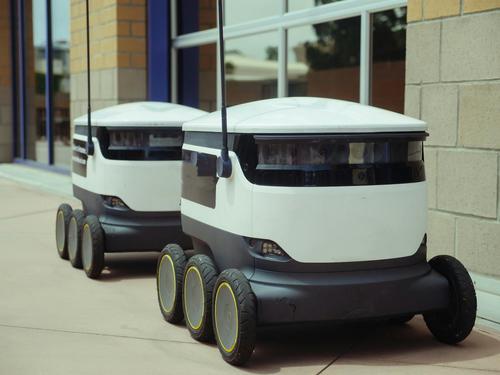
Serve Robotics (NASDAQ:SERV) is another name that has captured attention for its explosive growth potential, with some analysts projecting an upside of up to 560%. This ambitious forecast is rooted in the company's position as an early leader in last-mile-delivery robotics, a sector poised for significant disruption driven by artificial intelligence (AI) and automation trends. The company's business model revolves around deploying autonomous sidewalk delivery robots, aiming to revolutionize how goods are transported over short distances in urban environments.
The bull case for Serve Robotics is compelling: it boasts a close business partnership and investment relationship with Uber Technologies, a dominant player in the delivery space. This strategic alliance, coupled with a DoorDash partnership, broadens market reach and enhances asset utilization. Serve Robotics has already surpassed 1,000 deployed robots and is on track to reach 2,000 by year-end, a scale milestone management believes will be a tipping point for improved utilization and efficiency. Delivery volumes jumped 66% sequentially in Q3 2025, and restaurant partnerships rose 45% quarter-over-quarter to over 3,600 locations, indicating strong operational momentum.
However, the path to profitability for Serve Robotics is still long and fraught with challenges. The company is in a very early expansion stage, with modest sales of approximately $2.7 million last year, against a market capitalization of roughly $630 million. This valuation reflects optimistic future growth expectations rather than current financial performance. In Q3 2025, total revenue was just $687,000, while GAAP operating expenses reached $30.4 million, resulting in a negative adjusted EBITDA of $24.9 million. The company reported a GAAP net loss of $33 million in Q3 2025 and $67 million over the first nine months of 2025, highlighting substantial cash burn.
Analysts have noted that Serve Robotics' 2026 loss per share estimates have widened from $1.79 to $1.83 over the past 60 days, reflecting weakening confidence in near-term prospects. The stock has also underperformed, declining 28% over the past month and 17.6% over the past three months, sharply underperforming its industry peers. Despite these headwinds, Serve Robotics maintains a strong liquidity position with $211 million in cash and no debt, providing a cushion for its aggressive growth strategy. The company is targeting a $60–$80 million annualized revenue run rate beyond 2026, signaling confidence in its ability to scale operations and eventually narrow losses.
What are the Key Catalysts for These High-Growth Stocks?
For ProQR Therapeutics, the primary catalysts revolve around clinical trial milestones and regulatory progress. The successful completion of ongoing Phase Ib/II/III studies for its pipeline candidates, particularly AX-0810 for cholestatic diseases, would be a game-changer. Positive data readouts demonstrating efficacy and safety would not only validate its Axiomer® RNA editing platform but also de-risk future development and attract potential pharmaceutical partners. Regulatory approvals, especially from major bodies like the FDA or EMA, would unlock significant market opportunities and pave the way for commercialization.
Beyond clinical success, strategic partnerships and funding rounds are crucial for a clinical-stage biotech. Collaborations with larger pharmaceutical companies could provide necessary capital, expertise, and distribution channels, accelerating the path to market. Any news regarding new intellectual property, expanded applications of its RNA editing technology, or advancements in manufacturing could also serve as significant catalysts, enhancing investor confidence and driving valuation. The ability to demonstrate a clear path to commercial viability for its lead programs will be paramount.
For Serve Robotics, the catalysts are centered on operational scaling, technological advancements, and market expansion. Reaching and exceeding its target of 2,000 deployed robots by year-end, coupled with improving utilization rates and delivery volumes, would demonstrate strong execution and a growing market footprint. Further deepening its partnerships with delivery giants like Uber and DoorDash, potentially expanding into new cities or securing exclusive agreements, would solidify its competitive advantage and accelerate revenue growth.
Technological breakthroughs in AI and robotics that enhance the autonomy, efficiency, and safety of its robots will also be key. Any news of reduced operational costs per delivery, improved battery life, or expanded service capabilities (e.g., handling more complex delivery scenarios) could significantly boost investor sentiment. Furthermore, a clearer roadmap to profitability, perhaps through increasing revenue per robot or achieving economies of scale in manufacturing and deployment, would address a major concern for investors. Successfully converting its rapid fleet expansion into tangible revenue acceleration and a narrowing of losses will be the ultimate catalyst.
The Bull Case vs. The Bear Case: Navigating Extreme Volatility
The bull case for both ProQR Therapeutics and Serve Robotics is built on disruptive innovation and massive market potential. For ProQR, the promise of its Axiomer® RNA editing platform to cure genetic diseases represents a multi-billion-dollar opportunity. If its therapies prove successful in trials and gain regulatory approval, the company could capture significant market share in specialized, high-value indications. The current low valuation, relative to this potential, makes it an attractive target for risk-tolerant investors seeking exponential returns from groundbreaking biotech.
Similarly, Serve Robotics' bull case rests on the exponential growth of autonomous last-mile delivery. As labor costs rise and demand for instant gratification increases, robotic delivery offers a cost-effective, scalable, and efficient solution. Its early mover advantage, coupled with strategic partnerships and a rapidly expanding fleet, positions it to become a dominant player in a market that could eventually be worth hundreds of billions. The AI and automation tailwinds provide a strong narrative for long-term growth, making it appealing to investors looking to capitalize on the future of logistics.
However, the bear case for both companies highlights significant risks. ProQR faces the inherent uncertainties of clinical-stage biotech. The vast majority of drug candidates fail in trials, and even successful ones can take years and billions of dollars to bring to market. Negative trial results, regulatory delays, or unexpected safety concerns could wipe out years of progress and investor capital. Furthermore, competition in genetic therapies is fierce, and other companies might develop superior or more cost-effective treatments. The company's current unprofitability and reliance on future funding also pose a risk of dilution for existing shareholders.
For Serve Robotics, the bear case centers on execution risk, intense competition, and the challenge of achieving profitability at scale. Despite rapid deployment, the company's revenue remains small relative to its high operating expenses and market cap, indicating a deep investment mode with a distant path to breakeven. The autonomous delivery market is attracting numerous players, and regulatory hurdles for operating robots in public spaces could slow adoption. Furthermore, the high upfront costs of manufacturing and deploying robots, coupled with ongoing maintenance and operational expenses, could continue to pressure margins. Any slowdown in fleet expansion or utilization, or a failure to convert scale into sustainable profits, would severely undermine the investment thesis.
What Does This Mean for Investors?
For investors considering ProQR Therapeutics and Serve Robotics, it's crucial to understand that these are highly speculative investments. The potential for a 500%+ rally comes with an equally high risk of significant capital loss. These are not "set it and forget it" stocks; they demand continuous monitoring of clinical trial results, operational metrics, and competitive developments. A diversified portfolio approach is essential, where these high-risk, high-reward plays constitute only a small, manageable portion of one's overall holdings.
For ProQR, investors should pay close attention to upcoming clinical data readouts and regulatory updates. Any positive news from its Phase Ib/II/III studies, particularly for AX-0810, could trigger a sharp upward movement. Conversely, negative results or delays would likely lead to a significant sell-off. The company's cash burn rate and its ability to secure additional funding without excessive dilution are also critical factors to watch. This is a bet on scientific innovation and the long-term potential of RNA editing.
For Serve Robotics, the focus should be on operational scaling and the trajectory towards profitability. Monitor the number of deployed robots, delivery volumes, and utilization rates as indicators of market penetration and efficiency. Watch for signs of improving unit economics and a narrowing of losses. The company's ability to expand partnerships and enter new markets will also be key. Given the recent stock pullback, investors might view current levels as a potential entry point, but only if they have a high tolerance for risk and a long-term horizon, believing in the eventual monetization of its autonomous delivery network.
The Road Ahead: High Stakes, High Reward
Both ProQR Therapeutics and Serve Robotics represent the kind of high-stakes, high-reward opportunities that can define a growth portfolio. Oppenheimer and other analysts are clearly seeing significant potential, but the journey will be anything but smooth.
Investors must approach these stocks with a clear understanding of the inherent risks, focusing on the long-term narrative while closely tracking key operational and clinical milestones. The coming quarters will be pivotal in determining if these companies can truly deliver on their ambitious growth projections and transform into market leaders.
Want deeper research on any stock? Try Kavout Pro for AI-powered analysis, smart signals, and more. Already a member? Add credits to run more research.