MarketLens

Log in

What Was the Uniswap Lawsuit All About, and Why Does it Matter

1 hour ago
SHARE THIS ON:

What Was the Uniswap Lawsuit All About, and Why Does it Matter

Key Takeaways

  • A federal court dismissed all claims against Uniswap Labs, ruling that DeFi developers are not liable for third-party misuse of their open-source protocols.
  • This landmark decision provides crucial regulatory clarity for decentralized finance, distinguishing between platform creators and malicious actors.
  • While a win for innovation, the ruling underscores the need for legislative action to establish comprehensive DeFi regulations and enhance investor protection.

What Was the Uniswap Lawsuit All About, and Why Does it Matter?

The Uniswap lawsuit, formally known as Risley v. Universal Navigation Inc., was a class action that sought to hold Uniswap Labs and its founder, Hayden Adams, accountable for investor losses stemming from "scam tokens" traded on its decentralized exchange. Plaintiffs alleged they lost money trading 38 fraudulent tokens between April 5, 2021, and April 4, 2022, claiming Uniswap Labs effectively facilitated "rug pulls" and "pump-and-dump schemes." This wasn't merely another crypto dispute; it directly challenged the fundamental liability model of decentralized protocols, posing an existential threat to the DeFi ecosystem.

The legal battle began in April 2022, with plaintiffs arguing that by designing and promoting the decentralized exchange and collecting fees, Uniswap Labs enabled unregistered securities sales and widespread fraud. The initial federal securities claims were dismissed in August 2023, with Judge Katherine Polk Failla concluding that Uniswap's developers were not "statutory sellers" under federal law. This decision was later affirmed by the U.S. Court of Appeals for the Second Circuit in February 2025, which then remanded the case for consideration of state-law claims.

The final dismissal came in March 2026, when Judge Failla threw out all remaining state-law claims, including aiding and abetting fraud, consumer protection violations, and unjust enrichment. This comprehensive dismissal effectively closed a nearly four-year legal saga. The core issue at stake was whether the creators of open-source, permissionless software could be held liable for the actions of anonymous third parties who misuse that software for illicit purposes. The court's answer has profound implications for the future of decentralized technology and its regulatory landscape.

Why Did the Court Rule in Favor of Uniswap Labs?

The court's decision hinged on a clear distinction between providing a neutral platform and actively participating in fraudulent activity. Judge Katherine Polk Failla concluded that the plaintiffs failed to plausibly allege that Uniswap Labs "had knowledge of the fraud and substantially assisted in its commission." Merely creating an environment where fraud could exist, the judge reasoned, is not the same as affirmatively assisting in its perpetration. This reasoning is critical for understanding the legal boundaries of decentralized infrastructure.

Judge Failla drew powerful analogies to illustrate her point, stating that holding Uniswap liable for third-party scams is "less like a manufacturing defect, and more like a suit attempting to hold an application like Venmo or Zelle liable for a drug deal that used the platform to facilitate a fund transfer." She further compared it to a bank not being liable for a money launderer using its accounts, or WhatsApp not being liable for a drug dealer coordinating sales on its service. In each case, the platform provides a tool that can be used for lawful purposes, and its creators are not inherently responsible for misuse by bad actors.

Crucially, the court found no evidence that Uniswap Labs directly profited from the specific scam transactions during the class period. The protocol's optional "fee switch" was never activated, and an interface fee implemented in October 2023 fell outside the relevant timeframe. Furthermore, the court noted that Uniswap's public blog posts and terms of service already warned users about the risks of scam tokens, undermining claims of deceptive conduct or unique knowledge held by the company. This reinforces the idea that users bear responsibility for their own due diligence on permissionless platforms.

What Does This Landmark Ruling Mean for DeFi Development and Innovation?

This ruling is a monumental victory for the decentralized finance (DeFi) sector, establishing a critical legal precedent that could embolden developers and foster innovation. By affirming that open-source smart contract developers are not automatically liable for the misuse of their code by third parties, the court has provided a much-needed layer of legal certainty. Hayden Adams, Uniswap's founder, succinctly captured the sentiment, stating, "If you write open source smart contract code, and the code is used by scammers, the scammers are liable, not the open source devs." This "sensible outcome" protects the fundamental principle of permissionless innovation.

The decision reinforces the idea that DeFi protocols, particularly those designed as automated market makers (AMMs) like Uniswap, are akin to facilitative software rather than financial intermediaries. This distinction is vital because it allows developers to build foundational infrastructure without the constant threat of being held responsible for every nefarious act committed by anonymous users. Without this clarity, the fear of litigation could stifle the creation of new protocols and applications, pushing development offshore or into the shadows.

For the broader DeFi ecosystem, this ruling could unlock a new wave of development. Projects can now proceed with greater confidence, knowing that U.S. courts recognize the inherent differences between centralized entities and truly decentralized protocols. This legal shield for code creators is expected to encourage more talent and capital to flow into the space, accelerating the pace of innovation in areas like decentralized exchanges, lending protocols, and novel financial instruments. It suggests that the legal system is beginning to grapple with and understand the unique architecture of blockchain-based systems, rather than simply trying to fit them into outdated regulatory boxes.

How Does This Impact Investor Protection and Regulatory Clarity?

While a boon for innovation, the Uniswap ruling also highlights the significant gaps in investor protection within the current DeFi landscape. The court's decision, while legally sound in its interpretation of existing law, effectively places the onus of responsibility for scam tokens squarely on the issuers and the users themselves. This leaves retail investors vulnerable, as identifying and pursuing anonymous scam token issuers in a global, pseudonymous environment is often an impossible task. The ruling underscores that current legal frameworks are ill-equipped to provide comprehensive protection in the face of rapidly evolving decentralized technologies.

The court explicitly stated that grievances about regulatory gaps in decentralized finance "may be better addressed by Congress than through expansive judicial interpretation." This is a clear call for legislative action. The current patchwork approach, where courts interpret existing laws for novel technologies, creates uncertainty and leaves significant areas unregulated. Without clear, purpose-built legislation, investors will continue to face substantial risks from fraudulent activities on permissionless platforms, even if the platform developers themselves are not deemed liable.

This ruling also provides a degree of regulatory clarity by defining what isn't liable under current law, but it doesn't offer a comprehensive regulatory framework for what is. It reinforces the judicial limit on extending liability to open-source protocol developers, pushing the ball into Congress's court. The challenge now is for lawmakers to craft legislation that fosters innovation while simultaneously establishing robust safeguards for investors. This could involve new disclosure requirements for token issuers, mechanisms for identifying bad actors, or even new types of insurance or compensation funds for victims of crypto fraud.

What Are the Broader Implications for the Future of Decentralized Finance?

The Uniswap decision is a watershed moment, solidifying the legal distinction between open-source software development and financial intermediation. It suggests that merely providing the infrastructure for peer-to-peer trading does not equate to being a "DINO" (Decentralized In Name Only) or a centralized entity subject to traditional financial regulations. This clarity is crucial for the long-term viability and growth of truly decentralized protocols, as it reduces the regulatory overhang that has plagued the industry for years. The ruling could encourage more projects to embrace genuinely decentralized models, avoiding any custody of user funds or active intermediation.

However, the ruling is not a blanket license for illegal activities. The court was very specific in its findings, emphasizing Uniswap's architecture as a permissionless, P2P self-serve platform. It did not delve into the nuances of governance centralization or the upgradeability of smart contracts, which could be critical factors in future cases. Protocols with more centralized control, or those that actively promote specific tokens, might still face different legal challenges. This means DeFi projects must continue to scrutinize their governance structures and operational models to ensure they align with the principles of decentralization and avoid any appearance of direct involvement in fraudulent activities.

Looking ahead, this precedent could drive greater institutional adoption of decentralized exchange protocols. With a clearer understanding of developer liability, traditional financial institutions might feel more comfortable exploring and integrating DeFi solutions, albeit cautiously. The legal victory for Uniswap's operational model sets a benchmark for other decentralized platforms facing similar legal challenges, potentially streamlining future litigation. Ultimately, the decision marks an inflection point, pushing the DeFi industry towards a future where technological innovation can thrive, provided it operates within the bounds of clearly defined, and hopefully soon, legislatively established, regulatory parameters.

What's Next for Investors and the DeFi Market?

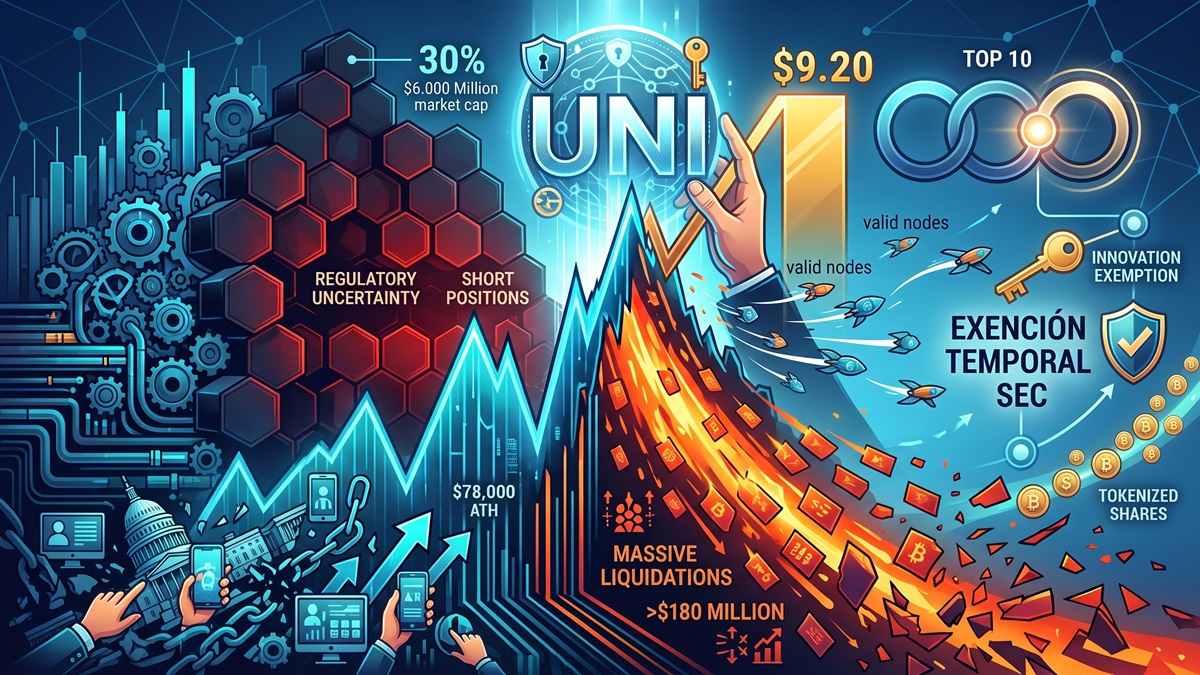
The Uniswap ruling has undeniably injected a dose of optimism into the DeFi market. Uniswap's native UNI token reacted positively to the news, rising 6% on the day to trade near $3.92, extending gains during a broader crypto market rally. This immediate market response reflects the removal of a significant litigation overhang that had persisted since the case was first filed. For investors, this legal clarity reduces one layer of systemic risk associated with holding or interacting with decentralized protocols.

However, investors should not view this as an "all-clear" signal for the entire DeFi space. The ruling specifically addresses developer liability for third-party misuse, not the inherent risks of investing in volatile, often unregulated, digital assets. The responsibility for due diligence remains paramount. While the legal landscape for open-source developers has improved, the market for scam tokens and fraudulent schemes continues to exist, and investors must remain vigilant.

The next critical step for the DeFi market will be to observe how this precedent influences other ongoing regulatory lawsuits and, more importantly, whether it spurs Congress to finally address the substantial gaps in the legal framework. Legislative action, rather than piecemeal judicial rulings, is essential for creating a stable and secure environment for both innovation and investor protection in decentralized finance.


Want deeper research on any stock? Try Kavout Pro for AI-powered analysis, smart signals, and more. Already a member? Add credits to run more research.

SHARE THIS ON:

Related Articles

Category

You may also like

Stock News21 hours ago

uniQure N.V. Sued for Securities Law Violations - Contact the DJS Law Group to Discuss Your Rights - QURE

A class action lawsuit was filed against uniQure N.V. (NASDAQ: QURE) for alleged violations of the Securities Exchange Act of 1934. Investors are reminded by the DJS Law Group to discuss their rights ...
Crypto News2 weeks ago

Uniswap wins CPAMM patent infringement lawsuit against Bancor

Uniswap won a patent infringement lawsuit filed by Bancor-connected organizations, marking a significant legal victory for the decentralized exchange and the broader DeFi sector.
Crypto News2 months ago

Court Scrutiny of Solana MEV Practices Raises Questions About “Fair Launch” Claims

A U.S. court is examining Solana memecoin fairness, specifically targeting Pump.fun over alleged Maximal Extractable Value (MEV) practices and transaction ordering issues. This scrutiny questions the ...
Crypto News2 months ago

Uniswap Vote Could Redefine UNI As Governance Weighs Revenue And Control

Uniswap token holders face a defining governance decision that concerns both revenue sharing and control mechanisms. The outcome will significantly impact the token's utility and long-term structure.

Breaking News

View All →

Top Headlines

View More →
Stock News1 hour ago

The Strait of Hormuz is facing a blockade. These countries will be most impacted

Stock News3 hours ago

Amazon Web Services Confirms Drone Strikes Caused Structural Damage In UAE And Bahrain, Warns Operating Environment 'Remains Unpredictable'

Stock News3 hours ago

Why Amazon Stock Lost 12% in February

Stock News4 hours ago

Amazon says drone strikes damaged 3 facilities in UAE and Bahrain

Stock News5 hours ago

This AI Stock Is Up 11% in Just 1 Week. Time to Buy?