MarketLens
Why Are Americans Spending So Much More on Gas? (The Geopolitical Catalyst)

Key Takeaways
- Americans are now spending an additional $300 million per month on gasoline, a direct consequence of the escalating Middle East crisis and disrupted oil supplies.
- This surge in non-discretionary spending is severely squeezing household budgets, particularly for lower-income families, and is expected to significantly dampen overall consumer sentiment and spending.
- The renewed inflationary pressure from energy costs will likely force the Federal Reserve to delay anticipated interest rate cuts, potentially even considering a hike, complicating the economic outlook amidst signs of a slowing job market and fragile growth.
Why Are Americans Spending So Much More on Gas? (The Geopolitical Catalyst)
The recent surge in gasoline prices, pushing Americans to spend an extra $300 million per month at the pump, is a direct and immediate fallout from the intensifying Middle East crisis. The conflict between the U.S. and Israel with Iran has thrown a wrench into global oil supplies, primarily through the critical Strait of Hormuz. This vital waterway, situated between Oman and Iran, is a chokepoint for roughly 20% of the world's oil supply, and its disruption has sent shockwaves through energy markets.
Crude oil prices have reacted sharply to the geopolitical tensions. WTI crude oil futures, for instance, surged from $72 per barrel at the start of last week to $108 per barrel, an 18% jump from Friday's close alone. This rapid escalation reflects market fears of prolonged supply constraints, especially given Iran's status as the fourth-largest oil producer in OPEC. The U.S. has even targeted Iran's main crude export terminal on Kharg Island, further signaling potential for sustained disruption.
The relationship between crude oil and pump prices is almost immediate. Experts estimate that a $10 increase in the price of a barrel of oil can translate to roughly a $0.25 per gallon increase at the pump. While it typically takes about six weeks for crude oil to be processed into gasoline and delivered, dealers are notoriously quick to pass on cost increases to consumers. This rapid pass-through mechanism means that the full impact of these higher crude prices is already being felt, with the national average price of gasoline climbing steadily.
The current average price for unleaded gasoline in the U.S. stands at $3.854 per gallon as of March 16, 2026, a significant jump from $3.148 just two weeks prior. This translates to a 6.08% increase in just one week and a 20.55% rise from a year ago. With Americans consuming approximately 375 million gallons of gasoline daily, even a one-penny increase adds $3.75 million to daily costs, quickly compounding to the staggering $300 million monthly figure.
How Are Rising Gas Prices Hitting Consumer Wallets? (The Affordability Crisis)
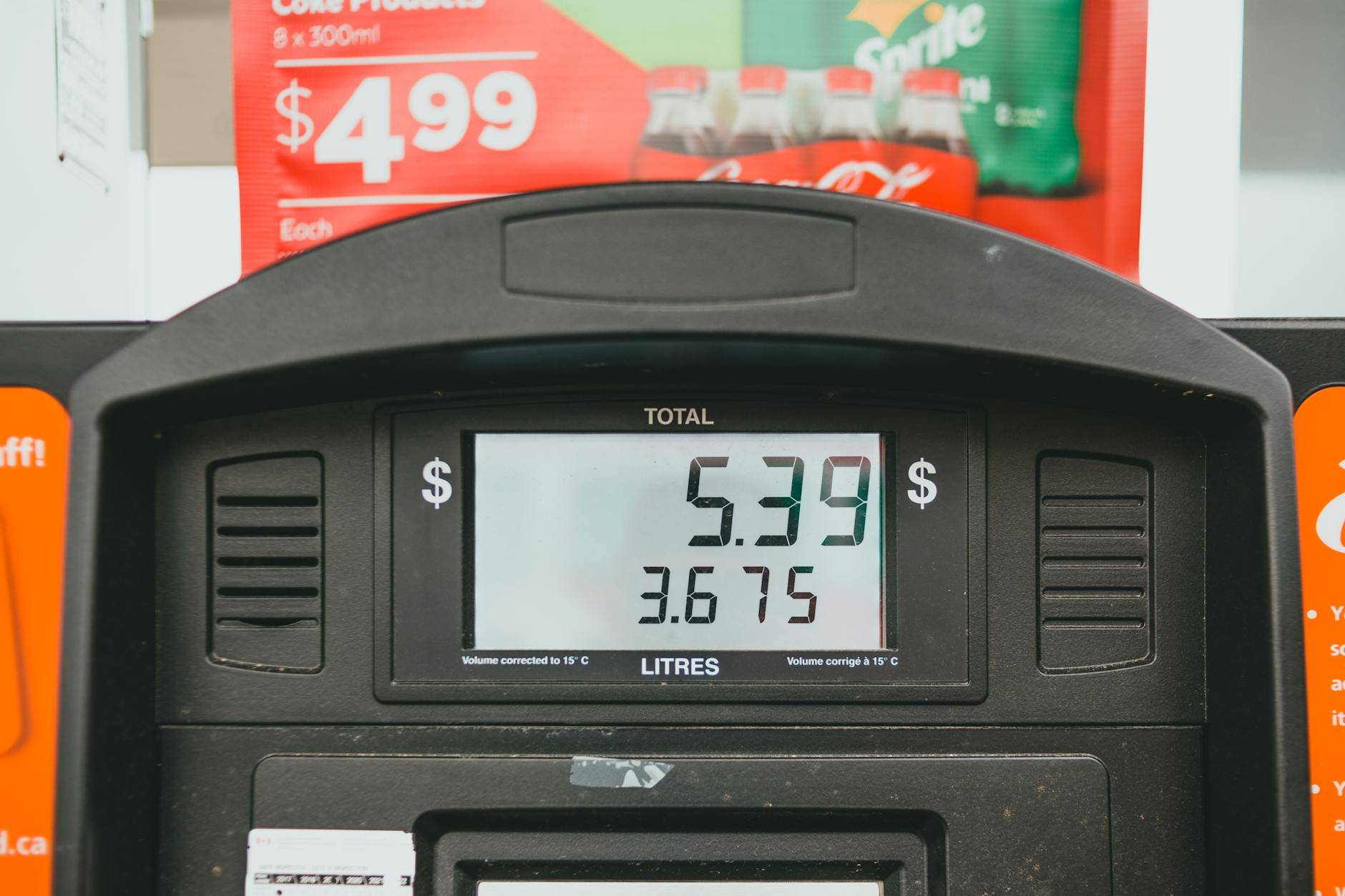
The escalating cost of gasoline is more than just a headline number; it represents a tangible hit to household budgets across America, exacerbating an already precarious affordability crisis for many. The national average at the pump has risen to $3.854 per gallon, marking an increase of $0.25 from just a week ago and a substantial $0.80 jump over the past month. This rapid ascent means consumers are now collectively spending an additional $300 million each month on fuel, a non-discretionary expense that leaves little room for adjustment.
For many households, particularly those with lower and middle incomes, this increase is a disproportionate shock. Gas is not an optional purchase; it's essential for commuting, childcare, and basic errands. Mark Zandi, chief economist at Moody's, highlights that this group, already under significant financial pressure, bears the brunt of these rising costs. Consider states like California, where the average price has already soared to $5.20 per gallon, or Washington at $4.63, demonstrating the extreme pain some regions are experiencing.
The impact extends beyond direct fuel costs. Higher gasoline prices have an outsized effect on consumer sentiment, which in turn influences overall spending behavior. When people feel their budgets are squeezed by essential expenses, their willingness and ability to spend on other goods and services decline. This psychological effect can weigh heavily on the broader economy, as consumer spending drives two-thirds of the nation's economic growth.
Moreover, any potential relief from recent legislative measures, such as the Trump administration's "One Big Beautiful Bill Act" (OBBBA) providing tax savings, could be entirely negated by these higher energy prices. RBC Capital Markets analysts have warned that the positive impact of OBBBA on consumer spending capacity could be "nearly entirely" offset. This means that even if individuals receive larger tax refunds, much of that extra cash will simply be diverted to the gas tank, rather than stimulating other sectors of the economy.
What Does This Mean for Inflation and the Federal Reserve? (Monetary Policy Headwinds)
The sharp rise in gasoline prices is a significant headwind for the Federal Reserve's ongoing battle against inflation, threatening to derail the progress made in recent months. Economists are now warning that the direct and indirect effects of higher energy costs could cause inflation to spike dramatically. Laura Rosner-Warburton, a senior economist at MacroPolicy Perspectives, projects that inflation could jump by as much as 0.8% to 0.9% in March from the previous month, which would be the largest monthly gain in nearly four years.
This potential surge would push yearly inflation well above the Fed's 2% target, possibly surpassing 3% and even nearing 4% in the coming months. This is a stark contrast to the projected 0.3% rise in February from the previous month, and the 2.5% year-over-year CPI figure for February (with the CPI at 327.46 as of February 1, 2026). Such a rapid acceleration in prices puts the Federal Reserve in an unenviable position, especially as it was already deeply divided on the path forward for interest rates.
The Fed had cut its key rate three times last year before leaving it unchanged at its last meeting in January, with the current rate hovering around 3.6%. The expectation of potential rate cuts to support borrowing and spending is now squarely in doubt. If inflation continues to intensify, the central bank will find itself under immense pressure to maintain its restrictive stance, or even consider a rate hike, a move that some Federal Reserve officials might advocate for at the upcoming meeting.
The bond market is already reflecting these concerns. Mortgage rates have been on an upward trend since the conflict began, as investors anticipate that inflation will remain stubbornly high, forcing the Fed to keep rates elevated for longer. While the U.S. Treasury yield curve currently shows a normal spread (2s/10s at +0.52%), indicating no immediate recessionary fears, persistent inflationary pressures could lead to further tightening in financial conditions, making borrowing more expensive across the board.
Are There Broader Economic Risks Beyond the Pump? (Growth and Sentiment Concerns)
The ripple effects of surging gasoline prices extend far beyond individual household budgets, posing significant risks to the broader U.S. economy, which was already showing signs of strain. Before the Middle East conflict escalated, the Commerce Department had already cut its estimate for fourth-quarter growth last year in half, revealing an anemic consumer spending environment in January. This suggests a fragile foundation that is ill-equipped to absorb a new inflationary shock.
The job market, a key indicator of economic health, has also entered a slump. Companies, nonprofits, and government agencies collectively cut 92,000 jobs in February, marking the weakest hiring outside of recession years since 2002. While there was a slight increase in open jobs in January, overall hiring remained largely unchanged, indicating a reluctance among businesses to fill positions, potentially due to economic uncertainty or the impact of artificial intelligence. This reluctance is likely to intensify if consumer confidence and spending continue to be weighed down by higher fuel costs.
Furthermore, the impact of higher energy prices is not confined to drivers. Companies across various sectors, from transportation and logistics to manufacturing, face increased fuel costs. These expenses are inevitably passed on to consumers, either through surcharges or price hikes on goods and services. This means that even non-drivers will feel the pinch, as groceries, restaurant meals, and airline fares become more expensive, contributing to a broader inflationary environment that erodes purchasing power.
Consumer sentiment, a crucial driver of economic activity, has taken a hit. The University of Michigan's consumer sentiment index, which was already dangerously close to recessionary territory at 56.4 in January 2026, saw a decline in March. Notably, those surveyed after February 28, when the war began, expressed significantly gloomier outlooks. This erosion of confidence, coupled with the ongoing slump in the housing market due to rising mortgage rates, creates a challenging environment for economic growth and stability.
What Should Investors Watch For Next? (Market Implications and Outlook)
For investors, the current economic landscape, heavily influenced by surging gasoline prices and geopolitical instability, demands a cautious yet strategic approach. The immediate concern is how long these elevated oil prices will persist and what that means for both inflation and consumer behavior. Crude oil prices, currently around $92.23 per barrel, are significantly higher than their 50-day average of $70.26 and 200-day average of $63.65, indicating a strong upward trend driven by the conflict.
The trajectory of oil prices hinges critically on the duration and intensity of the Middle East conflict, particularly the disruption to the Strait of Hormuz. Analysts from RBC Capital Markets suggest that if the conflict lasts three to four more weeks, oil could exceed the $128 per barrel high seen after the Russian invasion of Ukraine. A prolonged war extending several months could even push prices past the 2008 peak of $146 per barrel. Such scenarios would undoubtedly lead to even higher pump prices and more severe economic consequences.
Investors should closely monitor upcoming economic data releases, particularly the S&P Global PMI Flash reports for Manufacturing and Services on March 24, which will offer real-time insights into business activity and sentiment. The Chicago Fed National Activity Index on March 23 will also provide a broader gauge of economic momentum. Any signs of further deceleration in these indicators, coupled with persistent inflation, could signal a more challenging environment for corporate earnings and equity markets.
The Federal Reserve's actions will be paramount. With Fed Chair Powell scheduled to speak on March 21, markets will be scrutinizing his comments for any shifts in monetary policy outlook. The consensus for interest rate cuts has evaporated, and the possibility of a rate hike, though still a minority view, cannot be entirely dismissed if inflation spirals out of control. This uncertainty surrounding monetary policy will likely continue to fuel market volatility, making defensive sectors and companies with strong pricing power potentially more attractive.
The surge in gasoline prices is a potent reminder of how quickly global events can reshape the economic narrative. While the immediate pain is felt at the pump, the broader implications for inflation, consumer spending, and monetary policy are far-reaching. Investors should brace for continued volatility and prioritize resilience in their portfolios, focusing on companies with robust balance sheets and the ability to navigate a high-cost environment. The coming weeks will be crucial in determining whether this is a temporary squeeze or a more entrenched economic challenge.
Want deeper research on any stock? Try Kavout Pro for AI-powered analysis, smart signals, and more. Already a member? Add credits to run more research.
Related Articles
Why is Goldman Sachs so Bullish on Gold
Category
You may also like


"Wildcard" Energy Market: Why Elevated Oil Prices Play Big Part in Economy

Why Are Oil Prices Rising Faster Than Gas Prices?

Iran War Triggers Gas Price Surge—Here’s Where Drivers Are Paying the Most and Least
Breaking News
View All →Featured Articles
Top Headlines

LetPot Achieves Amazon Best Seller Status Across Multiple Markets in 2025 Holiday Season

Netflix sees more prospects for live events in South Korea

1 Artificial Intelligence (AI) Stock With Generational Wealth Potential

Exclusive: Tesla in talks with Chinese firms to buy $2.9 bln worth of solar equipment, sources say