MarketLens

Log in

Why Are Consumers So Glum Despite Continued Spending

12 hours ago
SHARE THIS ON:

Why Are Consumers So Glum Despite Continued Spending

Key Takeaways

  • Despite record-low consumer sentiment of 44.2 in May 2026, actual personal spending has remained resilient, rising 0.5% month-over-month in April, driven by essential goods and services.
  • The disconnect between consumer mood and spending is largely attributed to persistent inflation, particularly soaring gasoline prices due to the Middle East conflict, and a reliance on thinning financial buffers.
  • While a robust labor market and manageable aggregate household debt provide some near-term support, the erosion of real income growth and declining savings rates pose significant risks to future discretionary spending, especially for lower-income households.

Why Are Consumers So Glum Despite Continued Spending?

The U.S. consumer is presenting a perplexing paradox to investors: sentiment has plunged to an all-time low, yet spending continues to defy expectations. The University of Michigan's consumer sentiment index dropped to a record-low 44.2 in May 2026, falling below the previous trough of 49.8 set just one month prior in April. This marks the third consecutive monthly decline and represents the lowest reading since the survey began in 1952, surpassing even the depths of the Great Financial Crisis or the COVID-19 pandemic. Despite this profound pessimism, personal spending data tells a different story, with U.S. personal spending rising 0.5% month-on-month in April 2026, reaching $111.1 billion, following an upwardly revised 1% gain in March. This resilience, however, is increasingly fragile, driven by specific spending patterns and a reliance on dwindling financial cushions.

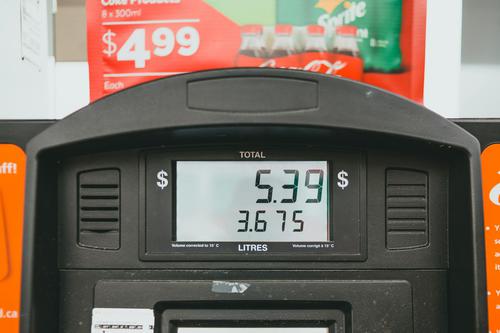
The primary driver of this deep-seated consumer gloom is the relentless pressure of high prices, particularly at the pump. Surveys indicate that 57% of consumers spontaneously mentioned that high prices were eroding their personal finances in May, up from 50% in April. This sentiment is exacerbated by the ongoing U.S.-Israeli conflict in Iran, which has effectively choked off the Strait of Hormuz for nearly three months, sending gasoline and other energy goods prices soaring. In April, spending on gasoline and other energy goods surged by $28.8 billion, underscoring the direct impact on household budgets. This inflationary environment, coupled with concerns that higher oil and gas prices will permeate other goods and services, creates a pervasive sense of financial insecurity, especially among lower-income consumers and those without college degrees, who are more sensitive to essential cost increases.

The divergence between what consumers say and what they do has become a critical point of analysis for economists and investors. While sentiment surveys capture immediate anxieties and headline-driven concerns, actual spending data reflects behavioral realities. The Federal Reserve Bank of New York has highlighted this disconnect, noting that while consumers express pessimism, verified retail purchases through late 2024 showed increased spending, not just higher prices. This suggests that during inflationary periods, consumers prioritize the impact of higher prices on their sentiment, even if robust income growth allows them to maintain spending levels. However, the sustainability of this trend is questionable as financial buffers thin and real income growth lags.

How Are Geopolitical Tensions and Energy Prices Reshaping Consumer Budgets?

The ongoing geopolitical tensions, specifically the U.S.-Israeli conflict in Iran and its impact on the Strait of Hormuz, have emerged as a dominant force reshaping consumer budgets and spending priorities. The effective choking off of this critical oil passageway has led to a significant surge in energy prices, directly translating to higher costs at the gasoline pump. In March 2026, the average household spent approximately 3.1% of their income on gasoline, up from 2.8% a year prior, according to Bank of America data. This figure is even more pronounced for lower-income households, who spent 4.2% of their income on gasoline in March, compared to 3.9% a year earlier. This disproportionate impact means that a larger share of their already constrained budgets is being diverted to essential fuel costs, leaving less for discretionary items.

The ripple effect of these elevated energy prices extends beyond just gasoline. Consumers are increasingly worried that these high oil and gas costs will "leak" into other necessities, such as groceries and utility prices, further eroding purchasing power. While there is little evidence of this widespread leakage into other essential goods so far, the expectation alone contributes to the pervasive negative sentiment. The Conference Board's May 2026 survey indicated that two-thirds of consumers are cutting back on spending overall due to rising prices, with many buying fewer items and delaying expensive purchases. This shift in behavior is a direct consequence of the need to absorb higher energy costs, forcing households to economize on categories like clothing, footwear, hobby items, and games/toys.

This dynamic creates a challenging environment for businesses, particularly those in discretionary retail, home real estate, and automotive sectors. While overall personal spending rose by 0.5% in April, motor vehicle spending actually fell by $9.2 billion during the same month. This suggests that consumers are making deliberate trade-offs, prioritizing essential goods and services, including a $22.7 billion increase in housing and utilities spending and a $12.1 billion rise in recreation services, over big-ticket items sensitive to both high prices and rising interest rates. The "pain at the pump" is not just a psychological phenomenon; it's a tangible drain on disposable income, forcing a reallocation of household budgets that could suppress demand in certain sectors for an extended period if energy prices remain elevated.

Is the Labor Market Still a Pillar of Consumer Strength?

The labor market has historically been a critical pillar supporting consumer spending, and recent data suggests it continues to provide some foundational strength, albeit with nuances. The economy added a net 304,000 jobs during the first four months of 2026, a significant improvement from the job losses experienced during the second half of 2025. This reemergence of job growth, coupled with an unemployment rate that remains historically low at 4.3%, offers a confidence boost to consumers as they head into the summer spending season. Nonfarm payrolls increased by 115,000 in April 2026, following a 185,000 gain in March, with job gains in healthcare, construction, and transportation offsetting declines in federal government employment.

However, the quality and growth trajectory of wages present a more complex picture. While nominal wages continue to exceed the cost of living for many, gains have slowed, particularly for lower-income households. Average hourly earnings of private sector employees increased 3.6% between April 2025 and April 2026. While this is above the 3.3% average increase seen in 2019, it is more than 2 percentage points below the strong gains posted during 2022. This slowdown in wage growth, combined with persistent inflation, means that real income growth is somewhat muted, challenging households' ability to keep pace with rising costs, especially for essentials like gasoline. Tom Hainlin, national investment strategist with U.S. Bank Asset Management Group, emphasizes that "Income growth remains a key stabilizer for consumers as the labor market moves toward better balance."

Despite the slowdown in wage growth, low layoff activity helps preserve income continuity, which is crucial for maintaining consumer confidence and spending. Initial unemployment claims ticked up modestly to 211,000 in the week ending May 9, 2026, but the four-week moving average remained near its lowest level since early 2024. This stability in employment conditions, where jobs are not "hard to get" for a significant portion of the workforce, provides a buffer against the negative sentiment driven by high prices. The Conference Board's May 2026 report noted that perceptions of employment conditions declined slightly, with the labor market differential ticking down by 0.6 percentage points to +6.9%, yet consumers were moderately more optimistic about the labor market outlook six months from now. This suggests that while current conditions are challenging, the underlying strength of job availability still offers some reassurance to households.

What Risks Do Thinning Financial Buffers and Rising Debt Pose?

While consumer spending has shown resilience, a deeper look at household balance sheets reveals increasing vulnerabilities, particularly the thinning of financial buffers and a rise in certain debt categories. The personal savings rate has declined significantly in recent months, falling to 2.6% in April 2026, down from 3.2% in March. This is nearly two full percentage points below early-2025 readings and well below the pre-pandemic average of 6.5% between 2017 and 2019. This decline indicates that many households are tapping into their savings to support expenditures, as consumer spending has been outpacing income growth in real terms. The "good news" of elevated deposit buffers, which provided a cushion for households, even lower-income ones, is gradually eroding.

The reliance on credit is also becoming more pronounced, particularly for lower-income households. Total household debt increased 3.3% in the first quarter of 2026 from a year earlier, bringing outstanding balances to $18.8 trillion. While this growth is below the long-term average of 4.3%, credit card balances have increased more noticeably, rising 5.9% year-over-year in Q1 2026. This signals pressure for some households, especially as higher interest rates raise borrowing costs. The median lower-income household, for instance, has the most stretched credit card utilization rates relative to 2019, and users of Buy Now, Pay Later (BNPL) options also tend to have higher card utilization. This suggests that for a growing segment of the population, spending is being financed through debt rather than current income or savings.

Despite these concerns, aggregate household debt payments remain manageable when compared to disposable income, currently at roughly 11.3%, well below the 2007 peak of 15.8%. This cushion suggests that many households still possess some financial flexibility. However, this aggregate view masks significant disparities. Lower-income households are disproportionately affected by rising gas prices and inflation, and their capacity to finance spending through credit is more limited. The expectation of sizable tax refunds in 2026, which were anticipated to be a catalyst for economic growth, may instead be acting as a cushion to absorb sharply higher gas prices, leading to a faster depletion of this expected driver of growth. This reliance on short-term relief measures and debt, coupled with lagging real income growth, poses a substantial risk to future consumer activity, particularly for discretionary spending.

What Are the Implications for Consumer-Facing Sectors and the Broader Market?

The current consumer landscape, characterized by record-low sentiment but resilient spending, presents a nuanced outlook for consumer-facing sectors and the broader market. Equity markets entered 2026 on firmer footing, yet consumer-oriented stocks have lagged broader gains. This pattern reflects investor expectations for slower but continued growth, with stable consumer spending still supporting corporate revenue despite tighter financial conditions. However, the composition of this spending is critical. Retail and food services sales rose 0.5% in April 2026 and increased 4.9% from a year earlier, but much of this was lifted by rising gasoline prices. Spending outside automobiles and gasoline still increased 4.6% year-over-year, indicating broad demand.

Specific sectors are experiencing divergent trends. Online retailers posted an 11.1% annual increase in April, while food services and drinking places rose 2.7%. These trends point to sustained demand for convenience, services, and experiences. Consumers are still spending on "cheap thrills" and necessary services, with categories like restaurants/bars/take-out, streaming/internet/mobile services, and beauty and personal care remaining top spending targets. Travel intentions for the next six months ticked up in May, with increased expected spending on hotel/motel and airfare/trains for personal travel, particularly for domestic destinations. This suggests a continued preference for experiences over goods, especially as discretionary goods purchases are being delayed.

Conversely, sectors reliant on big-ticket discretionary goods, such as motor vehicles and parts, and home furnishings, face headwinds. Motor vehicle spending fell by $9.2 billion in April, and spending plans for white goods, home furnishings, and electronics eased or were unchanged in May. Higher interest rates, influenced by the Federal Reserve's policy decisions and investor anticipation of potential rate hikes in 2026 due to inflation pressures, further impact borrowing costs for mortgages, auto loans, and credit cards. This makes large purchases more expensive and could prompt consumers to become more selective. The upcoming Fed Press Conference and Interest Rate Decision on June 17, 2026, will be closely watched for signals on future monetary policy, which could significantly influence consumer borrowing costs and, consequently, spending on rate-sensitive items.

The disconnect between consumer sentiment and spending also highlights the importance of distinguishing between the University of Michigan's Consumer Sentiment Index and the Conference Board's Consumer Confidence measure. While the Michigan survey is often seen as a better gauge of "pocketbook issues" like gasoline prices, the Conference Board survey tends to reflect job market and job security indicators. In May 2026, employment conditions were relatively stable, but gasoline prices soared, causing a sharp drop in sentiment but no unusual decline in confidence. This suggests that while consumers are feeling the pinch of prices, the underlying stability of the labor market prevents a complete collapse in their willingness to spend, particularly on services and necessities.

What Does This Mean for Investors?

For investors, the current economic environment necessitates a nuanced approach, recognizing the dichotomy between consumer sentiment and actual spending. The market is navigating a period where consumer anxiety is high due to inflation and geopolitical events, yet spending remains robust, albeit with shifts in composition. This suggests that while broad market downturns driven by a complete cessation of consumer activity are less likely in the immediate term, sector-specific performance will be highly differentiated.

Investors should consider defensive positioning in consumer staples and essential services, which are less susceptible to discretionary cutbacks. Companies providing streaming, internet, mobile services, and beauty/personal care products are likely to maintain demand. Furthermore, the continued preference for experiences, particularly domestic travel and dining, could benefit hospitality and restaurant sectors, provided they can manage rising operational costs. Conversely, sectors exposed to big-ticket discretionary goods, such as automotive and home improvement, may face sustained pressure as consumers delay purchases and prioritize necessities. Monitoring upcoming economic data, particularly the Retail Sales MoM on June 17, 2026, and the Fed's decisions, will be crucial for gauging the short-term trajectory of consumer behavior. The long-term outlook hinges on whether real income growth can catch up to inflation and if geopolitical tensions ease, allowing for a rebuilding of household financial buffers.

The current environment demands a selective investment strategy, favoring companies with strong pricing power, diversified revenue streams, and a focus on non-discretionary or experience-based offerings. The resilience of the labor market provides a floor, but the erosion of savings and rising credit usage for essentials signal potential fragility. Investors should remain vigilant for signs of sustained real income growth or a significant easing of energy prices, which could alleviate consumer pressure and potentially re-align sentiment with spending.

The U.S. consumer, while expressing deep pessimism, continues to drive economic activity, albeit with increasing caution and a clear shift in spending priorities. This complex dynamic, fueled by persistent inflation and thinning financial buffers, demands a highly selective investment strategy focused on resilience and essential services. The path forward for consumer-facing sectors will be shaped by the interplay of geopolitical stability, inflation trends, and the Federal Reserve's monetary policy decisions in the coming months.


Want deeper research on any stock? Try Kavout Pro for AI-powered analysis, smart signals, and more. Already a member? Add credits to run more research.

SHARE THIS ON:

Related Articles

Category

You may also like

News6 days ago

Fed Data Shows Consumer Divide Growing Wider

Economic activity expanded across most Federal Reserve districts, according to the latest Beige Book. However, the report highlights a growing consumer divide, noting that spending behaviors are diver...
News2 weeks ago

Consumer Confidence Drops as Gas Prices and Inflation Worries Rise

The Conference Board's Consumer Confidence Index fell 0.7 points to 93.1 in May, down from an upwardly revised 93.8 in April. Rising gas prices and concerns regarding war-related inflation drove the d...
Stock News2 weeks ago

Why So Many Americans Feel Broke Even with Good Incomes

Many Americans report feeling financially insecure despite earning high salaries, driven by rising living costs and unexpected expenses. This disconnect between income levels and perceived stability s...
Stock News3 weeks ago

Americans still feel bad about the economy. When will it get better?

The University of Michigan consumer sentiment index recently reached all-time lows, reflecting a structural decline in economic outlook. This trend aligns with multiple surveys indicating persistent n...

Breaking News

View All →

Top Headlines

View More →
Stock News1 hour ago

Here's Why Tesla (TSLA) Fell More Than Broader Market

Stock News1 hour ago

On Tesla Becoming X

Stock News2 hours ago

Microsoft's Xbox plans for major layoffs next month, Bloomberg News reports

Stock News3 hours ago

If You Invested $30,000 in Sandisk Stock at Its Spinoff, Here's How Much You'd Have Today (Hint: You'd Be a Millionaire)

Stock News3 hours ago

SpaceX Just Announced Fantastic News to Nvidia Stock Investors