MarketLens

Log in

Why Are Flight Delays and Cancellations Still So Common

5 hours ago
SHARE THIS ON:

Why Are Flight Delays and Cancellations Still So Common

Key Takeaways

  • Flight disruptions are a persistent and costly problem, with over 21% of U.S. flights delayed in 2023, leading to significant financial and emotional tolls for travelers.
  • Standard travel insurance offers crucial protection against common issues like illness and weather, but often explicitly excludes major geopolitical events such as war or military action.
  • Investors and frequent travelers must understand the nuanced differences between trip cancellation and interruption coverage, and consider comprehensive policies or credit card benefits for more robust protection.

Why Are Flight Delays and Cancellations Still So Common?

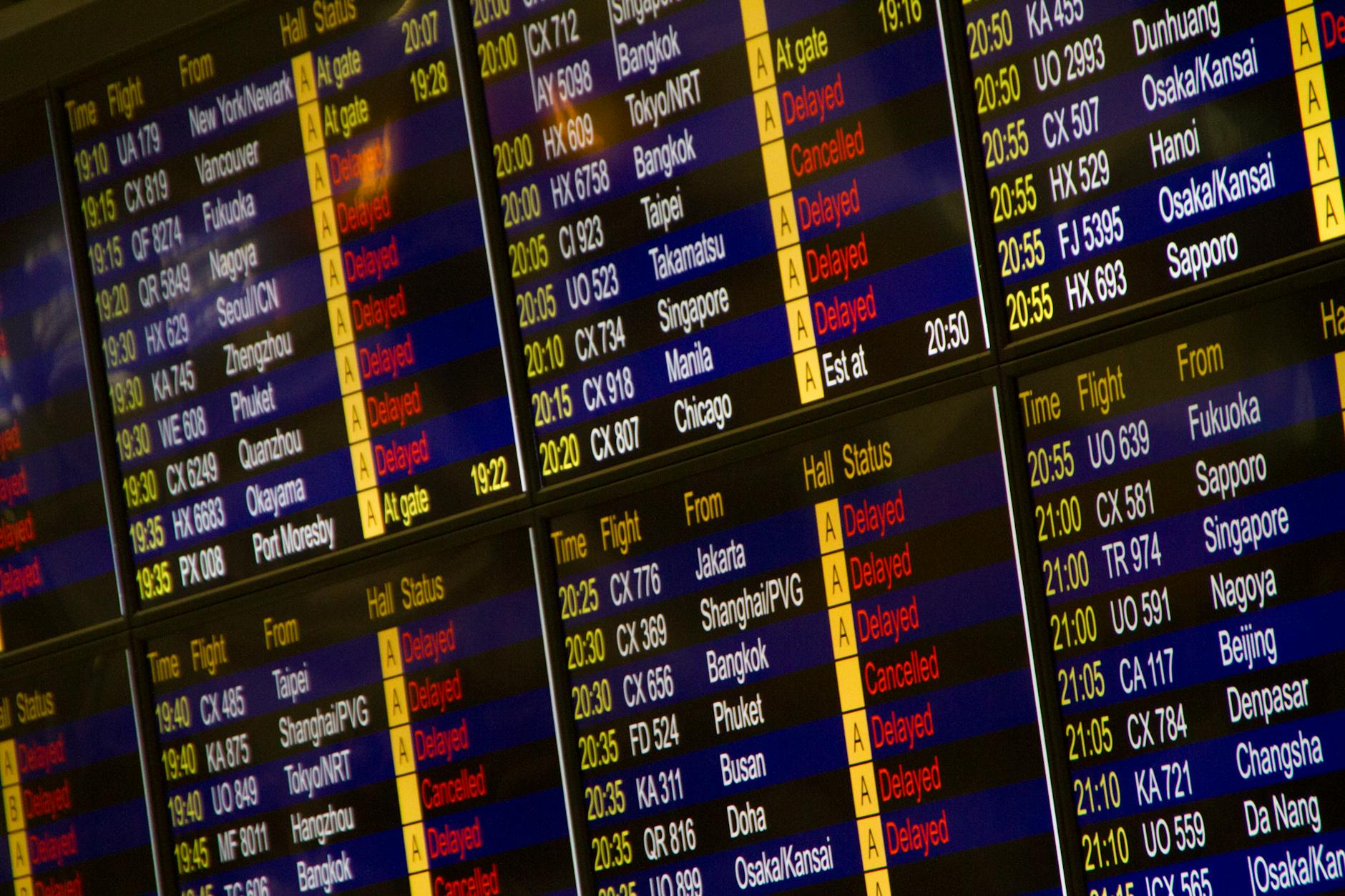
The dream of seamless travel often collides with the frustrating reality of widespread flight delays and cancellations, a problem that has only intensified in recent years. This isn't just about minor inconveniences; it's a systemic issue that costs travelers hundreds, if not thousands, of dollars and takes a significant emotional toll. The data paints a stark picture, revealing that air travel remains a gamble despite advancements in technology and infrastructure.

Consider the sheer scale: in 2023, a staggering 21.66% of all U.S. flights were delayed by 15 minutes or more. For some carriers, the numbers are even worse; Southwest Airlines, for instance, saw roughly 26% of its flights delayed in 2022. These aren't isolated incidents but a consistent pattern, driven by factors ranging from staffing shortages and air traffic control issues to severe weather and aircraft mechanical problems. The ripple effect of one delayed flight can cascade through an entire network, disrupting thousands of itineraries.

The financial impact on travelers is substantial and often overlooked. A 2026 AirHelp report highlighted that 73% of U.S. passengers lost money due to disruptions, with 52% incurring additional out-of-pocket expenses. On average, travelers faced $484.19 in lost earnings, $311.87 for unexpected accommodation, $114.58 on food and drink, $93.72 for essential clothing and toiletries, and $221.33 for local transportation. Beyond the monetary costs, 28% reported health impacts like fatigue or illness, and 20% missed crucial personal events.

Adding to the frustration is a widespread lack of awareness regarding passenger rights. The same AirHelp study found that 40% of U.S. passengers were unaware of regulations protecting their rights, and 68% were not informed of these rights during a disruption. While major airlines like Delta, United, and American have committed to providing rebooking, hotels, and meals for delays within their control, there's no universal law mandating compensation for issues outside their purview, such as weather. This leaves many travelers vulnerable, underscoring the critical need for proactive financial protection.

How Does Travel Insurance Actually Protect Your Trip Investment?

Travel insurance isn't a one-size-fits-all solution, but rather a suite of benefits designed to mitigate financial losses from unforeseen events. Understanding the core distinctions, particularly between trip cancellation and trip interruption coverage, is paramount for any traveler looking to safeguard their investment. These two benefits, often bundled together, address different phases of your journey.

Trip Cancellation coverage kicks in before you depart. It reimburses you for non-refundable, prepaid expenses if you have to cancel your trip for a covered reason. This includes costs like airline tickets, cruise fares, hotel bookings, and tour deposits. Covered reasons typically encompass sudden illness or injury (certified by a licensed physician), death of a family member or traveling companion, natural disasters impacting your destination, airline strikes, or significant mechanical issues with your common carrier. For example, if a hurricane strikes your beach resort before you leave, or you fall seriously ill, this benefit can save you from losing your entire upfront payment.

Conversely, Trip Interruption coverage applies after your trip has begun. If an unforeseen event forces you to cut your journey short and return home, this benefit can reimburse you for the lost portion of your trip and cover additional expenses incurred for a last-minute flight home or unexpected accommodation. Imagine you're halfway through a European tour when a family emergency requires your immediate return; trip interruption insurance would help cover the costs of your early departure and the non-refundable segments of your remaining itinerary. It’s crucial to note that while both cover similar "covered reasons," their application depends on whether the event occurs pre- or post-departure.

Many comprehensive travel insurance plans also include benefits like travel delay coverage, which reimburses for delay-related costs such as meals, lodging, and toiletries if your flight is delayed beyond a specified threshold (often 3 to 5 hours). Baggage loss or delay coverage is another common inclusion, providing funds for essential items if your luggage is lost, stolen, damaged, or significantly delayed. Even in regions experiencing conflict, standard travel insurance often continues to cover medical emergencies unrelated to the war, providing a vital safety net for unexpected illness or accidents abroad.

What Are the Major Gaps in Standard Travel Insurance Coverage?

While travel insurance offers a crucial safety net for common disruptions, it's vital for investors and travelers to recognize its significant limitations, particularly concerning geopolitical events and certain "risky" activities. Many standard policies contain explicit exclusions that can leave travelers financially exposed during major global incidents, which have become increasingly prevalent. This is where the fine print truly matters.

The most prominent exclusion in standard travel insurance policies revolves around acts of war, invasion, military conflicts, and civil disorder. Insurers design policies to cover everyday travel risks, not the extraordinary and unpredictable costs associated with large-scale hostilities. For instance, recent events like the U.S. military operation in Venezuela in 2026, the Iran-Israel conflict in 2026, or even the Mexican army's actions against cartel leaders, have led to widespread airspace closures and thousands of flight cancellations. In these scenarios, travelers who purchased standard policies often found themselves without coverage for trip interruption or cancellation, as the disruptions were directly linked to military action.

This "war exclusion" means that if your flight is canceled because airspace is closed due to military conflict, or if you need to evacuate a region due to civil unrest, your travel insurance will typically not cover the associated financial losses. The airline usually becomes the first point of contact for refunds or rescheduling in such cases, but they are often not obligated to compensate for disruptions outside their control. This creates a "gray area" where the exact nature of a conflict—whether it's an "undeclared war" or "civil unrest"—can significantly impact whether a claim is approved or denied, with insurers making the final determination.

Beyond geopolitical turmoil, other surprising exclusions can catch travelers off guard. Many policies will deny claims if losses are a direct result of intoxication. Furthermore, certain activities deemed "risky" by insurers, such as riding a moped, kayaking, hiking, zip-lining, or going on a safari, may also be excluded from coverage, particularly for injury-related claims. This highlights the critical importance of reading the policy document thoroughly before purchasing, especially if your travel plans involve destinations or activities that could fall into these excluded categories.

How Can Investors Secure More Robust Travel Protection?

For investors and frequent travelers seeking more comprehensive protection against the myriad of travel disruptions, relying solely on basic policies or airline goodwill is often insufficient. The key lies in exploring more robust options, including comprehensive travel insurance plans and leveraging the benefits offered by premium credit cards. These avenues can provide a significantly broader safety net, covering scenarios that standard policies typically exclude.

A comprehensive travel insurance policy is often the gold standard for robust protection. Unlike basic plans, these policies bundle a wide array of benefits, including trip cancellation, trip interruption, trip delay, baggage loss/delay, emergency medical coverage, and emergency medical evacuation. Providers like John Hancock (Gold plan), Berkshire Hathaway (LuxuryCare), and Travel Insured International (Worldwide Trip Protector) are highly rated for their extensive coverage. For instance, John Hancock's Gold plan offers $250,000 in medical coverage and $1,000,000 for medical evacuation, alongside trip cancellation/interruption limits up to 100-150% of the trip cost. These plans are designed to cover a wider range of unforeseen events, from severe weather to medical emergencies, providing peace of mind for significant travel investments.

For the ultimate flexibility, consider adding Cancel For Any Reason (CFAR) coverage to a comprehensive policy. While more expensive, CFAR allows you to cancel your trip for any reason not typically covered by standard policies—even a change of mind—and receive reimbursement for 50-75% of your non-refundable trip costs. This optional add-on is particularly valuable for high-stakes trips or when travel uncertainty is high, offering a level of control unmatched by other policies. However, CFAR must usually be purchased within 10-21 days of your initial trip deposit and requires insuring 100% of your prepaid, non-refundable expenses.

Another powerful tool for enhanced travel protection comes from premium travel credit cards. Many high-tier cards, such as The Business Platinum Card from American Express or the Chase Sapphire Reserve, offer complimentary travel insurance benefits. These can include trip cancellation and interruption coverage (often up to $10,000 per trip, with annual limits of $20,000), trip delay insurance, and lost luggage coverage. For example, the Chase Sapphire Reserve reimburses up to $500 per ticket for delays over six hours or requiring an overnight stay. While these benefits can be substantial, it's crucial to review the specific terms and conditions, as coverage limits, eligible reasons, and booking requirements (e.g., round-trip only for some Amex cards) vary significantly by card and issuer.

What Are the Best Strategies for Choosing the Right Travel Insurance?

Navigating the travel insurance landscape can be complex, but a strategic approach can help investors and frequent travelers select the most suitable coverage for their specific needs. The "best" plan isn't universal; it depends heavily on your trip details, budget, and personal risk tolerance. By focusing on key considerations and comparing providers, you can make an informed decision that protects your financial investment.

First, assess your trip's specifics and potential risks. Consider the total non-refundable cost of your trip, the duration, your age (premiums often increase with age), and the destination. Are you traveling to a region prone to severe weather, or one with a higher risk of civil unrest? Will you be engaging in "risky" activities like adventure sports that might be excluded from standard policies? Understanding these factors will help you determine the level and type of coverage you truly need. For instance, a multi-flight international itinerary warrants strong missed connection coverage, while a cruise requires robust trip interruption protection.

Next, compare comprehensive policies from reputable providers. Don't just opt for the cheapest plan. Look for insurers with strong financial strength ratings (e.g., A.M. Best A or A++ ratings) and positive customer service records (e.g., BBB A+ ratings). Companies like John Hancock, Berkshire Hathaway, WorldTrips, Detour Insurance, and Travel Insured International consistently rank high for their comprehensive offerings. Pay close attention to the specific benefit limits for trip cancellation, interruption, delay, and medical emergencies. For example, Travel Insured International’s Worldwide Trip Protector offers travel delay coverage after just 3 hours, a shorter waiting period than many competitors, and up to $1,500 in reimbursement.

Finally, leverage existing benefits and understand exclusions. Before purchasing a standalone policy, check if your credit card or existing health insurance provides any travel-related coverage. While credit card benefits can be excellent for trip delays or basic cancellation, they often lack the high medical evacuation limits or CFAR options of comprehensive policies. Always read the policy's fine print, paying particular attention to the list of exclusions. Knowing what isn't covered—whether it's a pre-existing medical condition (unless waived), a change of mind (without CFAR), or specific geopolitical events—is just as important as knowing what is. This due diligence ensures there are no unwelcome surprises if you need to file a claim.

The Future of Travel Protection: Adapting to an Unpredictable World

The travel landscape is undeniably more volatile than ever, characterized by persistent operational challenges, evolving health concerns, and an unpredictable geopolitical environment. For investors and frequent travelers, this new normal necessitates a proactive and informed approach to travel protection. The days of simply hoping for the best are long gone; strategic planning and robust insurance are now essential components of any travel itinerary.

As the industry continues to grapple with these complexities, the demand for flexible and comprehensive travel insurance solutions will only grow. Insurers are likely to innovate, potentially offering more customizable policies or specialized riders to address specific risks, though the core exclusions for major conflicts will likely remain. The onus will increasingly be on the individual traveler to understand these evolving offerings and tailor their coverage to their unique circumstances.

Ultimately, mitigating the financial risks of travel disruptions comes down to diligent research and a willingness to invest in appropriate protection. By understanding the nuances of trip cancellation versus interruption, recognizing the limitations of standard policies, and leveraging comprehensive plans or premium credit card benefits, travelers can navigate an unpredictable world with greater confidence. Don't let unforeseen events turn your travel dreams into financial nightmares.


Want deeper research on any stock? Try Kavout Pro for AI-powered analysis, smart signals, and more. Already a member? Add credits to run more research.

SHARE THIS ON:

Related Articles

Category

You may also like

Stock News4 days ago

Airbus: Weak Deliveries Raise Questions About The 2026 Target

Airbus deliveries lagged 17% year-on-year in the first two months, totaling 54 units, which casts doubt on the 870-aircraft 2026 delivery target despite an 8,800-plane backlog.
Stock News2 weeks ago

Airlines Grapple With Disruptions That ‘Far Surpass' Past Middle East Conflicts

Airlines face significant disruptions, including thousands of flight cancellations and higher fuel costs, due to ongoing issues that reportedly surpass those seen in past Middle East conflicts.
Stock News1 months ago

Norwegian, TripAdvisor Get New Activists. Why Travel Stocks Are Attractive Right Now.

Activist campaigns targeted Norwegian Cruise Line and Tripadvisor, despite robust travel demand, suggesting poor prior stock performance was a key catalyst for the moves.
News1 months ago

The government shutdown has delayed Friday's jobs report. Here's how the latest closure could end.

The government shutdown delayed Friday's jobs report release, impacting tax refunds and air travel operations. The duration of the closure remains uncertain as negotiations continue.

Breaking News

View All →

Top Headlines

View More →
Stock News16 minutes ago

Netflix sees more prospects for live events in South Korea

Stock News34 minutes ago

1 Artificial Intelligence (AI) Stock With Generational Wealth Potential

Stock News46 minutes ago

Exclusive: Tesla in talks with Chinese firms to buy $2.9 bln worth of solar equipment, sources say

Stock News59 minutes ago

Amazon Buys Robot Maker RIVR to Win Last-Mile Delivery Race

Stock News1 hour ago

Super Micro cofounder engaged in backdoor scheme to divert Nvidia chips to China, U.S. government says