MarketLens
Why Are Retail Giants Like Costco, Victoria's Secret, and Target Showing Such Divergent Fortunes

Key Takeaways
- Costco continues to demonstrate retail resilience, leveraging its membership model and employee-first culture to drive consistent growth and strong customer loyalty.
- Victoria's Secret faces a volatile turnaround, with recent earnings showing progress but a premium valuation and high debt raise concerns about sustained profitability amidst structural headwinds.
- Target's holiday quarter and strategic shifts highlight the challenges of navigating a complex consumer landscape, with its backtracking on DEI initiatives potentially impacting market share.
Why Are Retail Giants Like Costco, Victoria's Secret, and Target Showing Such Divergent Fortunes?
The latest earnings season has painted a starkly contrasting picture across the retail sector, with major players like Costco, Victoria's Secret, and Target revealing vastly different trajectories. While Costco Wholesale Corporation (NASDAQ: COST) continues to defy broader economic headwinds, reporting robust sales and solidifying its "defensive growth" status, Victoria's Secret & Co. (NYSE: VSCO) navigates a volatile turnaround, and Target Corporation (NYSE: TGT) grapples with a challenging holiday quarter and strategic missteps. This divergence isn't merely coincidental; it reflects fundamental differences in business models, consumer engagement strategies, and even corporate values that are increasingly shaping market performance.
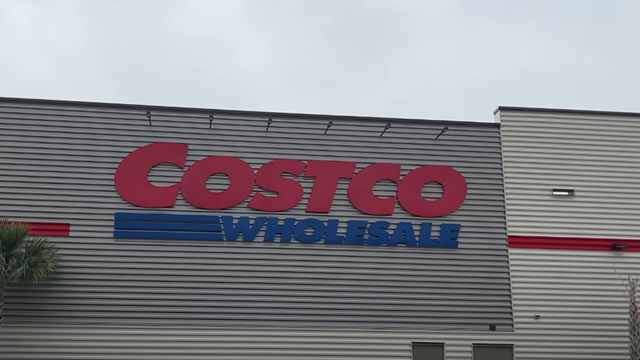
Costco, trading at $982.57 per share, down 2.40% today but with a commanding market cap of $436.13 billion, exemplifies stability. Its Q2 fiscal 2026 results underscore the power of its membership-driven model, which fosters deep customer loyalty and predictable revenue streams. In stark contrast, Victoria's Secret, priced at $52.71 and down a significant 12.16% today, with a market cap of $4.23 billion, highlights the fragility of a brand in transition, where positive earnings surprises are often overshadowed by broader market skepticism. Target, at $120.34 and up a modest 0.22% today, with a market cap of $54.68 billion, finds itself caught between shifting consumer preferences and the tangible repercussions of its recent corporate decisions, particularly around diversity, equity, and inclusion (DEI) initiatives. The market is clearly rewarding consistency and a clear value proposition, while punishing uncertainty and perceived misalignments with evolving consumer expectations.
What Drives Costco's Unstoppable Membership Flywheel?
Costco's latest Q2 fiscal 2026 results continue to demonstrate the formidable strength of its unique business model, often referred to as the "membership flywheel." The company's consistent performance is rooted in its ability to generate substantial, predictable revenue from membership fees, which in turn allows it to offer goods at razor-thin margins, creating an irresistible value proposition for its members. This strategy cultivates an exceptionally loyal customer base, evidenced by a North American renewal rate of 92.3%, a figure that few retailers can match.
The core of Costco's profitability isn't primarily from selling products, but from these recurring membership fees, which include the $65 "Gold Star" and $130 "Executive" tiers. This predictable income stream provides a robust financial cushion, enabling the company to absorb cost pressures and maintain its competitive pricing. Furthermore, the Kirkland Signature private label brand is a powerhouse, accounting for approximately 33% of total sales and generating over $86 billion annually. This private label not only offers higher relative margins but also acts as a strategic lever, compelling national brands to lower their prices to compete within Costco's warehouses.
Under the leadership of CFO Gary Millerchip, who joined in 2024, Costco has also been accelerating its digital modernization. Innovations like passwordless sign-ins on its mobile app and improved "Buy Online, Pick Up In-Warehouse" (BOPIS) for high-value items enhance the member experience without compromising the in-store "treasure hunt" appeal. The expansion of "Costco Next," a curated marketplace offering exclusive discounts from high-end manufacturers, further diversifies its offerings without the inventory risk. This blend of a proven physical model with strategic digital enhancements reinforces Costco's position as a "defensive growth" stock, making it a staple in many institutional portfolios.
Is Victoria's Secret's Turnaround Sustainable Amidst Volatility?
Victoria's Secret & Co. (VSCO) recently reported its 2025 fourth quarter and full-year results, exceeding both top- and bottom-line guidance, with comparable sales increasing 8% in Q4 and 5% for the full year. Despite these positive headline figures, the market reacted with skepticism, sending shares down 12.16% today. This volatility highlights the ongoing challenges for a brand attempting a significant turnaround in a highly competitive and rapidly evolving retail landscape. While the company's Q4 net sales reached $2.27 billion and full-year net sales hit $6.55 billion, the underlying narrative remains complex.
The bull case for Victoria's Secret centers on its brand transformation and omnichannel expansion, which analysts believe will drive sustained growth. The company reported adjusted operating income of $403 million for fiscal year 2025, even absorbing approximately $85 million in tariff pressure, and adjusted EPS of $3.00, representing 22% growth year-over-year. Management expressed confidence in delivering profitable growth and creating long-term shareholder value, initiating fiscal 2026 guidance with revenue expectations between $6.85 billion and $6.95 billion. Gains in younger customer demographics and a focus on fewer promotions are cited as margin drivers, contributing to a TTM net income of $151 million in Q2 2026, a notable improvement from earlier losses.
However, the bear case points to significant structural headwinds. Victoria's Secret trades at a premium P/E of 25.02x trailing earnings, higher than the US specialty retail average, despite revenue growth only expected around 3% per year. Its balance sheet carries a high debt-to-equity ratio of 7.25, and its net margin remains thin at just 2.7%. Bears argue that tariff exposure, reliance on mall-heavy stores, and intense competition from nimbler brands could quickly pressure these fragile margins. The stock's extreme volatility, with 36 moves greater than 5% over the last year, underscores investor uncertainty about the sustainability of its recovery, especially if growth stalls or macro pressures intensify.
What Role Do DEI Policies Play in Retailer Performance?
The contrasting performances of Costco and Target also shed light on an increasingly critical, albeit often politicized, factor in retail success: Diversity, Equity, and Inclusion (DEI) initiatives. In an era where consumer values are increasingly influencing purchasing decisions, a company's stance on social issues can have tangible financial implications. Costco has notably doubled down on its DEI commitments, while Target has scaled back, and the market response suggests a clear winner in terms of customer loyalty and financial resilience.
Costco has maintained a steadfast commitment to its DEI policies, prioritizing fair wages, inclusive hiring, and employee retention. Its average hourly wage of over $30 in 2024 significantly surpasses the industry average of $24.57, and over 90% of its employees receive employer-sponsored health insurance. This employee-first approach has resulted in an exceptionally low annual turnover rate of approximately 7%, a stark contrast to the typical 60-70% rate in retail. This commitment fosters a positive work environment, which in turn translates to superior customer service and a strong brand image. A recent consumer survey indicated that shoppers are 12% more likely to support brands demonstrating genuine commitment to inclusion, directly benefiting Costco with increased revenue and a 7 million shopper increase over a four-week period in 2025.
Conversely, Target faced significant backlash and a nationwide boycott after scaling back its DEI initiatives in early 2025. This decision, perceived as a retreat from its previous bold commitments, led to declining in-store visits and a shift in market share to competitors like Costco. While Target's problem is not DEI itself, but rather its inconsistent execution and communication around it, the episode underscores that DEI, when tied to business fundamentals and genuinely embraced, can be a winning strategy. Costco's board, for instance, explicitly defended its DEI efforts against an activist shareholder proposal, arguing that diverse employees and suppliers spur "creativity and innovation" and improve member satisfaction, a stance that resonated with 98% of shareholders.
How Do Operational Efficiency and Consumer Trends Impact Target's Outlook?
Target's recent performance and strategic outlook reveal a retailer grappling with a complex mix of operational challenges and shifting consumer behaviors. The company's fourth-quarter 2025 net sales of $30.5 billion were in line with expectations, but its full-year revenue growth was negative at -1.7%, with net income down -9.4% and EPS down -8.2%. This contraction signals a difficult period, particularly as the retailer navigated a holiday season where consumers prioritized essential purchases over discretionary spending, a trend that directly impacts Target's diverse product mix.
The company has been actively working to improve operational efficiency, especially after facing challenges like excess inventory in previous periods. Target's commitment to innovation is evident in initiatives such as AI-driven shopping experiences, aiming to make online shopping more personal and engaging. However, these efforts are set against a backdrop of significant investment. Target plans to open more than 30 new stores in 2026 and invest an incremental $2 billion, including over $1 billion in additional capital expenditures. While these investments are aimed at fueling a new chapter of growth, they also represent substantial outlays in a period of declining profitability.
Target's strategy diverges from Costco's "no-frills" approach, leaning into branding and aesthetics to create inviting spaces for both utility and enjoyment. This focus helps them capture attention in categories like home decor and fashion, where impulse buys can drive sales. However, this model is more susceptible to shifts in discretionary spending. The "K-shaped" consumer recovery, where lower-income brackets struggle while higher-income demographics remain resilient, presents a challenge for Target, which aims to cater to a broader demographic than Costco's core base. The company's current P/E of 13.75x and dividend yield of 3.8% suggest a more value-oriented investment compared to Costco's premium valuation, but its negative growth rates and recent strategic missteps indicate a bumpy road ahead.
What Are the Key Investor Implications for These Retailers?
For investors, the divergent paths of Costco, Victoria's Secret, and Target underscore the importance of understanding not just headline earnings, but also the underlying business models, strategic execution, and alignment with evolving consumer and social trends. Costco remains a compelling "set it and forget it" stock, offering defensive growth and a predictable revenue stream from its high-retention membership model. Its robust financials, including a 10.0% EPS growth in FY2025 and a 19.1% ROIC, justify its premium valuation (P/E of 51.03x). The company's disciplined approach to employee welfare and DEI also translates into a strong, resilient brand that resonates with a broad customer base, making it a safe haven in uncertain economic times.
Victoria's Secret, on the other hand, presents a higher-risk, higher-reward scenario. While its recent earnings show progress in its turnaround efforts, the company's thin margins (2.7% net), high debt-to-equity ratio (7.25), and premium valuation relative to its modest growth prospects (P/E of 25.02x vs. 3% revenue growth) demand careful consideration. Investors need to believe in the long-term sustainability of its brand refresh and omnichannel strategy to justify the current price. The stock's significant daily price swings highlight its sensitivity to news and market sentiment, making it more suitable for investors with a higher risk tolerance looking for a potential turnaround play.
Target's situation reflects the challenges of a traditional big-box retailer adapting to a dynamic environment. Its recent struggles with negative revenue and earnings growth, coupled with the fallout from its DEI policy adjustments, suggest that its path to recovery may be protracted. While its P/E of 13.75x and 3.8% dividend yield might appear attractive to value investors, the company's need for significant capital investment and its vulnerability to shifts in discretionary spending warrant caution. Investors should closely monitor Target's ability to execute its strategic growth plans and regain consumer trust, as its future performance hinges on effective adaptation to both economic realities and evolving societal expectations.
The retail landscape in 2026 is clearly bifurcated, rewarding those with strong, consistent value propositions and clear ethical stances, while penalizing those struggling with execution or misaligned strategies. Investors should weigh these factors carefully, recognizing that a company's culture and consumer connection are becoming as critical as its balance sheet.
Want deeper research on any stock? Try Kavout Pro for AI-powered analysis, smart signals, and more. Already a member? Add credits to run more research.
Related Articles
Category
You may also like


There Goes the Dividend -- Now What for Investors?

3 Retailers at 52-Week Highs With More Room to Run

Walmart vs. Costco: Which Retail Giant Wins Today's Consumer Race?
Breaking News
View All →Featured Articles
Top Headlines

Ernie Williams' "Wired for Disaster" Hits #1 on Amazon, Offering a Practical Guide to Surviving and Rebuilding After an EMP Event

Nvidia Stock: Buy, Sell, or Hold?

2 Top Tech Stocks to Buy in March

Adobe agrees to pay $150 million to resolve alleged violations of online shopper law