MarketLens
Are Geopolitical "Time Bombs" Reshaping Shipping's Fortunes

Key Takeaways
- Geopolitical "time bombs" like Red Sea instability and the Strait of Hormuz threat are creating significant operational inefficiencies and rerouting demands across global shipping.
- While some investors fear an unwinding of geopolitical rate upside, the persistent nature of these disruptions suggests a prolonged period of elevated freight costs and longer voyages.
- Crude and product tankers, along with certain dry bulk segments, appear best positioned to benefit from these extended trade routes and increased demand for vessel capacity.
Are Geopolitical "Time Bombs" Reshaping Shipping's Fortunes?
The global shipping industry finds itself at a critical juncture, navigating a complex web of geopolitical "time bombs" that are fundamentally reshaping trade routes and operational realities. Far from isolated incidents, the disruptions in key maritime chokepoints like the Red Sea, Panama Canal, and Black Sea are creating a new normal of volatility, forcing freight forwarders to prioritize risk-based routing over traditional cost efficiency. This environment, characterized by inconsistent schedules, missed connections, and cascading plan changes, is a direct consequence of escalating regional instability and strategic competition.
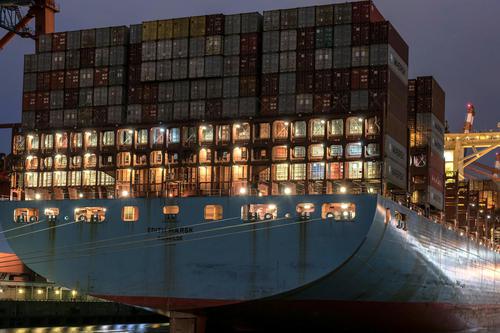
Consider the Red Sea, a critical artery connecting Europe and Asia via the Suez Canal. Ongoing instability in the Middle East and East Africa has made this route increasingly perilous, prompting major carriers like Maersk and Hapag-Lloyd to reroute vessels around the Cape of Good Hope despite the significant added time and cost. While there have been cautious attempts by some carriers to resume transits under naval escort, the security situation remains volatile, underscoring the persistent nature of the threat. This rerouting alone adds thousands of miles and weeks to voyages, effectively tightening vessel supply and increasing demand for available capacity.
Beyond the Red Sea, the Panama Canal faces dual threats from geopolitical instability and climate-related challenges, such as drought-induced water shortages. These factors disrupt canal operations, forcing freight forwarders to consider alternative ports or overland routes, further stressing an already strained global network. Similarly, the Black Sea remains a flashpoint, with ongoing conflicts rendering traditional routes inaccessible or highly unreliable due to sanctions and naval blockades. These overlapping disruptions mean that 2026 is shaping up to be one of the most volatile years in recent memory for global supply chains, creating an environment where agility and real-time intelligence are paramount for survival.
How Are Key Chokepoints Amplifying Shipping Inefficiencies?
The strategic importance of maritime chokepoints cannot be overstated; they are narrow sea passages that control trade routes and influence military movements, acting as critical arteries for global commerce. When these chokepoints become unstable, the ripple effects are profound, creating systemic inefficiencies that translate directly into higher shipping rates and longer transit times. The current geopolitical landscape has seen several of these vital passages turn into flashpoints, fundamentally altering the calculus for global freight.
The Strait of Hormuz, for instance, is a prime example of a chokepoint with immense global implications. Linking the Persian Gulf with the Indian Ocean, it serves as the only direct outlet to open seas for a region that accounts for roughly 31% of global seaborne crude flows. The temporary closure of the Strait of Hormuz by Iran during a military drill on February 17, 2026, immediately thrust this vital shipping route back into the global spotlight. Any prolonged disruption here would have catastrophic consequences for oil and gas shipments, forcing massive rerouting and driving up energy prices globally. Such a scenario would disproportionately benefit crude and product tanker operators, as longer voyages and increased demand for vessels would become the norm.
The Red Sea and Suez Canal situation, as previously noted, continues to be a major wildcard. While some carriers are cautiously testing a partial return, the security situation remains precarious, with high insurance costs still deterring many. This ongoing uncertainty means that the longer route around the Cape of Good Hope remains a de facto standard for a significant portion of East-West trade. This effectively removes vessel capacity from the market by increasing voyage times, a dynamic that supports higher freight rates across various shipping segments. The confluence of these chokepoint disruptions means that the global shipping complex is inherently less efficient, a condition that, paradoxically, shipping investors often crave.
Which Shipping Segments Stand to Benefit (and Which Face Headwinds)?
In an environment defined by geopolitical friction and operational inefficiency, not all shipping segments are created equal. The current dynamics suggest a clear differentiation in potential investment appeal, with certain types of carriers poised to capitalize on the extended trade routes and heightened demand for vessel capacity, while others grapple with structural challenges. Understanding these nuances is crucial for investors looking to navigate the choppy waters of the maritime sector.
Crude and product tankers appear to be the primary beneficiaries of the current geopolitical climate. The ongoing Russia-Ukraine war has already reshaped energy trade flows, with Russian exports increasingly moving to Asia rather than Europe, necessitating longer voyages. This "shadow fleet" serving Russian exports, often Russian-flagged, further complicates the market. Analysts like Jefferies' Omar Nokta noted that tanker spot rates remain "very strong," near 2025 highs, even as tanker equities faced some pressure from perceived peace talks. Clarksons Securities analyst Frode Mørkedal echoed this, stating that "normalisation in trade flows or a lifting of sanctions" is not a near-term event. The potential closure of the Strait of Hormuz would amplify this effect dramatically, creating immense demand for crude and product tankers as vessels are forced to undertake significantly longer journeys.
Dry bulk carriers also stand to benefit, albeit perhaps less directly than tankers. Disruptions in major trade lanes can lead to shifts in sourcing and longer hauls for commodities like iron ore, coal, and grains. For example, if traditional supply routes are compromised, new, less efficient routes may emerge, requiring more vessel days to transport the same volume of cargo. This increased tonne-mile demand is a tailwind for dry bulk operators. However, the container shipping segment faces a more complex picture. While Red Sea rerouting initially provided a boost by soaking up excess capacity, the global ocean freight market is still characterized by structural overcapacity. Maersk's Q4 2025 operating loss of $153 million in its Ocean division, its first since 2016, highlights the underlying pressure. Even with disruptions, a prolonged market share war among carriers is a realistic scenario, potentially limiting sustained rate upside for container lines.
What Are the Broader Investment Implications and Risks?
The confluence of geopolitical risks and operational disruptions presents a complex landscape for shipping investors, demanding a nuanced approach that balances potential upside with significant downside risks. While the immediate impulse might be to chase the "geopolitical premium" in freight rates, a deeper dive reveals several factors that could either sustain or unwind these gains. The market is currently caught between weakening fundamentals and the buoyancy of geopolitical friction, as Ioannis Papadimitriou, lead freight analyst at Vortexa, highlighted at the Baltic Exchange Tanker & Gas Market Insights Forum.
One significant risk is the potential for an unwinding of geopolitical rate upside. Shipping investors often fear that a return to more efficient trade routing could send shipping stocks lower. Scenarios such as a Red Sea reopening due to an Israel-Hamas ceasefire, or an end to the Russia-Ukraine war, could reduce voyage distances for containerships and product tankers, respectively. Similarly, an abatement of US tariff disruptions, especially after the US Supreme Court's February 20, 2026, ruling against the White House's aggressive use of emergency powers to levy tariffs, could be a short-term positive for liner demand but reduce "inefficiency upside." This sentiment has already seen product tanker stocks like Scorpio Tankers, Torm, and Hafnia slide by 13%, 10%, and 7% respectively since November 10.
However, the "good news is bad news for shipping" effect is often tempered by the reality that geopolitical shifts are rarely resolved quickly or cleanly. Even if some chokepoints partially reopen, the underlying tensions and the need for robust logistics risk management will likely keep insurance costs elevated and prompt continued diversification of routes. Furthermore, the energy transition introduces its own set of geopolitical complexities, with new fuels and technologies reshaping trade routes around "renewable-rich" regions and new bunkering hubs. This could create new chokepoints and vulnerabilities, ensuring that instability remains a constant factor in maritime trade. Investors must also consider regulatory risks, such as the FMC’s "flag state competition" investigation, which could introduce new US rules and "significant turmoil" in the second half of 2026, potentially impacting operating conditions and vessel redeployment.
Navigating the Volatility: A Forward-Looking Strategy
In this era of persistent geopolitical disruption, a forward-looking investment strategy in shipping must prioritize resilience, adaptability, and a deep understanding of specific segment dynamics. The days of relying on stable, predictable trade corridors are over; uncertainty is the new norm, and successful investors will be those who can anticipate and react to rapid shifts in global trade flows. This means moving beyond traditional supply-and-demand metrics to integrate geopolitical insights into investment frameworks.
For investors, this translates into a focus on companies with strong balance sheets that can weather prolonged periods of volatility and invest in fleet modernization or alternative fuel capabilities. Carriers that operate in segments less exposed to immediate overcapacity, such as crude and product tankers, or specialized dry bulk segments, may offer more compelling opportunities. The ability to pivot quickly to alternative routes, invest in real-time intelligence, and manage increased insurance and security costs will be critical differentiators for shipping companies.
Furthermore, the long-term implications of the energy transition cannot be ignored. While it introduces new risks and dependencies, it also creates opportunities for companies positioned to transport new fuels like methanol and hydrogen, or those involved in the supply chains for critical minerals. This will reshape trade hubs and create new strategic assets vulnerable to contestation. Therefore, a diversified approach within the shipping sector, favoring companies with robust risk management and a clear strategy for navigating both immediate geopolitical shocks and the evolving energy landscape, will be essential for sustained success.
The current market environment is not merely a temporary blip; it represents a fundamental shift in the operating paradigm for global shipping. Investors should "buckle up" for what promises to be a wild ride over the next five years, as the intersection of merchant traffic and global maritime security concerns continues to escalate. The companies that demonstrate agility, strategic foresight, and a deep understanding of these complex interdependencies will ultimately be best positioned to thrive.
Want deeper research on any stock? Try Kavout Pro for AI-powered analysis, smart signals, and more. Already a member? Add credits to run more research.
Related Articles
Category
You may also like


ETF Edge on positioning in international markets amid the war in the Middle East

Why ZIM Integrated Shipping Services Stock Surged Today

Nvidia's China question is back and the clock is ticking
Breaking News
View All →Featured Articles
Top Headlines

Prediction: Nvidia (NVDA) Will Be Worth More Than Alphabet, Apple, Amazon, Tesla, Meta, and Microsoft Combined by 2030

Meta Creates New AI Unit to Accelerate Model Development

Nvidia Expands Telecom Push With AI-Native 6G Initiative

Nvidia, Amazon temporarily close Dubai offices, Google employees stranded amid U.S.-Iran war