MarketLens

Log in

Why Did Amazon's Stock Dip After Its Drone Unit Split from an Alliance

2 hours ago
SHARE THIS ON:

Why Did Amazon's Stock Dip After Its Drone Unit Split from an Alliance

Key Takeaways

  • Amazon's recent withdrawal from the Commercial Drone Alliance signals a strategic move to shape drone delivery regulations, prioritizing safety standards that could create a competitive moat.
  • While Prime Air faces operational hurdles and higher unit economics, CEO Andy Jassy remains bullish, projecting 500 million annual drone deliveries by 2030, integrating them into Amazon's broader logistics and AI flywheel.
  • Despite short-term volatility from drone-related news and geopolitical risks impacting AWS, Amazon's core business remains robust, with strong analyst consensus and significant long-term growth drivers in AI, cloud, and specialized delivery.

Why Did Amazon's Stock Dip After Its Drone Unit Split from an Alliance?

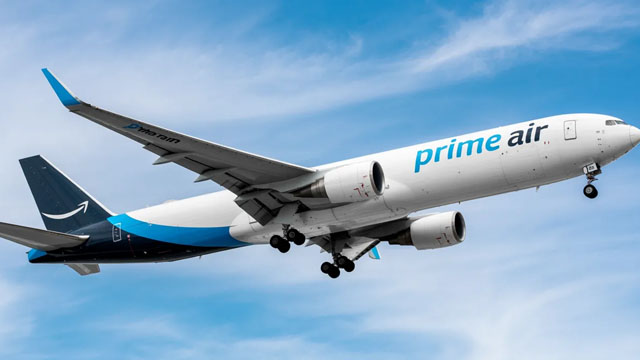
Amazon.com, Inc. (AMZN) shares edged lower today, trading at $209.53, down 1.47% against a previous close of $212.65. This dip comes on the heels of news that Amazon's drone delivery unit, Prime Air, is withdrawing from the Commercial Drone Alliance, citing "incompatible" safety concerns. While a single piece of news rarely dictates a company of Amazon's $2.25 trillion market capitalization, this development highlights the complex interplay between innovation, regulation, and investor sentiment in the high-stakes world of last-mile delivery.

The market's immediate reaction reflects a cautious stance, as any perceived friction in Amazon's ambitious drone delivery program can raise questions about its long-term growth trajectory. Prime Air isn't just a futuristic gimmick; it's a critical component of Amazon's strategy to enhance delivery speed, reduce costs, and deepen customer loyalty. The company's vision for drone delivery is deeply intertwined with its broader "Everything Infrastructure" narrative, where every business unit reinforces the others.

This isn't the first time Amazon's drone ambitions have faced headwinds. From initial skepticism to operational pauses and regulatory challenges, the path to scalable drone delivery has been anything but smooth. However, Amazon's consistent, long-term investment in Prime Air underscores its strategic importance, positioning it as a potential cornerstone for future logistics and specialized delivery services, particularly in high-value segments like prescription medication.

Investors are now weighing whether this withdrawal is a setback or a calculated maneuver to accelerate Amazon's unique vision for drone operations. The company's history suggests a willingness to play the long game, even if it means diverging from industry consensus to establish its own standards. This move could be seen as Amazon doubling down on its commitment to safety, aiming to build public trust and regulatory confidence on its own terms.

Is Amazon Prioritizing Safety or Seeking a Competitive Edge in Drone Regulations?

Amazon Prime Air's decision to exit the Commercial Drone Alliance stems from a fundamental disagreement over safety standards, with the company stating the alliance's positions were "incompatible with Prime Air’s core safety tenets." This isn't merely a philosophical debate; it's a strategic move to shape the regulatory landscape in a way that could ultimately benefit Amazon. The company has consistently advocated for stringent requirements across the industry, pushing for what it calls "bar-raising safety priorities."

Specifically, Amazon is championing electronic visibility for all low-altitude aircraft, ensuring drones can detect and be detected by other air traffic. They also demand advanced detect-and-avoid (DAA) capabilities for drone systems, going beyond basic location broadcasting. Prime Air's own operational data supports this stance, with over 70,000 drone flights successfully performing collision avoidance maneuvers on two potential mid-air incidents, preventing catastrophic outcomes. Amazon believes all package delivery drones, regardless of operator size, should meet these same high FAA standards for oversight and accountability, rejecting a "lighter" framework for some operations.

This rigorous approach positions Prime Air as an "aerospace program rooted in rigorous aerospace principles and standards," rather than just another delivery service. By advocating for higher, unified safety standards, Amazon is not only enhancing public trust but potentially creating a significant barrier to entry for smaller competitors who may struggle to meet such demanding technical and operational requirements. This could effectively carve out a competitive moat, allowing Amazon to dominate the drone delivery space as regulations mature.

The company's public comments to the FAA on Beyond Visual Line of Sight (BVLOS) operations underscore this strategy. While supporting a two-track framework for many BVLOS uses, Amazon insists package delivery must fall under the more rigorous "certificated" category. This unwavering commitment to safety, even at the cost of industry alignment, suggests Amazon is playing a long game to establish itself as the undisputed leader in secure and scalable drone logistics.

What Are the Real-World Hurdles for Amazon's Drone Delivery Ambitions?

Beyond regulatory disagreements, Amazon's drone delivery ambitions face significant commercial and operational realities that temper the initial hype. The recent decision to halt commercial drone delivery plans in Italy, despite positive engagement with aviation regulators, highlights that "economic and commercial realities carry equal weight" alongside regulatory approval. Amazon determined that Italy's broader business and regulatory framework simply didn't support its long-term goals for the program at this time, reinforcing that aviation approval alone doesn't guarantee commercial deployment.

In the U.S., Amazon is also recalibrating its strategy. The company is exiting College Station, Texas, one of its original pilot locations, to integrate drone deliveries into its existing fulfillment network rather than operating standalone facilities. New Prime Air locations, such as the same-day delivery site in Tolleson, Arizona, and planned expansions into Richardson, San Antonio, Waco, Detroit, and Kansas City, reflect this shift towards a more integrated and scalable model. This move acknowledges that drone delivery is not a universal solution but a complementary tool within a complex logistics system.

Practical limitations remain substantial. The current 5-pound payload limit restricts eligible products, making drone delivery best suited for lightweight, time-sensitive items like pharmaceuticals or small electronics. Geographic fit is also crucial, with suburban and semi-rural areas offering clearer drop zones and less airspace congestion than dense urban environments. Furthermore, the unit economics are still challenging; Amazon projected $63 per drone delivery in 2025, which is significantly more costly than most ground-based alternatives for the majority of scenarios.

These factors suggest that drone delivery will likely serve specialized use cases, such as remote locations, medical transport, or situations where speed is paramount, rather than replacing traditional delivery methods wholesale. Amazon's pause in Italy and strategic shifts in the U.S. offer a more realistic view of how the drone delivery sector will evolve, emphasizing that economic feasibility, regional logistics patterns, and local demand are just as critical as technological readiness and regulatory clearance.

How Does Prime Air Fit into Amazon's "Everything Infrastructure" Vision?

Despite the operational hurdles and regulatory friction, Amazon CEO Andy Jassy remains remarkably bullish on Prime Air, forecasting roughly 500 million annual drone deliveries by the end of the decade. This ambitious target underscores that drone delivery is not a peripheral project but a central component of Amazon's "Everything Infrastructure" vision, designed to reinforce its core businesses and expand its market dominance. Prime Air is a vivid example of Amazon's self-reinforcing "flywheel" in action, where each business unit fuels the others.

Drones accelerate this flywheel by generating proprietary real-time data from deliveries, which Amazon Web Services (AWS) machine-learning models then use to optimize routing, inventory placement, and personalized recommendations. This data-AI loop tightens with each successful flight, funding further expansion and enhancing efficiency across Amazon's vast logistics network. The integration of drone deliveries into existing fulfillment centers, as seen in Tolleson, Arizona, exemplifies this synergistic approach, leveraging existing infrastructure to scale new capabilities.

A key area where Prime Air is poised for explosive near-term growth is Amazon Pharmacy. Currently generating an estimated $2 billion in annual revenue, Amazon Pharmacy stands to capture a significantly larger share of the $600+ billion U.S. pharmacy market through same-day and sub-hour drone delivery. The high-trust and recurring nature of prescription delivery drives Prime stickiness and customer lock-in, making it an ideal use case for drone technology. This strategic focus on high-value, time-sensitive items maximizes the impact of drone capabilities.

Furthermore, Prime Air is part of Amazon's broader innovation strategy, which centers on Artificial Intelligence, Space, and Robotics. The company is projected to spend an unprecedented $200 billion in 2026, primarily on AI infrastructure (GPU clusters, custom chips) and the build-out of its Project Kuiper satellite constellation. This massive capital expenditure highlights Amazon's commitment to foundational technologies, with drone delivery acting as a tangible, customer-facing application that leverages and validates these underlying infrastructure investments.

What's the Investment Outlook for Amazon Amidst These Developments?

Amazon's stock, currently trading at $209.53, reflects a company in transition, balancing its retail dominance and cloud leadership with massive capital-intensive bets on AI, satellite connectivity, and advanced logistics like drone delivery. The market is digesting the implications of its projected $200 billion AI infrastructure spend for 2026, which has contributed to a 7.6% year-to-date decline as of March 10, 2026. Despite this, the long-term outlook remains robust, with a strong analyst consensus of "Buy" from 84 analysts and a median price target of $300.00, suggesting significant upside from current levels.

From a valuation perspective, Amazon trades at a P/E of 28.89, a P/S of 3.14, and an EV/EBITDA of 14.00. While these metrics might appear stretched compared to some mature industries, they are reasonable for a growth-oriented tech giant with Amazon's scale and innovation pipeline. The company's TTM net margin of 10.8% and operating margin of 11.2% demonstrate solid profitability, further bolstered by the "regionalization" of its fulfillment network, which has lowered cost-to-serve by nearly 15% since 2023.

However, investors must acknowledge the risks. Recent drone strikes on AWS facilities in the UAE and Bahrain highlight geopolitical vulnerabilities, potentially leading to higher insurance costs and supply chain disruptions. While Amazon's global diversification typically buffers regional shocks, these incidents underscore the importance of operational resilience. Additionally, regulatory uncertainties, such as the looming landmark antitrust trial, could introduce volatility and compliance costs.

On the upside, Amazon's diversification through AWS, which contributed over $90 billion in net sales in 2023, provides a strong buffer against retail or logistics-related risks. The company's ongoing expansion into digital advertising and healthcare, projected to be multi-billion-dollar segments, offers new market opportunities. With a consensus revenue estimate of $1.11 trillion for FY 2029 and EPS of $14.20, Amazon's growth story remains compelling for those with a high tolerance for capital-intensive expansion and regulatory dynamics.

Is Amazon a Buy, Hold, or Sell for Long-Term Investors?

For long-term investors, Amazon remains a foundational asset for a growth-oriented portfolio, despite the recent stock dip and the strategic recalibration of its drone program. The company's core strengths in e-commerce, cloud computing (AWS), and its relentless pursuit of innovation continue to drive its "Everything Infrastructure" vision. The current price of $209.53 offers a compelling entry point for investors looking to capitalize on Amazon's future growth drivers, particularly as the market digests its significant AI and satellite investments.

While the complexities of drone delivery and geopolitical risks are real, Amazon has a proven track record of navigating challenges and emerging stronger. The company's proactive stance on drone safety, its strategic integration of Prime Air into its broader logistics network, and its ambitious forecasts for drone deliveries by 2030 all point to a calculated long-term play. These initiatives, coupled with the robust growth of AWS and new ventures in AI and Project Kuiper, position Amazon for sustained expansion.

The strong analyst consensus of "Buy" and a median price target of $300.00 further underscore confidence in Amazon's ability to execute its strategy and deliver shareholder value. Investors should watch the acceleration of Project Kuiper satellite launches and the preliminary rulings in the FTC antitrust case as key catalysts. Amazon's ability to convert its massive capital expenditures into profitable growth will be the ultimate determinant of its success in the coming years.


Amazon's strategic pivot in drone delivery, while causing some short-term market jitters, is a calculated move to solidify its long-term competitive advantage. For investors with a long-term horizon, the current valuation offers an attractive entry into a company that continues to redefine global commerce and technology. The "Everything Infrastructure" era has begun, and Amazon is building it piece by piece.


Want deeper research on any stock? Try Kavout Pro for AI-powered analysis, smart signals, and more. Already a member? Add credits to run more research.

SHARE THIS ON:

Related Articles

Category

You may also like

Stock News5 hours ago

Amazon unit withdraws from drone trade group, raises safety concerns

Amazon's Prime Air unit withdrew from the Commercial Drone Alliance due to safety concerns incompatible with the group's stances. This action signals internal friction regarding industry safety standa...
Stock News1 day ago

Why Is AeroVironment Stock Tanking Wednesday?

AeroVironment (AVAV) stock fell Wednesday following an earnings miss and a reduced 2026 forecast, prompting technical analysis review.
Stock News1 week ago

Why Did Alphabet Stock Drop Today?

Alphabet stock dropped following a report that Apple will lease data centers from Google for Siri services. This follows Apple's existing partnership with Google to address issues with its Apple Intel...
Stock News3 weeks ago

Amazon Stock Is Slumping. But The Tech Giant Just Dethroned Walmart For This Milestone.

Amazon stock extended its slump after the tech giant officially overtook Walmart for the top spot based on company revenue.

Breaking News

View All →

Top Headlines

View More →
Stock News54 minutes ago

Marathon Petroleum (MPC) Ascends While Market Falls: Some Facts to Note

Stock News54 minutes ago

Tesla (TSLA) Suffers a Larger Drop Than the General Market: Key Insights

Stock News54 minutes ago

Here's Why Meta Platforms (META) Fell More Than Broader Market

Stock News1 hour ago

The S&P 500 just broke a major support. Another 10% decline is likely.

Stock News1 hour ago

The Best Stocks to Invest $1,000 in Right Now