MarketLens
Why Did Kraft Heinz Hit the Brakes on its Big Split

Key Takeaways
- Kraft Heinz (KHC) has paused its planned split into two companies, opting instead for a $600 million reinvestment in its core brands to address persistent sales and volume declines.
- This strategic pivot, led by new CEO Steve Cahillane, aims to revive growth in a challenging consumer staples market marked by shifting tastes, private label competition, and the emerging impact of GLP-1 drugs.
- While the 6.5% dividend yield offers income appeal, investors face a "reset year" with projected 2026 EPS of $1.98-$2.10, significantly below prior estimates, signaling a long road to recovery.
Why Did Kraft Heinz Hit the Brakes on its Big Split?
Kraft Heinz (NASDAQ: KHC) recently announced a significant strategic pivot, pausing its highly anticipated plan to split into two independent companies. This reversal marks a clear shift from a multi-year strategy focused on unlocking value through separation to an intensive effort to revitalize the core business. The decision comes as KHC shares trade at $24.80, reflecting a challenging period for the consumer staples giant, with the stock down 14.2% over the past year.
The original plan, first announced in September, aimed to separate the company into a North American grocery staples unit and a global "taste elevation" business focused on sauces, spreads, and seasonings. Management believed this would allow each entity to pursue distinct growth strategies, with the North American unit targeting underdeveloped channels like convenience stores, and the global business focusing on international expansion and innovation. This mirrored moves by peers like Kellogg, which split into Kellanova and WK Kellogg in 2023, and Keurig Dr Pepper.
However, new CEO Steve Cahillane, just weeks into his role, has unequivocally stated that the company is "not yet healthy enough to stand alone as two separate entities." His number one priority is returning the business to profitable growth, which he believes requires a unified focus and substantial internal investment. This led to the decision to pause the separation work and redirect $600 million towards marketing, sales, and research & development in 2026, primarily targeting the struggling U.S. business.
This strategic U-turn is a direct response to a meaningful decline in sales, profits, and market share experienced throughout 2025, with North America showing particular weakness. The company’s full-year 2025 net sales fell 3.5%, and adjusted operating income dropped 11.5%. The pause effectively puts the original 2026 separation timeline on hold, transforming the narrative from one of asset separation to an urgent operational revival.
What Challenges Forced This Strategic U-Turn?
The decision to halt the split is a stark admission of the deep-seated challenges facing Kraft Heinz, stemming from a confluence of shifting consumer preferences and intense market pressures. For years, the company has grappled with declining demand for its traditional processed food portfolio, including iconic brands like boxed macaroni and cheese, mayonnaise, and Capri Sun. Consumers are increasingly gravitating towards fresh, less processed, and healthier alternatives, leaving legacy brands struggling for relevance.
This trend is clearly reflected in KHC's recent financial performance. The company reported a significant $9.3 billion non-cash impairment charge in late 2025 tied to its declining valuation, underscoring the erosion of brand equity. Trailing twelve months (TTM) financials reveal a net income decline of -313.0% and an EPS drop of -318.1%, painting a grim picture of profitability. Organic net sales fell 4.2% in the fourth quarter of 2025, a worse decline than analysts had anticipated, with North America organic volume down a substantial 5.4%.
Adding to the complexity, the consumer staples sector has hit a "price ceiling" after years of inflation-driven price hikes. Shoppers are now actively "trading down" to more affordable private label brands, forcing KHC to increase promotional spending just to maintain market share. This intensifies margin pressure, even as commodity costs for ingredients like sugar and tomato paste remain volatile. The rise of GLP-1 weight-loss drugs also presents a subtle but significant long-term headwind, subtly shifting demand towards high-protein, low-calorie options, a category where many of KHC's core offerings are not positioned.
The company's 2026 guidance further confirms the difficult road ahead, projecting adjusted EPS of $1.98-$2.10, well below the prior analyst consensus of $2.49. Organic net sales are forecast to decline between 1.5% and 3.5% for the full year, indicating continued contraction. These figures highlight the immense task facing CEO Cahillane: reversing systemic weaknesses across multiple categories, from cold cuts and coffee to frozen meals and condiments, in an environment where the "easy" value-unlock of a split is no longer an option.
Can the $600 Million Investment Spark a Turnaround?
The $600 million reinvestment in marketing, sales, and R&D is the cornerstone of Kraft Heinz's new "restoration" strategy, a direct bet on the power of brand building to reverse years of underinvestment. This capital injection is intended to breathe new life into struggling brands and drive profitable growth, particularly in the critical U.S. market. CEO Steve Cahillane has emphasized that many of the company's challenges are "fixable and within our control," suggesting a belief that these iconic brands still possess significant untapped potential.
The investment aims to address the persistent volume erosion by enhancing product innovation, increasing promotional activities, and strengthening consumer engagement. For instance, the company is already exploring initiatives like "Super Mac" and "Lunchables Grains" to adapt to evolving dietary trends, including the subtle shift towards high-protein, low-calorie options influenced by GLP-1 drugs. Furthermore, efforts like the Heinz Dipper, a new fry box designed for on-the-go dipping, demonstrate a focus on practical innovation to improve consumer experience and expand "Away From Home" consumption.
However, the success of this substantial outlay is far from guaranteed. Analysts remain cautious, with Jefferies analyst Scott Marks noting "questions remain around the true growth and margin potential for both new companies" given long-term softness in demand for processed food. The market's initial reaction to the strategic pause and disappointing 2026 guidance saw KHC shares tumble, reflecting skepticism about the company's ability to execute a turnaround amidst such formidable headwinds.
The effectiveness of this investment will be measured by tangible improvements in organic sales growth and volume trends. The company's own 2026 guidance projects a decline of 1.5% to 3.5% in organic net sales, meaning the first quarter results will be crucial in demonstrating a meaningful deceleration in this decline, ideally moving towards flat or positive growth. This is a high-stakes gamble: the $600 million must demonstrably reverse the recent 4.2% decline in fourth-quarter organic sales to justify delaying the shareholder value unlock that a split might have offered.
What Does This Mean for KHC's Valuation and Dividend?
Kraft Heinz's current valuation metrics reflect a company in transition, grappling with significant operational challenges. The stock trades at $24.80, with a market capitalization of $29.36 billion. While its price-to-sales (P/S) ratio of 1.18 and price-to-free cash flow (P/FCF) of 8.09 might appear attractive compared to some peers, the negative P/E ratio of -5.04 and EV/EBITDA of -13.05 underscore the severe impact of recent impairment charges and profitability struggles.
The company's dividend, however, remains a key attraction for income-focused investors. KHC currently offers a robust dividend yield of 6.5%, paying $0.40 per share quarterly. This yield positions KHC as a "bond-like substitute" for many retail investors, especially those seeking consistent income in a volatile market. Despite the negative net income, the company's free cash flow generation remains a relative strength, with a TTM free cash flow of $3.06 per share and a free cash flow yield of 12.4%. This cash generation provides some support for the dividend, even with a negative payout ratio due to the large net income loss.
Wall Street analysts currently hold a "Hold" consensus on KHC, with 21 out of 34 analysts recommending a hold, 4 a buy, and 9 a sell. The consensus price target stands at $25.11, with a median of $25.00, suggesting minimal upside from the current price. Notably, JP Morgan recently downgraded KHC from Neutral to Underweight on 2026-02-12, reflecting ongoing concerns. This cautious sentiment is further exacerbated by the "Buffett Exit" — Berkshire Hathaway has been gradually unwinding its significant stake in KHC, creating a persistent "overhang" on the stock price.
For value investors, the question revolves around the margin of safety. While a discounted cash flow (DCF) analysis by some models suggests KHC could be significantly undervalued, this intrinsic value is highly conditional on the success of the new turnaround plan. The $600 million investment must visibly reverse organic sales declines and improve profitability to justify the asset base. If the plan falters, the stock could test lower, and the dividend, while currently attractive, would become increasingly vulnerable.
What Are the Key Risks and Opportunities Ahead?
The path forward for Kraft Heinz is fraught with both significant risks and potential opportunities, making it a complex proposition for investors. On the risk side, the primary concern is the potential failure of the $600 million reinvestment to reverse the persistent volume erosion. If consumers continue to "trade down" to private labels or shift away from processed foods, KHC could face further impairments and a prolonged period of underperformance. The projected 2026 organic net sales decline of 1.5% to 3.5% underscores the uphill battle.
Regulatory and geopolitical factors also pose headwinds. New HFSS (High Fat, Salt, Sugar) labeling laws in the UK and parts of Europe have already forced KHC to reformulate 15% of its international portfolio, incurring costs and potential sales disruption. Supply chain tensions, particularly in the Middle East, have increased freight costs for the international segment, impacting 2026 margin guidance. Furthermore, the "Buffett Exit" from Berkshire Hathaway continues to cast a shadow, creating a supply of shares that could depress the stock price.
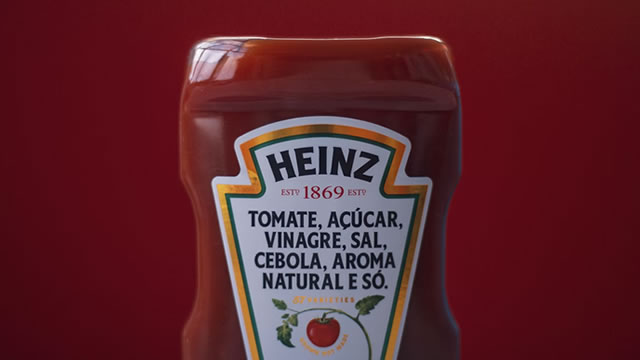
However, opportunities do exist. Emerging markets, particularly Brazil and China, remain under-penetrated for flagship brands like Heinz Ketchup, with international sales growing at double the rate of domestic sales in 2025. This geographic diversification offers a potential avenue for growth if the company can effectively tailor its products and marketing. The company's improved leverage ratio of 0.46 (debt-to-equity) also positions it for potential strategic M&A, allowing it to acquire smaller, "high-growth" wellness brands that align with evolving consumer preferences.
A successful turnaround could also lead to a significant valuation re-rating. If KHC can demonstrate two consecutive quarters of organic volume growth, its forward P/E ratio, currently around 7.2x, could re-rate towards the sector average of 12x-14x. This would represent substantial upside from the current price. The company's focus on AI-enabled supply chains and high-protein innovation, such as "Super Mac" and "Lunchables Grains," also points to efforts to modernize its portfolio and operating model.
The Road Ahead for Kraft Heinz Investors
Kraft Heinz is undeniably at a crossroads, having traded the immediate prospect of a corporate split for a concentrated, internal "restoration" effort. This strategic pivot, backed by a $600 million investment, signals a high-stakes gamble on the enduring power of its legacy brands in a rapidly changing consumer landscape. The next few quarters will be critical in determining whether CEO Steve Cahillane's confidence is justified and if the company can indeed reverse its declining sales and volume trends.
For investors, KHC remains a compelling income play with its 6.5% dividend yield, but it's now paired with a significant turnaround story that demands patience and close monitoring. The market will be scrutinizing organic sales growth and volume trends, particularly in the upcoming Q1 2026 earnings report, for any signs that the investment is beginning to yield results. Until then, the stock's performance will likely remain volatile, reflecting the tension between a bold new plan and a sobering reality check.
The "easy" value-unlock of a split is gone, replaced by the hard work of brand building and operational execution. KHC is a massive, cash-generative entity, but its path to sustainable growth is now a marathon, not a sprint, and investors must weigh the attractive yield against the considerable execution risk.
Want deeper research on any stock? Try Kavout Pro for AI-powered analysis, smart signals, and more. Already a member? Add credits to run more research.
Related Articles
Why Wall Street Is Betting Big on $5,000 Gold
Category
You may also like
No related articles available
Breaking News
View All →No topics available at the moment