Key Takeaways
- Seven & i Holdings (SVNDY) is strategically closing 645 North American 7-Eleven stores in fiscal 2026, marking a deliberate shift from volume-driven expansion to profitability and operational efficiency.
- This aggressive portfolio optimization, including a pivot to larger, food-focused formats, is crucial preparation for the delayed North American IPO, now slated for at least 2027.
- While short-term revenue forecasts are soft, the long-term vision aims for enhanced unit economics, a 10% ROIC target by 2027, and sustained shareholder returns through buybacks and dividends.
Why is 7-Eleven Closing Hundreds of North American Stores?
Seven & i Holdings (SVNDY), the Japanese parent company of 7-Eleven, is undertaking a significant strategic overhaul, planning to shutter 645 convenience stores across North America in fiscal 2026. This isn't a sign of distress, but rather a calculated move to optimize its portfolio and enhance profitability ahead of a planned initial public offering for its North American business. The company will open only 205 new locations in the same period, resulting in a net reduction of 440 units and marking the fifth consecutive year of net store closures.
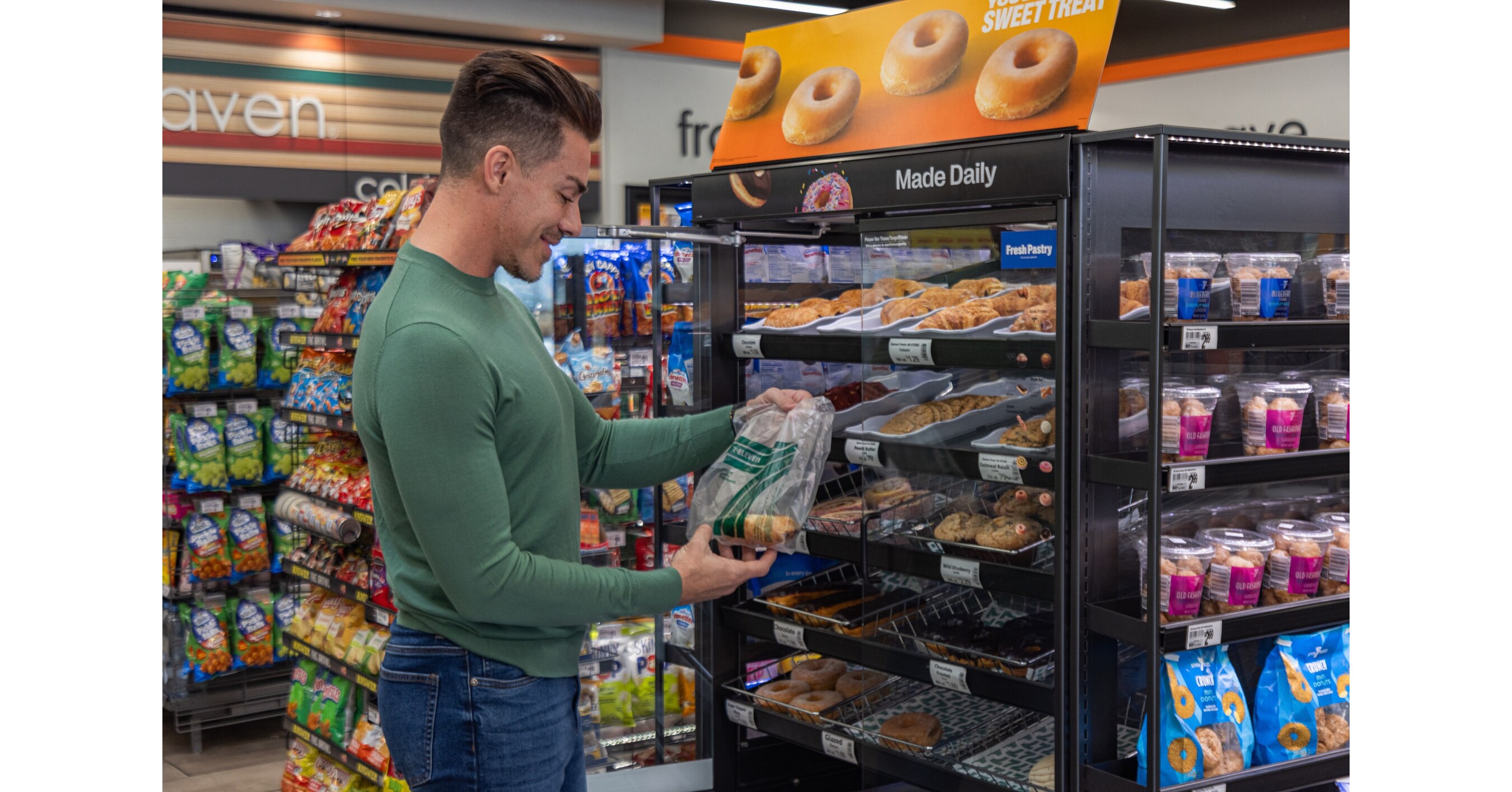
This aggressive rationalization underscores a fundamental shift in strategy: moving away from sheer volume toward the quality and profitability of each location. Historically, convenience store growth was often measured by footprint expansion. However, Seven & i is now prioritizing unit economics, focusing on larger, more modern formats that emphasize fresh food and digital integration. This transformation is designed to streamline operations and improve the financial performance of its North American segment.
The closures are part of a broader "portfolio optimization" strategy, which includes converting some underperforming sites into wholesale fuel models. This allows 7-Eleven to retain valuable real estate assets while reducing overhead costs associated with full-service retail operations. It’s a clear signal that the company is adapting to evolving consumer preferences and a more competitive retail landscape, where traditional profit drivers like tobacco and basic impulse buys are giving way to higher-margin prepared foods and enhanced in-store experiences.
This strategic pivot is not a sudden reaction but the culmination of a trend building over the past half-decade. Seven & i has been reporting net closures since fiscal 2024, with the current plan being the most aggressive yet. It reflects a proactive approach to restructuring its U.S. arm, ensuring it presents a robust and attractive business model to potential investors when it eventually goes public. The goal is to solidify the balance sheet and operational efficiency, setting the stage for sustainable long-term growth.
How Does This Strategy Prepare 7-Eleven for its Delayed IPO?
The decision to close hundreds of stores is inextricably linked to the postponement of the North American IPO, which was originally targeted for late 2026 but has now been pushed to at least 2027. This delay, announced alongside the store closure plan, suggests that Seven & i Holdings intends to further refine its business model and demonstrate improved unit economics before seeking public capital. By executing these closures and conversions now, the parent company aims to present a more mature and profitable unit to potential investors once the listing finally occurs.
This pre-IPO "glow-up" involves more than just trimming underperforming assets. Seven & i is also implementing productivity improvements and bringing maintenance tasks in-house to reduce expenses, all in preparation for the eventual public listing. The goal is to solidify the balance sheet and operational efficiency, making the North American business a more compelling investment story. This strategic restructuring was, in part, accelerated by the unsolicited $47 billion takeover bid from Alimentation Couche-Tard in late 2024, which highlighted concerns about Seven & i's conglomerate structure and the underperformance of its North American operations.
The delay allows management to address critical issues, including a recovery in U.S. performance, which CEO Stephen Hayes Dacus has cited as a prerequisite for the IPO. Elevated pump prices and persistent inflation have reduced driving frequency and discretionary spending, impacting both fuel sales and in-store traffic. By focusing on higher-margin food offerings and improving the overall customer experience, 7-Eleven aims to mitigate its reliance on volatile fuel margins and create a more resilient business model.
Ultimately, the delayed IPO provides a crucial window for Seven & i to demonstrate tangible improvements in profitability and operational efficiency. Bloomberg Intelligence analyst Lea El-Hage noted that the delay highlights how "the North American turnaround remains incomplete, with a customer recovery still lacking." This strategic pause is an opportunity to complete the transformation, ensuring that when the North American unit does go public, it commands a stronger valuation based on a clear, high-margin growth trajectory rather than just a vast store count.
Seven & i Holdings (SVNDY) is navigating a complex financial landscape, with its strategic transformation aimed at improving long-term profitability despite some near-term headwinds. For the fiscal year ending February 2027, management projects operating profit to be ¥405 billion (approximately $2.5 billion), which falls below analyst expectations of ¥423 billion. Similarly, total sales are forecast to shrink slightly to ¥9.45 trillion, just missing market expectations of ¥10 trillion. This softer outlook reflects ongoing challenges in North America, particularly weaker customer traffic and fuel sales due to inflation and high oil prices.
Despite these projections, the underlying financial strategy is focused on enhancing shareholder value. Seven & i has targeted a minimum Return on Invested Capital (ROIC) of 10% by 2027, a significant improvement from its TTM ROIC of 3.6%. The company has also committed to a ¥100 billion share buyback program and increased its dividend payout ratio to 35%, demonstrating a commitment to returning capital to shareholders. These measures are designed to bolster distributions and, in part, deter future takeover threats, as seen with the 2024 Couche-Tard bid.
The integration of the $21 billion Speedway acquisition is a critical component of this financial strategy, with estimated synergies of $800 million underpinning the North American EBITDA ramp. Management aims for North America EBITDA to exceed $5 billion by 2026. These synergy gains are vital for improving overall margins, which currently stand at a TTM Gross Margin of 27.0%, Operating Margin of 4.2%, and Net Margin of 2.9%. The focus on higher-margin food offerings is expected to further boost these figures.
From a valuation perspective, SVNDY currently trades at a TTM P/E of 16.10 and offers a Dividend Yield of 2.5% with a payout ratio of 38.8%. The company’s TTM EPS is $122.73, and its FCF Yield is a healthy 11.4%. While the market capitalization is $28.85 billion, the Enterprise Value (EV) is substantially higher at $7.94 trillion, reflecting its significant debt load (D/E of 1.05). The ongoing restructuring, if successful, is expected to lead to a clearer investment case and potential valuation re-rating as the distinct businesses are valued on more comparable metrics, ultimately unlocking greater shareholder value.
How Does 7-Eleven's Pivot Align with Broader Convenience Retail Trends?
7-Eleven's strategic pivot towards larger, food-focused formats is not an isolated move but a direct response to, and alignment with, several overarching trends transforming the convenience retail industry. The traditional "quick pit stop" model is evolving, with consumers increasingly seeking high-quality prepared foods, diverse beverage options, and an enhanced in-store experience. This shift is turning convenience stores into "third places" – informal gathering spaces where customers choose to spend time, not just complete a transaction.
Industry data strongly supports this transformation. Prepared foods have seen a 12% year-over-year increase in sales across the sector, with 72% of consumers now viewing c-store food as a viable alternative to quick-service restaurants. Regional chains like Wawa, Sheetz, and Casey's have already successfully leveraged upgraded food offerings to drive higher transaction volumes and customer loyalty, demonstrating the viability of this hybrid model. 7-Eleven aims to emulate this success, with its new "7-Eleven 2.0" format emphasizing fresh-prep counters, grab-and-go options, and omnichannel integration.
Fuel, while still essential, is increasingly seen as the beginning of a visit, not the end. With tight and volatile fuel margins, in-store purchases, particularly foodservice, have become more critical to profitability. 7-Eleven's strategy to convert some locations to wholesale fuel models while enhancing the in-store experience at others reflects this understanding. The goal is to draw customers inside, converting a fuel stop into an opportunity for higher-margin food and beverage sales.
Beyond food, the industry is also undergoing consolidation, with a slight decline in total c-store count as smaller operators face mounting pressures from rising costs and labor challenges. Larger players like Seven & i are acquiring scale and investing in technology, including AI for forecasting and inventory planning, to personalize experiences and optimize operations. 7-Eleven's plan to open 1,300 new food-focused stores by 2030, alongside its closures, indicates a selective growth strategy that prioritizes modern, high-standard locations capable of competing in this evolving landscape. This comprehensive transformation positions 7-Eleven to capture new revenue streams and maintain relevance in a dynamic retail environment.
While Seven & i Holdings' (SVNDY) strategic transformation holds significant promise, it is not without substantial risks and challenges that could impact its execution and financial outcomes. One primary concern is the inherent execution risk associated with such an aggressive restructuring. Closing 645 stores, converting others, and simultaneously rolling out 1,300 new, larger food-focused formats by 2030 requires flawless operational coordination, significant capital investment, and effective management across a vast North American network. Any missteps in site selection, construction, supply chain for fresh food, or staff training could delay the turnaround and erode investor confidence.
Macroeconomic pressures, particularly persistent inflation and high energy prices, remain a significant headwind. CEO Stephen Hayes Dacus has acknowledged that U.S. consumer spending has softened, especially among low-income households, due to these factors. High traditional fuel prices reduce driving frequency, directly impacting the critical fuel-driven customer traffic that often leads to in-store purchases. This reliance on fuel-related demand, coupled with volatile fuel margins, exposes the company to external market forces beyond its direct control, making the shift to high-margin food even more critical but also more challenging in a constrained consumer environment.
Labor costs and shortages, particularly in Japan but also a growing concern in North America, could compress retail margins and challenge the business plan to sustain operating leverage. The success of the food-focused model heavily depends on skilled staff for prepared foods, which can be more difficult and expensive to attract and retain than traditional convenience store employees. Furthermore, the integration of international assets, such as the Speedway acquisition, carries its own set of complexities and potential for delays in synergy realization.
Finally, the company faces competitive pressures from established food-centric chains like Wawa and Sheetz, as well as broader retail trends like rapid tobacco regulation changes and the growing demand for electric vehicle charging infrastructure. These require continuous capital investment and strategic recalibration to protect market position. The delayed IPO itself, while offering time for refinement, also prolongs market uncertainty and the period during which the North American turnaround must prove its effectiveness before facing public scrutiny.
Seven & i Holdings (SVNDY) is at a critical juncture, undertaking a bold transformation that, if successful, could fundamentally reshape its North American convenience store business and unlock significant shareholder value. Investors should view the current store closures not as a retreat, but as a strategic pruning designed to cultivate a more robust, profitable enterprise. The shift towards larger, food-focused formats and digital integration aligns with prevailing industry trends and positions 7-Eleven for long-term relevance.
While the delayed IPO and softer short-term operating profit forecasts present some near-term uncertainty, the company's commitment to a 10% ROIC target by 2027, coupled with substantial share buybacks and a 35% dividend payout ratio, signals a clear focus on shareholder returns. The successful integration of Speedway and the realization of $800 million in synergies are key milestones to watch, as they are crucial for achieving the $5 billion North American EBITDA target. This strategic overhaul aims to deliver a more capital-light model, improving financial efficiency and potentially leading to a re-rating of SVNDY's valuation.
The path ahead involves navigating macroeconomic headwinds and execution risks, but the long-term vision of a streamlined, food-centric 7-Eleven is compelling. Investors should monitor progress on the new store formats, the impact of productivity initiatives, and the overall recovery of U.S. consumer spending. SVNDY's current valuation, with a TTM P/E of 16.10 and a healthy FCF Yield of 11.4%, suggests that much of the transformation's potential is yet to be fully priced in. This is a story of strategic evolution, where fewer, better stores could ultimately lead to stronger, more sustainable growth.
Want deeper research on any stock? Try Kavout Pro for AI-powered analysis, smart signals, and more. Already a member? Add credits to run more research.