MarketLens

Log in

Why is AbbVie Investing $380 Million in US Manufacturing

1 day ago
SHARE THIS ON:

Why is AbbVie Investing $380 Million in US Manufacturing

Key Takeaways

  • AbbVie's $380 million investment in new US manufacturing facilities signals a high-conviction bet on its next-generation neuroscience and obesity pipeline, crucial for post-Humira growth.
  • The move enhances supply chain resilience and integrates advanced AI manufacturing, positioning AbbVie to meet anticipated demand for key assets coming online by 2029.
  • While the stock trades at a high P/E of 96.35, this strategic capital allocation reinforces long-term growth potential and could support a premium valuation as new products scale.

Why is AbbVie Investing $380 Million in US Manufacturing?

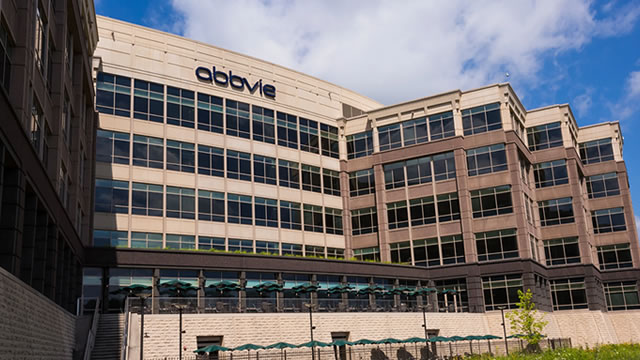
AbbVie's recent announcement to inject $380 million into expanding its active pharmaceutical ingredient (API) manufacturing capabilities in North Chicago is far more than a routine capital expenditure. This significant investment is a strategic declaration, signaling the company's unwavering commitment to its future growth drivers, particularly in neuroscience and obesity. It's a tangible step in AbbVie's carefully orchestrated portfolio rotation, moving beyond the shadow of Humira's patent expiration and solidifying its position as a biopharmaceutical powerhouse.

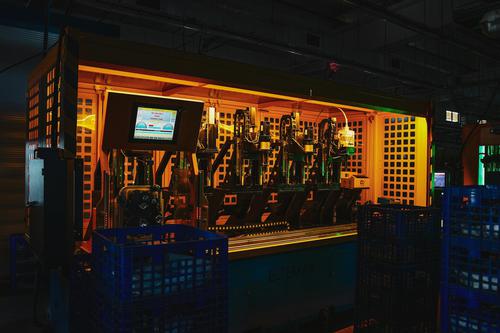
The new state-of-the-art facilities, slated to begin construction in spring 2026 and become fully operational by 2029, will integrate advanced manufacturing technologies with artificial intelligence (AI). This isn't just about increasing capacity; it's about building a smarter, more efficient, and resilient manufacturing backbone. The strategic timing aligns perfectly with the anticipated commercial ramp-up of key pipeline assets, ensuring that AbbVie can scale production of its high-margin, next-generation medicines without encountering supply constraints.

This $380 million project is also a critical component of AbbVie's broader $100 billion commitment to US research and development (R&D) and capital investments over the next decade. This long-term vision underscores a disciplined approach to capital allocation, prioritizing internal innovation and domestic manufacturing. By strengthening its US footprint, AbbVie aims to enhance its ability to deliver groundbreaking medicines to patients while simultaneously creating 300 new jobs in North Chicago, including engineers, scientists, and manufacturing operators.

Ultimately, this investment is a high-conviction bet on AbbVie's ability to innovate and execute in a rapidly evolving pharmaceutical landscape. It’s a proactive measure to secure future revenue streams and maintain a competitive edge, demonstrating management's confidence in its pipeline and long-term strategic direction. The integration of AI into these facilities also highlights a forward-thinking approach to operational efficiency and product quality, which can drive sustainable growth.

What Does This Investment Signal About AbbVie's Pipeline and Future Growth?

This $380 million manufacturing expansion is a clear vote of confidence in AbbVie's burgeoning pipeline, particularly within the neuroscience and obesity therapeutic areas. The facilities, expected to be fully operational by 2029, are specifically designed to support the production of next-generation medications in these critical segments. This timing is crucial, as it anticipates the commercialization and scaling of several key assets currently in development or early launch phases, ensuring AbbVie can meet future demand without bottlenecks.

In neuroscience, AbbVie is projecting substantial growth, with the franchise expected to generate $12.5 billion in sales for 2026, representing a 16% increase over 2025 levels. This growth is driven by established products like Botox Therapeutic and Vraylar, but newer drugs such as the oral migraine therapies Ubrelvy and Qulipta are also contributing significantly. Notably, Vyalev, a Parkinson’s disease therapy launched last year in the US, is anticipated to cross the $1 billion mark in global sales in 2026, underscoring the segment's robust momentum. Furthermore, a regulatory filing for tavapadon, a once-daily oral therapy for Parkinson’s disease, is currently under FDA review, with a potential launch later this year, which would further expand AbbVie’s footprint.

While the new investment directly targets neuroscience and obesity, it’s important to remember that the success of AbbVie's immunology portfolio, particularly Skyrizi and Rinvoq, provides the financial bedrock for such strategic capital outlays. These two immunology blockbusters are projected to achieve combined sales of over $31 billion in 2026, growing more than 20% year-over-year. Their robust performance, even as Humira sales decline to an expected $2.9 billion in 2026, allows AbbVie to fund ambitious long-term projects like the North Chicago expansion, ensuring a smooth transition and sustained high single-digit revenue CAGR through 2029.

The investment also implicitly signals AbbVie's commitment to diversifying its revenue streams beyond immunology, a critical strategy for long-term resilience. By building out dedicated manufacturing for neuroscience and obesity, AbbVie is not just preparing for product launches; it's laying the groundwork for these segments to become significant revenue contributors, driving the company's overall top line towards its $67 billion revenue goal for 2026 and beyond. This forward-looking approach to capacity planning is a strong indicator of management's confidence in its R&D pipeline and its ability to capture new market share.

How Does This Bolster AbbVie's Supply Chain and Mitigate Risks?

AbbVie's $380 million investment in US API manufacturing is a powerful move to fortify its supply chain, a critical strategic imperative in today's volatile global environment. By bringing advanced API production back to its North Chicago campus, AbbVie is actively reducing its reliance on complex international networks, thereby mitigating geopolitical and logistical risks that have plagued the pharmaceutical industry in recent years. This vertical integration enhances operational predictability and ensures a more secure, stable supply of essential drug components, which can be a significant competitive advantage.

The decision to expand domestic manufacturing aligns with a broader industry trend of "reshoring" pharmaceutical production, heavily influenced by potential tariffs and government initiatives to boost US self-sufficiency. Former President Trump's proposals for tariffs, potentially as high as 250% on pharmaceutical imports, have spurred many drugmakers to increase their US manufacturing footprint. AbbVie's CEO, Robert Michael, has previously stated that the company's robust US manufacturing presence would help shield it from major tariff impacts, and this new investment further solidifies that defensive posture.

This isn't AbbVie's first step in this direction; the company broke ground on a $195 million API facility in North Chicago in September 2025, expected to be operational by 2027, to bring production for select neuroscience, immunology, and oncology products back from Europe and Asia. A $70 million expansion at its Worcester, Massachusetts, biologics center also commenced in September 2025, aimed at increasing biologics manufacturing for immunology and oncology medicines and expediting the transfer of certain oncology products from Europe to the US. These cumulative investments demonstrate a concerted effort to enhance supply chain control and resilience across multiple therapeutic areas and manufacturing types.

Beyond tariffs, a localized supply chain offers benefits such as improved quality control, faster response times to demand fluctuations, and reduced lead times. These attributes are not just operational advantages; they translate into a critical quality factor that can support premium valuation multiples over time. In a world where drug shortages and supply disruptions can have severe consequences, AbbVie's proactive strategy to strengthen its domestic manufacturing capabilities is a defensive play that simultaneously funds offensive growth, improving the risk-adjusted return profile for investors.

Is AbbVie's Capital Allocation Strategy Sound?

AbbVie's capital allocation strategy, particularly in light of the $380 million manufacturing investment, appears both disciplined and forward-looking. This project is a non-recurring capital expenditure, meaning its financial impact will be felt in future periods through enhanced supply chain resilience and the ability to scale new product lines, rather than directly pressuring near-term earnings. It’s a strategic bet on the long-term cash-generating potential of its supported product lines, aligning with the 2029 operational date for key pipeline assets.

The investment fits within AbbVie's broader $100 billion commitment to US R&D and capital investments over the next decade. This framework provides a clear roadmap for how the company intends to fund its growth strategy post-Humira. While some analysts might question the return on investment (ROI) of specific projects versus alternatives like M&A or share buybacks, this particular investment emphasizes internal innovation and operational efficiency. It signals management's confidence in its organic pipeline and its ability to fund growth without overextending the balance sheet.

Examining AbbVie's financial fundamentals, the company currently holds a market capitalization of $404.20 billion. Its P/E ratio stands at 96.35, which is high, but its P/S ratio of 6.61 and P/FCF of 21.61 offer a more nuanced picture. The dividend yield of 2.9% with a payout ratio of 275.8% indicates a significant portion of earnings is returned to shareholders, though the high payout ratio reflects the current lower EPS of $2.37 (TTM) due to post-Humira transition dynamics. However, the company's ability to maintain a 4.5% dividend growth rate (FY2025 YoY) suggests confidence in future cash flows.

Despite a negative Book Value per Share of -$1.81 and a negative ROE of -361.6% (TTM), which are often characteristic of asset-heavy pharmaceutical companies with significant intangible assets and share buybacks, AbbVie's ROIC of 10.6% indicates effective capital deployment. The Net Debt/EBITDA of 2.25 suggests manageable leverage, and an EV/EBITDA of 16.54 reflects a reasonable valuation for a company with strong growth prospects. The company's disciplined capital allocation, focusing on high-margin product lines and supply chain control, reinforces its ability to navigate the post-Humira era and achieve its $67 billion revenue target for 2026 with projected operating margins nearing 49%.

What Does This Mean for ABBV Investors?

For investors in AbbVie (ABBV), this $380 million manufacturing investment, coupled with the broader $100 billion commitment, reinforces a long-term growth narrative underpinned by strategic execution and pipeline strength. The stock is currently trading at $228.70, up 1.73% today, with a market cap of $404.20 billion. While its trailing P/E of 96.35 might appear stretched, this metric is heavily influenced by the ongoing Humira erosion and the significant R&D investments that are yet to fully materialize into earnings. A forward-looking perspective, considering the robust growth expected from Skyrizi, Rinvoq, and the neuroscience franchise, is essential.

Wall Street analysts largely share a positive outlook, with a consensus rating of Buy from 26 analysts (out of 39 total) and a median price target of $257.00. This suggests a potential upside of approximately 12.3% from the current price. The high target of $299.00 indicates even greater conviction from some analysts. The investment in manufacturing capacity is a tangible step towards de-risking the commercialization of future blockbusters, providing a clearer path to achieving the projected $83.5 billion in revenue and $19.92 in EPS by FY 2030.

However, investors should also consider the nuances. While the TIKR model, based on an 8.3% revenue growth assumption and 47.1% operating margins, projects a target price of $291.11, it signals a "Sell" on risk-adjusted grounds due to an implied 9.5% annualized return over three years, which is below typical equity hurdles. This suggests that while the growth story is compelling, the current valuation may already price in much of the anticipated success, leaving less room for outsized returns unless execution significantly exceeds expectations.

The bull case centers on AbbVie's successful pivot post-Humira, driven by the strong performance of Skyrizi and Rinvoq, coupled with the emerging potential in neuroscience and obesity. The manufacturing investment ensures capacity for these new growth engines, while enhanced supply chain resilience mitigates external risks. The bear case, however, points to the high P/E, the significant capital intensity of the pharmaceutical industry, and the ongoing competitive pressures in oncology (e.g., Imbruvica's decline). Investors should monitor the commercial ramp-up of new drugs, the ROI of these capital projects, and any shifts in the competitive landscape.

AbbVie's strategic investments are laying the groundwork for sustained growth and operational resilience. While the current valuation demands a long-term perspective, the company's commitment to innovation and manufacturing control positions it favorably for the coming decade.


Want deeper research on any stock? Try Kavout Pro for AI-powered analysis, smart signals, and more. Already a member? Add credits to run more research.

SHARE THIS ON:

Related Articles

Category

You may also like

No related articles available

Breaking News

View All →

No topics available at the moment