MarketLens
Why is Rep. Chip Roy Betting Big on Atlas Energy Solutions

Key Takeaways
- Rep. Chip Roy's substantial and repeated purchases of Atlas Energy Solutions (AESI) stock, including a multi-million dollar spouse acquisition, signal a high-conviction bet on the Permian Basin's energy services sector.
- Atlas Energy Solutions is a specialized, vertically integrated provider of proppant, logistics, and distributed power solutions, strategically positioned to capitalize on the Permian's robust activity.
- While congressional trades can offer unique insights, investors should conduct independent due diligence, weighing AESI's strong operational focus and capital return strategy against inherent commodity price volatility and evolving regulatory landscapes.
Why is Rep. Chip Roy Betting Big on Atlas Energy Solutions?
The financial disclosures of U.S. politicians often offer a fascinating, albeit controversial, glimpse into potential investment theses. When a prominent figure like Representative Chip Roy, a Texas Republican with a background spanning investment banking, federal prosecution, and key roles in the offices of Senator Ted Cruz and Governor Rick Perry, makes significant and repeated investments in a specific company, it naturally piques investor curiosity. Roy, known for his conservative stance and role as Policy Chair of the House Freedom Caucus, has demonstrated a notable conviction in Atlas Energy Solutions (AESI), an energy services firm deeply entrenched in the Permian Basin. This isn't just a casual trade; it's a series of substantial bets, including a multi-million dollar acquisition by his spouse, that suggest a deeper underlying belief in the company's trajectory and the broader energy sector.
The most recent reported transaction, a purchase of AESI stock valued between $100,001 and $250,000 on March 30, 2026, was disclosed on May 11, 2026. This follows an even larger acquisition by his spouse, a staggering $5,000,001 to $25,000,000 purchase on April 30, 2026. Such significant capital deployment, particularly by a spouse, often implies a high level of confidence, potentially stemming from a deep understanding of the industry or specific market dynamics. Given Roy's committee assignments on the House Judiciary, Rules, and Budget Committees, while not directly energy-focused, his broader engagement with economic and regulatory policy could inform his outlook on sectors critical to the Texas economy.
These trades stand out not just for their size, but for their timing and the underlying asset. Atlas Energy Solutions operates at the heart of the Permian Basin, a region vital to U.S. energy independence. Roy's consistent buying activity suggests a belief that AESI is well-positioned to thrive, regardless of short-term market fluctuations, or perhaps that the market is currently undervaluing its long-term potential. For investors, this raises a critical question: what does a seasoned political and financial mind see in Atlas Energy Solutions that warrants such a substantial commitment?
What Exactly Does Atlas Energy Solutions Do? A Deep Dive into AESI's Business Model
Atlas Energy Solutions Inc. (AESI) isn't just another energy company; it's a specialized solutions provider operating at the crucial intersection of proppant supply, logistics, and distributed power within the Permian Basin. This strategic focus in North America's most active oil and natural gas producing region differentiates AESI from broader oil and gas players. Founded in 2017 by experienced E&P operators and led by Executive Chairman Bud Brigham and CEO John G. Turner, the company prides itself on a "customer-first" approach, leveraging technology to address mission-critical needs for its clients.
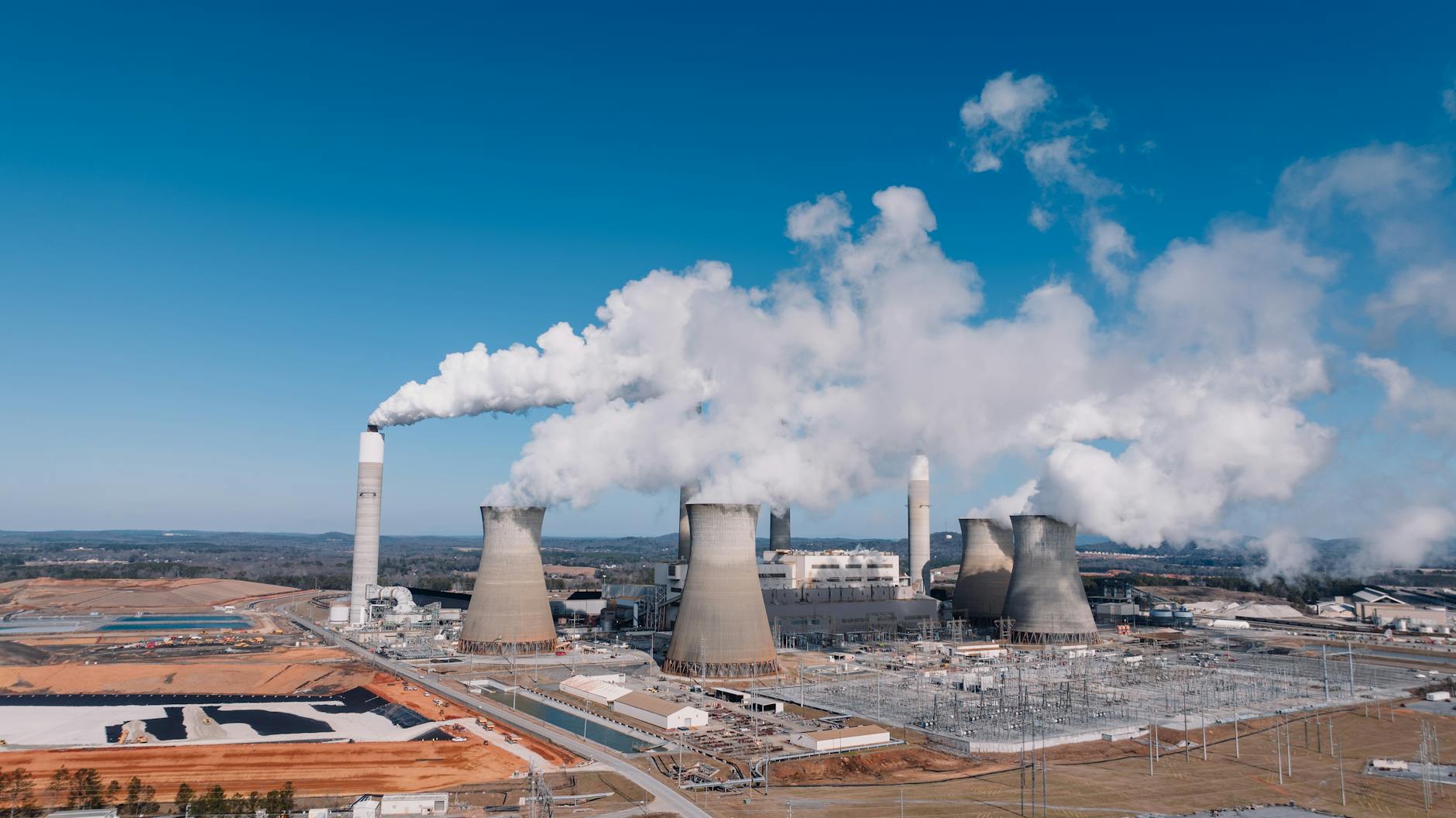
The company operates through two primary segments: Sand and Logistics, and Power. The Sand and Logistics segment is the backbone, controlling what Atlas claims is the largest position of high-quality frac sand in the Permian Basin. It boasts fourteen proppant production facilities, including large-scale in-basin plants near Kermit and Monahans, Texas, and a distributed mining network. These facilities produce locally sourced proppants like 40/70-mesh and 100-mesh sand, offering both dry and damp options. Crucially, this segment also includes a sophisticated logistics platform, featuring a fleet of specialized trucks, trailers, wellsite equipment, and the innovative 42-mile Dune Express conveyor system, designed to drive significant efficiencies in proppant delivery.
The Power segment is an increasingly vital and forward-looking part of AESI's strategy. It provides distributed power solutions through a fleet of natural gas-powered reciprocating generators. These generators are engineered for heavy-duty, mission-critical applications, primarily supporting oil and gas production and artificial lift operations. This segment also offers transportation, storage, contract labor, and power rentals, utilizing raw wellhead gas, pipeline gas, and propane. The company's recent announcement of a global framework agreement with CAT for its power solutions highlights its ambition to become a leading provider of private power, addressing grid constraints across Texas and the U.S.
Atlas Energy Solutions' integrated model, combining essential proppant supply with advanced logistics and on-site power generation, positions it as a critical partner for E&P companies in the Permian. This vertical integration not only enhances reliability and efficiency for its customers but also creates a robust, diversified revenue stream for AESI, mitigating some of the direct exposure to commodity price volatility that pure-play E&P companies face.
The Bull Case: Why Congressional Confidence Might Be Justified
Rep. Chip Roy's significant investment in Atlas Energy Solutions isn't an isolated event; it aligns with several compelling elements of the bull case for AESI. At its core, the thesis rests on the company's strategic positioning within the Permian Basin, its integrated business model, and its focus on capital efficiency and shareholder returns. The Permian remains the engine of U.S. oil and gas production, and AESI's role as a leading provider of proppant, logistics, and distributed power makes it an indispensable partner in this high-activity region.
One key factor is AESI's control over the largest position of high-quality frac sand in the Permian. This in-basin advantage significantly reduces transportation costs and enhances supply reliability for E&P operators, a critical competitive edge. The Dune Express conveyor system further solidifies this advantage, promising substantial logistics efficiencies that translate directly into cost savings for customers and improved margins for Atlas. This infrastructure investment is a high barrier to entry for competitors and a long-term asset for AESI.
The burgeoning Power segment also presents a significant growth vector. With increasing demand for reliable, on-site power solutions in the Permian, particularly those utilizing natural gas, Atlas is tapping into a critical need. Executive Chairman Bud Brigham's excitement about the power markets and the recent global framework agreement with CAT underscore the potential for this segment to become a substantial revenue driver, diversifying the company's offerings beyond traditional sand and logistics. This move positions Atlas to benefit from the broader energy transition while still serving its core oil and gas clientele.
Financially, Atlas Energy Solutions is committed to maximizing shareholder value through strong cash flow generation and efficient capital allocation. The company's stated mission includes providing a regular and durable return of capital to investors through industry cycles. With a current market capitalization of $2.37 billion and a stock price of $18.95, AESI trades at a 5.47% forward dividend yield, indicating a commitment to returning capital. This blend of strategic operational advantages, diversified growth avenues, and a shareholder-friendly capital allocation policy forms a solid foundation for the bullish outlook.
The Bear Case and Key Risks for AESI Investors
While the bullish arguments for Atlas Energy Solutions are compelling, a balanced perspective requires acknowledging the inherent risks and potential headwinds that could challenge its growth trajectory and profitability. Even with a strong operational model and strategic positioning, AESI operates within the volatile energy sector, making it susceptible to broader market dynamics and specific industry challenges. Investors considering AESI, regardless of congressional interest, must weigh these factors carefully.
The most significant risk stems from the cyclical nature of the oil and natural gas industry. As a provider of equipment and services, AESI's fortunes are inextricably linked to the activity levels of E&P companies in the Permian Basin. A sustained downturn in crude oil or natural gas prices could lead to reduced drilling and completion activity, directly impacting demand for frac sand, logistics services, and distributed power solutions. While AESI's integrated model offers some resilience, it is not immune to a significant contraction in the broader energy market. The company's Q1 2026 results, reporting a loss and total revenue of $265.58 million, down from $297.59 million in Q1 2025, highlight this sensitivity, even as it beat revenue estimates.
Competition within the Permian Basin's energy services sector is also intense. While Atlas boasts a strong market position and unique assets like the Dune Express, other players are constantly innovating and vying for market share. Pricing pressure on frac sand and logistics services could erode margins, especially if supply outstrips demand or if new, more efficient competitors emerge. The capital-intensive nature of the business, requiring ongoing investment in facilities, trucks, and power generation assets, also means that any slowdown in revenue growth could strain cash flow and profitability.
Furthermore, regulatory and environmental pressures could pose challenges. The energy industry faces increasing scrutiny regarding emissions and environmental impact. While Atlas emphasizes "emissions friendly technologies" and being "good stewards of the environments," evolving regulations could necessitate costly operational adjustments or limit expansion opportunities. The company's beta of 1.04 suggests its stock tends to move in line with the broader market, but specific industry-related shocks could lead to outsized negative impacts. Investors should monitor commodity price trends, competitive dynamics, and the evolving regulatory landscape closely.
Congressional Trading Ethics: A Broader Context and Its Implications
The substantial stock purchases by Rep. Chip Roy and his spouse in Atlas Energy Solutions, while perfectly legal under current rules, inevitably draw attention to the broader debate surrounding congressional stock trading ethics. This isn't just about AESI; it's about the perception of fairness, transparency, and potential conflicts of interest that arise when lawmakers, who have access to nonpublic information and influence policy, trade individual stocks. The Stop Trading on Congressional Knowledge (STOCK) Act of 2012 was enacted to address these concerns, requiring members of Congress to disclose stock trades exceeding $1,000 within 30 days of notification and 45 days of the transaction date.
However, the STOCK Act has faced criticism for its perceived shortcomings. Penalties for non-disclosure are often minimal, a mere $200 for a first-time violation, which many argue is an insufficient deterrent against the potential for millions in personal gain. Enforcement has also been spotty, with reports indicating that many members fail to disclose trades or do so with significant delays. No member of Congress has ever been prosecuted for insider trading under the STOCK Act, leading to a persistent public perception that the law has not lived up to its promise of curbing potential corruption.
The issue extends beyond direct insider trading. Lawmakers often sit on committees that oversee sectors in which they hold investments, creating an appearance of conflict even if no direct misuse of information occurs. For instance, a New York Times investigation found that from 2019 to 2021, 18% of members of Congress traded stocks in sectors related to their committee work. While Rep. Roy's committees (Judiciary, Rules, Budget) are not directly energy-focused, his broader role in shaping economic policy and his representation of a Texas district deeply tied to the energy industry could still raise questions for some observers.
The ongoing debate has led to bipartisan calls for stricter rules, including outright bans on individual stock trading for members of Congress and their families. Proposals range from requiring blind trusts to prohibiting new stock acquisitions once elected. The existence of ETFs like NANC and GOP, which track congressional stock trades and have reportedly outperformed the S&P 500, further underscores public skepticism and the perception that some investors are betting on the "untrustworthiness" of Congress. While Roy's trades are compliant, they serve as a potent reminder of this contentious ethical landscape and the ongoing push for greater transparency and accountability in Washington.
What Does This Mean for Your Portfolio?
Rep. Chip Roy's substantial investment in Atlas Energy Solutions offers a compelling signal, but it should serve as a starting point for your own research, not a definitive buy signal. The conviction demonstrated by a seasoned political and financial mind, especially one representing a key energy state, warrants attention. It suggests a belief in the long-term viability and growth potential of AESI within the critical Permian Basin energy ecosystem.
For investors, this insider activity highlights Atlas Energy Solutions as a company with strong fundamentals in a vital sector. Its integrated model, combining in-basin frac sand, advanced logistics like the Dune Express, and a growing distributed power segment, positions it as a resilient player. The company's commitment to shareholder returns, evidenced by its dividend, adds to its appeal for income-focused investors.
However, remember that even well-informed insider trades are not guarantees of future performance. The energy sector's inherent volatility, competitive pressures, and evolving regulatory environment remain significant factors. Use Roy's trades as a catalyst to delve deeper into AESI's financials, management strategy, and market outlook, ensuring your investment aligns with your own risk tolerance and financial goals.
Atlas Energy Solutions (AESI) presents an intriguing opportunity, bolstered by significant insider confidence. Its strategic position in the Permian Basin, coupled with an integrated business model and a focus on capital efficiency, makes it a noteworthy consideration for investors seeking exposure to the energy services sector. However, as with any investment, thorough due diligence and a clear understanding of the associated risks are paramount.
Want deeper research on any stock? Try Kavout Pro for AI-powered analysis, smart signals, and more. Already a member? Add credits to run more research.
Related Articles
Why Wall Street Is Betting Big on $5,000 Gold
Category
You may also like


Congressman Buys Defense Stocks As Middle East Tensions Continues: Here Are The Companies

Natural Gas is Wildly Profitable Around the World. In Texas, Prices are Negative.

Why Dividend Investors Are Watching Viper's $1.5 Billion Debt Target
Breaking News
View All →Featured Articles
Top Headlines

Meta challenges New Mexico's $3.7 billion plan for teen mental health in social media trial

Instagram Introduces Instants, Meta's New Private Photo Sharing App

Nvidia (NVDA) Exceeds Market Returns: Some Facts to Consider

Apple Prepares App Store for Autonomous AI Agents