MarketLens

Log in

Why is UPS Offering $150,000 Buyouts to Drivers

3 weeks ago
SHARE THIS ON:

Why is UPS Offering $150,000 Buyouts to Drivers

Key Takeaways

  • UPS's $150,000 driver buyout program, now greenlit by a federal judge, is a bold move to right-size its network and boost profitability.
  • The strategy targets low-margin Amazon volume and aims for $3 billion in savings, but carries significant upfront costs and legal risks with the Teamsters union.
  • Investors should brace for a "bathtub year" in 2026, with initial margin pressure followed by potential recovery as the network transformation takes hold.

Why is UPS Offering $150,000 Buyouts to Drivers?

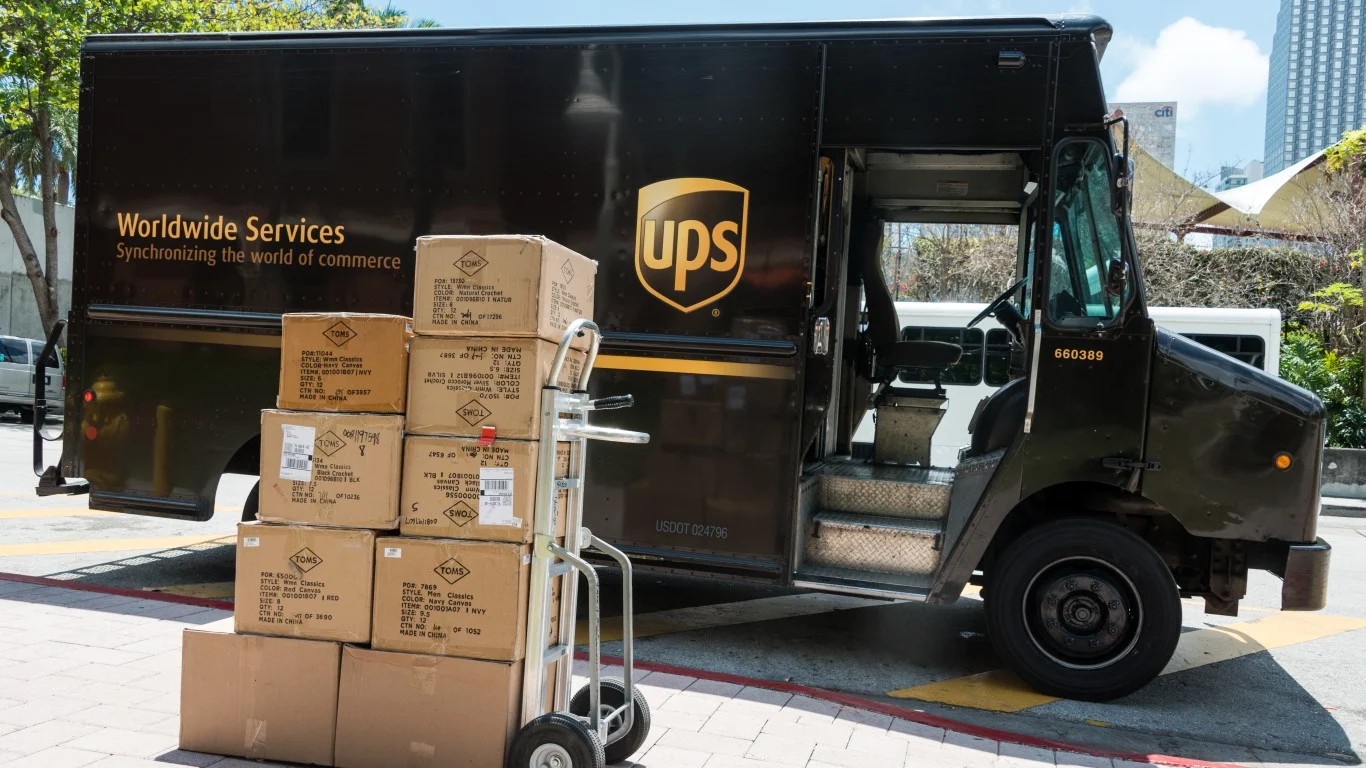
United Parcel Service (NYSE: UPS) is executing a major strategic shift, offering a substantial $150,000 buyout package to approximately 105,000 eligible drivers. This aggressive move, recently greenlit by a federal judge on February 20, 2026, after denying a Teamsters' injunction request, is a direct response to fundamental changes in the parcel delivery landscape. The company aims to cut up to 30,000 operational positions, including drivers, as it reconfigures its network to prioritize profitability over sheer volume.

The core rationale behind this initiative is straightforward: UPS needs to right-size its vast network. This urgency stems from an 8.6% decline in package deliveries from Amazon, its largest customer, and a new, less profitable contract with the U.S. Postal Service for Ground Saver packages. These low-margin shipments have been a drag on profitability, and management is determined to shed this "extraordinarily dilutive" business. CEO Carol Tomé has explicitly stated that UPS is comfortable walking away from unprofitable volume, signaling a clear strategic pivot.

This isn't UPS's first attempt at driver buyouts; a previous program offered less generous terms, around $1,800 per year of service with a $10,000 minimum, and only saw about 3,000 drivers accept. The significantly sweetened $150,000 lump sum, regardless of seniority, reflects UPS's determination to accelerate its network optimization. It’s a blunt instrument designed to quickly reduce its workforce and align capacity with expected, more profitable volume levels, particularly in higher-margin segments like healthcare and business-to-business deliveries.

The company's transformation strategy, dubbed "Transformation 2.0," has been underway since 2025, involving the closure of 93 buildings last year and plans for another 24 closures in the first half of 2026. These physical network adjustments, combined with the voluntary separation program, are all part of a concerted effort to achieve $3 billion in cost savings this year. UPS is not just trimming fat; it's reshaping its entire operational backbone to adapt to a post-pandemic e-commerce environment where low-margin residential deliveries are less attractive.

What Are the Financial Implications of UPS's Buyout Program?

The financial implications of UPS's $150,000 driver buyout program are a high-stakes gamble, balancing significant upfront costs against projected long-term savings and improved profitability. If, as the union estimates, over 10,000 drivers accept the offer, the immediate cash outlay could reach $1.5 billion. This is a massive expenditure, but UPS is betting that the ongoing savings from shedding these roles and the associated low-profit work will far outweigh this initial cash burn.

The company's TTM (trailing twelve months) financials show a net income margin of 6.3% and an operating margin of 8.9%, with EPS at $6.56. Revenue growth has been challenging, with a -2.5% YoY decline in FY2025 and a -9.1% cumulative decline over three years. These figures underscore the pressure on UPS to improve its "revenue quality" and operational efficiency. The buyouts are a direct response to this, targeting the elimination of roles tied to low-margin Amazon deliveries, which saw an 8.6% decline in volume.

By reducing its workforce, UPS aims to lower its substantial labor costs, which are a major component of its operating expenses. The company's domestic operating margins have fallen from over 14% a decade ago to just over 6% recently, largely due to the shift towards lightweight, lower-profit residential e-commerce packages. The buyouts, coupled with automation and facility closures, are designed to reverse this trend by focusing on higher-margin segments like B2B and healthcare logistics, where revenue per piece (RPP) is significantly higher.

However, the financial mechanics are not without risk. The legal dispute with the Teamsters, which alleges contract violations, introduces a contingent liability. If an arbitrator later rules the buyouts illegal, UPS could be forced to pay back wages to every driver who accepted the offer, potentially adding billions to the initial severance cost. This legal uncertainty clouds the financial benefits, making the program a calculated risk. While the immediate goal is to achieve $3 billion in savings and improve profitability, the ultimate financial success hinges on both acceptance rates and the outcome of ongoing arbitration.

How Does the Teamsters Lawsuit Impact UPS's Strategy?

The Teamsters' lawsuit against UPS, though an injunction was denied, significantly impacts the company's strategic rollout of the driver buyout program by introducing substantial legal and reputational risks. The union alleges that the $150,000 buyout plan violates the 2023 labor contract, specifically citing "direct dealing" with workers and the elimination of union jobs when the contract aimed to establish more positions. This legal challenge, which will now proceed to binding arbitration, creates a critical vulnerability for UPS.

While the federal judge's ruling on February 20, 2026, allows UPS to proceed with offering the buyouts, it explicitly stated that any harm to drivers would not be "irreparable" because they could be reinstated with back pay if an arbitrator later finds the buyouts illegal. This means UPS is now on the clock, offering packages with the knowledge that a significant contingent liability could materialize. The union's warning of "chaotic" operational disruption if drivers are reinstated underscores the potential for severe fallout, both financially and operationally.

The Teamsters' general president, Sean M. O’Brien, has publicly denounced the program as an "illegal buyout scam," accusing CEO Carol Tomé of having "buyer's remorse" for the 2023 contract. This aggressive stance highlights the deep animosity and distrust between the union leadership and company management. The union's lawsuit details at least six alleged violations of the National Master Agreement, including the erosion of shop stewards' rights and the irrevocability of the separation letters drivers must sign.

Furthermore, the structure of the new buyout offer, a $150,000 lump sum regardless of seniority, contrasts sharply with the previous tenure-based program. This could create a schism within union ranks, potentially alienating younger, more financially motivated drivers who might accept the offer against leadership's objections. The union fears that younger drivers will feel "screwed out of it" if the program is later deemed illegal, leading to internal turmoil. For UPS, this means navigating not just external legal battles but also potential internal labor unrest, complicating its broader transformation efforts.

What are the Operational and Workforce Risks?

UPS's aggressive buyout strategy, while aiming for cost efficiencies, introduces significant operational and workforce risks that could impact service quality and long-term labor relations. The immediate concern is the potential loss of a core, experienced workforce. Veteran drivers are the backbone of UPS's delivery network, possessing invaluable institutional knowledge and route expertise. A mass exodus, even if voluntary, could strain service quality, disrupt established routes, and increase the burden on remaining staff, leading to potential delays and customer dissatisfaction.

The company has already cut 48,000 jobs last year and plans to eliminate another 30,000 operational positions in 2026, alongside closing 24 buildings. These reductions, combined with the shift away from low-margin Amazon volume and the outsourcing of Ground Saver packages to the USPS, are fundamentally reshaping UPS's network. While the goal is a leaner, more agile operation, the transition period is fraught with challenges. The union's warning that reinstating drivers under a disputed program would be "chaotic" is a direct threat to UPS's operational stability, suggesting potential widespread disruption if the arbitration rules against the company.

Moreover, the buyout program's design could foster internal divisions within the Teamsters union. By offering a flat $150,000 lump sum regardless of seniority, the program appeals more to younger drivers who might see it as a significant financial opportunity, rather than older, more tenured employees who might have accrued more under a seniority-based system. This could drive a wedge between different factions of the union, potentially undermining leadership's authority and complicating future labor negotiations. The company's move to rely more on gig drivers for smaller packages also signals a shift away from its traditional full-time workforce model, further escalating union tensions.

Ultimately, UPS is walking a tightrope. It needs to reduce its cost structure and optimize its network to remain competitive in a rapidly evolving logistics market. However, doing so at the expense of its experienced workforce and through a contentious legal battle with its union could erode employee morale, damage its reputation as a reliable employer, and lead to unforeseen operational headaches. The success of this transformation hinges not just on the numbers, but on UPS's ability to manage these complex human capital and labor relations challenges effectively.

Is UPS a Buy Amidst This Transformation?

United Parcel Service is currently trading at $116.73, up 1.03% on the day, with a market cap of $99.03 billion. The stock's 52-week range of $82.00 to $123.70 suggests it's trading near the upper end, reflecting investor optimism around its strategic transformation. However, the ongoing changes, particularly the driver buyout program and the associated Teamsters lawsuit, present a complex investment narrative that requires careful consideration.

From a valuation perspective, UPS trades at a P/E of 17.79, a P/S of 1.12, and an EV/EBITDA of 10.52. Its dividend yield is a robust 5.6%, though the payout ratio of 96.9% indicates little room for further increases without significant earnings growth. The company's focus on "revenue quality" and shedding low-margin volume is a long-term positive, aiming to improve its operating margin of 8.9% and net margin of 6.3%. If successful, this could lead to a re-rating of the stock as profitability improves.

However, investors must weigh the "bathtub year" outlook for 2026. CEO Carol Tomé has indicated that the first half will see continued margin pressure due to the costs of transformation, with recovery expected in the second half. This implies potential near-term volatility and earnings choppiness. The $1.5 billion potential buyout cost, coupled with the contingent liability from the Teamsters lawsuit, represents a material financial risk that could impact cash flow and earnings if arbitration goes against UPS.

The strategic pivot away from Amazon and towards higher-margin B2B and healthcare logistics is sound, but its execution carries operational risks, including potential service disruptions and workforce instability. While UPS aims for $3 billion in savings, the actual realization of these benefits depends on successful employee transitions and favorable legal outcomes. For investors, UPS represents a value play with a strong dividend, but one that requires patience and a tolerance for the significant execution and labor risks inherent in its ambitious transformation.


UPS is in the midst of its most significant strategic shift, aiming to emerge as a leaner, more profitable logistics giant. While the immediate future presents a "bathtub year" with legal and operational headwinds, the long-term vision of prioritizing high-margin volume could unlock substantial value. Investors should closely monitor buyout acceptance rates, the arbitration outcome with the Teamsters, and the company's ability to maintain service quality through this transformative period.


Want deeper research on any stock? Try Kavout Pro for AI-powered analysis, smart signals, and more. Already a member? Add credits to run more research.

SHARE THIS ON:

Related Articles

Category

You may also like

Stock News5 days ago

SHAREHOLDER BUYOUT INVESTIGATION: Does the $7.00 Per Share Buyout Price Shortchange Mister Car Wash, Inc. (MCW) Investors? Kaskela Law LLC is Investigating the Buyout Offer and Encourages MCW Shareholders to Contact the Firm

Kaskela Law LLC is investigating the $7.00 per share buyout offer for Mister Car Wash (MCW) investors to assess if the price adequately compensates shareholders for the acquisition by Leonard Green & ...
Stock News2 weeks ago

Salesforce Is Buying Back $50 Billion of Its Own Stock. Should You Be Buying Too?

Salesforce announced a massive $50 billion stock buyback plan, signaling management believes shares are undervalued or that growth opportunities are limited.
Stock News2 weeks ago

UPS Gets Court Approval for $150K Driver Buyouts: Will This Ease Cost?

UPS secured court approval for $150K driver buyouts, supporting its plan to cut 30,000 jobs and reduce Amazon volumes to drive cost reductions.
Stock News2 months ago

Here is What to Know Beyond Why United Parcel Service, Inc. (UPS) is a Trending Stock

United Parcel Service (UPS) is currently a trending stock among Zacks.com users. Investors should examine the current factors influencing the stock's near-term performance.

Breaking News

View All →

Top Headlines

View More →
Stock News41 minutes ago

Nvidia Says It Is Restarting Production of AI Chips for Sale in China

Stock News43 minutes ago

Should You Sell Tesla Before June 30? Hint: Don't Dare

Stock News43 minutes ago

Amazon plans drastic cut in packages it sends through post office, WSJ reports

Stock News53 minutes ago

Tesla, LG Bet On U.S. Batteries With $4.3 Billion Michigan Plant

Stock News1 hour ago

Jensen Huang says Nvidia has received orders from China and is 'restarting our manufacturing'