MarketLens

Log in

Has Microsoft (MSFT) Found Its Next Growth Catalyst in AI Agents

10 hours ago
SHARE THIS ON:

Has Microsoft (MSFT) Found Its Next Growth Catalyst in AI Agents

Key Takeaways

  • Microsoft's Build 2026 conference solidified its strategic pivot towards an "agent-first" computing paradigm, moving beyond traditional app-centric interactions.
  • Project Solara and Microsoft Scout represent ambitious long-term bets on specialized AI devices and always-on enterprise agents, respectively, aiming to embed AI deeper into workflows.
  • The unveiling of seven new in-house MAI models, including the flagship MAI-Thinking-1, signals Microsoft's intent to gain greater control over its AI stack and reduce reliance on external partners like OpenAI.

Has Microsoft (MSFT) Found Its Next Growth Catalyst in AI Agents?

Microsoft's (NASDAQ: MSFT) recent Build 2026 developer conference, held on June 2-3, 2026, in San Francisco, unveiled a comprehensive strategy to cement its leadership in the burgeoning artificial intelligence landscape. The announcements, particularly around Project Solara, the Microsoft Scout agent, and a new family of in-house MAI models, suggest a significant platform shift that could drive the company's next phase of growth. While shares closed yesterday at $416.67, down 2.66% from the prior close of $428.05, reflecting broader market jitters, these strategic AI initiatives position Microsoft to capture substantial value in the evolving enterprise and consumer AI markets, making it a compelling long-term investment.

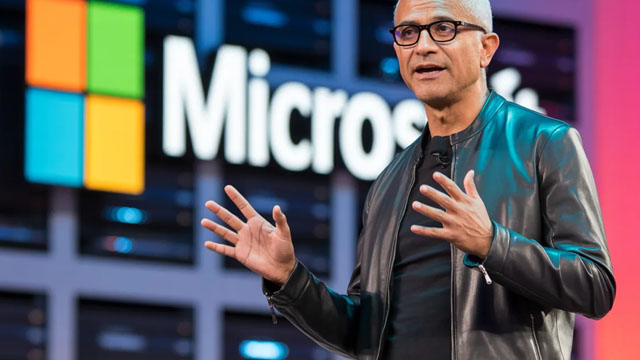
The core thesis emerging from Build 2026 is Microsoft's aggressive push from an "app-first" to an "agent-first" world. CEO Satya Nadella's vision emphasizes intelligence that users invoke rather than software they open, with AI agents working across applications, workflows, and devices. This paradigm shift, if successfully executed, could redefine how users interact with technology and how developers build solutions, potentially unlocking new revenue streams for Microsoft's Intelligent Cloud and Productivity and Business Processes segments. The company's market capitalization of $3.10 trillion underscores its existing scale, but these AI advancements indicate a proactive effort to maintain its competitive edge and expand its total addressable market.

What is Project Solara, and How Does it Redefine Computing?

Project Solara emerged as one of the most intriguing, and perhaps most revealing, announcements from Build 2026, signaling Microsoft's intent to extend its AI platform beyond traditional PCs. Described as a "chip-to-cloud platform designed for an open, multiple agent world," Solara is an early-stage initiative focused on "agent-first devices." These are specialized hardware solutions built around AI agents rather than conventional applications, with Microsoft showcasing prototype badge and desk concept devices. The company is actively collaborating with chipmakers like Qualcomm and MediaTek on reference designs, indicating a serious commitment to this new hardware category.

The significance of Project Solara lies in its potential to create entirely new form factors for computing, moving AI into the physical environments where people need it most. Imagine AI agents embedded in a badge for frontline workers in retail or healthcare, or a desk display providing ambient intelligence in an office. Microsoft's enterprise DNA is crucial here; unlike consumer AI gadgets that have struggled with clear use cases, Solara is explicitly aimed at enterprise scenarios where device management, identity, compliance, and workflow integration are paramount. This focus on business value, rather than just novelty, could accelerate adoption in industries like healthcare, retail, and finance, which Microsoft is already investigating.

Steven Bathiche, CVP & Technical Fellow of Microsoft's Applied Sciences Group, emphasized that Solara aims to create more specific, contextual computers without the prohibitive cost of rebuilding the entire software stack for each new device. The platform's "just-in-time UI" capability allows agents to adapt their presentation across diverse devices and modalities, reducing developer effort. This flexibility is critical for fostering a diverse ecosystem of agent-first devices, from small, hypermobile wearables to fixed, specialized appliances. While still in its early stages, Project Solara represents a bold, long-term vision that could open up entirely new hardware and software markets for Microsoft, diversifying its revenue streams beyond the traditional Windows and Azure ecosystems.

How Will Microsoft Scout Transform Enterprise Productivity?

Microsoft Scout, unveiled at Build 2026, represents a significant evolution in AI assistance, moving from prompt-driven Copilot interactions to persistent, always-on background action. Positioned as Microsoft's first "Autopilot" agent for Microsoft 365, Scout is designed to work across a user's entire digital workspace – including Teams, Outlook, OneDrive, SharePoint, calendar, and local resources. Its core function is to coordinate work, prepare users for meetings, manage deliverables, and proactively identify risks, making the PC feel more attentive and intelligent.

The power of Scout lies in its ability to leverage the vast "exhaust" of knowledge work already residing within Microsoft 365: messages, files, calendars, approvals, and organizational relationships. An agent with access to this rich context does not need to be "magical" to be immensely useful. For instance, Scout could surface a dormant thread that has become urgent, suggest a relevant document for work in progress, or flag a conflict before a calendar becomes impossible. This proactive, context-aware assistance aims to reduce cognitive load and enhance productivity, freeing users from mundane tasks and information retrieval.

Crucially, Microsoft is emphasizing enterprise controls as central to Scout's pitch. Given its "always-on" nature and extensive access to sensitive data, trust and governance are paramount. Scout operates with enterprise-grade security, its own governed Entra identity, scoped credentials, and Microsoft Purview enforcement for sensitivity labels and data loss prevention. Access is initially limited to Microsoft's "Frontier" program, requiring specific Intune policy configuration and opt-in attestation, underscoring Microsoft's cautious, enterprise-focused rollout. This meticulous approach to security and governance is vital for gaining IT administrators' confidence, who will ultimately determine Scout's widespread adoption within organizations.

What Do Microsoft's New MAI Models Mean for its AI Strategy?

Build 2026 also marked a pivotal moment for Microsoft's in-house AI capabilities, with the company announcing a family of seven new MAI (Microsoft AI) models. This expansion, following a renegotiated deal with OpenAI that loosened ties, signals Microsoft's strategic intent to own more of the AI stack and reduce its dependence on external partners. The flagship announcement was MAI-Thinking-1, described as Microsoft's first advanced reasoning model, featuring a 256k token window and designed for complex multi-step instructions and long-context reasoning. Other models include MAI-Code-1-Flash for GitHub Copilot, MAI-Image 2.5 for text-to-image and editing, MAI-Transcribe-1.5 (claimed to be five times faster than competing models), and MAI-Voice-2 with support for 15 new languages.

The introduction of MAI-Thinking-1 is particularly significant because reasoning models are often seen as a proxy for a company's seriousness in the AI race. By developing its own reasoning model, Microsoft gains greater control over tuning for cost efficiency, integration into its vast product portfolio, and enterprise-specific workloads. This move allows Microsoft to offer customers flexibility through its Azure AI Foundry, while increasingly favoring its own models within Copilot and Microsoft 365 experiences. It's a strategic play to shift leverage in the AI ecosystem, making OpenAI an "optional" partner rather than an indispensable one.

This internal model development is not about dethroning frontier models from OpenAI or Google DeepMind in every benchmark. Instead, it's about building a portfolio of models that can be embedded into existing Microsoft products, routed efficiently through Azure, and priced as part of a larger software relationship. For instance, MAI-Code-1-Flash is optimized for GitHub Copilot and Visual Studio Code, directly impacting developer productivity within Microsoft's ecosystem. This pragmatic approach aims to deliver useful intelligence at a sustainable cost, enhancing Microsoft's platform control and potentially improving its margins on AI-powered services.

How Do These Announcements Impact Microsoft's Competitive Position and Investor Outlook?

Microsoft's Build 2026 announcements collectively reinforce its formidable competitive position across cloud, AI, and software development, while also introducing new vectors for growth. The "agent-first" paradigm, spearheaded by Project Solara and Microsoft Scout, positions the company to lead the next wave of computing, moving beyond the current app-centric model. This proactive stance could create significant first-mover advantages in specialized AI devices and always-on enterprise agents, areas where rivals like Google and Amazon are also investing but perhaps without Microsoft's deep enterprise integration.

The strategic development of in-house MAI models, particularly MAI-Thinking-1, strengthens Microsoft's control over its AI supply chain and reduces potential dependencies on external partners. This vertical integration allows for greater optimization of cost, performance, and security across its vast product ecosystem, from Azure to Windows and Microsoft 365. While Microsoft maintains its partnership with OpenAI, having its own robust model family provides a crucial hedge and increases its negotiating power, potentially leading to better margins and more tailored AI solutions for its enterprise customers. This diversified AI portfolio makes Microsoft a more resilient and self-sufficient player in the intensely competitive AI market.

For investors, these developments underscore Microsoft's commitment to innovation and its ability to leverage its extensive ecosystem. The potential for new revenue streams from agent-first devices (Project Solara) and enhanced productivity tools (Microsoft Scout) could fuel long-term growth. Furthermore, the ability to offer a comprehensive, integrated AI stack – from chips and operating systems to cloud infrastructure and proprietary models – creates a powerful lock-in effect for enterprise customers. While the stock's current price of $416.67 is below its 52-week high of $555.45, the strategic depth of these AI initiatives suggests a strong foundation for future value creation, particularly as these agent-first platforms mature and gain wider adoption.

What Are the Key Risks and Challenges for Microsoft's AI Vision?

Despite the ambitious vision, Microsoft's "agent-first" future is not without significant risks and challenges that investors should consider. The primary hurdle for Project Solara and Microsoft Scout is the critical issue of trust and governance. Giving AI agents pervasive access to enterprise data and the ability to act autonomously raises profound questions about data privacy, security, and accountability. As Dr. Ashraf Elnashar noted on LinkedIn, when agents act before being asked, the critical questions become: who authorized the action, what was its scope, and what happens when it's wrong? Microsoft's emphasis on Entra identity, Intune policy, and Purview data protections is a necessary first step, but real-world deployment will test the robustness of these controls.

Another significant challenge lies in user adoption and the "social consequences" of always-on agents. While Scout promises enhanced productivity, it also risks making employees feel surveilled or overwhelmed by constant AI intervention. Microsoft has a history of sometimes overestimating user desire for AI woven into every surface. The success of Scout will depend on its ability to demonstrate clear value without feeling intrusive, requiring a delicate balance of transparency, user control, and predictable behavior. The "personality" of an agent is less important than its judgment and humility to stop when context is insufficient.

Finally, the shift to agent-first devices with Project Solara faces the challenge of ecosystem development. Creating a new hardware category requires convincing developers to build for it and enterprises to invest in new infrastructure. While Microsoft's enterprise focus is a strength, the market for specialized agent devices is nascent and unproven. The company will need to demonstrate compelling return on investment for these new form factors to gain traction. These challenges highlight that while Microsoft's AI vision is bold, its execution will require careful navigation of technical, ethical, and market adoption complexities.

Microsoft's Build 2026 conference laid out a compelling vision for an agent-first future, driven by Project Solara, Microsoft Scout, and a robust suite of in-house MAI models. These initiatives represent a strategic pivot to embed AI deeper into enterprise workflows and new device categories, positioning the company for long-term growth. Investors should monitor the successful implementation of governance frameworks and the pace of enterprise adoption as these ambitious AI platforms mature.


Want deeper research on any stock? Try Kavout Pro for AI-powered analysis, smart signals, and more. Already a member? Add credits to run more research.

SHARE THIS ON:

Related Articles

Category

You may also like

Stock News3 days ago

Is Microsoft Stock a Value Trap or a Generational Opportunity?

Microsoft faces investor scrutiny over elevated AI-related capital expenditures. However, sustained demand for Azure and Copilot enterprise services suggests potential long-term growth that could offs...
Stock News5 days ago

Prediction: Microsoft Stock Will Trade At This Price in a Year

Microsoft (MSFT) shares could see upward momentum following a strong quarterly performance. The company's recent financial results exceeded expectations, potentially serving as a catalyst for future p...
Stock News1 week ago

Could Agentic AI Be Apple's Next Big Tailwind?

Apple's potential integration of agentic AI could serve as a significant growth catalyst for the company. Investors are weighing whether this technology will drive future hardware cycles and sustain t...
Stock News2 weeks ago

Microsoft: How Ditching OpenAI Unlocks New AI Growth Catalysts

Microsoft shares trade at a 24x forward P/E, with analysts citing underappreciated growth catalysts. Copilot adoption reached 20 million paid seats, representing 3.3% market penetration, while the com...

Breaking News

View All →

Top Headlines

View More →
Stock News1 hour ago

Marvell Gets Another Shout-Out: It (And Flex) Are Joining the S&P 500

Stock News4 hours ago

$10,000 in Asia's Biggest 50 Stocks Became $15,267 in Five Months: Here's Why

Stock News5 hours ago

What to expect from WWDC 2026: Siri's highly anticipated revamp and Apple Intelligence updates

Stock News7 hours ago

Trading expert sets date when Nvidia stock will crash to $125

Stock News8 hours ago

SpaceX IPO Could Create More Wealth Than All IPOs in the Last 20 Years Combined. Here's Why Early Investors Are Banking On It