MarketLens

Log in

Has the Geopolitical Ice Melted for Shell in Venezuela

2 hours ago
SHARE THIS ON:

Has the Geopolitical Ice Melted for Shell in Venezuela

Key Takeaways

  • Shell is strategically positioned to unlock Venezuela’s Dragon gas field, a multi-billion-dollar opportunity, following recent U.S. license approvals and a significant geopolitical shift.
  • The project promises to revitalize Trinidad’s underutilized Atlantic LNG facility, bolstering regional energy security and Shell’s natural gas portfolio.
  • Despite the immense potential, significant political, operational, and financial risks remain, demanding careful navigation by Shell and its investors.

Has the Geopolitical Ice Melted for Shell in Venezuela?

The energy landscape in Venezuela has undergone a dramatic transformation, opening doors for international oil majors like Shell plc (SHEL) after years of frozen relations. Following the capture of former leader Nicolás Maduro and a subsequent policy shift by the Trump administration, the U.S. Treasury Department has issued general licenses authorizing five companies – Shell, BP PLC, Chevron Corp., Eni SpA, and Repsol SA – to engage in oil and gas contracts with Petróleos de Venezuela SA (PDVSA). This move marks a pivotal moment, signaling Washington's intent to revive Venezuela's struggling energy sector and economy.

Shell has wasted no time in welcoming this development, with CEO Wael Sawan confirming that Venezuela and its Dragon offshore gas project align perfectly with the company's global strategy. These opportunities, Sawan noted, could potentially be activated within months, hinting at a rapid acceleration of long-stalled projects. The country boasts an estimated 200 Tcf of natural gas reserves, making it a highly attractive, albeit historically challenging, frontier for energy companies seeking long-term supply.

This policy reversal comes after years of stringent U.S. sanctions that crippled Venezuela's oil production, which had fallen by about half since 2017. The new licenses, which limit payments including taxes to a U.S.-controlled account, aim to stimulate investment and rebuild crumbling infrastructure. For Shell, this represents a chance to leverage its expertise in a resource-rich region, potentially adding a significant new pillar to its Integrated Gas segment and enhancing its position in the global LNG market.

The broader implications extend beyond Shell, as other majors like Eni and BP are also assessing the opportunities. While Chevron has been the primary global supermajor operating in Venezuela, these new licenses level the playing field, inviting a broader consortium of international players. This collective re-engagement could reshape regional energy dynamics and offer a fresh supply source for a global market constantly seeking stability.

What is the Dragon Gas Project and Why is it So Important?

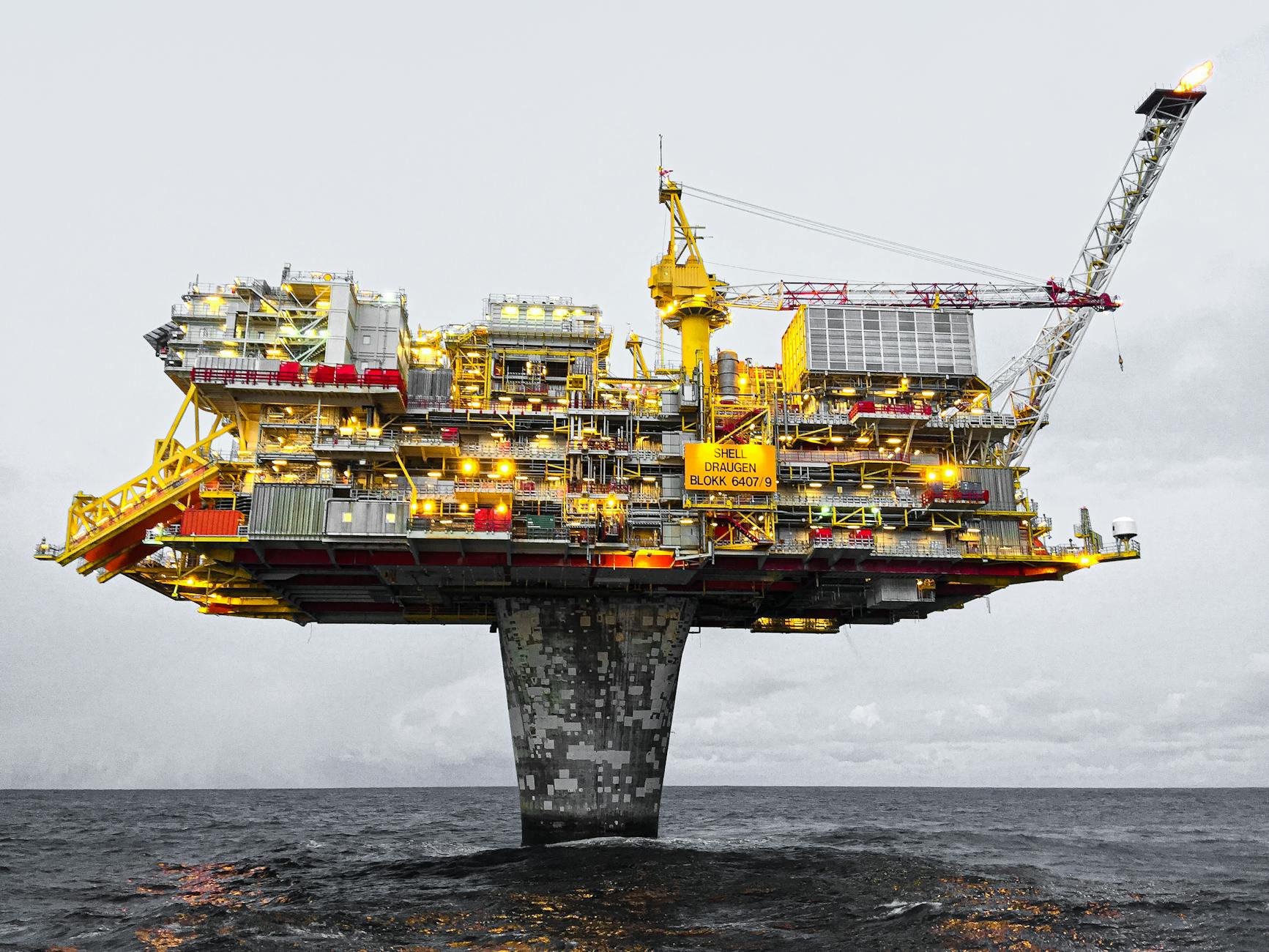
At the heart of Shell’s renewed interest in Venezuela lies the Dragon gas field, a colossal offshore asset with estimated reserves of 4.5 trillion cubic feet (Tcf) of natural gas. This field, located in Venezuelan waters just 11 miles offshore Trinidad, is not merely another gas project; it’s a strategic linchpin for regional energy security and a potential game-changer for Shell’s natural gas portfolio. Its development has been repeatedly delayed for years due to regulatory uncertainty and U.S. sanctions, making the recent license issuance a critical breakthrough.

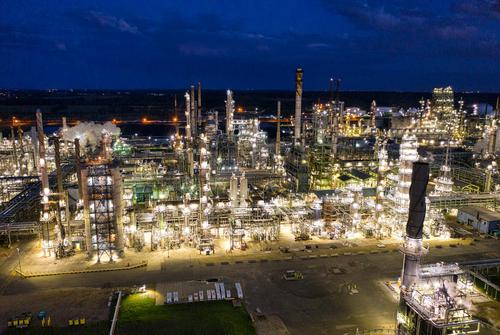
The Dragon project’s significance is amplified by its proximity to Trinidad and Tobago, a nation with substantial, yet underutilized, liquefied natural gas (LNG) export infrastructure. Trinidad’s Atlantic LNG facility, operated by BP and Shell, has been operating at significantly reduced capacity, processing only 8.5 million metric tons last year against its full capacity of 12.5 million metric tons. Bringing Dragon gas online could supply an estimated 0.35–0.4 billion cubic feet per day, enough to add roughly 2.5–3 million tonnes of LNG exports per year, effectively filling Trinidad’s processing trains and allowing it to regain lost market share.

Shell has already accelerated its timeline, now aiming for first gas production by 2026, a year ahead of the previously projected 2027 launch. This ambitious schedule underscores the urgency and strategic value Shell places on the project. The company plans to begin an environmental baseline survey in April, focusing on critical engineering work to construct an approximately 16km pipeline linking Dragon to Trinidad. A final investment decision is expected this year, contingent on the U.S. license extension beyond its current October 2025 validity.

For Shell, the Dragon project offers a multi-billion-dollar opportunity, with projections suggesting it could generate around $500 million in annual revenues for up to 30 years. This long-term, high-volume gas supply would not only boost Shell’s production figures but also strengthen its position as a leading LNG exporter, diversifying its supply chains and enhancing its resilience in volatile global energy markets. The project is a clear manifestation of Shell’s strategic refocus on high-value oil and gas assets, particularly in the natural gas sector.

What are the Economic and Operational Implications for Shell?

The successful development of the Dragon gas project could significantly bolster Shell’s financial performance and strategic positioning. With a market capitalization of $230.70 billion and a P/E ratio of 12.72, Shell is a titan in the energy sector, but it constantly seeks avenues for sustainable growth and enhanced shareholder value. The Dragon project, with its potential for $500 million in annual revenues over three decades, represents a substantial long-term asset that could meaningfully contribute to the company’s top line.

Operationally, the project offers a compelling synergy with Shell’s existing assets. By feeding gas into Trinidad’s Atlantic LNG facility, where Shell is already a key operator, the company can leverage established infrastructure and expertise. This integration minimizes greenfield development risks and capital expenditure compared to building entirely new export facilities. The increased utilization of Atlantic LNG would also improve its cost efficiency, benefiting both Shell and its partners.

However, the path to profitability is not without its challenges. While Shell’s CEO Wael Sawan has expressed confidence in activating these opportunities within months, the actual execution involves complex engineering, environmental assessments, and significant capital deployment. The company’s net debt climbed to $45.7 billion by the end of 2025, up from $41.2 billion in September, even as it reported a 22% fall in adjusted earnings to $18.5 billion for 2025. This financial backdrop means that any new large-scale investment must be carefully managed to avoid further debt accumulation while delivering strong returns.

Shell’s recent financial performance, including a 3.7% dividend yield and 47.5% payout ratio, indicates a commitment to shareholder returns. The Dragon project, if executed efficiently, could provide a stable, long-term cash flow stream to support these payouts and future growth initiatives. The company's focus on high-value oil and gas, alongside its efforts to reduce spending on underperforming clean energy projects, highlights a pragmatic approach to capital allocation, making the Dragon project a prime candidate for investment.

What are the Risks and Hurdles Shell Must Navigate?

While the prospect of unlocking Venezuela’s Dragon gas field presents a compelling opportunity for Shell, the venture is fraught with significant risks and complex hurdles. The primary concern revolves around political stability within Venezuela. Despite the recent leadership change, the country's history of political volatility, corruption, and state interference in its energy sector casts a long shadow. As Francisco Monaldi, director of the Latin America Energy Program at Rice University’s Baker Institute, aptly noted, "The dust needs to settle, a lot of things need to happen."

A critical risk is the long-term credibility of contractual arrangements and fiscal terms. International energy companies require robust legal frameworks and stable fiscal policies to justify multi-billion-dollar investments. It remains an open question whether the current Venezuelan government can credibly guarantee the necessary legal and fiscal terms for such large-scale projects. Trinidad’s Prime Minister Kamla Persad-Bissessar has also emphasized that her country is not interested in a deal that supersedes a democratically elected government, underscoring the need for legitimate and stable governance in Venezuela.

Furthermore, the U.S. licenses, while a positive step, are not permanent. The special license allowing Shell and Trinidad’s National Gas Company (NGC) to pursue Dragon development is currently extended through October 2025. Industry leaders are closely watching whether this license will be renewed, especially given the recent tightening of U.S. sanctions on Venezuela, including the termination of a key license for Chevron. Any future shifts in U.S. policy could abruptly halt progress, as seen with a prior deal between Shell, NGC, and the Venezuelan government that was scrapped due to protests over U.S. military assets.

Operational and security risks are also paramount. Years of mismanagement have left Venezuela’s energy infrastructure in disrepair, and the physical security environment for personnel and assets remains a concern. As Clayton Seigle of CSIS cautioned, it is "way premature for energy companies and outside investors to already be de-risking the physical security environment." Shell will need to invest heavily not only in developing the field but also in ensuring the safety and stability of its operations in a historically challenging environment.

How Does This Impact Shell's Long-Term Strategy and Shareholder Value?

Shell's pursuit of the Dragon gas project is a clear signal of its long-term strategic direction, particularly its commitment to natural gas as a transition fuel and a core component of its Integrated Gas segment. CEO Wael Sawan has explicitly stated the company's refocus on high-value oil and gas assets, alongside a reduction in spending on underperforming clean energy projects. This pragmatic approach aims to maximize returns from traditional energy sources while navigating the broader energy transition.

For shareholders, the Dragon project could represent a significant value driver, offering a stable, long-term revenue stream that diversifies Shell's production base and strengthens its LNG portfolio. The project's potential to generate $500 million annually for 30 years provides a predictable cash flow that can support Shell's attractive dividend yield of 3.7% and ongoing share buyback programs. The company has consistently delivered substantial buybacks, with $3.5 billion in the last quarter of 2025, marking its 17th consecutive quarter of at least $3 billion in buybacks.

However, the impact on shareholder value will ultimately hinge on Shell's ability to successfully mitigate the substantial political and operational risks. While the resource potential is immense, the execution risk in Venezuela is arguably higher than in more stable jurisdictions. Investors will be closely scrutinizing Shell's progress, particularly regarding the renewal of U.S. licenses and the establishment of credible, long-term contractual agreements.

Shell's current valuation metrics, including a P/E of 12.72 and a P/B of 1.30, suggest a company trading at reasonable multiples within the energy sector. A successful Dragon project could lead to an upward re-rating as the market prices in new, de-risked production. Conversely, any significant setbacks could weigh on investor sentiment, highlighting the delicate balance between opportunity and risk that defines this venture.

What Should Investors Watch Next?

Shell's renewed push into Venezuela's Dragon gas field presents a high-stakes opportunity, but investors must remain vigilant. The immediate focus should be on the U.S. license extension, which is critical for the project's continuity beyond October 2025. Any delays or non-renewal could significantly impact Shell's accelerated timeline and financial commitments.

Secondly, monitor the political and legal landscape within Venezuela. The stability of the new government and its ability to provide credible, long-term contractual guarantees will be paramount. Statements from Trinidadian officials also bear watching, as their support is essential for the project's integration with Atlantic LNG.

Finally, keep an eye on Shell's capital allocation decisions and operational updates. The company's ability to manage project costs, ensure security, and deliver first gas by 2026 will be key indicators of success. This venture is a test of Shell's strategic agility and risk management in a complex geopolitical environment.

Shell is betting big on Venezuela's gas potential, and while the rewards could be substantial, the path forward is anything but smooth. Investors should weigh the significant upside against the inherent geopolitical and operational uncertainties. This is a long-term play, demanding patience and a keen eye on evolving developments.


Want deeper research on any stock? Try Kavout Pro for AI-powered analysis, smart signals, and more. Already a member? Add credits to run more research.

SHARE THIS ON:

Related Articles

Category

You may also like

No related articles available

Breaking News

View All →

No topics available at the moment