MarketLens
Has the U.S. Economy Dodged a Recession in 2026

Key Takeaways
- The U.S. economy has demonstrated surprising resilience, pushing down recession odds to around 40-49% for 2026, a notable shift from earlier, more pessimistic forecasts.
- Key indicators like robust GDP growth, moderating inflation, and a normalized yield curve signal underlying strength, despite persistent concerns about the labor market and energy prices.
- Investors should brace for continued volatility driven by geopolitical tensions and upcoming economic data, but the long-term outlook remains constructive for diversified portfolios.
Has the U.S. Economy Dodged a Recession in 2026?
The narrative around a looming U.S. recession has dramatically shifted, with recent economic data painting a picture of unexpected resilience. While fears of an imminent downturn dominated headlines just months ago, the consensus among economists now suggests a significantly lower probability, hovering around 40-49% for 2026. This marks a stark contrast to the 100% recession predictions seen in 2022 or the nearly 75% consensus in 2023, neither of which materialized.
This newfound optimism isn't baseless. The economy has shown a remarkable ability to absorb shocks, from persistent inflation to aggressive interest rate hikes. We're seeing a "rolling recession" effect, where different sectors experience slowdowns sequentially rather than a synchronized contraction across the entire economy. For instance, while tech struggled in 2022 and manufacturing in 2024, other sectors continued to grow, providing crucial offsets.
Furthermore, the "K-shaped economy" has played a significant role in maintaining overall demand. Wealthier households have continued to spend robustly, even amidst inflationary pressures, supporting businesses and preventing a broader collapse in consumer confidence. This sustained spending, coupled with strategic investments in infrastructure, technology, and manufacturing, has provided a solid foundation for growth as we navigate 2026.
However, it's critical not to mistake resilience for immunity. While the immediate threat of a deep recession has receded, the economy remains in a delicate balance. The S&P 500 is already down about 7% in 2026, with the Nasdaq Composite dropping over 10% and the Dow Jones Industrial Average off nearly 8%, reflecting ongoing market caution. The question isn't if challenges exist, but whether the economy's structural strengths can continue to outweigh the headwinds.
What Key Economic Indicators Are Signaling Strength?
Several crucial economic indicators are flashing green, contributing to the reduced recession odds and suggesting a more stable, albeit measured, path forward for the U.S. economy. Perhaps most notably, the U.S. Treasury yield curve has normalized, with the 2-year/10-year spread now at a healthy +0.52%. This positive spread, a reversal from the inverted curve that historically signaled impending recessions, indicates that bond investors are no longer pricing in an immediate downturn. The 10-year yield stands at 4.33%, while the 2-year is at 3.81%, reflecting a more conventional market outlook.
Gross Domestic Product (GDP) figures also underscore this strength. As of October 1, 2025, the U.S. GDP stood at a robust $31,442.48 billion. While the upcoming Q4 GDP Growth Rate QoQ is estimated at a modest 0.7%, the full-year growth forecast for 2026 is a solid +2.5%, supported by continued investments in infrastructure, technology, and manufacturing. This sustained expansion suggests that the economy is not just avoiding contraction but actively growing.
Inflation, a major concern for the past few years, is finally showing signs of moderating towards the Federal Reserve's 2.0% target by year-end. The Consumer Price Index (CPI) was 327.46 as of February 1, 2026, and the PCE Price Index YoY for February is estimated to remain at 2.8%. This deceleration is partly attributed to the diminishing impact of higher tariffs and a more rapid deceleration in the "shelter" component of CPI, which accounts for a hefty 35% of the index. If these trends hold, it could pave the way for further Fed rate cuts, currently at 3.64%, which would provide additional tailwinds to economic activity.
Consumer spending, a bedrock of the U.S. economy, remains healthy. Retail sales were $638.22 million as of February 1, 2026, indicating that despite some pressures, consumers are still actively participating in the economy. This sustained demand, particularly from wealthier households, is a critical buffer against broader economic weakness. These combined factors paint a picture of an economy that, while not without its challenges, possesses significant underlying momentum.
What Are the Remaining Headwinds and Risks?
Despite the improved outlook, significant headwinds and risks persist that could still derail the U.S. economy's soft landing. The labor market, in particular, remains the most significant risk for 2026. While the unemployment rate sits at 4.40% as of February 1, 2026, the primary concern isn't mass layoffs but rather a "low-hire, no-fire" environment. Monthly payroll growth in 2025 averaged just 50,000 jobs, decreasing to 29,000 per month from June to August, with a projected 911,000 fewer jobs in 2025 after revisions. This slowdown disproportionately impacts younger workers, with unemployment for 16-24 year olds above 10% and rising for six months.
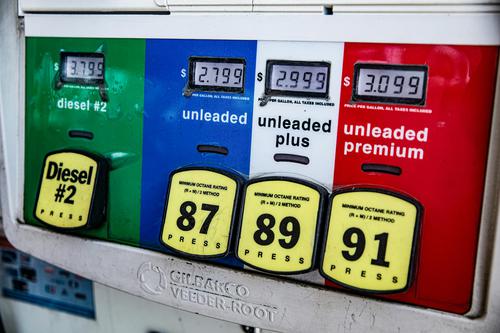
Energy prices represent another critical vulnerability. Crude oil is currently surging towards $120 per barrel, with the May 2026 contract at $110.78. Historically, energy shocks have preceded eight of the past nine U.S. recessions, making this a serious warning sign. A continued sharp rise in oil prices would increase costs across transportation, manufacturing, and households, reducing discretionary spending and slowing growth. This dynamic could force the Federal Reserve to maintain higher interest rates for longer, further tightening financial conditions.
Geopolitical tensions and policy uncertainty also cast a long shadow. Escalations in global conflicts could disrupt supply chains and increase uncertainty, prompting businesses to cut back on investment and hiring. Domestically, quickly changing trade policies and tariffs have created business uncertainty, particularly for small businesses less equipped to absorb sharply higher costs. While the "One Big Beautiful Bill Act" aims to provide tax relief and incentivize domestic capital spending, the broader policy landscape remains a source of apprehension.
Finally, market valuations present a potential risk. The S&P 500 Shiller CAPE Ratio is currently near 40, the second-highest it's ever been, significantly above its long-term average of around 17. Similarly, the Buffett indicator, which measures total market cap to GDP, sits at around 213% as of March 2026, well above Warren Buffett's "playing with fire" threshold of 200%. These elevated valuations suggest the market could be overvalued and prone to a significant correction, especially if corporate earnings growth, projected to be double-digits for the S&P 500 in 2026, fails to materialize broadly across sectors beyond Big Tech.
How Are Interest Rates and Inflation Shaping the Outlook?
The interplay between interest rates and inflation is arguably the most critical factor shaping the U.S. economic outlook for 2026. The Federal Reserve's aggressive rate-hiking cycle, which saw the federal funds rate climb to 3.64% by March 1, 2026, was a direct response to surging inflation. Now, with inflation showing signs of moderating, the focus shifts to the timing and pace of potential rate cuts. The PCE Price Index YoY for February is estimated at 2.8%, with the MoM figure at 0.4%. If these trends continue, reaching the Fed's 2.0% target by year-end becomes a realistic possibility.
This moderation in inflation is largely driven by two key factors: the diminishing impact of tariffs and a deceleration in the "shelter" component of the CPI. As the economy moves past the anniversary of tariff implementations, their upward pressure on prices should considerably lessen. Simultaneously, the housing market, a significant contributor to inflation through shelter costs, is cooling. This combination could give the Fed the flexibility to begin easing monetary policy, with expectations for cuts in January and May, and potentially another in December 2025.
However, the path to lower rates isn't without its challenges. Persistent U.S. deficit dynamics and growing Treasury supply could keep longer-term interest rates firm, even if the Fed cuts short-term rates. The 10-year Treasury yield, currently at 4.33%, reflects this underlying pressure. If inflation were to re-accelerate, perhaps due to surging oil prices or unexpected supply shocks, the Fed might be forced to maintain its restrictive stance, or even hike again, which would significantly tighten financial conditions and increase recession risk.
The labor market's response to monetary policy is also crucial. While wage growth has remained a full percentage point higher than pre-pandemic rates, a sustained slowdown in hiring could eventually weigh on consumer spending. The Fed's "appropriate monetary policy" aims to foster maximum employment and price stability. Balancing these two mandates will dictate the pace of interest rate adjustments, with any misstep potentially leading to either runaway inflation or an unnecessary economic contraction. The upcoming Core PCE Price Index MoM (Feb) and GDP Price Index QoQ (Q4) will be closely watched for further clues on inflation's trajectory.
What Does This Mean for Investors in 2026?
For investors, 2026 promises to be a year of both opportunity and continued vigilance. The reduced recession odds and underlying economic resilience suggest a constructive environment for asset prices, but after three years of strong gains, particularly in Big Tech, tempered return expectations are warranted. The market's rally will likely need to broaden beyond the "Magnificent Seven," with more industries delivering profit gains to sustain momentum. S&P 500 Index earnings per share are projected to grow by double-digits, with profit gains anticipated across most major sectors.
Given the ongoing volatility and potential for "fits and starts," active management strategies could prove more valuable than ever. Identifying opportunities beyond mega-cap tech, which has driven much of the recent market performance, will be key. This involves leaning into high-quality investments and diversifying portfolios to mitigate concentration risk. While AI and technology investments are expected to drive productivity gains, their impact on broad job creation and profit growth across all sectors is still evolving.
The current market environment, characterized by elevated valuations like the Shiller CAPE Ratio near 40 and the Buffett indicator at 213%, suggests that investors should exercise caution. While a recession isn't guaranteed, the market is priced for perfection, leaving little room for error. Any significant negative surprises, whether from geopolitical events, a renewed surge in oil prices, or a sharper-than-expected slowdown in the labor market, could trigger a substantial pullback.
However, history also teaches us that downturns can create lucrative long-term buying opportunities. If stocks tumble, it could be a chance to acquire high-quality assets at discounted prices. The market has a 100% success rate of recovering from recessions and bear markets over the long term. Therefore, maintaining a disciplined, long-term perspective, coupled with a focus on quality and diversification, will be paramount for navigating the complexities of 2026.
Navigating the Path Ahead
The U.S. economy in 2026 is a complex tapestry of resilience and risk. While the immediate threat of a deep recession has receded, investors must remain acutely aware of the persistent headwinds, particularly in the labor market and energy sector. The Federal Reserve's delicate balancing act between inflation and employment will continue to dictate market sentiment and the pace of interest rate adjustments.
Ultimately, a disciplined, long-term investment strategy, prioritizing diversification and quality, will be crucial for navigating the expected volatility. The economy's underlying strengths provide a solid foundation, but vigilance against potential shocks and an adaptable approach to portfolio positioning will be key to capitalizing on opportunities in the year ahead.
Want deeper research on any stock? Try Kavout Pro for AI-powered analysis, smart signals, and more. Already a member? Add credits to run more research.
Related Articles
Is the U.S. Economy Headed for Stagflation
Category
You may also like


The Economy Is Growing: So Where Are The New Jobs?

Are We Headed For a ‘Soft Landing’ or a Recession in 2026?

U.S. Economy Shows Strength: Consumer Spending Defies Cooling Expectations
Breaking News
View All →Featured Articles
Top Headlines

Chevron: Prolonged Iran War A Catalyst

Tesla Sold Over 358K Vehicles Globally In Q1, BYD Nearly Matches Total For Just Exports

Globalstar stock soars on Amazon rumors. Why the Starlink rival's shares are blasting into space today

GSAT's 18-Year High Isn't Just About Amazon - Soros, AQR, Millennium Saw It Coming