MarketLens
How is the Current Government Shutdown Impacting Major Airlines

Key Takeaways
- The ongoing government shutdown, now over a month long, is creating significant operational headaches and financial risks for major U.S. airlines, particularly American, United, and Delta.
- Airline CEOs are aggressively lobbying Congress to pass legislation that would ensure essential aviation personnel are paid during future shutdowns, aiming to stabilize the critical travel infrastructure.
- While the market reaction has been mixed, investors should closely watch legislative developments, jet fuel price volatility, and sustained travel demand as key drivers for airline stock performance.
How is the Current Government Shutdown Impacting Major Airlines?
The U.S. airline industry finds itself once again caught in the crosshairs of political gridlock, as a partial government shutdown, now stretching over a month since its inception on February 14, continues to wreak havoc on air travel. This latest impasse, specifically targeting the Department of Homeland Security (DHS), has left tens of thousands of essential Transportation Security Administration (TSA) officers, U.S. Customs clearance officers, and air traffic controllers working without pay. The immediate fallout is palpable: passengers are enduring "extraordinarily long – and painfully slow – lines at checkpoints," with some airports like Houston Hobby and New Orleans reporting security wait times exceeding two to four hours.
This disruption comes at a particularly inopportune moment, as the busy spring break travel season is in full swing, with airlines anticipating a record 171 million passengers this spring. The mounting pressure on the aviation system is further exacerbated by upcoming major events like the FIFA World Cup 2026 and America's 250th birthday celebrations. Airline executives from American Airlines, United, Delta, and others have collectively voiced their frustration, stating that "air travel has once again become 'the political football'" in Washington. They emphasize the unacceptable nature of national travel security employees going without pay, especially as many have already missed their first full paycheck.
The operational strain is evident across the country. TSA call-outs have risen significantly, leading to the closure of some security checkpoints and a general slowdown in screening processes. While TSA PreCheck remains operational, the popular Global Entry program has been paused nationwide, forcing international arrivals into standard, often much longer, customs lines. Airlines are attempting to mitigate the chaos by holding flights for delayed passengers and offering rebooking options, but they warn that Congress must act swiftly to prevent further deterioration of the system. The industry has even launched a "Pay Federal Aviation Workers" campaign, underscoring the urgency of the situation.
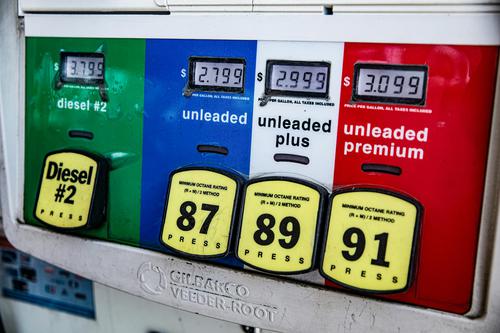
Beyond the immediate inconvenience, the shutdown introduces a layer of uncertainty that can deter future travel, impacting bookings and revenue. The longer the stalemate persists, the greater the risk of a cascading effect, leading to more widespread flight delays and cancellations. This environment of unpredictability, coupled with heightened concerns over domestic security threats and rising jet fuel prices due to ongoing geopolitical conflicts, creates a challenging backdrop for an industry that thrives on stability and efficiency. The question for investors is not just about the current disruption, but how these events will shape the financial landscape for major carriers in the months to come.
What Has Been the Financial Toll of Past Shutdowns on Airlines?
Government shutdowns are not a new phenomenon, and historical data provides a stark reminder of their tangible financial impact on major airlines. The most recent significant shutdown, a 43-day impasse in late 2025, served as a costly lesson, particularly for the legacy carriers. During that period, American Airlines (AAL) reported a substantial revenue loss of approximately $325 million, a figure notably higher than its peers. This disproportionate hit was largely concentrated in its domestic market, especially operations at Reagan National Airport, which is heavily reliant on government travel.
Delta Air Lines (DAL) also felt a significant pinch, reporting an estimated $200 million in pretax profit losses from the 2025 shutdown. The carrier noted a weakening in bookings during the extended period, translating to an approximate $0.25 per share impact on its quarterly earnings. United Airlines (UAL) similarly recorded a hit of around $250 million. These figures underscore how deeply intertwined the airline industry's financial health is with the stability of federal operations, particularly when it comes to critical infrastructure like air traffic control and security screening.
The 2025 shutdown also saw the Federal Aviation Administration (FAA) mandate capacity cuts, forcing airlines to trim their schedules to relieve pressure on already stretched air traffic controllers. This resulted in thousands of delayed or canceled flights, costing the travel industry an estimated $6 billion. Airlines for America (A4A), an industry trade group, estimated a "daily U.S. economic impact" of between $285 million and $580 million when FAA-mandated flight reductions reached 10%. The data clearly shows a sharp escalation in cancellations due to controller staffing issues as the shutdown dragged on, from just 11 flights in the first 29 days to 1,271 in the subsequent nine days.
This uneven impact highlights a critical vulnerability for hub-dependent carriers like American and Delta, which rely heavily on major airport operations and often serve a larger proportion of business and government travelers. In contrast, point-to-point carriers or those serving smaller markets sometimes experience less severe disruptions. The financial repercussions extend beyond direct revenue losses, encompassing increased operational costs from rebooking passengers, accommodating stranded travelers, and managing the logistical nightmare of a disrupted schedule. For investors, understanding this historical context is crucial for assessing the potential downside risk of the current, and any future, government-induced operational slowdowns.
How Are Airlines Lobbying Congress, and What Solutions Are Proposed?
In response to the recurring disruptions and significant financial toll of government shutdowns, major airline CEOs are not passively waiting for a resolution; they are actively and aggressively lobbying Congress for legislative solutions. A coalition of executives from American Airlines, United, Delta, JetBlue, Southwest, and Alaska Air Group, alongside cargo giants like UPS and FedEx, penned an open letter to lawmakers, urging immediate action. Their message is clear: "First, leaders should immediately come together to reach an agreement to fund the Department of Homeland Security. Then they need to act so this problem never happens again."
The industry is pushing for several specific legislative measures, including the Aviation Funding Solvency Act, the Aviation Funding Stability Act, and the Keep America Flying Act. The core objective of these proposals is to ensure that essential federal aviation workers—including TSA officers, U.S. Customs clearance officers at airports, and air traffic controllers—continue to be paid regardless of the government's funding status. This would decouple their paychecks from the political brinkmanship that often leads to shutdowns, thereby stabilizing the workforce and preventing the "sick outs" and resignations that cripple operations.
Airline executives, including Delta CEO Ed Bastian, have repeatedly pressed Washington officials to implement a long-term solution. They point to the FAA's Airport and Airway Trust Fund, which currently holds approximately $5 billion, as a potential source that could be used to pay air traffic controllers during future shutdowns. The argument is that this dedicated fund, generated from aviation taxes, should be accessible to maintain critical services, rather than allowing aviation to become "collateral damage in Washington’s policy debates."
The lobbying efforts extend beyond just ensuring pay. Industry leaders have also criticized decisions like the suspension of Global Entry, arguing that such programs, designed to expedite travel for vetted passengers, should remain operational. Chris Sununu, CEO of Airlines for America, stated, "There is absolutely zero justification for the Department of Homeland Security pausing either program." These efforts underscore a broader push for greater operational resilience and predictability in the face of political instability, aiming to protect both the traveling public and the industry's bottom line from future government-induced chaos.
What Does This Mean for Investors in American, United, and Delta?
For investors holding positions in American Airlines (AAL), United Airlines (UAL), and Delta Air Lines (DAL), the current government shutdown and the broader context of political instability present a complex risk-reward profile. As of March 13, 2026, 16:00 EDT, the market has reacted with a mixed bag of performance. American Airlines (AAL) is trading at $10.30, down 2.37% from its previous close, with a market cap of $6.80 billion. United Airlines (UAL) saw a slight uptick, trading at $86.60, up 0.08%, with a market cap of $28.04 billion. Delta Air Lines (DAL) showed the strongest positive movement, up 1.45% to $58.78, commanding a market cap of $38.39 billion.
The varied market response reflects several factors. Delta, with its robust balance sheet and strong operational performance, often demonstrates greater resilience during periods of uncertainty. Its recent press release about presenting at the J.P. Morgan Industrials Conference suggests a focus on investor relations and strategic communication, potentially reassuring the market. United also announced its participation in the same conference, indicating a similar proactive stance. American Airlines, however, has historically shown greater sensitivity to government shutdowns dueating to its network design and higher exposure to government travel, which could explain its current dip.
Investors need to weigh the immediate operational disruptions against the airlines' long-term fundamentals and the potential for legislative fixes. While the current shutdown causes short-term pain, the aggressive lobbying by airline CEOs for permanent solutions could de-risk future political impasses. If legislation like the Aviation Funding Stability Act passes, it would significantly reduce the uncertainty surrounding essential aviation worker pay, providing a more stable operating environment. This would be a major positive catalyst for the sector, especially for the legacy carriers.
Beyond the shutdown, investors must consider the broader economic environment. Rising jet fuel prices, exacerbated by geopolitical conflicts, represent a significant headwind, directly impacting operating costs. However, strong travel demand, particularly for spring break and upcoming major events, provides a powerful counter-narrative. The industry is expecting record passenger numbers, suggesting that the appetite for travel remains robust despite the current inconveniences. Therefore, the long-term outlook for these stocks will hinge on a delicate balance between managing political risks, controlling costs, and capitalizing on sustained consumer demand.
Is the Airline Industry Adequately Regulated, or Does Deregulation Still Hold Sway?
The current challenges faced by the airline industry, particularly during government shutdowns, inevitably spark discussions about the optimal level of government involvement and regulation. The industry's landscape was fundamentally reshaped by the Airline Deregulation Act of 1978, a landmark piece of legislation that dramatically reduced federal controls over pricing, route availability, and scheduling. This act aimed to foster competition and allow market forces to drive efficiency and lower costs, a stark contrast to the pre-1978 era where the Civil Aeronautics Board (CAB) dictated routes, set prices, and even limited competition.
The impact of deregulation has been profound. In 1977, only 25% of Americans had flown commercially in the past year; by 2024, that figure had more than doubled to 52%. Airfare, on average, was three times higher in the 1970s than it was in 2025, making air travel accessible to a much broader segment of the population. Last year, the U.S. saw 876 million enplanements, a 3.5-fold increase from 1977, with load factors rising from 55% to 81%. These statistics strongly suggest that deregulation achieved its primary goal of making air travel more affordable and widespread.
However, the current situation highlights a critical caveat: while economic regulation was largely dismantled, the government's role in safety, security, and air traffic control remains paramount. The FAA continues to oversee passenger safety and pilot certification, and the TSA is responsible for airport security. It is precisely these "essential" government functions, when disrupted by funding impasses, that expose the vulnerabilities of a deregulated industry that still relies heavily on federal infrastructure. The current shutdown isn't about price controls or route restrictions; it's about the fundamental operational backbone of the system.
Industry leaders, while staunch advocates for market-driven competition, are now pushing for legislative measures that could be seen as a form of "smart regulation" – not to control prices or routes, but to insulate critical operational components from political interference. Ensuring that air traffic controllers and TSA agents are paid during shutdowns is not a return to economic regulation but a pragmatic step to safeguard the efficiency and safety gains achieved through deregulation. The debate is no longer about whether to regulate, but how to ensure the essential, non-economic functions of government can reliably support a competitive, private-sector-led aviation industry.
What Are the Broader Risks and Opportunities for Airline Investors?
Beyond the immediate shadow of government shutdowns, investors in American, United, and Delta face a broader landscape of risks and opportunities that will shape their long-term performance. One significant and persistent risk is the volatility of jet fuel prices. Geopolitical tensions, particularly the ongoing conflict in the Middle East, have a direct and often immediate impact on crude oil markets, which translates into higher operating costs for airlines. While airlines employ hedging strategies, sustained price spikes can quickly erode profit margins, especially for carriers with less robust financial cushions.
Another evolving risk is the potential for increased regulatory scrutiny, even outside of shutdown scenarios. While the industry largely operates under a deregulated economic framework, concerns about consolidation, consumer protections, and environmental impact could lead to new legislative pressures. For instance, debates around airline competition, as highlighted by a recent Senate Judiciary Committee hearing, could introduce proposals that affect pricing power or operational flexibility. Investors should monitor these discussions closely, as even non-economic regulations can have significant financial implications.
However, opportunities abound. The underlying demand for air travel remains incredibly strong, driven by a growing global middle class, increasing business connectivity, and a desire for leisure experiences. The industry's resilience post-pandemic, with record passenger numbers projected for 2026, underscores this robust demand. Airlines are also investing heavily in fleet modernization, which improves fuel efficiency and enhances the passenger experience, potentially leading to higher yields and lower operating costs over time.
Technological advancements also present opportunities. Enhanced data analytics can optimize route planning, pricing strategies, and operational efficiency. Digital transformation in customer service, while still evolving, promises to streamline interactions and improve loyalty. Furthermore, the push for sustainable aviation fuels (SAFs) and other decarbonization efforts, while costly in the short term, could position airlines favorably in a future carbon-constrained economy. For investors, the key is to identify carriers that can effectively navigate these complex risks while aggressively capitalizing on the powerful tailwinds of global travel demand and technological innovation.
The current government shutdown serves as a potent reminder of the external vulnerabilities facing even the most robust airline operations. While the immediate focus is on resolving this political stalemate, the long-term success of American, United, and Delta will ultimately hinge on their ability to adapt to a dynamic geopolitical landscape, manage critical operational dependencies, and continue to meet the insatiable global demand for air travel. Investors should remain vigilant, prioritizing carriers with strong balance sheets and proactive management teams capable of navigating both political headwinds and market opportunities.
Want deeper research on any stock? Try Kavout Pro for AI-powered analysis, smart signals, and more. Already a member? Add credits to run more research.
Related Articles
Category
You may also like


United and American Fight at Chicago's O'Hare Draws Federal Scrutiny

U.S. Airlines Prepare for Record Number of Passengers this Spring Amid Government Shutdown

The government shutdown has delayed Friday's jobs report. Here's how the latest closure could end.
Breaking News
View All →Featured Articles
Top Headlines

Opinion | Apple's Cheap AI Bet Could Pay Off Big

2 No-Brainer AI Stocks to Buy Right Now

Got $1,000? Here's the Artificial Intelligence (AI) Stock I'd Buy First

3 Stocks Investors Should Buy Hand Over Fist