MarketLens
How is the Iran Conflict Immediately Impacting Global Markets

Key Takeaways
- The escalating Iran conflict has immediately spiked oil prices, with Brent crude jumping to $79.30 a barrel, and threatens to reignite global inflation, particularly if the Strait of Hormuz faces prolonged disruption.
- A sustained oil shock could force central banks, including the Federal Reserve, to delay or even reverse interest rate cuts, complicating efforts to bring inflation down to target.
- Experts warn that a prolonged closure of the Strait of Hormuz could trigger a "guaranteed global recession" and stagflation, posing significant risks to economic growth and stability worldwide.
How is the Iran Conflict Immediately Impacting Global Markets?
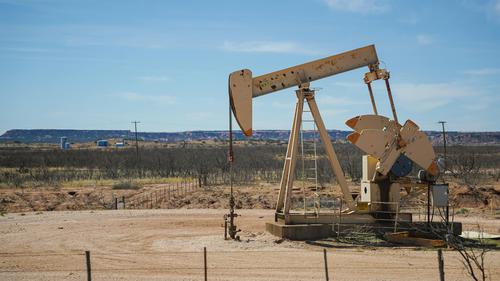
The escalating conflict between the US, Israel, and Iran has sent immediate shockwaves through global financial markets, with oil prices surging and a palpable sense of uncertainty taking hold. Brent crude, the international benchmark, jumped nearly 9% on Monday to trade around $79.30 a barrel, a significant move reflecting fears of supply disruption. This sharp increase follows an already considerable rise from just above $60 in January, as regional tensions intensified.
The primary concern revolves around the Strait of Hormuz, a critical chokepoint through which approximately 20% of the world's oil and liquefied natural gas (LNG) supplies transit. Reports indicate that tanker traffic through this vital passage has largely halted, with insurers reluctant to provide coverage for vessels. This disruption, even if temporary, underscores the fragility of global energy supply chains and the immediate market reaction to perceived threats to this crucial artery.
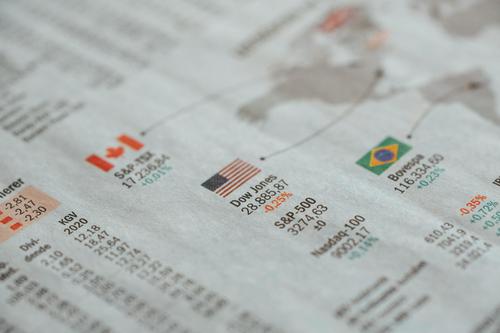
Beyond oil, the bond market has also seen significant shifts. Initially, geopolitical conflicts often trigger a "flight to safety," pushing Treasury prices up and yields down. However, this time, the inflation implications of soaring oil prices quickly overshadowed the safe-haven bid. On Monday, the benchmark 10-year Treasury yield rose 8 basis points to 4.044%, while the 2-year Treasury note yield climbed 10 basis points to 3.479%. This move indicates that inflation concerns are now a dominant factor, with investors dumping bonds as crude prices revive worries about sticky inflation.
The market's immediate focus is on the duration and scale of the disruption. While a brief spike in oil prices might be absorbed, a prolonged closure of the Strait of Hormuz or direct attacks on energy infrastructure in the wider region would have far more severe and lasting consequences. This situation is not merely a headline risk; it's a pricing event, forcing investors to re-evaluate their positions across asset classes, from energy stocks and gold to fixed income and broader equities.
Will Soaring Oil Prices Reignite Inflationary Pressures?
The most immediate and keenly felt economic impact of the Iran conflict is through the rising cost of oil, which carries a significant risk of reigniting inflationary pressures globally. Current US inflation stands at 2.29%, already above the Federal Reserve's 2% target. A sustained surge in crude prices could quickly push this figure higher, unwinding months of progress in taming price pressures.
Economists at Goldman Sachs suggest that even a worst-case scenario involving a complete, month-long blockage of the Strait of Hormuz could see oil prices jump by as much as $15 a barrel. More broadly, if oil prices shoot up to $90-$100 a barrel and remain elevated, inflation in developed markets could be up to 0.8% higher than expected. This is not just about the price at the pump; rising energy costs feed through rapidly to consumers' pockets and have wider knock-on effects for the cost of almost everything else, from manufacturing to transportation.
The duration of any oil price shock is as crucial as its magnitude. If prices retrace over the next few months due to de-escalation or increased output from other producers, the impact on inflation might be modest and short-lived. However, if the conflict is prolonged and disrupts maritime traffic for an extended period, the inflationary consequences could be severe. Some analysts warn that a full disruption of Iran's 5% share of global supply could push prices towards $108 per barrel, while a scenario akin to the 1970s oil crisis, leading to a similar scale of global economic crisis, would require oil prices to reach around $200 a barrel.
Net energy importers in Asia and Europe, including the UK, will be hit particularly hard by higher prices. While the US, with its robust shale oil supplies and strategic petroleum reserve, is somewhat more insulated, a prolonged spell of higher costs would still deter the Federal Reserve from delivering desired interest rate cuts. The risk is clear: oil is the Fed's "tripwire," and if it rises and stays elevated, pushing inflation expectations higher, central banks will be forced to respond.
How Does This Conflict Influence the Federal Reserve's Rate Decisions?
The escalating Iran conflict significantly complicates the Federal Reserve's path forward on interest rates, making policymakers "even more on hold" and reluctant to cut. Former Treasury Secretary Janet Yellen explicitly stated that the situation "puts the Fed even more on hold, more reluctant to cut rates than they were before this happened." This sentiment reflects the core dilemma: geopolitical shocks typically prompt a flight to safety, but this time, the overriding concern is oil-driven inflation.
The Fed's current Federal Funds Rate stands at 3.64%, with the US inflation rate at 2.29%. Before the Iran shock, the market was pricing in potential rate cuts later in the year, with the 2-year Treasury yield at 3.47% and the 10-year at 4.05%. However, the recent surge in oil prices has caused a repricing. Markets have now pushed the next expected Fed rate cut back to September, with bets for a third reduction in 2026 fading. This shift is a direct consequence of renewed inflation worries.
The Fed's trigger for a policy shift is straightforward: oil prices must rise and stay elevated, and inflation expectations must drift higher. Without both, the Fed is likely to remain patient, avoiding cutting or hiking rates. If oil holds above $100 for weeks, the 2-year Treasury and 1-month Term SOFR will reprice higher as expected rate cuts are pushed further into the future. This is not just a theoretical exercise; if oil becomes a sustained inflation problem, it directly impacts borrowing costs for businesses and consumers.
Policymakers would prefer to tackle one problem at a time, but the current environment presents a collision of forces: slower growth against higher oil-driven inflation. The Fed has to worry that market participants might perceive them as not serious about getting inflation down to 2% if they cut rates amidst rising energy costs. This psychological aspect is crucial, as it could lead to permanently higher inflation expectations and worsened tradeoffs for the central bank.
Could a Prolonged Conflict Lead to a Global Recession and Stagflation?
The most dire warnings emanating from the Iran conflict point to the potential for a "guaranteed global recession," particularly if the Strait of Hormuz faces a prolonged closure. Bob McNally, a former energy advisor to the White House, explicitly stated that "a prolonged closure of the Strait of Hormuz is a guaranteed global recession." This isn't merely hyperbole; the strait carries approximately 20% of global oil and LNG supplies, and its disruption would create a supply shock of a magnitude not seen in decades.
Beyond a recession, economists are increasingly warning of stagflation – a troublesome blend of high inflation and anaemic or non-existent growth. The global trading system is already under stress from existing tariffs and fragmented supply chains. Adding a major energy shock, which drives up maritime freight costs and overall inflation while simultaneously slowing economic activity, would open the door to such a scenario. The US economy, despite its domestic energy production, would not be immune, potentially facing a 1.0-1.5% shock to inflation and a similar hit to overall GDP growth if the oil spike is sustained.
The impact would be uneven across the globe. China, as the "world's factory," would be particularly affected due to its heavy reliance on oil shipped through the Strait of Hormuz. Europe, while potentially less impacted than by the 2022 gas shock, would still face significant headwinds. The closure of Gulf airspace is already disrupting aviation between Europe and Asia, adding another layer of economic friction.
While some experts suggest that the world is less reliant on oil than during the 1970s crises, the interconnectedness of the global economy means that a major energy shock would reverberate widely. The duration and intensity of the conflict are key. A short, sharp shock might be manageable, but a sustained disruption would undoubtedly weaken an already fragile global economy, presenting considerable political and economic risks for major powers and potentially forcing a premature end to military campaigns if economic stability crumbles.
How Are Treasury Markets and Investors Reacting to Geopolitical Uncertainty?
Treasury markets are grappling with a complex interplay of forces: the traditional safe-haven bid during geopolitical turmoil versus renewed inflation fears driven by spiking oil prices. Initially, the instinct was to flock to US government bonds, which saw their best month in a year in February as investors sought shelter. However, this sentiment evaporated quickly as the Iran conflict intensified, leading to a significant selloff in Treasuries.
On Monday, the 10-year Treasury yield rose 8 basis points to 4.044%, and the 2-year yield climbed 10 basis points to 3.479%. This move, which saw yields soar from recent lows, indicates that inflation concerns are now outweighing the safe-haven demand. The market is pricing in war risk and labor data simultaneously, creating sharp swings and range-bound trading. The 2s/10s spread, currently at a normal +0.58%, could see further volatility as these dynamics play out.
The duration of the conflict is the critical question for fixed income investors. A brief spike in risk premium is one thing; a prolonged shock that starts to weigh on capital expenditure and hiring decisions is another. Historical analysis shows that major oil supply shocks tend to lift Treasury yields rather than suppress them, especially in the short to medium term. When energy spikes, bonds do not always behave like a comfort blanket, as the initial inflation surge often dominates.
For investors, this environment demands disciplined risk management. The market is now weighing slower growth against higher oil-driven inflation, with a Federal Reserve that needs sustained evidence before changing course. This means watching key indicators closely: Brent crude prices and tanker flows, market-based inflation gauges, and upcoming labor data like the Non-Farm Payrolls report on Friday, March 6. If oil holds above $100 for weeks, the outlook for interest rates, and thus bond prices, will shift significantly, pushing expected rate cuts further into the future.
The Iran conflict presents a formidable challenge to the global economic outlook, threatening to reignite inflation, delay central bank rate cuts, and potentially trigger a global recession. Investors must remain vigilant, focusing on the duration of the conflict and its impact on oil flows, as these will be the primary determinants of market stability and the trajectory of interest rates. Building portfolios for resilience, with an eye on energy-related assets and defensive plays, appears prudent in this uncertain environment.
Want deeper research on any stock? Try Kavout Pro for AI-powered analysis, smart signals, and more. Already a member? Add credits to run more research.
Related Articles
Category
You may also like


The Iran Conflict Is Hitting Stocks Across the World. Just Look at This Red-Hot Market.

Oil Spikes After Iran Attack, Pressuring Global Markets

Here's How The Conflict In Iran Is Affecting Markets
Breaking News
View All →Featured Articles
Top Headlines

Nvidia Swears Off an Earnings Crutch, Putting Pressure on Other Tech Companies

Apple stock flashes ‘worst bearish cross', expert warns crash to $200 imminent

How Build-A-Bear Went on an Nvidia-Like Run

IP Group portfolio company Oxa raises $103 million in Series D backed by National Wealth Fund and Nvidia