MarketLens

Log in

How is the Middle East Conflict Impacting Global Oil Prices

1 day ago
SHARE THIS ON:

How is the Middle East Conflict Impacting Global Oil Prices

Key Takeaways

  • The escalating Middle East conflict has sent crude oil prices soaring, with Brent crude now trading well above $100 a barrel, signaling a significant risk premium for global energy markets.
  • Disruptions to the Strait of Hormuz and Red Sea shipping lanes are creating a dual shock of higher energy costs and snarled supply chains, threatening to reignite inflation and slow global economic growth.
  • Central banks face a difficult balancing act, as persistent energy price hikes could force them to reconsider interest rate cuts, potentially leading to a stagflationary environment.

How is the Middle East Conflict Impacting Global Oil Prices?

The recent escalation of conflict in the Middle East has dramatically reshaped the global energy landscape, sending crude oil prices surging and introducing a substantial risk premium into the market. Following US and Israeli strikes in Iran and subsequent retaliatory attacks, the international benchmark, Brent crude, has broken above $100 a barrel, a level not seen in over 18 months. This sharp increase reflects immediate market anxiety over supply disruptions, particularly concerning the Strait of Hormuz, a critical chokepoint through which approximately one-fifth of global oil and liquefied natural gas (LNG) supplies transit daily.

Just days ago, on March 3rd, traders were already demanding an additional $14 per barrel to compensate for heightened geopolitical risks. This premium has only grown as the situation intensifies. Our real-time data shows crude oil (CLUSD) trading at $106.22, marking a significant +16.85% jump from its previous price of $90.90. This spike pushes the price beyond its 52-week high of $108.83, indicating severe market stress.

Goldman Sachs Research estimates that a full one-month closure of the Strait of Hormuz could add anywhere from $10 to $15 per barrel to oil prices, even with offsets like spare pipeline capacity and strategic petroleum reserve releases. Without these measures, the impact would be even more severe. The current price action suggests the market is pricing in a significant, prolonged disruption, far beyond a temporary shock.

This rapid ascent from Brent crude's $61 at the end of last year and $77 just days ago underscores the market's sensitivity to Middle East stability. While Iran's own production of 3.5 million barrels per day (mb/d) of crude oil and 0.8 mb/d of condensate accounts for about 4% of global supply, the real concern lies in the 20 mb/d of global oil production that relies on the Strait of Hormuz. Any sustained impediment to this flow will have profound and lasting implications for energy costs worldwide.

What Are the Broader Economic Consequences for Global GDP and Inflation?

The ripple effects of soaring energy prices and disrupted supply chains extend far beyond the oil market, posing a significant threat to global economic growth and inflation targets. Before the recent escalation, the International Monetary Fund (IMF) projected a healthy 3.3% global economic growth for the year. However, a prolonged conflict could shave off a substantial portion of this, with some economists suggesting up to half a percentage point could be lost from economic growth in the European Union alone if the conflict drags on for several months.

Inflation, already a persistent concern for central banks, is now facing renewed upward pressure. The Guardian reported that if oil prices shoot up to $90-100 a barrel and remain there, inflation in developed markets could be up to 0.8% higher than expected. With crude oil now trading at $106.22, this scenario is already playing out. Goldman Sachs also projected that if oil prices stay at current levels for several months, US consumer price inflation (CPI) could rise from 2.4% in January to 3% by year-end. Our latest CPI reading as of January 1, 2026, stands at 326.59, indicating that inflationary pressures are already elevated.

The impact is particularly acute for net energy importers in Asia and Europe. Asian economies, which receive 80-90% of crude oil and LNG shipped through the Strait of Hormuz, are especially vulnerable. Goldman Sachs estimates that a six-week closure of the Strait, pushing oil prices from $70 to $85 a barrel, could lead to a 0.7 percentage point rise in regional inflation in Asia. The current price of $106.22 suggests an even more severe outcome.

Beyond energy, the conflict is snarling broader supply chains. India, for instance, has 400,000 metric tons of basmati rice exports stuck at ports due to shipping disruptions. Prices for critical agricultural inputs like urea and sulfur, heavily sourced from the Middle East, have also jumped by 35% and more, respectively. These secondary impacts will inevitably feed into consumer prices for food and other goods, creating a broader inflationary impulse that central banks will find challenging to contain.

How Will the Conflict Impact Global Supply Chains and the Shipping Industry?

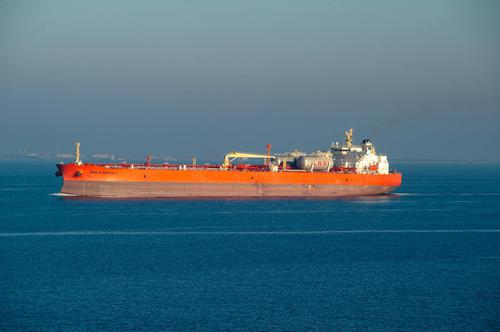
The escalating Middle East conflict is delivering a severe one-two punch to global supply chains and the shipping industry, first through direct transit disruptions and then via cascading cost increases. The Strait of Hormuz, a critical artery for 20% of global oil and LNG, is effectively stalled, with tanker traffic deterred by the threat of attacks. This forces vessels to reroute, often around the Cape of Good Hope, adding 10-14 days per leg to journeys and significantly extending global fleet turnover cycles.

The Red Sea, another vital corridor linking Europe and Asia, is also facing severe disruption, with some reports indicating ships are now dodging the Suez Canal. This widespread rerouting is not merely an inconvenience; it translates directly into higher shipping costs. War risk insurance premiums for Middle East routes have already surged threefold, and some insurers are reportedly reluctant to provide cover at all, making cargo transport operationally impossible regardless of cost.

A prolonged conflict, extending beyond four weeks, would see these disruptions escalate dramatically. Carriers might suspend Middle East routes entirely, leading to widespread port congestion and berthing delays of up to a month at major global ports. The efficiency of global container turnover would decline sharply, intensifying empty container imbalances and driving freight rates even higher. Air cargo is also affected, with many planes grounded and airspace restricted, impacting high-value items like smartphones and microchips.

The "short-term shock, long-term transmission" principle observed in past geopolitical events is highly relevant here. Even if the conflict de-escalates quickly, the lagged impact on shipping premiums, freight rates, and container availability could persist for three to six months. This means manufacturing sectors dependent on Middle East trade routes will face both cost inflation and delivery delays, forcing companies to accelerate supply chain diversification and redesign logistics networks to build resilience.

What Does This Mean for Central Bank Policy and Interest Rates?

The renewed inflationary pressures stemming from the Middle East conflict present a formidable challenge for central banks worldwide, complicating their carefully laid plans for interest rate adjustments. Just as markets began to anticipate a pivot towards rate cuts, the surge in energy prices and supply chain disruptions threatens to push inflation higher and keep it there for longer. This puts policymakers in a precarious position, balancing the need to tame inflation against the risk of stifling economic growth.

The Federal Reserve, for instance, could find it even more difficult to deliver interest rate cuts this year if oil prices remain elevated. The 10-year US Treasury yield, a key indicator of market expectations for long-term interest rates, has already risen to 4.15%, up from 4.0% recently. This reflects investor concerns that central banks may be forced to hold rates steady for longer, or even consider further tightening, to combat persistent inflation. Germany's 10-year bonds have also seen yields rise from 2.6% to 2.9%, signaling similar anxieties in the Eurozone.

For economies heavily reliant on Middle East oil imports, such as many in Asia, the policy calculus is even more acute. Nomura expects central banks in Malaysia, Australia, and Singapore to tighten interest rates if a potential oil shock fuels inflation. Policymakers in India and South Korea will likely hold rates steady for longer, while the Philippines and Indonesia may pause on anticipated rate cuts. This divergence in policy responses could lead to increased volatility in currency markets and capital flows.

The specter of stagflation—a period of high inflation coupled with economic stagnation—is now a real concern, reminiscent of the 1970s oil shocks. While some argue the global economy is less oil-dependent today, the interconnectedness of modern supply chains means energy price hikes rapidly feed into the cost of nearly everything. Central banks face a difficult choice: accept higher inflation or risk pushing already fragile economies into recession by maintaining restrictive monetary policy.

Is Europe Facing a New Energy Crisis?

Europe, still reeling from the energy shocks of the Russia-Ukraine conflict, now faces the very real threat of a new energy crisis, primarily driven by potential disruptions to liquefied natural gas (LNG) flows through the Strait of Hormuz. This narrow waterway is not just crucial for oil; it's also a vital artery for approximately 80 million tons per annum of LNG, representing 19% of global LNG supply. Any significant impediment to these flows would have immediate and severe consequences for European gas markets.

Goldman Sachs Research estimates that if LNG flows through the Strait of Hormuz are fully halted for just one month, Dutch natural gas (TTF) prices could approach 74 EUR/MWh. This is a dramatic increase from the approximately 31.6 EUR/MWh where TTF natural gas traded recently. A hypothetical longer disruption, lasting more than two months, would likely lift European natural gas prices to more than 100 EUR/MWh. While these levels are still below the peaks seen after Russia's invasion of Ukraine, Europe's current stockpiles are lower than in recent years, making the region more vulnerable to price spikes as it prepares for next winter.

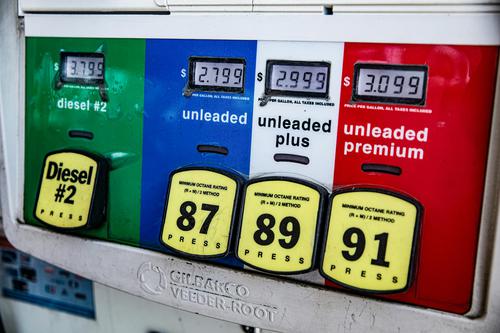
The impact is already being felt. Benchmark European gas prices surged 38% recently, exacerbated by state-owned QatarEnergy halting production at two sites after drone attacks. Germany has seen gasoline and diesel prices jump by double digits over the past week. Consumer price inflation in the European Union, which stood at 2% in January, could rise by more than a percentage point if the conflict drags on for several months, according to Berenberg bank.

Such a scenario would not only squeeze consumers at the pump and in their heating bills but also significantly impact industrial production. High-energy-consuming industries like steel, chemicals, and cement could face widespread production suspensions or be forced to curtail capacity due to sustained cost pressures. This dual shock of higher energy costs and potential supply shortages threatens to shave up to half a percentage point off economic growth in the EU, pushing the continent closer to a recessionary environment.

The Middle East conflict has unleashed a potent cocktail of risks for the global economy. Investors should brace for continued volatility, prioritize defensive positions, and closely monitor the duration of the conflict and its impact on energy transit. The path ahead is fraught with uncertainty, demanding vigilance and adaptability from all market participants.


Want deeper research on any stock? Try Kavout Pro for AI-powered analysis, smart signals, and more. Already a member? Add credits to run more research.

SHARE THIS ON:

Related Articles

Category

You may also like

Stock News10 hours ago

How will central banks respond to the war in Iran & soaring oil prices?

Rising crude oil prices due to Middle East conflict will likely intensify inflation fears ahead of next week's Federal Reserve meeting. Key U.S. CPI and PCE data releases are expected soon.
News3 days ago

How The Mideast War Impacts Oil, Gas, And U.S. Stocks

The eruption of Middle East war raises major questions for energy markets, inflation, and the global economy. The conflict may impact oil, natural gas, and fertilizer supply chains. Consequences could...
Stock News5 days ago

Oil Swings as Iran Denies Report of US Outreach to End War

Oil prices fluctuated after Iran denied reports of indirect US outreach aimed at ending the Middle East war, which threatens global energy flows.
Stock News6 days ago

Oil Rises as Middle East Conflict Keeps Supply Disruption Risks Elevated

Oil prices rose during the morning Asian session because the ongoing Middle East conflict sustained elevated risks of supply disruption.

Breaking News

View All →

Top Headlines

View More →
Stock News32 minutes ago

German publishers reject Apple's revised app tracking rules, urge antitrust fine

Stock News43 minutes ago

Microsoft's Stock Is Off to Its Worst Start to a Year Since 2008. Is Now the Time to Buy?

Stock News1 hour ago

Alphabet (GOOGL) Exceeds Market Returns: Some Facts to Consider

Stock News1 hour ago

Why Alphabet Inc. (GOOG) Outpaced the Stock Market Today

Stock News2 hours ago

Large cap tech stocks like Nvidia are a deal now, says Silvant Capital's Michael Sansoterra