MarketLens
How is the E-commerce Boom Reshaping the Logistics Landscape for SCLN

Key Takeaways
- The e-commerce logistics market is projected for explosive growth, with some estimates suggesting a 26.5% CAGR to reach nearly $6.9 trillion by 2035, creating a massive tailwind for SupplyChain Logistics (SCLN).
- SCLN's revised optimistic earnings forecast is underpinned by its strategic embrace of advanced technologies like AI and IoT, alongside a pivot towards integrated omnichannel solutions and sustainable practices.
- While the market presents significant opportunities, investors should closely monitor SCLN's ability to navigate intense competition, manage high capital expenditure for automation, and adapt to evolving regulatory landscapes.
How is the E-commerce Boom Reshaping the Logistics Landscape for SCLN?
The relentless surge in e-commerce is not just a retail phenomenon; it's a fundamental re-architecture of global logistics, creating unprecedented opportunities for companies like SupplyChain Logistics (SCLN). Consumers now expect lightning-fast, trackable, and often free delivery, a demand that has transformed logistics from a back-office function into a strategic differentiator. This shift is forcing every player in the supply chain to innovate or risk obsolescence, directly benefiting agile technology-driven providers.
Consider the sheer scale of this transformation: the global e-commerce logistics market, valued at approximately $660.64 billion in 2025, is projected by some analyses to skyrocket to an astonishing $6.86 trillion by 2035, exhibiting a staggering 26.5% CAGR. Even more conservative estimates place the market at $1.58 trillion by 2034 with an 11.89% CAGR. This exponential growth, fueled by increasing internet penetration and smartphone adoption globally, means a continuous, escalating demand for sophisticated logistics solutions that SCLN is uniquely positioned to provide.
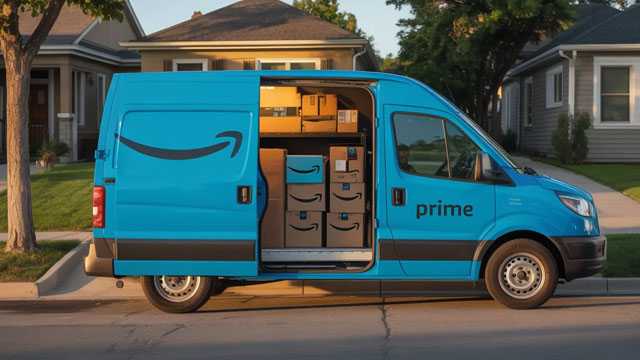
The "Amazon Effect" has permeated every corner of retail, setting new benchmarks for speed and convenience. Retailers are no longer just managing physical stores; they're juggling online storefronts, home deliveries, and in-store pickups. This complexity demands a unified fulfillment approach, where "an order is an order" regardless of its origin or destination. SCLN's focus on providing single-pane visibility across all channels, automating order ingestion, and offering real-time inventory insights directly addresses this critical need, allowing suppliers to maintain precision at scale and secure vital partnerships.
Moreover, the diversification of e-commerce product offerings, from groceries and pharmaceuticals to large appliances, necessitates highly specialized and efficient logistics. This requires advanced handling capabilities, temperature-controlled environments, and optimized last-mile delivery. SCLN's ability to integrate these diverse requirements into a cohesive, technology-driven solution positions it as a crucial enabler for businesses striving to meet the ever-expanding scope of online consumer demands.
What are the Key Drivers Behind SCLN's Optimistic Earnings Forecast?
SCLN's revised optimistic earnings forecast isn't built on wishful thinking; it's grounded in a confluence of powerful market trends and the company's strategic positioning within them. At its core, the forecast reflects the burgeoning demand for sophisticated supply chain management (SCM) solutions, a market projected to grow from $35.7 billion in 2025 to $91 billion by 2034 at a 10.9% CAGR. SCLN is directly tapping into this expansion by offering solutions that address the modern enterprise's most pressing logistics challenges.
A primary driver is the pervasive integration of digital technologies. SCLN is at the forefront of leveraging artificial intelligence (AI), machine learning (ML), the Internet of Things (IoT), and blockchain to revolutionize supply chain operations. These innovations enable predictive analytics for demand forecasting, optimize delivery routes to cut costs and transit times, and provide end-to-end transparency that was once unimaginable. By embedding these capabilities into its offerings, SCLN helps clients reduce operational expenses, improve service levels, and proactively mitigate risks, making its solutions indispensable.
Furthermore, the shift towards cloud-based SCM models (SaaS) presents a significant growth avenue. Cloud solutions offer unparalleled scalability, remote accessibility, and lower upfront costs, appealing to both large enterprises and small-to-medium enterprises (SMEs). SCLN's emphasis on subscription models and integrated platforms provides the flexibility businesses need to adapt quickly without heavy capital investment. This model not only expands SCLN's addressable market but also creates a more predictable, recurring revenue stream, bolstering its earnings outlook.
The growing global emphasis on sustainability and ESG (Environmental, Social, and Governance) compliance also plays a pivotal role. Organizations are increasingly seeking supply chain solutions that enable carbon footprint tracking, ethical sourcing, and waste reduction. SCLN's offerings that facilitate these objectives are not just a competitive advantage but a necessity for many businesses, aligning with regulatory pressures and consumer preferences. This strategic alignment with sustainability trends positions SCLN for long-term relevance and growth in an increasingly conscious marketplace.
How is Technology Integration Fueling SCLN's Competitive Edge?
SCLN's competitive edge in the rapidly evolving logistics sector is fundamentally powered by its aggressive and intelligent integration of cutting-edge technologies. The company understands that in an industry where speed, efficiency, and transparency are paramount, technological superiority is not just an advantage—it's a prerequisite for survival and growth. This strategic focus on innovation allows SCLN to differentiate its services and capture a larger share of the expanding market.
The deployment of AI and machine learning is transforming SCLN's operational capabilities. These technologies enable sophisticated predictive analytics, allowing for highly accurate demand forecasting. Imagine pre-positioning high-demand inventory in urban micro-fulfillment centers before orders even arrive, drastically reducing last-mile transit times and enabling same-day delivery promises. This data-driven approach, which can improve forecast accuracy by 15%, directly enhances efficiency and elevates the customer experience, a critical differentiator in today's market.
Moreover, SCLN is leveraging automation and robotics within its warehouse management systems (WMS). Automated sortation systems in urban distribution centers are accelerating to manage rising parcel volumes, with some facilities reporting a 25% increase in throughput. This not only addresses labor shortages but also ensures higher accuracy rates, with targets often exceeding 99.5% for order accuracy. The integration of IoT provides real-time visibility across the entire supply chain, from inventory tracking to fleet management, allowing for dynamic route optimization and proactive problem-solving.
Beyond internal operations, SCLN is enhancing its offerings with digital customs platforms for international shipments, streamlining cross-border trade compliance. This is crucial as cross-border e-commerce continues its robust growth, with consumers increasingly purchasing from international online retailers. By simplifying complex regulatory frameworks and providing transparent tracking solutions, SCLN is making international transactions smoother and more reliable, fostering trust and expanding its global reach.
What are the Opportunities and Challenges in the E-commerce Logistics Market?
The e-commerce logistics market, while a significant tailwind for SCLN, presents a dual landscape of immense opportunities alongside considerable challenges. Understanding these dynamics is crucial for investors assessing SCLN's long-term trajectory. The sheer scale of market growth, with some forecasts suggesting a near $6.9 trillion valuation by 2035, underscores the vast potential for companies that can effectively navigate this complex environment.
Opportunities: The expansion of cross-border logistics services is a massive opportunity. Consumers are increasingly comfortable buying internationally, driven by improved payment gateways and global shipping options. Companies like Cainiao are already expanding global logistics networks, demonstrating the demand for cost-effective, reliable international fulfillment. SCLN, with its focus on digital customs platforms and robust international shipping networks, can capitalize on this trend, especially as emerging markets in Asia-Pacific, Latin America, and the Middle East continue their industrial expansion and e-commerce penetration.
The demand for flexible fulfillment solutions, such as on-demand warehousing for peak season logistics, is also growing rapidly. This allows businesses to scale capacity without long-term capital commitments, improving asset utilization. SCLN's ability to offer such adaptable solutions, coupled with its focus on real-time inventory management and automated returns processing, positions it to meet the evolving needs of retailers and e-commerce platforms. The emphasis on a superior customer delivery experience, including precise time windows and real-time communication, further drives investment in the very technologies SCLN provides.
Challenges: However, the market is not without its hurdles. The high capital cost associated with implementing advanced automation, robotics, and AI can be a significant barrier to entry and a continuous investment requirement. SCLN must manage these expenditures effectively to maintain profitability. Furthermore, the complexity of cross-border customs and varying regulatory frameworks across different regions demands constant vigilance and adaptability. Geopolitical tensions and trade rewiring are fundamentally restructuring global supply networks, shifting from optimization-first logistics to risk mitigation, requiring resilient and flexible solutions.
Intense competition from established logistics giants like Amazon, DHL, FedEx, Kuehne + Nagel, and UPS, who are also heavily investing in technology and infrastructure, poses a constant threat. SCLN must continuously innovate and differentiate its services to avoid being commoditized. Lastly, the environmental pressure to adopt sustainable practices, while an opportunity, also presents a challenge in terms of developing and implementing eco-friendly solutions across vast supply chains.
How Can SCLN Sustain Growth Amidst Market Pressures and Competition?
To sustain its impressive growth trajectory amidst intense market pressures and fierce competition, SCLN must execute a multi-pronged strategy focused on continuous innovation, strategic partnerships, and operational excellence. The logistics sector is no longer a quiet background operation; it's a visible, strategic component that determines customer retention and market leadership. SCLN's ability to adapt and evolve will be critical in a world that remains fast-moving and unpredictable.
Firstly, SCLN needs to double down on its technological leadership. While it's already integrating AI, ML, and IoT, the pace of technological change demands constant investment in R&D. This includes exploring agentic AI for unified commerce, advanced warehouse robotics coordination, and further optimizing route planning. By staying ahead of the curve, SCLN can continue to offer solutions that are not just efficient but truly transformative for its clients, creating a sticky customer base and justifying premium pricing.
Secondly, strategic partnerships and collaborations will be vital. The logistics industry is seeing a flurry of merger and acquisition activity as established players seek to expand their e-commerce reach. While SCLN may not be an acquirer of the same scale, forming alliances with technology providers, local delivery services, or even collaborative shipping networks can enhance its capabilities and extend its geographic reach without massive capital outlay. This allows for shared transportation capacity, reduced empty miles, and improved overall utilization rates.
Finally, SCLN must prioritize building a flexible, intelligent, and scalable network that can adapt to rapid shifts in consumer behavior and global trade dynamics. This means investing in robust technology governance frameworks that evaluate new solutions against standardized criteria and integration requirements. It also involves fostering cross-functional technology teams that bring together IT specialists with operational experts, ensuring that new systems address real business needs and contribute directly to key performance indicators like order accuracy, fulfillment time, and on-time delivery.
What Does This Mean for Investors Considering SCLN?
For investors eyeing SCLN, the current landscape presents a compelling narrative of high growth potential, but also necessitates a nuanced understanding of the associated risks. The optimistic earnings forecast is well-supported by the undeniable tailwinds of the e-commerce boom and the critical role SCLN plays in modernizing supply chains. However, a deep dive into the company's execution and market position is essential.
The sheer market size and projected growth rates for both the broader SCM market and the e-commerce logistics segment offer a robust foundation for SCLN's expansion. The company's strategic alignment with digital transformation, sustainability, and omnichannel fulfillment positions it squarely in the path of these megatrends. Investors should view SCLN as a play on the infrastructure powering the digital economy, rather than just another logistics provider. Its focus on high-value, technology-driven solutions suggests a potential for stronger margins compared to traditional logistics.
However, investors must also weigh the competitive intensity. The logistics sector is crowded with well-capitalized players. SCLN's ability to maintain its technological edge and customer loyalty will be paramount. Monitoring its capital expenditure, particularly for automation and AI integration, will be crucial to ensure these investments translate into tangible returns and don't erode profitability. Furthermore, the global nature of supply chains means exposure to geopolitical risks and regulatory changes, which can impact operational costs and efficiency.
Ultimately, SCLN appears to be a high-growth opportunity within a transformative industry. Its success hinges on its continued ability to innovate, adapt, and scale its technology-driven solutions while prudently managing capital and navigating a dynamic competitive landscape. Investors should look for consistent execution on its strategic initiatives and a clear demonstration of how its technological investments translate into sustained revenue and earnings growth.
SCLN is positioned at the nexus of e-commerce expansion and technological innovation, making it a compelling growth story. Its ability to leverage AI, IoT, and cloud solutions to streamline complex supply chains is a significant differentiator. While competition and capital intensity remain key considerations, SCLN's strategic focus on efficiency, transparency, and sustainability provides a strong foundation for long-term value creation in the evolving digital economy.
Want deeper research on any stock? Try Kavout Pro for AI-powered analysis, smart signals, and more. Already a member? Add credits to run more research.
Related Articles
Category
You may also like


GOFO and QLS Join Forces to Strengthen E-Commerce Logistics Across the Netherlands

How SMX Is Replacing Assumption With Proof Across Fashion, Luxury, and Materials

Will Alibaba Stock Recover Amid Slowing E-Commerce Market Momentum?
Breaking News
View All →Featured Articles
Top Headlines

ETJ's Put Options On The S&P 500 Are Finally In-The-Money - Buy At $8.10

3 Bargain Stocks the Market Is Mispricing After the Recent Sell-Off

Securities Fraud Investigation Into Alibaba Group Holding Ltd. (BABA) Continues – Investors Who Lost Money Urged To Contact Glancy Prongay Wolke & Rotter LLP, A Leading Securities Fraud Law Firm

Super Micro Co-Founder Charged With Smuggling Nvidia Chips to China | Bloomberg Tech 3/20/2026