MarketLens
Is Gold's Current Rally Sustainable Amidst Middle East Tensions

Key Takeaways
- Gold prices have surged, with futures trading at $5,391.60, as escalating US-Israel strikes on Iran and subsequent retaliation ignite a global flight to safety.
- Historically, geopolitical tensions consistently drive gold demand, positioning the yellow metal as a critical hedge against uncertainty and inflation.
- While a sustained rally is plausible if the conflict persists, investors should brace for extreme volatility and potential whipsaw movements, especially near record highs.
Is Gold's Current Rally Sustainable Amidst Middle East Tensions?
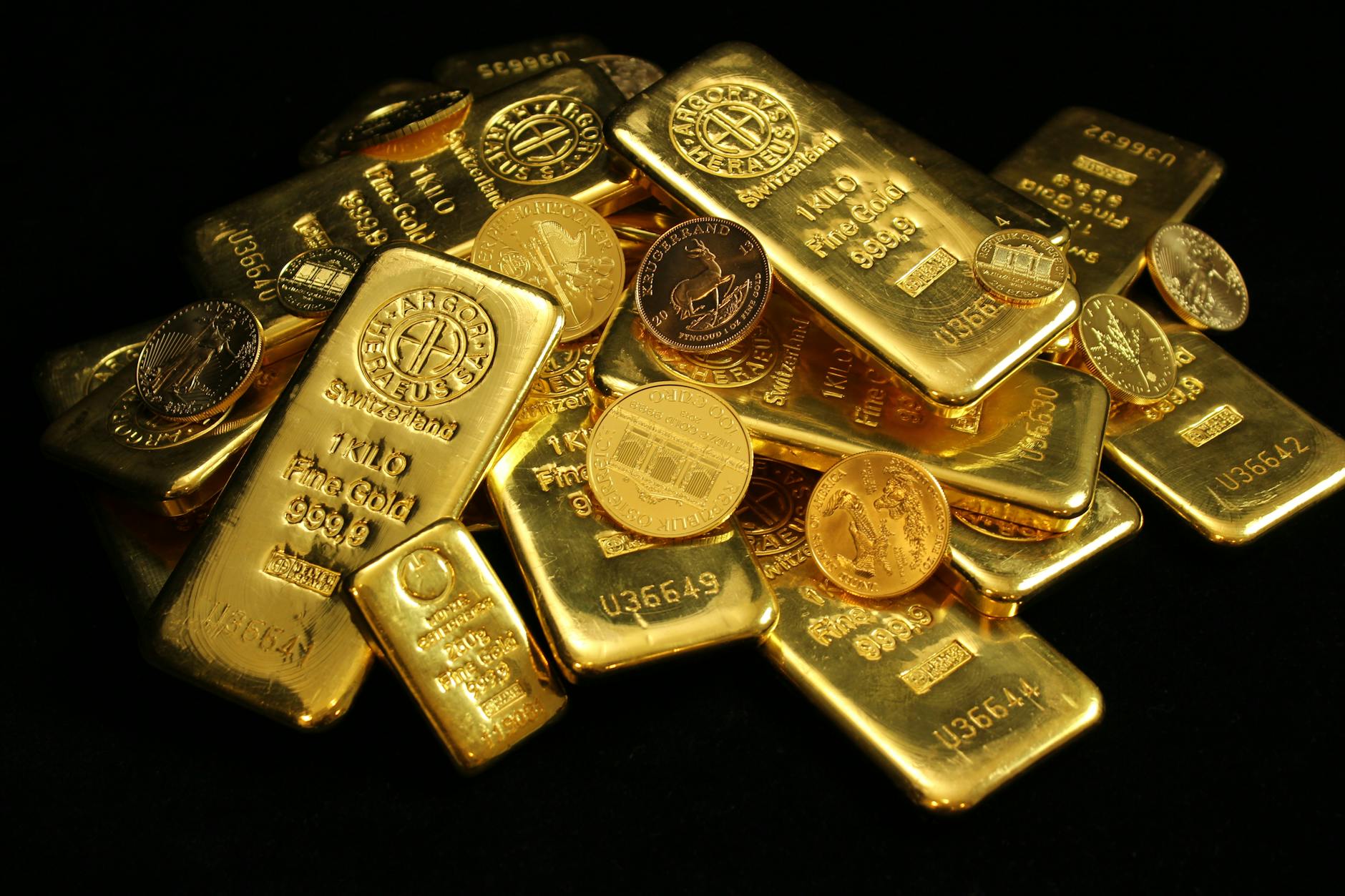
Gold has once again asserted its role as the quintessential safe-haven asset, with prices surging dramatically as geopolitical tensions in the Middle East reach a critical boiling point. The recent US-Israel strikes on Iran, followed by Tehran's retaliatory missile launches, have plunged the region into a new, highly volatile conflict. This immediate escalation has sent shockwaves through global markets, prompting a rapid reallocation of capital into traditional hedges like gold.
The yellow metal's ascent is not merely a knee-jerk reaction; it reflects a deep-seated investor anxiety over potential widespread instability and economic disruption. Gold futures (GCUSD) are currently trading at $5,391.60, marking a significant +2.74% increase from the previous close. This move comes after a period of consolidation, with the price now well above its 50-day average of $4,883.25 and nearing its 52-week high of $5,626.80.
Exchange-Traded Funds (ETFs) tracking gold have mirrored this upward trajectory. SPDR Gold Shares (GLD) closed at $483.75, up +1.31%, while iShares Gold Trust (IAU) also gained +1.31% to reach $99.07. These instruments offer convenient exposure to gold, and their robust performance underscores the broad-based investor demand for tangible assets in times of crisis. The market is clearly pricing in a prolonged period of uncertainty, making gold a central theme for investors navigating this complex landscape.
The immediate concern for markets revolves around the Strait of Hormuz, a critical chokepoint through which 20% of the world's oil flows. Disruptions here would not only spike oil prices further but also exacerbate global inflation fears, reinforcing gold's appeal as an inflation hedge. President Donald Trump's suggestion that the conflict could last for several more weeks, with attacks continuing until US objectives are met, adds another layer of uncertainty, signaling that this geopolitical premium on gold may be more than just a fleeting event.
Why is Gold the Go-To Safe Haven in Times of Conflict?
Gold's enduring appeal as a safe haven during geopolitical crises isn't a modern phenomenon; it's a historical constant, rooted in its unique characteristics. Unlike sovereign currencies or corporate equities, gold carries no credit risk and often exhibits a negative correlation to risk assets, making it an ideal portfolio diversifier when global stability falters. When the world feels uncertain, investors instinctively turn to gold as a tangible store of value.
Consider past crises: the Gulf War in the early 1990s, the aftermath of the 9/11 attacks, or the more recent Russia-Ukraine conflict. Each event saw gold prices surge as investors sought refuge from escalating tensions. The World Gold Council's research, utilizing the Geopolitical Risk (GPR) index, quantifies this effect, showing that an increase in the GPR index by 100 units typically correlates with a 2.5% positive impact on gold's return, even when accounting for other market variables.
This flight to safety is particularly pronounced when traditional financial systems face potential disruptions or when confidence in fiat currencies wanes. The current Middle East conflict, with its potential to disrupt global energy supplies and trigger wider economic instability, perfectly aligns with the conditions under which gold thrives. It's not just about fear; it's about preserving capital in an environment where other asset classes are under pressure.
Interestingly, other supposed "safe havens" have not fared as well. Bitcoin, often touted as "digital gold," has notably failed to act as a safe haven during recent geopolitical tensions, losing significant value over the past two months. This divergence highlights that in true crisis moments, investors still prefer tangible hedges like gold over nascent digital assets, reinforcing gold's traditional role. The market is effectively paying for insurance, and gold is the policy of choice.
How Are Gold ETFs (GLD, IAU) Reacting to the Escalation?
The escalating conflict has ignited significant activity in gold-backed Exchange-Traded Funds (ETFs), with GLD and IAU serving as primary conduits for investors seeking quick and liquid exposure to the yellow metal. These ETFs offer a convenient way to participate in gold's rally without the complexities of physical storage or futures contracts, making them highly sensitive barometers of investor sentiment during times of crisis. Both GLD and IAU saw robust gains today, each rising +1.31%, reflecting strong buying interest.
GLD, the SPDR Gold Shares, is currently trading at $483.75, having seen a substantial daily volume of 16,646,457 shares. Its market capitalization stands at a hefty $186.34 billion, underscoring its status as a major player in the gold market. The fund's 52-week range of $265.07 to $509.70 shows just how much ground it has covered, with the current price nearing the upper end of this spectrum, indicating strong bullish momentum driven by recent events.
Similarly, the iShares Gold Trust (IAU) is trading at $99.07, with a daily volume of 9,114,639 shares and a market cap of $84.47 billion. IAU's 52-week range of $54.20 to $104.40 also highlights its significant appreciation. The strong performance of both GLD and IAU suggests that institutional and retail investors alike are actively channeling capital into gold, viewing these ETFs as essential components of a risk-averse portfolio strategy.
This surge in ETF inflows is a global phenomenon. Data from The Kobeissi Letter reveals that Indian investors, for instance, have rapidly reallocated capital into gold, with gold ETF inflows climbing to an all-time high of approximately 250 billion rupees (around $2.7 billion). This surpasses equity mutual fund inflows for the first time, demonstrating a clear shift in investor preference towards safe-haven assets. The convenience and liquidity of gold ETFs make them particularly attractive during periods of heightened uncertainty, allowing investors to quickly adjust their exposure to geopolitical risks.
What Macroeconomic Headwinds and Tailwinds Could Shape Gold's Trajectory?
Gold's trajectory isn't solely dictated by geopolitical tremors; a confluence of macroeconomic factors acts as both tailwinds and headwinds, shaping its long-term outlook. Currently, several powerful tailwinds are converging to support higher gold prices, reinforcing its appeal beyond just crisis hedging. These include persistent inflation concerns, robust central bank demand, and the potential for a weaker US dollar alongside declining real interest rates.
The most immediate tailwind is gold's role as an inflation hedge. The Middle East conflict has already sent oil prices spiking, with Brent crude trading near $73 and showing strong year-to-date gains. Disruptions in the Strait of Hormuz could further tighten global supply, pushing energy costs higher and reigniting broader inflationary pressures. Gold historically thrives in such environments, offering a tangible store of value when purchasing power erodes.
Central bank demand provides a structural floor for gold prices. Many nations are actively accumulating gold as a neutral reserve asset, driven by persistent policy unpredictability, trade fragmentation, and the "weaponization" of the dollar-based financial system. This sustained institutional buying, often not explicitly captured in short-term models, adds a significant layer of support, making gold attractive for portfolio diversification and risk mitigation in a fragmented global economy.
Looking ahead, the Federal Reserve's monetary policy path remains a crucial driver. Markets anticipate further interest rate cuts in 2026. Lower nominal rates, coupled with inflation persisting above the Fed's 2% target, imply declining real interest rates. Historically, when real yields fall or turn negative, the opportunity cost of holding non-yielding gold decreases substantially, making it a more attractive investment. The World Gold Council suggests lower US interest rates could drive gold prices up 15-30% in 2026.
However, headwinds exist. A stronger US dollar, perhaps driven by successful fiscal consolidation or relative US economic outperformance, could weigh on dollar-denominated gold prices. Additionally, significant improvements in geopolitical stability, though beneficial for the global economy, could reduce gold's safe-haven premium. Finally, the growing competition from cryptocurrencies, particularly Bitcoin, which is marketed as "digital gold," could divert some alternative asset allocations, especially among younger investors.
What Are the Key Risks and Opportunities for Gold Investors Now?
For gold investors, the current environment presents a complex mix of significant opportunities alongside heightened risks. The primary opportunity lies in gold's proven ability to act as a crisis hedge, a role it is fulfilling robustly amidst the escalating Middle East conflict. With gold futures trading near $5,391.60, and major banks like J.P. Morgan and Bank of America projecting prices approaching the $6,000 level, the upside potential remains compelling if tensions persist or intensify.
One major opportunity stems from the potential for a prolonged conflict. If the Strait of Hormuz remains disrupted or military responses continue, oil and precious metals are likely to move higher, while global equities face renewed pressure. In such a scenario, the flight to safety could push gold towards new record highs, potentially even reaching $6,500 to $7,000 if major powers like Russia and China actively back Iran. This "doom loop" scenario, as some analysts term it, could create a significant spillover effect, further boosting gold.
However, the risks are equally pronounced. The market is currently experiencing extreme volatility, and a sharp opening higher, especially near record highs, could be a trap for those chasing the rally. Independent analyst Ross Norman warns that such a surge could be followed by a quick sell-off, shaking out weaker long positions. This "whipsaw" potential means investors must be prepared for rapid price swings and avoid over-leveraging.
Another risk factor is the possibility of de-escalation. While currently unlikely, any signals of diplomatic breakthroughs or a cooling of tensions could lead to a swift stabilization of risk assets and a corresponding pullback in gold prices. A stronger dollar or a rebound in equity markets after an initial sell-off could also limit gold's upside. Investors should also monitor upcoming US economic data, such as retail sales and non-farm payrolls, which could shift market sentiment away from pure geopolitical focus.
Navigating the Golden Storm: Investor Implications
The current geopolitical landscape has unequivocally put gold back in the spotlight, cementing its role as an indispensable safe-haven asset. Investors should recognize that while the immediate catalyst is conflict, deeper structural supports like central bank demand and inflation hedging are also at play. Expect continued volatility, but the fundamental case for gold remains strong as long as global uncertainty persists.
For those considering exposure, a combination approach might be prudent: maintaining core physical holdings for long-term stability, while using liquid ETFs like GLD or IAU for tactical adjustments. Dollar-cost averaging can help mitigate short-term price volatility, allowing investors to build positions systematically without trying to perfectly time the market. Ultimately, gold's current surge is a stark reminder of its enduring value in turbulent times, offering a crucial hedge against the unpredictable nature of global events.
Want deeper research on any stock? Try Kavout Pro for AI-powered analysis, smart signals, and more. Already a member? Add credits to run more research.
Related Articles
Category
You may also like


Oil Prices Mixed; May be Supported by Lingering Middle East Tensions

Gold Is Inching Closer To $5,000. Where Next For Investors?

New World Order? Gold Rallies, But America's Bull Market Holds
Breaking News
View All →Featured Articles
Top Headlines

Palantir: The U.S.-Iran Conflict Validates Its Unstoppable AI Military Moat

Vodafone teams up with Amazon's satellites to connect masts in Europe and Africa

Amazon's AWS reports power, connectivity issues in Bahrain, UAE amid Iran strikes

Tesla registrations in Denmark fall 18% year-on-year in February