MarketLens
Is Johnson & Johnson's $1 Billion Cell Therapy Investment a Game Changer

Key Takeaways
- Johnson & Johnson's $1 billion investment in a Pennsylvania cell therapy facility signals a strategic deepening into high-growth advanced medicines.
- The cell therapy market is poised for significant expansion, with the manufacturing segment alone projected to grow at a 26.11% CAGR through 2035.
- JNJ's existing oncology dominance, particularly in multiple myeloma with Carvykti, provides a strong foundation for leveraging these new manufacturing capabilities.
Is Johnson & Johnson's $1 Billion Cell Therapy Investment a Game Changer?
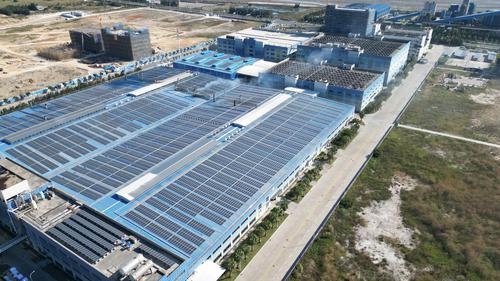
Johnson & Johnson (NYSE: JNJ) recently made headlines with its commitment to invest over $1 billion in a new cell therapy manufacturing facility in Pennsylvania. This move isn't just another capital expenditure; it's a strategic declaration, signaling JNJ's intensified focus on advanced therapies and its broader $55 billion commitment to U.S. investments by 2029. For a company that recently spun off its consumer health segment into Kenvue, this investment underscores a clear pivot towards high-growth, innovation-driven segments within Innovative Medicine and MedTech.
The Pennsylvania facility is designed to be a next-generation site, leveraging cutting-edge cell therapy technologies to support JNJ's burgeoning portfolio across cancer, immune-mediated, and neurological diseases. This isn't an isolated project; it complements other significant U.S. manufacturing expansions, including a $2 billion biologics facility in Wilson, North Carolina, and a 160,000-square-foot biopharmaceutical manufacturing site in Holly Springs, North Carolina. These investments collectively aim to bolster JNJ's domestic manufacturing capacity, enhance global competitiveness, and potentially mitigate risks associated with evolving trade policies, such as recent tariff threats.
Beyond the strategic implications for JNJ, these projects promise substantial economic impact. The Pennsylvania facility alone is expected to generate over 500 permanent biomanufacturing jobs and more than 4,000 construction jobs. This aligns with a broader trend of major pharmaceutical companies scaling up U.S. manufacturing, driven by both market demand and government incentives. For investors, this commitment to domestic, high-tech manufacturing suggests a long-term vision for supply chain resilience and a deeper integration into the U.S. healthcare ecosystem, further cementing JNJ's legacy of innovation.
How Fast is the Cell Therapy Market Actually Growing?
The cell therapy market is not just growing; it's undergoing a transformational shift from experimental programs to regulated, scalable therapeutic platforms. This is a critical backdrop for JNJ's substantial investment. The global stem cell therapy market, for instance, was valued at an estimated $20.1 billion in 2026 and is projected to reach $45.2 billion by 2036, exhibiting a robust Compound Annual Growth Rate (CAGR) of 8.4%. This growth is fueled by an aging global demographic, a rising burden of chronic diseases, and significant regulatory acceleration that is shortening commercialization timelines by an estimated 2-3 years in selected pathways.
Even more striking is the cell and gene therapy manufacturing market, which JNJ's new facility directly addresses. This segment was estimated at $26.67 billion in 2026 and is forecast to skyrocket to approximately $215.18 billion by 2035, demonstrating an impressive CAGR of 26.11%. This explosive growth highlights the immense demand for specialized manufacturing capabilities to bring these complex therapies to market. Key drivers include a surge in FDA approvals for cell and gene therapies and the expansion of contract manufacturing services, though high costs and manufacturing complexity remain significant restraints.
Within this burgeoning market, Mesenchymal Stem Cells (MSCs) are expected to retain leadership, holding approximately 45% of the market share in 2026. This is due to their tissue-specific differentiation potential across multiple indications and ongoing efforts to standardize production protocols. The market is moving into a "scale era," where commercial advantage increasingly depends on validated outcomes, regulatory readiness, and predictable, reliable production. JNJ's investment positions it squarely to capitalize on these trends, treating manufacturing capacity as a competitive moat rather than a mere cost center.
What Does JNJ's Existing Advanced Therapy Pipeline Look Like?
Johnson & Johnson isn't just entering the cell therapy space; it's already a significant player with a robust pipeline and an approved therapy. The company's oncology portfolio, in particular, is a major growth driver, with CEO Joaquin Duato projecting $50 billion in oncology sales by 2030. A substantial portion of this growth is expected from multiple myeloma (MM), where JNJ aims to reach $25 billion in sales by the same year. Central to this strategy is Darzalex/Faspro (daratumumab), JNJ's largest franchise, which forms the backbone of many current and pipeline MM regimens.
Crucially, JNJ also boasts an approved cell therapy, Carvykti (ciltacabtagene autoleucel), for adults with certain types of multiple myeloma. Despite general headwinds in the cell therapy market, JNJ expects a significant increase in Carvykti sales, noting that its sales are not restricted by supply. The company is actively expanding its reach, anticipating Carvykti to capture a significant portion of late-line patients. This existing commercial success provides a strong foundation and immediate demand for the increased manufacturing capacity that the new Pennsylvania facility will provide.
Beyond Carvykti, JNJ is aggressively bolstering its next-generation cell therapy capabilities through strategic partnerships. A notable collaboration is with Link Cell Therapies, aimed at advancing their proprietary LINK logic-gated CAR T platform into clinical development. This partnership focuses on delivering next-generation CAR T therapies designed for solid tumors, a notoriously challenging area, by leveraging "AND-gate" technology to selectively target tumor-specific antigen pairs, thereby minimizing off-tumor toxicity. This innovative approach, alongside other pipeline assets like the trispecific T-cell engager ramantamig and an in vivo CAR-T partnership with Kelonia Therapeutics, demonstrates JNJ's commitment to staying at the forefront of advanced therapeutic modalities.
How Does This Investment Impact JNJ's Financial Outlook and Valuation?
Johnson & Johnson's $1 billion cell therapy investment, while substantial, is a calculated move to secure future growth in a high-potential market, and it's important to view it within the context of the company's robust financial position. JNJ currently trades at $243.23, with a market capitalization of $586.16 billion. Its valuation metrics, such as a P/E ratio of 22.04 and a P/FCF of 29.76, reflect a company valued for its stability and consistent performance, albeit with a premium for its innovation pipeline.
The company's TTM (trailing twelve months) financials show healthy margins, with a gross margin of 72.8%, operating margin of 27.2%, and net margin of 28.5%. These strong profitability metrics provide the financial flexibility to undertake such significant capital expenditures without undue strain. Furthermore, JNJ's return on equity (ROE) stands at an impressive 33.8%, with ROIC at 13.7%, indicating efficient capital deployment. The current ratio of 1.03 suggests adequate liquidity, while a debt-to-equity ratio of 0.59 and net debt/EBITDA of 0.74 point to a manageable leverage profile.
While TTM free cash flow (FCF) growth was slightly negative at -0.7%, and operating cash flow growth was modest at 1.1%, these figures can fluctuate with large-scale investments and R&D cycles. The company's revenue growth of 6.0% and a remarkable net income and EPS growth of over 90% for FY2025 (year-over-year) underscore its underlying strength and capacity for significant earnings expansion. The 2.1% dividend yield, with a payout ratio of 46.2%, also signals a commitment to shareholder returns, making JNJ an attractive option for income-focused investors seeking exposure to growth in advanced therapies.
What Are the Key Risks and Opportunities for JNJ Investors?
Investing in Johnson & Johnson, even with its blue-chip status, involves navigating a complex landscape of risks and opportunities, particularly as it leans further into advanced therapies. On the opportunity side, the new cell therapy facility significantly de-risks JNJ's ability to scale production for its existing and future cell therapy pipeline, including blockbuster potential like Carvykti and innovative solid tumor CAR T programs. This manufacturing "moat" could provide a competitive edge in a market where production complexity and consistency are paramount. The broader $55 billion U.S. investment strategy also positions JNJ favorably against potential protectionist trade policies and strengthens its domestic supply chain.
However, the cell therapy market is not without its challenges. High manufacturing costs and inherent complexity remain significant hurdles, potentially impacting the affordability and accessibility of these advanced treatments. Regulatory pathways, while accelerating, are still stringent and can shift, introducing uncertainty. Competition is also fierce, with major players like Novartis, Bristol Myers Squibb, and Takeda actively investing in their own cell and gene therapy capabilities and manufacturing footprints. JNJ's ability to execute on its ambitious oncology sales targets, particularly the $25 billion for multiple myeloma by 2030, will be crucial.
For investors, JNJ's beta of 0.35 indicates lower volatility compared to the broader market, offering a degree of stability. However, the success of these advanced therapy investments will hinge on clinical trial outcomes, regulatory approvals, and efficient commercialization. While the company's strong balance sheet and diversified portfolio provide a cushion, any setbacks in its cell therapy pipeline or manufacturing scale-up could impact future growth projections. Therefore, JNJ represents a blend of defensive stability with targeted, high-growth potential in a rapidly evolving healthcare frontier.
Johnson & Johnson's strategic investment in cell therapy manufacturing is a bold move to secure its leadership in the future of medicine. By bolstering its capabilities in this high-growth sector, JNJ is not just expanding its footprint but also fortifying its long-term competitive advantage. For investors, this signals a commitment to innovation and sustained growth, making JNJ a compelling consideration for those looking to capitalize on the transformative potential of advanced therapies.
Want deeper research on any stock? Try Kavout Pro for AI-powered analysis, smart signals, and more. Already a member? Add credits to run more research.
Related Articles
Category
You may also like
No related articles available
Breaking News
View All →No topics available at the moment