MarketLens
Is McDonald's Betting Big on Premium with the Big Arch Burger

Key Takeaways
- McDonald's is making a calculated push into the premium burger segment with its new Big Arch Burger, a strategic pivot from its recent value-driven success.
- The company's robust Q4 2025 performance, fueled by strong value offerings and innovative marketing, provides a solid financial runway for this new product launch.
- While the Big Arch offers significant upside for average check size and market share, investors must weigh potential risks like consumer price sensitivity and operational challenges.
Is McDonald's Betting Big on Premium with the Big Arch Burger?
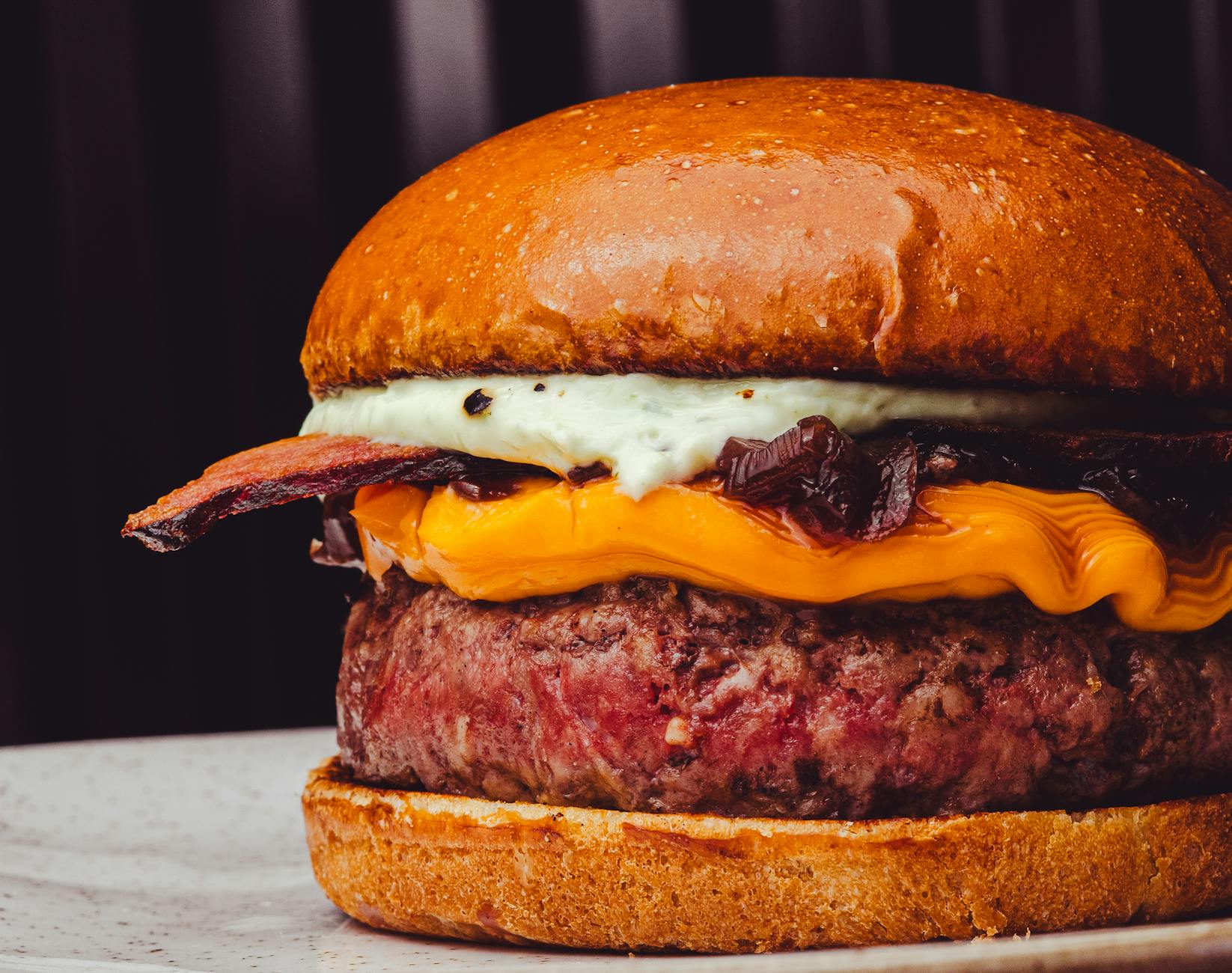
Yes, McDonald's is indeed making a significant play in the premium burger category with the U.S. launch of its "Big Arch Burger," a clear strategic move to capture a more upscale segment of the fast-food market. This new offering, described as the company's "biggest and boldest burger yet," features two quarter-pound beef patties, three slices of melted white cheddar cheese, crispy and slivered onions, lettuce, pickles, and a tangy Big Arch Sauce, all served on a toasted sesame and poppy seed bun. It's a direct challenge to "better-burger" chains and reflects a growing consumer trend towards "protein-maxxing."
The Big Arch is not entirely new; it has been successfully piloted in several international markets for about a year and a half, even earning a permanent spot on the menu in the United Kingdom and Canada. This international traction suggests a proven concept, but its U.S. debut as a limited-time offer (LTO) starting March 3, 2026, will be the ultimate test. Early indications suggest a price point of $10-$11 for the burger alone in the U.S., positioning it well above traditional McDonald's fare and directly into the premium quick-service restaurant (QSR) territory.
This move is particularly noteworthy because it contrasts with McDonald's recent emphasis on value, which has been a cornerstone of its strong financial performance. While the company has excelled by appealing to budget-conscious consumers, the Big Arch aims to attract diners seeking a heartier, more indulgent experience. It represents an attempt to broaden McDonald's appeal and capture a larger share of wallet from customers who might otherwise opt for fast-casual competitors. The success of this premium gamble will largely depend on whether consumers are willing to pay a higher price for a McDonald's brand burger, despite the company's recent focus on affordability.
How Did McDonald's Q4 2025 Performance Set the Stage for This Launch?
McDonald's delivered an exceptionally strong Q4 2025, significantly exceeding analyst expectations, which provides a robust financial backdrop for its ambitious new product initiatives like the Big Arch Burger. The company reported impressive revenue of $7.01 billion, a 10% increase year-over-year, comfortably surpassing the $6.85 billion analyst estimate. This strong top-line growth was mirrored by healthy profitability, with net income reaching $2.16 billion, up 7%, and adjusted earnings per share (EPS) of $3.12, beating the $3.05 estimate.
A key driver of this outperformance was McDonald's "3 for 3" strategy, which emphasized compelling value, breakthrough marketing, and menu innovation. Global comparable sales surged by 5.7%, well above the 3.7% average analyst estimate, with positive guest counts across all operating segments. In the crucial U.S. market, comparable sales growth hit an impressive 6.8%, largely propelled by the relaunch of Extra Value Meals and aggressive marketing campaigns. CEO Chris Kempczinski noted that this value-focused approach resonated strongly, particularly with lower-income consumers, leading to improved traffic and affordability scores.
Marketing efforts were particularly effective, with global campaigns like the Minecraft collaboration and the holiday Grinch Meal setting new records, including the highest single-day sales in company history. The company also saw significant traction from its loyalty programs, nearly doubling sales to loyalty members since 2023 and reaching 210 million active users globally. This strong financial health and proven ability to execute large-scale marketing and value initiatives give McDonald's the flexibility and confidence to experiment with premium offerings like the Big Arch, leveraging its brand strength and operational prowess to explore new growth avenues.
What are the Bull and Bear Cases for the Big Arch Burger's Impact?
The Big Arch Burger presents a compelling bull case for McDonald's, primarily centered on its potential to significantly increase average check sizes and capture a larger share of the premium burger market. With an estimated price point of $10-$11, the Big Arch could substantially boost revenue per transaction, especially if it encourages existing customers to trade up from lower-priced items. Its success in international markets, where it became a permanent menu item in the UK and Canada, suggests a proven demand for a heartier, more satisfying burger within the McDonald's ecosystem. This premium offering directly addresses the "protein-maxxing" trend, appealing to consumers seeking more substantial meals and potentially drawing in diners who might otherwise frequent fast-casual competitors like Five Guys or Shake Shack.
However, a notable bear case exists, drawing parallels to McDonald's infamous Arch Deluxe flop from the 1990s. The Arch Deluxe, also positioned as a premium, "grown-up" burger, failed due to its higher price point and operational complexity, alienating core value-seeking customers. The Big Arch, with its premium ingredients and higher price, risks similar consumer resistance, especially if the perceived value doesn't justify the cost in the minds of McDonald's traditional customer base. Furthermore, introducing a new, complex item can strain kitchen operations, potentially slowing service and impacting efficiency, which are critical for a QSR giant built on speed and uniformity.
Another risk factor is the current economic climate, where consumers, despite McDonald's recent success with value, remain sensitive to price increases. While the company has successfully navigated inflation with its value strategy, a premium offering at a higher price point might face headwinds if economic pressures persist or intensify. The Big Arch is a gamble that McDonald's can successfully diversify its menu strategy without diluting its core brand identity as an affordable, convenient option. Its limited-time offer status in the U.S. allows McDonald's to test the waters, but the long-term implications for sales and brand perception remain to be seen.
How Does the Big Arch Fit into McDonald's Broader Strategic Vision?
The Big Arch Burger, despite its premium positioning, aligns with McDonald's overarching "Accelerating the Arches 2.0" strategy, which prioritizes core menu innovation, marketing excellence, and the "4Ds" (Digital, Delivery, Drive-Thru, and Development). This new burger is a direct manifestation of the "Core Menu Innovation" pillar, specifically designed to scale large-form burgers and compete more effectively in the "craveable" market segment. It complements the ongoing "Best Burger" initiative, which aims to improve the taste and quality of all McDonald's beef products across nearly all markets by the end of 2026, ensuring that the Big Arch benefits from enhanced preparation standards.
Beyond beef, McDonald's is aggressively expanding its beverage and chicken categories. A significant U.S. beverage expansion under the McCafe brand is planned for later in 2026, targeting the $100 billion global beverage category with energy drinks and cold coffee. Similarly, the company is scaling its chicken offerings, with the McCrispy sandwich becoming a standardized menu item globally and plans for new variations in late 2026. The Big Arch, therefore, is not an isolated product launch but part of a multi-pronged strategy to innovate across key menu categories, responding to diverse consumer preferences and market trends.
The company's ambitious expansion plans also provide a fertile ground for the Big Arch's rollout. McDonald's aims to open approximately 2,600 new restaurants in 2026, targeting a total of 50,000 global locations by the end of 2027. This expanding footprint, coupled with continued investment in digital infrastructure like AI-enabled voice ordering and its loyalty program (targeting 250 million active users by 2027), creates a powerful ecosystem for new product introductions. The Big Arch can leverage these digital channels for targeted marketing and seamless ordering, reinforcing menu innovation as a key catalyst for sustaining guest counts and system-wide sales growth.
What Are the Key Investor Implications and What Should We Watch For?
For investors, McDonald's (NYSE: MCD) remains a formidable player, currently trading at $341.06 with a market capitalization of $243.38 billion. The stock has shown resilience, with a 52-week range of $283.47 to $341.35, and its recent Q4 2025 earnings beat underscores its operational strength. The Big Arch Burger launch, while a premium play, is a calculated risk backed by a strong balance sheet and a proven ability to execute large-scale initiatives. The company's TTM P/E ratio stands at 28.45, reflecting a premium valuation, but its consistent revenue growth (TTM Revenue $37.64 billion) and dividend yield of 2.1% (with a payout of 59.7%) continue to attract long-term investors.
The success of the Big Arch will be a crucial indicator of McDonald's ability to diversify its revenue streams beyond its core value offerings. If the Big Arch resonates with consumers and drives incremental traffic and higher average checks, it could significantly bolster future earnings and revenue growth, which saw 3.7% revenue growth and 4.9% EPS growth in FY2025. Conversely, if it struggles to gain traction, it could signal limitations in McDonald's premium pricing power and potentially lead to increased marketing spend to salvage the LTO. Investors should also monitor the impact of GLP-1 adoption trends, which management is actively tracking for potential shifts towards higher protein intake and reduced snacking, as this could influence future menu development.
Looking ahead, investors should keep a close eye on three key metrics. First, the sales performance and customer reception of the Big Arch Burger in the U.S. will be critical, especially any indications of it moving from an LTO to a permanent menu item. Second, watch the continued growth of McDonald's digital loyalty base towards its 250 million user goal, as this ecosystem is vital for personalized marketing and driving visit frequency. Finally, monitor capital expenditure, projected between $3.7 billion and $3.9 billion, primarily allocated to new unit development and digital infrastructure like AI-enabled voice ordering, which will be essential for maintaining efficiency and growth in a challenging QSR environment.
McDonald's is navigating a complex landscape, balancing its proven value strategy with ambitious premium and category expansions. The Big Arch Burger is a bold test of its brand elasticity and pricing power, with its success potentially reshaping the investment narrative for years to come. The company's robust financial health and strategic vision provide a solid foundation, but execution and consumer response will be the ultimate determinants of this big, beefy gamble.
Want deeper research on any stock? Try Kavout Pro for AI-powered analysis, smart signals, and more. Already a member? Add credits to run more research.
Related Articles
Why is eBay betting big on Depop
Why Wall Street Is Betting Big on $5,000 Gold
Category
You may also like


McDonald's may bring its 1,057-calorie Big Arch burger to America soon. Why it could be a billion-dollar seller.

Is Mastercard Turning Incentive Spend Into a Reliable Growth Channel?

This Billionaire Investment Legend is Betting on the QQQ. Is it a Better Bet Than the SPY?
Breaking News
View All →No topics available at the moment
Featured Articles
Top Headlines

Apple Hikes Prices On New Laptops Amid AI Chip Shortage

Elon Musk's Starlink Escalates The 5G War In Space As Amazon Locks In Vodafone

Apple unveils new MacBook Air and MacBook Pro with M5

Wall Street analyst updates Nvidia stock price target