MarketLens

Log in

Is Nvidia's Groq Deal a Masterstroke or an Antitrust Minefield

5 hours ago
SHARE THIS ON:

Is Nvidia's Groq Deal a Masterstroke or an Antitrust Minefield

Key Takeaways

  • Nvidia's $20 billion licensing deal with AI startup Groq, finalized in late 2025, is under intense scrutiny from Senators Warren and Blumenthal over potential antitrust evasion.
  • The deal, structured as a non-exclusive license and "acqui-hire," aims to bolster Nvidia's position in the critical AI inference market while sidestepping traditional merger reviews.
  • Despite Nvidia's claims of Groq remaining independent, the transfer of key personnel and IP raises significant questions about competition and regulatory oversight in the rapidly consolidating AI chip sector.

Is Nvidia's Groq Deal a Masterstroke or an Antitrust Minefield?

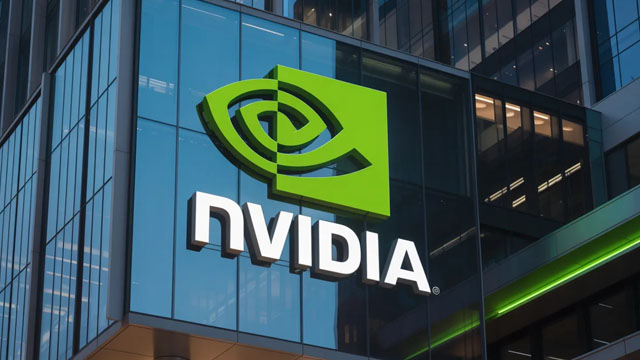
Nvidia (NASDAQ: NVDA), the undisputed titan of the AI chip industry, finds itself once again in the crosshairs of Washington. The company's reported $20 billion licensing agreement with AI startup Groq, sealed at the close of 2025, has drawn sharp criticism from Senators Elizabeth Warren and Richard Blumenthal. Their concern isn't just about the sheer size of the deal, but its unconventional structure, which they allege was designed to circumvent rigorous antitrust review. This move highlights Nvidia's aggressive strategy to maintain its market dominance, currently valued at a staggering $4.20 trillion, but it also exposes the company to escalating regulatory risks.

The senators' letter to Nvidia CEO Jensen Huang explicitly questioned the deal's terms, suggesting it "appeared to have been structured to evade scrutiny by antitrust regulators." This isn't a minor administrative quibble; it strikes at the heart of competition in the nascent, yet critical, AI computing market. Groq, a specialist in AI inference chips (Language Processing Units, or LPUs), was seen by many as a potential challenger to Nvidia's Graphics Processing Units (GPUs), particularly in the post-training phase of AI model deployment. The deal effectively brings Groq's innovative technology and much of its engineering talent, including CEO Jonathan Ross, under Nvidia's wing.

Nvidia, for its part, maintains that it "did not acquire Groq, which continues to be a separate and independent business." A company spokesperson clarified that Nvidia merely "purchased a non-exclusive license to Groq’s IP and hired engineering talent from Groq’s team." However, the reality on the ground, where most of Groq's software engineers and hardware designers have transitioned to Nvidia, paints a different picture. This "acqui-hire" model, combined with a licensing agreement, has become a growing trend among tech giants, drawing increased scrutiny from the Federal Trade Commission (FTC) and Department of Justice (DOJ) for its potential to stifle competition without triggering formal merger thresholds.

The market reaction to the news saw Nvidia shares trading at $172.93, down 3.15% from the previous close of $178.56, reflecting investor apprehension regarding potential regulatory headwinds. This dip, while modest, underscores the sensitivity of Nvidia's valuation to any perceived threats to its growth trajectory. The company's 52-week range of $86.62 to $212.19 illustrates its volatile, yet upward, trajectory, heavily fueled by its AI leadership. The Groq deal, therefore, is not just a strategic play for technology; it's a high-stakes gamble on navigating an increasingly complex regulatory landscape.

Why Did Nvidia Pursue This "Acqui-Hire" Strategy?

Nvidia's strategic rationale behind the Groq deal is multifaceted, serving both offensive and defensive purposes in the fiercely competitive AI chip landscape. At its core, the move is about extending Nvidia's already formidable lead beyond AI training, where its GPUs are dominant, into the rapidly growing and increasingly diversified inference market. Groq's Language Processing Units (LPUs) offer a distinct architectural approach, optimized for low-latency, high-throughput inference tasks, which complements Nvidia's existing GPU strengths.

The AI chip market is broadly segmented into training and inference. Nvidia currently controls roughly 90% of the market for high-end data center GPUs used in AI training, a segment characterized by massive parallel processing. However, the inference side, which involves deploying trained AI models to generate outputs, presents a different set of challenges and opportunities. Here, specialized chips like Groq's LPUs, Google's TPUs, and custom silicon from AWS and Microsoft are gaining traction due to their potential for greater energy efficiency and speed for specific workloads. Groq's technology, with its deterministic, compiler-centric design and use of SRAM memory, offered a unique solution for these inference demands.

By licensing Groq's IP and integrating its engineering talent, Nvidia effectively neutralizes a potential rival and absorbs valuable expertise. Jonathan Ross, Groq's founder and CEO, previously led the development of Google's first-generation TPUs, making him a formidable figure in the custom AI chip space. Bringing such talent in-house allows Nvidia to blend Groq's innovative ideas with its established CUDA software ecosystem, potentially creating a more robust and flexible "AI Factory" platform. This synergy of GPU and LPU architectures could enable Nvidia to offer a comprehensive solution that addresses a wider array of AI use cases, from training to various inference scenarios.

Furthermore, the deal acts as a defensive maneuver. Groq was positioned to become a significant supplier of inference hardware, with its developer registrations growing 5.6x year-on-year into 2025. Had a major customer or group adopted Groq's open platform at scale, it could have eroded Nvidia's future inference GPU sales. By acquiring Groq's technology and talent, Nvidia prevents this scenario, securing its ecosystem and widening its "competitive moat," as noted by analysts. This strategy allows Nvidia to maintain its full system stack leadership in the AI market, ensuring that key innovations remain within its control rather than falling into the hands of competitors.

What Are the Antitrust Implications and Regulatory Headwinds?

The Groq deal, structured as a licensing agreement and "acqui-hire," has ignited a fierce debate about its antitrust implications, particularly given the current regulatory climate. Senators Warren and Blumenthal's probe is not an isolated incident; it reflects a broader shift in how federal agencies like the FTC and DOJ are scrutinizing non-traditional tech deals that appear to consolidate power without triggering formal merger reviews. This approach, often dubbed an "asset licensing hackquisition," allows dominant players to functionally acquire innovations and talent while keeping the target company "technically alive," thereby sidestepping mandatory review under merger laws.

The FTC, under Chair Andrew Ferguson, has explicitly stated its intent to scrutinize such arrangements. The agency's 2023 Merger Guidelines explicitly warn that "acquisitions of partial interests, exclusive dealing arrangements, and non-equity partnerships may substantially lessen competition" if they eliminate independent market participants. This means simply labeling a transaction a "licensing deal" instead of an "acquisition" no longer guarantees immunity from regulatory oversight. The concern is that these deals can effectively remove nascent competitors, further entrenching the dominance of market leaders like Nvidia.

Nvidia's history with antitrust regulators provides a crucial backdrop. Its 2019 acquisition of Mellanox, a networking-chip company for $6.9 billion, took over a year to clear, and even then, Chinese regulators opened a new probe in early 2025 alleging breaches of approval conditions. More dramatically, Nvidia's ambitious $40 billion attempt to acquire British chip architecture designer Arm was ultimately blocked in mid-2022 by authorities in the U.S., UK, and EU, citing fears it would stifle competition across multiple chip markets. These precedents clearly demonstrate that even seemingly benign deals face intense gatekeeping if regulators perceive a risk of market consolidation.

The senators' letter specifically highlighted Nvidia's existing market power, noting its control of roughly 90% of the high-end data center GPU market and 92% of the PC GPU market as of Q3 2025. They argue that because Nvidia's technology is "essential for advanced AI development, Nvidia effectively controls which companies can compete in AI." The Groq deal, by absorbing a key player in the inference space, could further solidify this control, potentially limiting innovation and choice for AI developers and users. The DOJ is also reportedly investigating Nvidia for potential monopolization of AI chip markets, examining whether access to scarce H100 GPUs was conditioned on exclusive cloud service agreements. These overlapping investigations suggest a concerted effort by regulators to rein in the power of tech giants.

How Does This Impact Competition and Innovation in the AI Chip Market?

The Nvidia-Groq deal sends ripples across the entire AI chip ecosystem, raising fundamental questions about the future of competition and innovation. On one hand, proponents might argue that integrating Groq's LPU technology into Nvidia's platform could accelerate innovation, bringing advanced inference capabilities to a broader market more quickly. Nvidia's vast resources, including its $60.6 billion in cash and short-term investments as of late October, and its extensive software ecosystem (CUDA), could theoretically supercharge Groq's innovations.

However, the primary concern voiced by regulators and competitors is that this deal, regardless of its "licensing" label, effectively removes a significant independent player from the market. Groq was explicitly developing LPUs as an alternative to Nvidia's GPUs, aiming to drive down the cost of AI compute, particularly for inference. By absorbing Groq's key personnel and intellectual property, Nvidia eliminates a direct, albeit nascent, competitor and prevents its technology from potentially empowering other rivals. This "offense and defense" strategy, as some analysts describe it, ensures that Groq's innovations primarily serve Nvidia's interests, rather than fostering a more diverse and competitive landscape.

The AI chip market is already witnessing intense competition from hyperscalers like Google, Amazon, and Microsoft, all of whom are developing their own custom silicon (TPUs, Trainium, Inferentia). These internal efforts, while formidable, are often closed ecosystems. Independent chipmakers like Cerebras, SambaNova, and Mythic are also pushing custom inference chips, but they face an uphill battle against Nvidia's entrenched position and massive R&D budget. The Groq deal makes their challenge even steeper by consolidating a promising alternative technology under the market leader.

The long-term impact on innovation is debatable. While Nvidia might integrate Groq's ideas, the loss of an independent entity with a distinct engineering philosophy could reduce overall market diversity. Innovation often thrives on independent competition and the clash of different approaches. If promising startups are consistently "acqui-hired" or licensed into the fold of dominant players, it could stifle the emergence of truly disruptive technologies that challenge the status quo. The senators' concern about "ceding our technological leadership to China" also underscores the geopolitical dimension, suggesting that a lack of domestic competition could weaken the overall U.S. position in AI.

Nvidia's Financial Muscle and Broader Investment Strategy

Nvidia's ability to execute a $20 billion licensing deal, even one structured to avoid traditional merger review, speaks volumes about its immense financial strength and aggressive investment strategy. The company is not just a chipmaker; it's a financial powerhouse leveraging its massive balance sheet to cement its dominance across the entire AI ecosystem. With a market capitalization of $4.20 trillion, Nvidia has become one of the world's most valuable companies, a testament to its pivotal role in the AI revolution.

The company's cash reserves have swelled dramatically, reflecting the insatiable demand for its AI hardware. As of the end of October, Nvidia reported $60.6 billion in cash and short-term investments, a significant leap from $13.3 billion in early 2023. Its cash inflow climbed more than 30% year-over-year in its most recent quarter, reaching $22 billion. This war chest provides Nvidia with unparalleled flexibility to invest, acquire, and license technologies that reinforce its market position. The Groq deal, while substantial, represents a strategic deployment of this capital to secure critical inference technology and talent.

Beyond Groq, Nvidia has a history of wide-ranging investments in AI firms, spanning from large language model developers like OpenAI and xAI to "neoclouds" such as Lambda and CoreWeave, which specialize in AI services and even compete with Nvidia's own Big Tech customers. The company has also invested in other chipmakers like Intel and Enfabrica. This broad investment strategy, sometimes criticized as "circular financing schemes," allows Nvidia to foster an ecosystem that is deeply reliant on its technology, while also gaining early access to emerging innovations and potential future rivals.

Nvidia's executive compensation also reflects its extraordinary success. CEO Jen-Hsun Huang's total compensation for 2025 was nearly $49.87 million, with a significant portion tied to stock awards. This aligns executive incentives with shareholder value, driving aggressive strategies to maintain growth and market leadership. The company's employee base has also expanded rapidly, from 29,600 in 2024 to 36,000 in 2025, and projected to reach 42,000 in 2026, indicating continuous investment in talent and R&D. This financial muscle and strategic investment approach underscore Nvidia's commitment to not just participate in, but to actively shape, the future of AI.

Investor Outlook: Navigating Risks and Opportunities

For investors, Nvidia's Groq deal presents a complex picture of both significant opportunities and escalating risks. On the opportunity side, the integration of Groq's LPU technology could further solidify Nvidia's end-to-end AI platform, enhancing its offerings in the critical inference market. This move could extend Nvidia's competitive moat, ensuring it captures an even greater share of the burgeoning AI compute demand, which the company itself projects could reach $1 trillion in combined system sales through 2027. The ability to offer a more flexible and efficient "AI Factory" covering both training and inference workloads could drive continued revenue growth and market share expansion.

However, the regulatory scrutiny surrounding the Groq deal is a tangible risk that cannot be ignored. The aggressive stance taken by Senators Warren and Blumenthal, coupled with the FTC's increased focus on non-traditional tech deals, suggests that Nvidia may face a protracted battle. Potential outcomes range from requests for more transparency to outright challenges, which could force a restructuring of the deal or impose behavioral remedies. Such actions could divert management attention, incur legal costs, and potentially dampen investor sentiment, impacting Nvidia's stock performance, which has already seen recent declines despite its long-term gains.

Beyond regulatory challenges, investors must also consider the evolving competitive landscape. While Nvidia dominates, rivals are not standing still. Hyperscalers continue to develop custom silicon, and other startups are pushing innovative architectures. Market saturation, or a shift in AI model architectures that favors different chip designs, could also pose long-term threats. Furthermore, the geopolitical dimension, particularly with China, adds another layer of complexity, as export controls and international competition for AI leadership continue to shape the industry.

Ultimately, Nvidia's stock, currently trading at $172.93, remains a bellwether for the AI revolution. Its ability to navigate these regulatory headwinds while continuing to innovate will be crucial. Investors should closely monitor developments from Washington, as well as Nvidia's execution on integrating Groq's technology and fending off competition. The company's strong financial position and strategic vision are undeniable assets, but the path ahead is fraught with potential challenges that could test its resilience.

Nvidia's Groq deal is a clear signal of its intent to dominate every facet of the AI chip market. While the strategic benefits are evident, the escalating regulatory pressure demands careful attention. Investors should weigh the company's unparalleled growth potential against the very real risks of increased antitrust enforcement in a rapidly consolidating industry.


Want deeper research on any stock? Try Kavout Pro for AI-powered analysis, smart signals, and more. Already a member? Add credits to run more research.

SHARE THIS ON:

Related Articles

Category

You may also like

Stock News2 weeks ago

Buy Broadcom Stock as Q1 Results Approach or Choose Nvidia Instead?

Investors weigh Broadcom against Nvidia ahead of Broadcom's Q1 results, noting Broadcom's AI chip niche versus Nvidia's broader hyperscale customer reach.
Stock News1 months ago

D-Wave's Big Deal, Bigger Question: Can Sales Catch Up to the Hype?

D-Wave Quantum closed a $550M acquisition of Quantum Circuits in January, boosting gate-model capabilities. However, $330M in shelf registrations filed the same month raise concerns regarding potentia...
Stock News2 months ago

How Can Nvidia Sustain Its Margins?

Nvidia's AI leadership faces potential strain following a $20 billion licensing deal with startup Groq and key executive recruitment by Groq. This signals a major transformation in the Silicon Valley ...
Stock News2 months ago

Nvidia's H200 AI Chips Get Trump's Nod for China Sales. Will Political Hurdles Derail the Plan?

Nvidia secured President Trump's approval to sell its H200 AI chips into China. The ability to finalize the actual sale remains an open question pending further execution.

Breaking News

View All →

Top Headlines

View More →
Stock News26 minutes ago

Stock Market Today: S&P 500, Dow Jones Futures Plunge As Trump Issues Ultimatum To 'Obliterate' Iran—SSR Mining, Nebius, United Airlines In Focus

Stock News48 minutes ago

The Best Stocks to Invest $1,000 in Right Now

Stock News1 hour ago

Prediction: Nvidia Will Make a Substantial Dividend Increase in 2026. Should You Buy the Stock?

Stock News1 hour ago

AI May Disrupt Millions of Jobs. These 3 Stocks Could Be Big Winners.

Stock News3 hours ago

Prediction: Nvidia Will Reach a $10 Trillion Market Cap by 2028