MarketLens
Is POET Technologies the Dark Horse of AI Infrastructure

Key Takeaways
- POET Technologies is a small-cap semiconductor company poised to capitalize on the massive demand for high-speed optical interconnects in AI and hyperscale data centers.
- Its patented Optical Interposer platform offers a unique, scalable, and cost-effective solution for integrating photonic and electronic devices, addressing critical bandwidth and power challenges.
- While current financials reflect a pre-revenue stage, recent customer orders, strategic partnerships, and significant equity financing signal a potential revenue inflection point starting in late 2025 and accelerating into 2026.
Is POET Technologies the Dark Horse of AI Infrastructure?
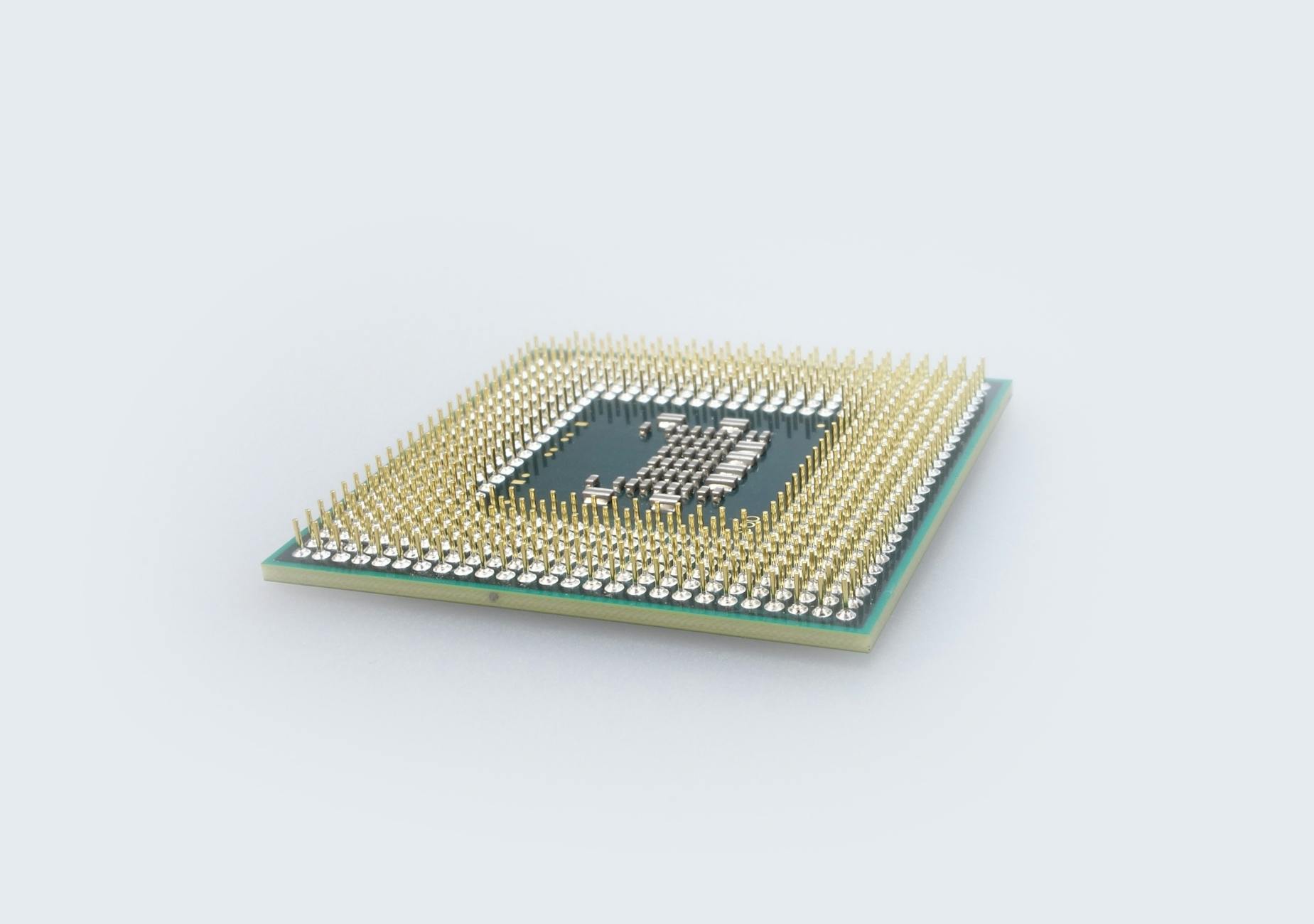
POET Technologies (NASDAQ: POET), a small-cap semiconductor firm with a market capitalization of $790.6 million, is carving out a niche in the burgeoning AI infrastructure market. The company designs and develops high-speed optical engines, light sources, and custom optical modules, all built around its patented POET Optical Interposer™ platform. This technology aims to solve the critical bandwidth and power consumption challenges facing next-generation AI clusters and hyperscale data centers by seamlessly integrating electronic and photonic devices at the chip level.
The shift to optical computing is not just an incremental upgrade; it's a fundamental necessity for AI. As AI models grow exponentially, the electrical interconnects currently used in servers and data centers are hitting physical limits in terms of speed, power efficiency, and density. POET's approach, leveraging advanced wafer-level semiconductor manufacturing, promises lower costs, reduced power consumption, and smaller form factors—all essential ingredients for scaling AI infrastructure to meet future demands. This positions POET not merely as a component supplier, but as a potential enabler of the underlying manufacturing layer for photonics in AI.
Recent developments underscore this potential. POET has secured initial production orders from two key customers, valued at over $5.6 million, which management expects to kickstart a steady revenue ramp throughout 2026. Furthermore, the company successfully closed $250 million in equity financing from institutional investors, providing substantial capital for internal expansion and potential inorganic growth. These milestones suggest that POET is transitioning from a development-focused entity to one on the cusp of commercialization, a crucial phase for any technology innovator.
While the company’s current financials, including a trailing twelve-month (TTM) revenue of just $0.01 million and a net loss of $9.37 million in Q3 2025, reflect its pre-commercialization stage, the market is beginning to price in future growth. Shares currently trade at $6.00, within a 52-week range of $3.09 to $9.41, demonstrating significant volatility but also substantial upside potential from its lows. The narrative around POET is shifting from pure R&D to execution and volume production, making it a compelling, albeit speculative, play in the AI hardware space.
What Makes POET's Optical Interposer a Game Changer for AI?
POET Technologies' core innovation, the POET Optical Interposer™, is designed to fundamentally change how optical and electronic components are integrated. Unlike traditional methods that involve complex, costly, and power-hungry discrete packaging, the Optical Interposer allows for chip-scale integration using standard semiconductor manufacturing techniques. This passive alignment capability is a significant differentiator, offering a structural cost advantage that competitors using legacy packaging methods would find difficult to replicate without massive capital expenditure.
The interposer platform enables the creation of high-speed optical engines and light source products crucial for AI clusters and hyperscale data centers. For instance, POET has introduced 1.6T optical receivers in collaboration with Semtech, targeting the highest-performance segments of the AI interconnect market. This capability is vital as the industry moves towards Co-Packaged Optics (CPO) and External Laser Sources (ELS), architectures where optical components are brought much closer to the processing units to overcome electrical bottlenecks. POET's existing 800G and 1.6T engines, coupled with its ELS-compliant light source products, position it perfectly for this industry shift.
The demand for such solutions is immense. AI systems require unprecedented data transfer speeds and extremely low latency, pushing the limits of current electrical interconnects. The market for 3.2T solutions in pluggable and CPO formats alone is projected to reach nearly $12 billion by 2030. POET's collaboration with Quantum Computing Inc. (QCi) to co-develop 3.2 Tbps optical engines, utilizing 400G/Lane thin-film lithium niobate (TFLN) modulators, highlights its commitment to pushing these boundaries. TFLN is a highly efficient material ideal for chip-scale photonic integration, and this partnership aims to double the speeds of the fastest networking devices currently available.
Moreover, POET's technology extends beyond data centers. The Optical Interposer platform also addresses device integration challenges in 5G networks, machine-to-machine communication, "Edge" computing applications, and sensing applications like LiDAR for autonomous vehicles. This broad applicability underscores the versatility and long-term potential of the platform, positioning POET as a foundational technology provider across multiple high-growth sectors. The ability to offer a scalable, cost-effective, and power-efficient solution for optical interconnects is not just an advantage; it's becoming a prerequisite for the future of high-performance computing.
What Are the Key Milestones and Partnerships Driving POET's Growth?
POET Technologies is actively building a robust ecosystem of partnerships and achieving critical milestones that are essential for its commercialization phase. These collaborations are not just about product development; they are about embedding POET's technology into the broader AI and data center supply chain. The company’s strategy involves working with industry leaders to validate its Optical Interposer platform and accelerate market adoption.
One significant partnership is with Semtech, which led to the introduction of 1.6T optical receivers, enhancing POET’s product leadership in high-performance AI interconnects. Another crucial collaboration is with Sivers Semiconductors for advancing POET's Starlight light-source strategy, specifically for External Light Source (ELS) modules tailored for Co-Packaged Optics (CPO). This partnership aims to address an estimated $1 billion+ annual ELS market opportunity, with prototypes expected in the first half of 2026 and production readiness by the end of 2026. These ELS solutions are critical for scaling CPO deployments efficiently.
Furthermore, POET has entered the front-haul mobile networking space through a collaboration with NTT Innovative Devices, expanding its reach beyond data centers into telecommunications. Perhaps most strategically, POET’s engagement with manufacturing giants like Luxshare and Foxconn is paramount. These companies are the backbone of global AI rack, switch, and device manufacturing. If POET's technology is validated at the ODM (Original Design Manufacturer) level, it becomes deeply embedded in supply chains, making it difficult to displace and inherently scalable. This "silent integration" strategy, often seen with major players like Nvidia and Broadcom, suggests that lack of flashy public announcements doesn't equate to a lack of traction.
The company has also been proactive in securing the necessary capital for its growth. In late 2025 and early 2026, POET successfully completed multiple equity financing rounds, raising a total of $250 million. This capital infusion is vital for scaling manufacturing capabilities, expanding R&D, and potentially pursuing strategic acquisitions. With a current ratio of 2.30 and low debt-to-equity of 0.11, the company appears to have a solid financial foundation to support its ambitious commercialization plans. These milestones collectively paint a picture of a company systematically building the infrastructure and partnerships needed for a significant revenue ramp.
What Does This Mean for Investors? Bull vs. Bear Case
For investors considering POET Technologies, the narrative presents a classic high-risk, high-reward scenario. The bull case hinges on POET's ability to execute its commercialization strategy and capitalize on the fundamental shift to optical computing in AI infrastructure. If the company successfully ramps up production of its 800G and 1.6T optical engines, and its ELS and 3.2T solutions gain traction, it could become a standard-bearer in the optical AI market. Analyst consensus reflects this optimism, with a "Buy" rating from two analysts and a median price target of $7.30, representing a 21.7% upside from the current $6.00. The high target of $8.00 suggests a potential 33.3% increase.
The "revenue inflection point" guided for late 2025, with analysts projecting Q4 2025 revenue to reach $1 million - $2.5 million, is a critical near-term catalyst. The real acceleration is modeled for FY2026, with full-year revenue projected to jump to $50 million - $125 million as the 1 million unit capacity in Malaysia comes online. If POET achieves breakeven by mid-to-late 2026, as targeted, it would significantly de-risk the investment. The company's unique, patented Optical Interposer offers a strong economic moat due to its structural cost advantages and ease of integration, making it difficult for competitors to replicate. This positions POET as an infrastructure platform, rather than just a component supplier, potentially leading to a much higher valuation trajectory similar to the entities it supplies.
However, the bear case cannot be ignored. POET is still in the very early stages of revenue generation, as evidenced by its TTM revenue of $0.01 million and significant net losses. The company's P/S ratio of 1036.61 is extremely high, reflecting market speculation rather than current financial performance. While the recent equity financing provides a substantial cash runway, it also comes with significant shareholder dilution, which has historically impacted investor confidence and stock value. Shares fell due to perceived dilution issues after the $150 million registered direct offering in January 2026.
There are inherent risks in developing and commercializing cutting-edge semiconductor technology, including potential delays in development, testing, or manufacturing, failure to achieve anticipated performance, dependence on third-party suppliers, and intense competitive pressures. The company's small size (53 employees in 2022, growing to 90 by 2024) compared to industry giants also presents challenges in scaling and market penetration. Investors must weigh the transformative potential of POET's technology against the significant execution risks and the highly speculative nature of its current valuation.
What Should Investors Watch For in the Coming Quarters?
For investors tracking POET Technologies, the next few quarters will be crucial in validating the company's transition from a development-stage entity to a commercial success. The focus should shift from technological promise to tangible execution and financial performance. There are three key areas to monitor closely that will dictate POET's trajectory and investor confidence.
First, revenue ramp and production milestones are paramount. Management has guided for a "revenue inflection point" starting late 2025, with initial production orders already secured. Investors should watch for the actual reported revenue figures in upcoming earnings reports, particularly for Q4 2025 and throughout 2026. The successful delivery of the initial 1 million units from the Globetronics facility in Malaysia will be a critical indicator of manufacturing scalability and market acceptance. Any delays or shortfalls in these targets could significantly impact the stock.
Second, deepening customer engagements and design wins will be vital. While POET has announced partnerships with Semtech, Sivers Semiconductors, NTT Innovative Devices, and engagements with ODMs like Luxshare, the true measure of success will be the conversion of these collaborations into high-volume orders and broader adoption. Look for news on additional customer wins, particularly with hyperscale data centers and major AI system integrators. These "silent integrations" into the supply chain, though not always flashy, are the bedrock of long-term growth in the infrastructure space.
Finally, progress on advanced product development and strategic acquisitions should be monitored. The co-development of 3.2 Tbps optical engines with Quantum Computing Inc. (QCi) and the targeted completion of the 400G/Lane modulator in the second half of 2026 are significant future catalysts. Investors should also watch for how POET utilizes its substantial $250 million equity financing. Strategic acquisitions, if pursued, could accelerate market penetration or expand technological capabilities, but they also carry integration risks. The company's ability to manage its cash burn while investing in growth will be a key financial metric to track.
POET Technologies stands at a pivotal juncture, aiming to transform the AI infrastructure landscape with its innovative optical solutions. While the path ahead is challenging and fraught with risks inherent to early-stage technology companies, the potential rewards for successful execution are substantial. The coming quarters will provide critical insights into whether this small-cap dark horse can truly gallop into the AI spotlight.
Want deeper research on any stock? Try Kavout Pro for AI-powered analysis, smart signals, and more. Already a member? Add credits to run more research.
Related Articles
Category
You may also like


Aeluma: The AI Photonics Dark Horse

After NVIDIA, Is SMCI the Smartest AI Stock to Buy Right Now?

Can This $2 Billion AI Investment Help Nvidia's Secret Portfolio From Collapsing?
Breaking News
View All →Featured Articles
Top Headlines

Vodafone teams up with Amazon's satellites to connect masts in Europe and Africa

Tesla registrations in Denmark fall 18% year-on-year in February

Alibaba Group Holding Ltd Investigated by the Portnoy Law Firm

SynaXG Proves the Art of the Possible with Fully Software-Defined AI-RAN on NVIDIA AI Aerial