MarketLens
Is Saudi Arabia's "Forgotten" Pipeline the World's New Energy Lifeline

Key Takeaways
- Saudi Arabia's East-West pipeline has become a critical lifeline for global oil markets, partially offsetting the 20 million barrels per day typically transiting the now-disrupted Strait of Hormuz.
- While the pipeline, known as Petroline, boasts a design capacity of 7 million barrels per day, operational constraints at the Red Sea port of Yanbu and ongoing security threats limit its effective throughput.
- The crisis highlights the fragility of global energy supply chains, pushing crude oil prices higher to $99.07 per barrel, and accelerating regional efforts to diversify export routes beyond traditional chokepoints.
Is Saudi Arabia's "Forgotten" Pipeline the World's New Energy Lifeline?
The global energy landscape is in uncharted territory. With the Strait of Hormuz effectively closed following escalating U.S. and Israeli strikes on Iran, and subsequent Iranian retaliation, a staggering 20 million barrels per day of crude oil — roughly one-fifth of global consumption — has been choked off from its usual maritime route. This unprecedented disruption has sent shockwaves through markets, pushing crude oil prices to $99.07 per barrel as of March 23, 2026, up 0.86% from the previous day's close. In this maelstrom, a decades-old piece of Saudi infrastructure, the East-West pipeline or Petroline, has suddenly emerged as a pivotal player, a strategic masterstroke designed for precisely this worst-case scenario.
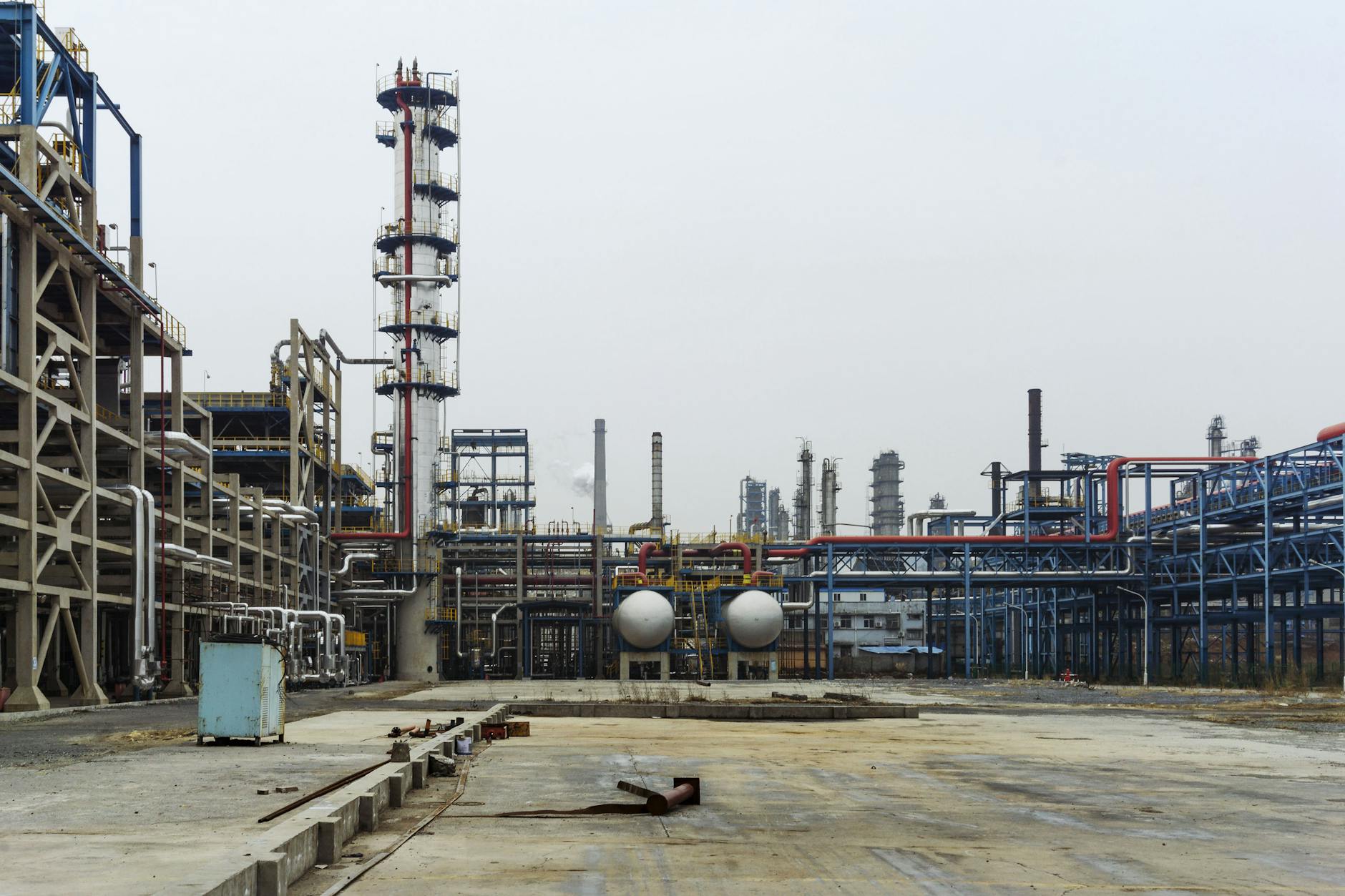
Built in the 1980s during the Iran-Iraq War, this 1,200-kilometer (750-mile) dual-pipe system connects Saudi Arabia’s eastern oil fields to the Red Sea port of Yanbu, completely bypassing the Strait of Hormuz. For years, it was a backup, a contingency plan quietly maintained. Now, it's the centerpiece of Saudi Arabia's rapid response to the largest supply disruption in history. State-owned oil giant Saudi Aramco has swiftly activated the pipeline, redirecting Arab Light crude volumes and throwing the Yanbu port into overdrive. This strategic foresight is now paying dividends, offering a vital release valve to the immense pressure building on global oil supplies and preventing an even more severe market shock.
The activation of Petroline has allowed Saudi Arabia to maintain a significant portion of its oil exports, which stood at around 6 million barrels per day through Hormuz before the conflict. Without this alternative, the Kingdom would have been forced into drastic production cuts as storage facilities quickly reached capacity. As Jim Krane, Wallace S. Wilson Fellow for Energy Studies at Rice University, aptly puts it, "The East-West pipeline is looking like a strategic masterstroke right now. The entire global economy is better off with the line in operation." This infrastructure is not just a commercial asset; it's a geopolitical tool, enabling Saudi Arabia to navigate the crisis and potentially influence regional dynamics.
How Much Oil Can the Petroline Actually Move, and What Are the Constraints?
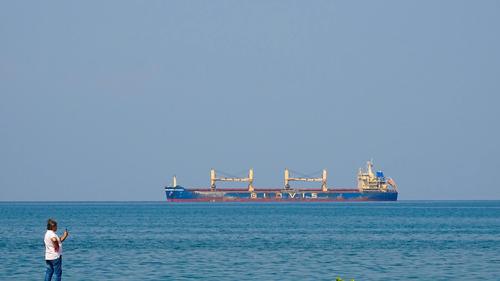
While the East-West pipeline is undoubtedly a strategic asset, its ability to fully replace the Strait of Hormuz's throughput is limited by a complex interplay of design capacity, operational realities, and security vulnerabilities. The pipeline boasts a robust design capacity of 7 million barrels per day (bpd) following expansions in 2019. Saudi Aramco CEO Amin Nasser recently confirmed that the company is ramping up crude flows and expects to hit this full daily capacity within days, a testament to the pipeline's engineering and the Kingdom's logistical prowess. This surge in volume has already led to Red Sea ports experiencing increased tanker loadings, as buyers seek to avoid the perilous Hormuz route.
However, the headline capacity of the pipeline itself doesn't tell the whole story. The bottleneck often lies at the export terminals. The Red Sea port of Yanbu, the pipeline's terminus, has a nominal combined loading capacity of about 4.5 million bpd across its two terminals, Yanbu North and Yanbu South. Market sources suggest the effective, operationally tested figure is closer to 4 million bpd. Under current wartime conditions, energy consultancy Vortexa estimates the terminals could handle roughly 3 million bpd. This discrepancy between pipeline capacity and port loading capability means that even if the pipeline can push 7 million bpd, the oil can only be exported as quickly as Yanbu can load it onto tankers.
Adding to these logistical challenges are the ongoing security threats. Energy facilities in Yanbu, including the Samref refinery (a joint venture between Aramco and ExxonMobil), have already been targeted in recent attacks. Furthermore, any shipments from Yanbu must still navigate the Bab el-Mandeb Strait, another critical chokepoint that has experienced security threats, particularly from the Iran-aligned Houthis. This introduces a new layer of vulnerability, as the very alternative route designed to bypass one chokepoint now faces risks at another. The current operational flow of 3.66 million bpd through Petroline, while significant, still represents a substantial loss of export capacity compared to pre-war levels, creating a persistent supply deficit that underpins current price support.
What Are the Broader Geopolitical and Economic Implications?
The activation of the Petroline and the ongoing crisis in the Strait of Hormuz have profound geopolitical and economic implications, extending far beyond immediate oil supply. Economically, the closure of Hormuz represents the largest supply disruption in history, triggering a fresh inflation crisis driven by surging energy costs. Crude oil is currently trading at $99.07 per barrel, significantly above its 50-day average of $73.20 and 200-day average of $64.23, reflecting the market's anxiety. While the Petroline has prevented a more severe shock, the persistent supply deficit maintains upward pressure on prices across nearly every sector, from transportation and manufacturing to household energy bills.
Geopolitically, the crisis underscores the strategic importance of energy infrastructure and the vulnerabilities inherent in global supply chains. Saudi Arabia's long-term planning, maintaining and expanding the Petroline over decades, has proven invaluable. This resilience contrasts sharply with the predicament of other major Gulf exporters like Iraq, Kuwait, and Qatar, which remain heavily dependent on the Strait of Hormuz with limited alternatives. The situation is likely to accelerate efforts across the region to diversify export routes and reduce reliance on traditional chokepoints. Countries like Oman and the United Arab Emirates are already investing in alternative infrastructure, such as the UAE's Abu Dhabi Crude Oil Pipeline (ADCOP), which can handle an estimated 1.5 million bpd.
However, these alternative routes are not without their own challenges. Even combined, the Saudi and UAE pipelines can only offset between 3.5 and 5.5 million bpd of crude, a fraction of the 20 million bpd normally transiting Hormuz. Moreover, the shift to Red Sea terminals introduces new vulnerabilities, as oil tankers become exposed to potential attacks by the Houthis in the Bab el-Mandeb Strait. The Red Sea itself has transitioned from a seamless corridor to a "conditional route," accessed selectively and with sustained risk premiums. This structural shift has far-reaching implications for global trade costs, supply chain resilience, and the geopolitical positioning of maritime logistics, signaling a new era of energy insecurity.
What are the Risks and Limitations of Relying on Bypass Routes?
While the East-West pipeline offers a crucial workaround, it is by no means a complete solution, and its reliance introduces new layers of risk and limitation. Firstly, the sheer scale of the Hormuz disruption dwarfs the capacity of any existing bypass infrastructure. Even at its full design capacity of 7 million bpd, the Petroline, combined with the UAE's ADCOP at 1.5 million bpd, can only partially offset the 20 million bpd that typically flows through the Strait of Hormuz. This leaves a substantial gap in global supply chains, meaning that even with the pipelines active, a significant portion of global oil supply remains constrained.
Secondly, the shift to the Red Sea introduces new security vulnerabilities. Shipments from Yanbu must still navigate the Bab el-Mandeb Strait, a narrow bottleneck that has seen increased security threats, particularly from the Iran-aligned Houthis. While the Houthis have so far largely sat out the current Iran conflict, their historical actions in the Red Sea, including attacks on commercial vessels in late 2023, demonstrate their capability to disrupt maritime traffic. A single successful Houthi strike on a high-value commercial vessel could trigger renewed airstrikes, re-divert global shipping flows, and force insurers to re-rate the corridor, effectively shifting the chokepoint from Hormuz to Bab el-Mandeb.
Finally, the infrastructure itself faces operational and strategic limitations. The Petroline was originally intended as a temporary solution for short disruptions, not sustained high-capacity operation over extended periods. As Ellen Wald, founder of Transversal Consulting, notes, "If the East-West pipeline is converted to carry all of Aramco’s crude oil exports to Yanbu, then it can’t also carry natural gas or products." This forces a choice between crude oil exports and refined product demand, a critical issue given Europe's reliance on Gulf refineries for diesel and jet fuel. The current crisis is not just a crude oil shortage, but a "distillate crisis," which bypass pipelines are less equipped to solve.
What Does This Mean for Investors and the Future of Energy Security?
For investors, the current energy crisis, exacerbated by the Strait of Hormuz closure and the strategic activation of the Petroline, signals a period of sustained volatility and elevated oil prices. Crude oil (CLUSD) is trading near $99.07 per barrel, significantly above its 52-week low of $54.98, and the market remains highly sensitive to geopolitical developments. The immediate implication is continued strong performance for oil producers and energy companies capable of maintaining supply, particularly those with diversified export routes or exposure to Red Sea terminals. However, the inherent risks of infrastructure damage and regional escalation cannot be ignored.
The long-term outlook suggests an accelerated shift in global energy strategy. The crisis highlights the imperative for greater energy security and diversification of supply routes. This will likely translate into increased investment in new pipeline infrastructure, expanded port capacities, and potentially a re-evaluation of strategic petroleum reserves by importing nations. While the near-term focus is on crude oil, the "distillate crisis" for refined products like diesel and jet fuel, particularly in Europe, points to potential investment opportunities in refining capacity and alternative fuel sources. Natural gas (NGUSD), currently at $3.08 per MMBtu, also remains a critical component of the energy mix, though its price action has been less dramatic than crude oil's.
Investors should closely monitor several key indicators: the sustained flow rate through the Petroline, any security incidents targeting Yanbu or the Bab el-Mandeb Strait, and the diplomatic efforts to de-escalate regional tensions. The ability of Saudi Arabia to maintain flows above 4 million bpd through Yanbu without major security incidents will be crucial for market stability. Furthermore, the actions of the Houthis in the Red Sea, and their potential re-entry into the conflict, remain a significant wildcard. This era demands a nuanced understanding of geopolitical risk and its direct impact on energy markets, favoring companies and nations that have demonstrated strategic foresight and resilience in their energy infrastructure.
The Saudi East-West pipeline has proven its worth as a critical strategic asset in an unprecedented global energy crisis. While it cannot fully replace the Strait of Hormuz, it offers a vital buffer, mitigating what could have been a far more catastrophic supply shock. Investors should brace for continued volatility, recognizing that energy security has become a paramount concern, driving both short-term price action and long-term infrastructure investment. The story of this pipeline is a powerful reminder that in a volatile world, strategic foresight in energy infrastructure can be the ultimate differentiator.
Want deeper research on any stock? Try Kavout Pro for AI-powered analysis, smart signals, and more. Already a member? Add credits to run more research.
Related Articles
Category
You may also like


The two oil pipelines helping Saudi Arabia and UAE bypass the Strait of Hormuz

Does $150 Oil Matter to Nvidia?

Are Enbridge's Midstream Projects the Next Cash Flow Catalyst?
Breaking News
View All →Featured Articles
Why is Investview Pivoting to Health & Wellness
What's Driving Terns Pharmaceuticals' Recent Surge
Top Headlines

What did jury decide in social media case against Meta and Google?

Meta And Google Found Liable In Social Media Addiction Trial

Jury Hits Meta and YouTube with $3 Million Compensatory Verdict in Landmark Social Media Addiction Trial

LA Jury Finds Meta & Google Negligent In Social Media Addiction Trial; Zuckerberg's Tech Giant Says “Respectfully Disagree With The Verdict”