MarketLens

Log in

Is Schrödinger's AI Platform Truly Disruptive in Drug Discovery

2 weeks ago
SHARE THIS ON:

Is Schrödinger's AI Platform Truly Disruptive in Drug Discovery

Key Takeaways

  • Schrödinger (SDGR) leverages a unique physics-based AI platform, LiveDesign, to accelerate drug discovery, offering a differentiated approach in a crowded market.
  • Despite recent stock volatility and a shift to a hosted licensing model impacting near-term revenue, strong software margins and a growing proprietary pipeline signal long-term potential.
  • Wall Street analysts maintain a "Buy" consensus with significant upside, but investors should monitor client acquisition and the inherent risks of clinical development.

Is Schrödinger's AI Platform Truly Disruptive in Drug Discovery?

Schrödinger, Inc. (NASDAQ: SDGR) is carving out a distinct niche in the rapidly evolving landscape of AI-driven drug discovery, positioning itself as a leader through its proprietary physics-based computational platform. Unlike many "AI-first" entrants, Schrödinger integrates advanced physics simulations with machine learning, aiming to predict molecular behavior with higher accuracy and accelerate the identification of novel drug candidates. This hybrid approach is designed to overcome the limitations of purely data-driven AI models, which often struggle with data scarcity and the complexities of biological systems.

The company's core offering, the LiveDesign platform, serves as a centralized, cloud-native environment for discovery teams. It democratizes access to sophisticated computational modeling tools, enabling scientists to leverage both physics-based and AI/ML calculations within a single interface. This capability is crucial in an industry where traditional drug development is notoriously lengthy and expensive, often taking over a decade and costing billions. Schrödinger's technology aims to streamline this process, reducing trial-and-error experimentation and improving the efficiency of hit-to-lead and lead optimization phases.

Schrödinger operates in two primary segments: Software and Drug Discovery. The Software segment focuses on licensing its computational tools to biopharmaceutical, biotechnology, and materials science companies, while the Drug Discovery segment leverages the platform to build a portfolio of proprietary drug candidates and engage in collaborations. This dual business model provides both recurring revenue streams from software licenses and the potential for significant upside from successful drug development. The company, founded in 1990, has approximately 891 employees and went public in 2020.

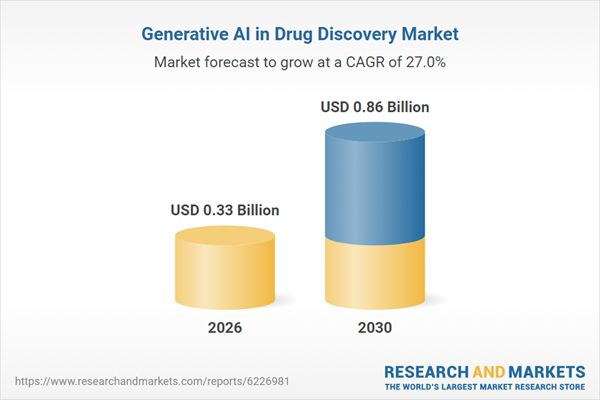
The market is increasingly recognizing the value of computational approaches. The global AI in drug discovery market is projected to grow at a robust 29.7% CAGR from 2024 to 2030, reflecting a broader industry shift towards digital-first R&D. Schrödinger's unique blend of physics and AI positions it well to capitalize on this trend, offering a more robust and reliable path to drug discovery compared to competitors relying solely on AI. This strategic differentiation is key to its long-term competitive advantage.

How Does Schrödinger's Software Drive Sustainable Growth?

Schrödinger's Software segment is the bedrock of its business, providing a stable, high-margin revenue stream that fuels its ambitious drug discovery efforts. The company's LiveDesign platform is central to this, offering a flexible, cloud-native environment that integrates experimental data with in silico predictions. This unified approach allows computational and medicinal chemists to collaborate seamlessly, leveraging Schrödinger's suite of cutting-edge computational modeling tools, including its proprietary Free Energy Perturbation (FEP+) technology, which accurately predicts drug candidate binding affinity.

The company has been strategically shifting towards a primarily hosted licensing model, a move expected to drive substantial growth in annual contract value (ACV). For 2026, Schrödinger anticipates ACV growth of 10% to 15%, indicating confidence in the continued adoption of its enterprise informatics platform. While this transition may pressure reported revenues in the near term, it is viewed as a sensible long-term move that enhances client stickiness and provides more predictable revenue streams. The underlying demand trends and key performance indicators (KPIs) for its software remain strong, suggesting a healthy trajectory despite any temporary accounting impacts.

Financial data underscores the strength of the Software segment. In fiscal year 2023, Schrödinger reported approximately $216 million in total revenue, with software contributing roughly 70% of that mix and boasting impressive gross margins near 85-90%. More recently, in Q2 2024, software revenue surged to $35.4 million, marking a 21% year-over-year increase. This consistent growth highlights the increasing acceptance and reliance on AI-driven computational tools within the pharmaceutical industry, validating Schrödinger's platform as an essential component of modern drug R&D.

Strategic partnerships further amplify the reach and impact of Schrödinger's software. A notable collaboration announced in January 2026 with Eli Lilly and Company (Lilly) involves making Lilly TuneLab™, an AI platform designed to accelerate drug discovery, available within LiveDesign. This partnership positions LiveDesign as a priority interface for biotech companies to access TuneLab workflows, reflecting the demand for unified enterprise informatics solutions that democratize access to AI models, physics-based calculations, and experimental data. Such collaborations not only expand Schrödinger's ecosystem but also validate its platform's capabilities and market leadership, reinforcing its position as a critical enabler in the digital transformation of drug discovery.

What's the Upside from Schrödinger's Internal Drug Pipeline?

Beyond its robust software platform, Schrödinger's Drug Discovery segment offers significant optionality and potential upside through its proprietary pipeline of drug candidates. This segment leverages the company's advanced computational tools internally, demonstrating the platform's efficacy by advancing its own programs from discovery to clinical development. This "eat your own dog food" approach provides tangible validation of the software's capabilities, which in turn can attract more software clients and collaborative partners.

The company has a diverse portfolio of preclinical and clinical programs, including several promising candidates. SGR-1505, a MALT1 inhibitor, has shown early efficacy and received FDA Fast Track designation, positioning it as a key driver for future revenue growth. Other notable programs include SGR-2921 (a CDC7 inhibitor), SGR-3515 (a WEE1 inhibitor), SGR-5573 (an osimertinib-resistant EGFR variant inhibitor), SGR-4174 (a SOS1 inhibitor), and SGR-6016 (a brain-penetrant NLRP3 inhibitor development candidate). These programs span critical therapeutic areas such as inflammation, immunology, neurology, and oncology, targeting areas with high unmet medical need.

The progress in these internal programs is a crucial indicator of Schrödinger's long-term potential. While the software segment provides consistent revenue, successful clinical advancement of proprietary drugs could unlock substantial milestone payments and royalties, transforming the company's financial profile. For instance, revenue projections for 2028 anticipate $396.6 million, with a significant portion expected to come from the drug discovery segment. In Q2 2024, revenue from drug discovery partnerships already saw a remarkable 104% increase year-over-year, reaching $11.9 million, underscoring the growing acceptance and monetization of its collaborative programs.

Furthermore, Schrödinger's commitment to innovation in drug discovery is exemplified by its $10 million grant from the Bill & Melinda Gates Foundation. This funding is specifically aimed at enhancing predictive toxicology tools using AI, an initiative that not only validates the real-world impact of the company's platform but also expands its capabilities into a critical area of drug development. The ability to accurately predict toxicity earlier in the discovery process can significantly reduce attrition rates in later-stage clinical trials, saving immense time and resources. This blend of internal pipeline development, strategic partnerships, and grant-funded innovation positions Schrödinger's drug discovery segment as a powerful engine for future growth.

Can Schrödinger Maintain Its Edge Amidst Fierce Competition?

The AI-enabled drug discovery market is a hotbed of innovation, attracting a diverse array of players from nimble AI-first startups to established pharmaceutical giants and even Big Tech. Schrödinger operates within a competitive landscape estimated at $3-4 billion in 2024, growing at a robust >20% CAGR. The question for investors is whether Schrödinger's unique "physics-plus-AI" approach can sustain its competitive advantage against this varied field.

Schrödinger differentiates itself from "AI-first" drug discovery firms like Exscientia, Insilico Medicine, Recursion Pharmaceuticals, and Atomwise by emphasizing physics-based accuracy alongside machine learning. While AI-first companies often excel in rapid virtual screening and pattern recognition, Schrödinger's platform, with its focus on accurate binding affinity predictions and physics-guided candidate ranking, aims for deeper predictive power. This hybrid model is critical because, as industry experts note, accurate structure prediction alone does not guarantee druggable targets or successful molecules; optimal use requires combining AI with physics-based refinement.

The company also faces competition from traditional cheminformatics providers such as Cadence/OpenEye, which offers cloud-first virtual screening and HPC scale, and Chemical Computing Group (MOE), known for its strong academic adoption and competitive pricing. Schrödinger competes by offering superior physics-backed accuracy and enterprise readiness, aiming to win on the depth of its predictive capabilities rather than just throughput or cost. Its LiveDesign platform's ability to consolidate workflows and democratize access to advanced tools also helps it stand out against more fragmented offerings.

Moreover, the market sees increasing commoditization of stack components through open-source tools like RDKit, DeepChem, and AlphaFold 3. This shifts value towards integration, validation, and physics accuracy – areas where Schrödinger aims to excel. The company's strategy involves deepening its hybrid AI+physics product roadmaps, expanding managed services, and tightening integrations with ELN/LIMS and data clouds to lower the cost-per-simulation. This comprehensive approach, combined with its strong software margins and strategic partnerships like the one with Lilly, positions Schrödinger to navigate the competitive dynamics and capitalize on the market's shift towards integrated, cloud-first solutions.

What Do Current Valuations and Analyst Sentiments Suggest for SDGR?

Schrödinger's current market valuation presents a complex picture, reflecting both its growth potential and the inherent risks of a pre-profit, innovation-driven company. Trading at $12.39, the stock has seen significant volatility, with a -2.41% drop today and a 52-week range spanning from $11.11 to $27.63. The company's market capitalization stands at $915.0 million, with an Enterprise Value (EV) of $793.7 million. These metrics place it firmly in the small-cap growth category, susceptible to broader market sentiment and sector-specific fluctuations.

From a valuation multiples perspective, Schrödinger's TTM P/S ratio of 3.57 is relatively modest for a high-growth software and biotech hybrid, especially given its impressive software gross margins of 55.7%. However, its negative P/E ratio of -8.80 and EV/EBITDA of -9.26 highlight its current unprofitability, with a net margin of -40.4%. This is typical for companies heavily investing in R&D and platform development, as evidenced by its operating margin of -65.2%. While the company has implemented cost reduction initiatives, with total operating expenses decreasing approximately 9% compared to 2024, profitability remains a future goal.

Despite the current unprofitability, growth metrics are encouraging. For FY2025, Schrödinger reported robust year-over-year growth in revenue (23.3%), net income (44.8%), and EPS (45.1%). Operating cash flow surged by 108.8%, and free cash flow (FCF) by 107.6%, indicating improving operational efficiency and cash generation, even if FCF yield remains low at 1.4%. The company's current ratio of 2.75 suggests a healthy liquidity position to fund its ongoing operations and R&D.

Wall Street analysts maintain a generally bullish outlook on SDGR. The consensus rating is a "Buy" from 11 analysts, with 8 "Buy" ratings and 3 "Hold" ratings. The average analyst price target is $18.50, representing a substantial upside from the current price. The highest target stands at $19.00, while the lowest is $18.00. While some analysts, like BofA's Michael Ryskin, have recently lowered price targets (from $24 to $20) due to the shift to a hosted licensing model impacting near-term reported revenues, they generally maintain a "Buy" rating, emphasizing that underlying demand and KPIs remain strong. This suggests that while there might be short-term headwinds, the long-term growth story remains intact for those willing to stomach the volatility.

The Road Ahead for Schrödinger

Schrödinger stands at a critical juncture, poised to leverage its unique physics-plus-AI platform to revolutionize drug discovery. The company's strategic shift to a hosted licensing model, coupled with its robust pipeline and key partnerships, positions it for long-term growth, despite near-term revenue pressures. Investors should closely monitor client acquisition rates and the clinical progress of its proprietary drug candidates, as these will be crucial determinants of future success.

While the path to profitability may be extended, the improving cash flow and strong analyst sentiment underscore the significant potential. Schrödinger's ability to deliver on its promise of accelerating drug development and bringing novel therapies to market will ultimately define its trajectory in the competitive and transformative AI in healthcare sector.


Want deeper research on any stock? Try Kavout Pro for AI-powered analysis, smart signals, and more. Already a member? Add credits to run more research.

SHARE THIS ON:

Related Articles

Category

You may also like

Stock News3 weeks ago

Can This AI Stock Bounce Back in 2026?

Recursion Pharmaceuticals seeks to leverage AI for faster biotech R&D, but the company has not yet demonstrated the value of its approach, facing significant uncertainty.
Stock News2 months ago

Will Check Point's Recent AI Advancements Help Steer the Competition?

Check Point introduced an AI-driven exposure management strategy to accelerate remediation and automate responses as cyber threats increase.
Stock News2 months ago

Is BMY's Deep Pipeline the Key to Its Next Growth Phase?

BMY emphasizes its deep drug pipeline, which holds multi-billion-dollar potential, alongside upcoming late-stage data readouts and positive uptake for the new schizophrenia drug, Cobenfy.
Stock News2 months ago

Schrodinger to offer Eli Lilly's AI drug discovery platform on its software

Schrodinger announced Friday a collaboration with Eli Lilly to integrate Lilly's AI-based drug discovery platform, TuneLab, into Schrodinger's drug designing software.

Breaking News

View All →

Top Headlines

View More →
Stock News39 minutes ago

Chinese chipmakers claim nearly half of of local market as Nvidia's lead shrinks, IDC says

Stock News45 minutes ago

2 Reasons This Warren Buffett Favorite May Soar in 2026

Stock News51 minutes ago

Iran threatens Nvidia, Apple and other tech giants with attack

Stock News55 minutes ago

Meta is assembling an elite new AI lab for its recommendations division

Stock News1 hour ago

Billionaire Ken Griffin Buys 2 AI Stocks Chasing a $1 Trillion Market Opportunity in Robotaxis (Hint: Not Tesla)