MarketLens

Log in

Is Span's "Backyard Data Center" Concept a Game-Changer for AI Infrastructure

14 hours ago
SHARE THIS ON:

Is Span's "Backyard Data Center" Concept a Game-Changer for AI Infrastructure

Key Takeaways

  • Span is pioneering a disruptive "distributed data center" model, leveraging unused residential power capacity to host AI compute nodes.
  • Strategic partnerships with Nvidia and PulteGroup lend significant credibility and a clear path to market for its XFRA units.
  • While offering substantial cost and speed advantages over traditional data centers, the model faces challenges in public perception, regulatory clarity, and ensuring network reliability at scale.

Is Span's "Backyard Data Center" Concept a Game-Changer for AI Infrastructure?

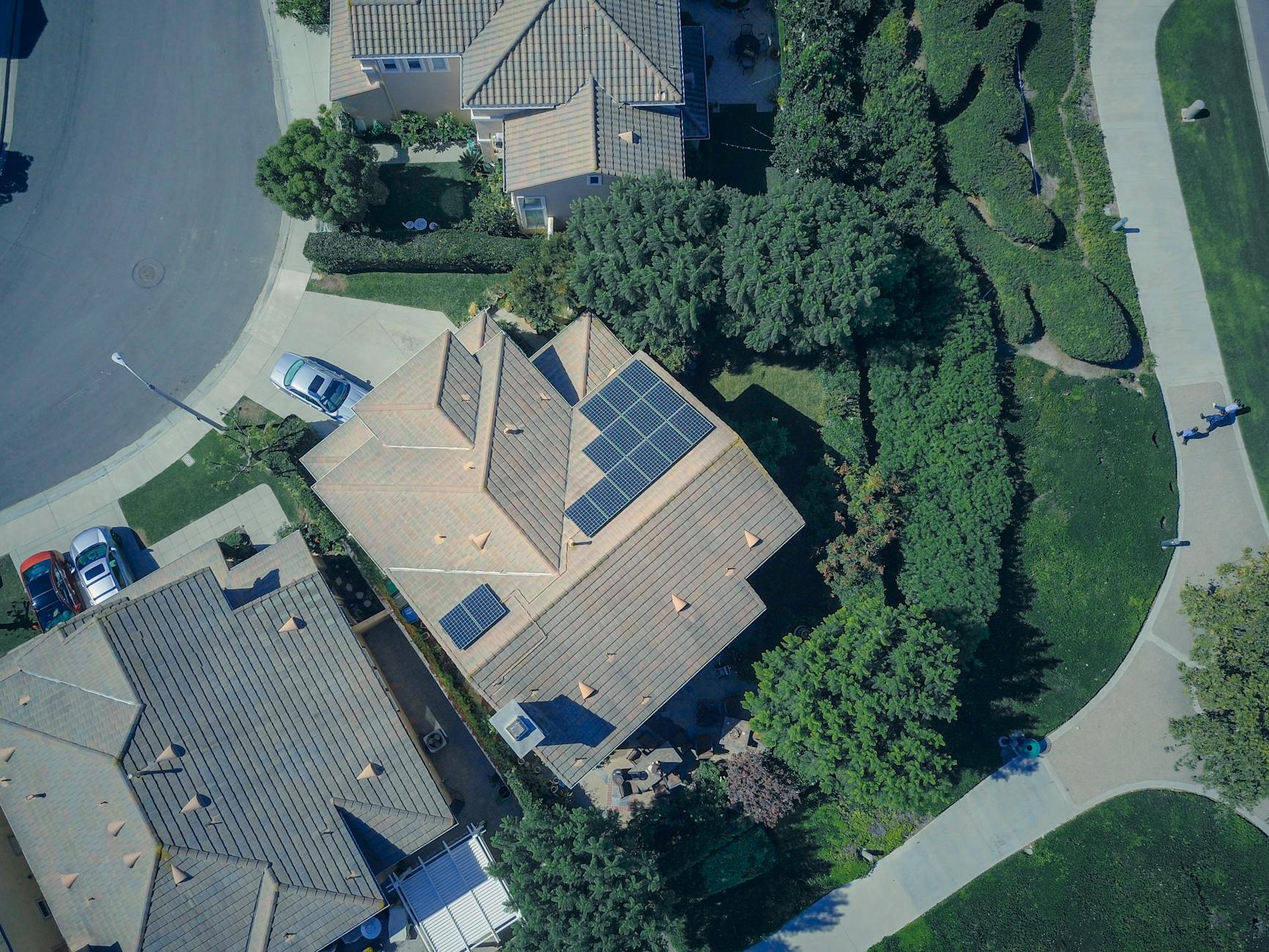
Span, a California-based startup, is making waves with an audacious proposal: turning ordinary homes into miniature AI data centers. This isn't just a quirky idea; it's a strategic response to the escalating demand for AI compute power and the growing public resistance to massive, centralized data centers. By deploying small, fractional data centers, or "XFRA units," on residential and small commercial properties, Span aims to tap into the vast, underutilized electrical capacity of existing grids, fundamentally altering how AI infrastructure is built and scaled.

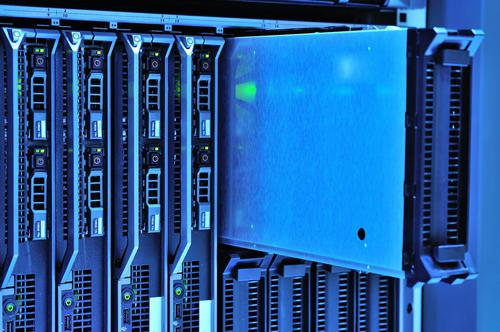
The core of Span's innovation lies in its ability to detect and harness the latent power within homes. The average American home, Span notes, utilizes only about 40% of its electrical capacity. This leaves significant "untapped" headroom, which its smart panels can pinpoint and direct to power the XFRA nodes. Each node, roughly the size of an HVAC unit, houses powerful hardware, including 16 liquid-cooled Nvidia RTX PRO 6000 Blackwell Server Edition GPUs and 4 AMD EPYC Server CPUs, backed by 3 terabytes of memory. This distributed network, when scaled, can collectively deliver the computing power of a traditional data center, but with a dramatically different footprint and operational model.

This approach directly addresses several critical pain points in the AI industry. Traditional data centers are not only expensive, costing around $15 million per megawatt and taking three to five years to build, but they also face increasing public opposition over land use, noise, and strain on local power grids. Span claims it can deploy 8,000 XFRA units to match a 100-megawatt data center's capacity six times faster and at five times lower cost, around $3 million per megawatt. This speed-to-power gap is a compelling economic argument, positioning Span as a potentially vital player in the future of AI infrastructure, particularly for inference tasks closer to end-users.

How Does Span Plan to Scale This Distributed Network?

Span's scaling strategy is ambitious, beginning with targeted deployments in new home construction before expanding to retrofits. The company is currently in the early testing phase, having partnered with PulteGroup, one of the nation's largest homebuilders, to deploy XFRA units in a handful of new communities. This initial focus on new builds streamlines installation and integration, ensuring the necessary infrastructure, including Span's smart panel and a 16 kilowatt-hour backup battery, is seamlessly incorporated from the outset.

A significant proof of concept is slated for Q3 2026, where Span plans to deploy 100 XFRA nodes in new residential homes in a Southwestern state, likely Nevada or Arizona. This pilot program will be crucial for refining the technology, assessing real-world economics, and demonstrating the system's reliability. Following this, Span aims for rapid expansion, targeting 80,000 XFRA nodes across the United States by 2027, collectively providing over 1 gigawatt of distributed compute capacity. This aggressive rollout schedule underscores the company's confidence in its ability to meet the "insatiable demand for more compute" that CEO Arch Rao describes.

The long-term vision involves creating a vast, interconnected network of these nodes, communicating with each other to serve hyperscalers and AI cloud providers. These customers would tap into Span's network just as they would a traditional data center, but with the added benefits of geographical distribution and reduced latency for edge computing tasks. While these nodes are not designed to replace the massive data centers needed for intensive AI model training, they are perfectly suited for AI inference, cloud gaming, and content streaming, where proximity to users and efficient power utilization are paramount.

What's the Value Proposition for Homeowners and Hyperscalers?

Span's model offers a compelling two-sided value proposition, addressing both the homeowner and the AI compute customer. For homeowners, the primary draw is financial relief and access to cutting-edge technology. Span covers the installation cost of the XFRA unit, smart panel, and backup battery. More importantly, it takes on the host's electricity and internet bills directly, charging a flat monthly fee that is significantly lower than what homeowners would typically pay. An example flat fee of $150 per month has been floated, roughly half the average American's combined utility and internet costs, with the possibility of no fee at all in some cases. This effectively turns a home's unused electrical capacity into a source of savings, or even potential income, without requiring any upfront investment from the resident.

For hyperscalers and AI cloud providers, the value is rooted in cost-effectiveness, speed, and strategic decentralization. The ability to deploy compute capacity six times faster and at five times lower cost than traditional data centers is a massive competitive advantage in a rapidly expanding market. This distributed network also helps alleviate the strain on power grids, which are increasingly burdened by AI's growth, and sidesteps the public opposition often faced by large data center projects. Nvidia's Senior Managing Director of Global Energy Industry, Marc Spieler, emphasizes that leveraging existing locations with power access makes "a lot of sense" for quicker AI solution deployment and improved affordability.

Furthermore, the XFRA nodes are specifically designed for AI inference tasks, which are becoming increasingly critical as AI models move from training to real-world application. By placing compute closer to end-users, Span's network can reduce latency and improve the performance of applications like document Q&A, software code generation, and multi-turn conversations. The system also boasts robust reliability features, including liquid-cooled, fanless Nvidia GPUs for quiet operation, a whole-home battery for demand spikes and outages, and software that can shift workloads between nodes to ensure continuous operation.

What Are the Key Challenges and Risks to Span's Vision?

While Span's distributed data center model presents a compelling vision, it is not without significant challenges and risks that investors must consider. The most immediate hurdle is public acceptance. Despite growing opposition to massive data centers, the idea of hosting a "mini data center" on one's home, even if quiet and aesthetically designed, might still face skepticism or "not in my backyard" (NIMBY) sentiment. Ensuring homeowners fully understand the technology, its benefits, and its minimal impact on daily life will be crucial for widespread adoption.

Operational complexities at a gigawatt scale also present a formidable challenge. The security, reliability, and regulatory compliance of a network comprising tens of thousands of individual residential nodes are vastly different from managing a few centralized facilities. Maintaining consistent performance across varied home internet connections and ensuring robust cybersecurity for a highly distributed system will require sophisticated management and monitoring. Experts like Ream question whether the industry has "quietly figured out that the cheapest place to put the operational risk of AI is in someone else's utility room."

Regulatory hurdles are another significant concern. State and local governments are increasingly scrutinizing data center energy and water consumption, with some states even considering construction moratoriums. While Span's model aims to mitigate these issues, the novel nature of residential AI compute nodes may trigger new regulatory frameworks or require extensive lobbying efforts. The economics of deployment could also be complicated by widely varying residential retail electricity rates across states, although Span is exploring "innovation in the tariff model" with utilities to secure lower rates.

What Does This Mean for Investors in the AI Infrastructure Space?

For investors eyeing the burgeoning AI infrastructure market, Span represents a high-risk, high-reward opportunity that could redefine the industry's physical footprint. The company's innovative approach directly tackles the twin challenges of escalating compute demand and growing public resistance to traditional data center expansion. If Span can successfully execute its ambitious scaling plans and overcome the inherent complexities of a distributed model, it could capture a significant share of the AI inference market, which requires compute power closer to the edge.

The strategic partnerships with Nvidia and PulteGroup are powerful endorsements, providing both technological prowess and a direct channel to new home construction markets. Nvidia's involvement, particularly with its liquid-cooled Blackwell GPUs, lends credibility to the technical feasibility and performance of the XFRA units. PulteGroup's early testing offers a crucial pathway to integrate these systems into new homes, bypassing some of the challenges associated with retrofitting existing properties and establishing a scalable deployment model.

However, investors should remain cautious. Span is still a startup, and its long-term success hinges on proving the economic viability, operational reliability, and public acceptance of its model at scale. The current market capitalization of $0 for Span-America Medical Systems, Inc. (SPAN) on NASDAQ suggests that the company being discussed in the research context is likely a private entity or a different company with the same name, and not the publicly traded SPAN. Investors interested in this specific AI data center concept would need to monitor for any future IPOs or investment opportunities in the private Span. The broader implications for the AI infrastructure sector, however, are clear: innovation in distributed compute is essential, and Span is at the forefront of this potentially transformative shift.

The Road Ahead for Distributed AI Compute

Span's vision of turning homes into AI data centers is a bold, potentially transformative answer to the escalating demands of artificial intelligence. Its strategic partnerships and compelling economic arguments for speed and cost efficiency position it as a significant disruptor in the AI infrastructure landscape. However, the path to widespread adoption will require navigating complex challenges related to public perception, regulatory frameworks, and the intricate logistics of managing a truly distributed network at scale.

The success of Span's upcoming 100-home proof of concept in Q3 2026 will be a critical indicator of its ability to deliver on its promises. If successful, the company's planned expansion to 80,000 nodes by 2027 could fundamentally alter how AI inference compute is delivered, making it more affordable, accessible, and environmentally sustainable. For now, Span remains a fascinating case study in innovation, pushing the boundaries of what's possible in the race to power the AI revolution.


Want deeper research on any stock? Try Kavout Pro for AI-powered analysis, smart signals, and more. Already a member? Add credits to run more research.

SHARE THIS ON:

Related Articles

Category

You may also like

Stock News1 day ago

Ideal Power eyes high-voltage AI data center market with B-TRAN technology gaining traction

Ideal Power is targeting the high-voltage AI data center market with its B-TRAN bidirectional semiconductor switch. The company reported accelerating commercial momentum in its Q1 results, positioning...
Stock News1 week ago

CoreWeave: The Backbone of the AI Revolution

AI infrastructure provider CoreWeave reports explosive revenue growth and a substantial backlog. This rapid expansion highlights the company's strengthening position as a critical backbone for the ong...
News1 week ago

Homes could become mini data centers to power AI growth

Span, Nvidia, and PulteGroup are testing home-based data center nodes to leverage unused grid capacity. This initiative aims to lower operational costs, mitigate community opposition, and provide addi...
Stock News2 weeks ago

Delivering an Open Data Center Ecosystem for AI

The Open Compute Project Foundation (OCP) is expanding its open data center ecosystem to accelerate AI infrastructure development. This initiative aims to standardize hyperscale best practices to impr...

Breaking News

View All →

Top Headlines

View More →
Stock News43 minutes ago

S&P 500 Snapshot: Seven-Week Win Streak Survives Friday Slump

Stock News1 hour ago

How NVDA, TSM & AVGO Continue Adding AI Muscle as IGV Recovers

Stock News2 hours ago

Berkshire Boosted Stake in Alphabet in First Quarter, Bought Delta Air, Sold Visa, Mastercard

Stock News2 hours ago

Stock Market Dives, Yields Soar As Trump Says This On Taiwan; Microsoft Pops On Ackman Move

Stock News2 hours ago

Berkshire Hathaway triples Alphabet stake — and reveals new bet on Delta