MarketLens

Log in

Is the U.S. Economy Headed for Stagflation

1 week ago
SHARE THIS ON:

Is the U.S. Economy Headed for Stagflation

Key Takeaways

  • Escalating conflict in Iran has sent crude oil prices soaring, with WTI crude jumping 12.21% to $90.90, fueling inflation fears.
  • The U.S. economy unexpectedly shed 92,000 jobs in February, pushing the unemployment rate to 4.4%, signaling a weakening labor market.
  • The Federal Reserve faces a stagflationary dilemma: weak growth calls for rate cuts, but rising oil prices make easing monetary policy a dangerous gamble.

Is the U.S. Economy Headed for Stagflation?

The U.S. economy finds itself at a precarious crossroads, battered by a potent combination of geopolitical turmoil and domestic labor market weakness. Crude oil prices have surged dramatically following military action in Iran, while a surprisingly soft February jobs report has ignited fears of an economic slowdown. This dual shock creates a challenging environment for policymakers and investors alike, raising the specter of stagflation – a dreaded mix of high inflation and stagnant growth.

West Texas Intermediate (WTI) crude oil, the U.S. benchmark, rocketed to $90.90 per barrel, marking a staggering 12.21% increase from its previous close of $81.01. This surge, driven by the escalating conflict in the Middle East and concerns over the Strait of Hormuz, immediately translates to higher energy costs for consumers and businesses. Meanwhile, the Bureau of Labor Statistics reported a loss of 92,000 jobs in February, a sharp reversal from expectations and a clear signal of weakening economic momentum.

This confluence of events has put the Federal Reserve in an unenviable position. Typically, a softening labor market would prompt consideration of interest rate cuts to stimulate growth. However, the inflationary pressure from soaring oil prices severely constrains the Fed's options, as easing monetary policy could exacerbate price increases. The market is now grappling with the uncomfortable reality that the central bank may be "between a rock and a hard place," unable to effectively address both inflation and unemployment simultaneously.

The current backdrop bears an unsettling resemblance to the 1970s, an era defined by persistent stagflation. While the structural differences between then and now offer some hope, the immediate challenges are undeniable. Investors must now recalibrate their strategies, seeking resilience in a market increasingly defined by uncertainty and the potential for prolonged economic headwinds.

How is the Iran Conflict Driving Oil Prices and Inflation Fears?

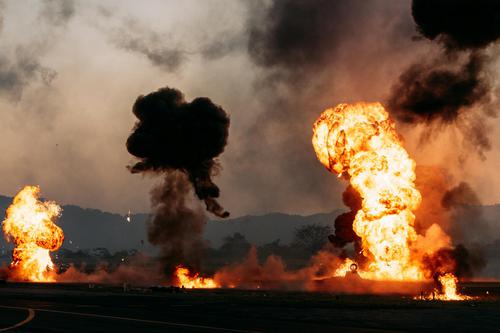
The escalating military conflict involving the U.S., Israel, and Iran has sent shockwaves through global energy markets, directly impacting crude oil prices and fueling inflation concerns. WTI crude oil, a key benchmark, surged to $90.90 per barrel, marking a substantial 12.21% jump from its prior close of $81.01. This dramatic increase reflects traders' anxieties over potential supply disruptions from a region critical to global oil flows.

A primary concern is the Strait of Hormuz, a narrow chokepoint off Iran's coast through which roughly a fifth of the world's oil supply typically sails. Iran has historically threatened to close the strait during disputes, and any significant disruption there could send oil prices well above $100 per barrel. While the initial surge was less than some feared, the unpredictability of the conflict, which President Trump suggested could last weeks, keeps markets on edge. Bob McNally of Rapidan Energy Group noted that a military action in Iran had a 75% probability, highlighting the long-anticipated nature of this risk.

Beyond the Strait, the conflict threatens Iran's own substantial oil reserves and production capabilities. Iran is the world's sixth-largest oil producer, and any sustained loss of its barrels would force countries like China to bid for substitute supplies, driving global prices higher. Even a precautionary measure, such as Saudi Arabia shutting units at its Ras Tanura refinery after a drone strike, underscores the fragility of the region's energy infrastructure.

The immediate consequence for American consumers is a noticeable rise in gasoline prices, with the national average already climbing 32 cents in the last seven days to approximately $3.31 per gallon. If crude oil prices remain elevated, or push towards $100 a barrel, economists warn that inflation in developed markets could be up to 0.8% higher than expected, forcing central banks to reconsider their monetary policy stances. This direct link between geopolitical instability and household budgets is a stark reminder of oil's pervasive influence on the economy.

What Does the Weak February Jobs Report Signal for Economic Growth?

The U.S. labor market delivered a significant downside surprise in February, with the economy unexpectedly shedding 92,000 jobs. This stark reversal from expectations, which had forecast a gain of 50,000 to 60,000 jobs, has raised serious alarms about the underlying health of economic growth. The unemployment rate also ticked up to 4.4% from 4.3% in January, further solidifying concerns about a softening job market.

Adding to the worry, previous months' job growth figures were revised downward. January's initially strong total was adjusted to 126,000 jobs from 130,000, and December's estimated gain of 48,000 jobs was revised to a loss of 17,000. This pattern suggests that the labor market has averaged essentially zero net job creation over the past six months, indicating a more prolonged period of weakness than previously understood. The U.S. economy has now shed jobs in five out of the past nine months, a concerning trend.

Several factors contributed to February's poor showing. The healthcare sector, typically a strong source of employment gains, posted a loss of 28,000 jobs, largely attributed to a nurses' strike in California. Beyond specific strikes, economists like Diane Swonk of KPMG US noted that the report "really illustrates how fragile the economy is on the labor market side of it." The labor force participation rate also dropped from 62.5% in January to 62.0%, the lowest since December 2021, which, if it hadn't fallen, would have pushed the unemployment rate even higher.

This unexpected weakness in job creation, coupled with a drop in employed Americans by 185,000 in the household survey, signals a labor market that may be shifting from merely cooling to actively contracting. Such a slowdown in hiring and rising unemployment typically precede broader economic deceleration, putting the brakes on consumer spending – the primary engine of the U.S. economy. The report paints a picture of an economy struggling to maintain momentum, making the Federal Reserve's upcoming decisions even more critical.

How Does This Complicate the Federal Reserve's Rate Policy?

The dual shock of surging oil prices and a weakening labor market has placed the Federal Reserve in an exceptionally difficult predicament regarding its interest rate policy. On one hand, the unexpected loss of 92,000 jobs in February and the rise in the unemployment rate to 4.4% would typically argue for rate cuts to stimulate economic activity. A softening job market and slowing growth are classic signals for monetary easing.

However, the dramatic surge in crude oil prices, with WTI crude hitting $90.90 per barrel, presents a formidable inflationary threat. Higher energy costs feed directly into consumer prices and can quickly reverse any progress made on taming inflation. Ellen Zentner, chief economic strategist for Morgan Stanley Wealth Management, aptly summarized the dilemma: "Today's numbers may have put the Fed between a rock and a hard place." Cutting rates to support employment risks fueling an inflation surge, while holding steady to combat inflation could deepen the economic slowdown.

The Fed's next rate decision is scheduled for March 18, and policymakers will be grappling with whether February's data is a temporary blip or the start of a more concerning trend. San Francisco Fed President Mary Daly acknowledged the "two-sided risks," noting that the "oil price shock, depending on how long it lasts, is a real thing." While some Fed officials, like Governor Chris Waller, had previously indicated a bias towards rate cuts if the job market weakened, the inflationary pressures from oil complicate that stance significantly.

Adding to the complexity, annual wage growth is still nearing +4.0%, which supports the ongoing pause in rate adjustments to prevent a wage-price spiral. The bond market reflects this uncertainty; while unexpected labor market weakness might normally prompt a rally in Treasuries, long treasury yields are higher, indicating inflation concerns are outweighing growth worries. The 10-year Treasury yield, for instance, slipped only marginally to 4.138%, with the 2s/10s spread at a normal +0.59%, suggesting that while the market sees some growth concerns, inflation expectations remain elevated. This intricate balance of conflicting economic signals leaves the Fed with no easy answers.

Is Stagflation a Real Threat, or Just Market Noise?

The term "stagflation" has re-entered market discourse with unsettling frequency, and for good reason. It describes the worst-case economic scenario: a miserable mix of high inflation and stagnant or contracting economic growth, coupled with rising unemployment. The current confluence of soaring oil prices and a weakening labor market is precisely the kind of environment that ignites these fears, drawing uncomfortable parallels to the 1970s.

Economists at SocGen suggest that if oil prices remain above $90 a barrel for at least three months, global inflation could rise by as much as 1 percentage point, while global growth could drop by 0.2 percentage points. This scenario, combined with the U.S. economy unexpectedly losing 92,000 jobs and the unemployment rate climbing to 4.4%, paints a clear picture of stagflationary risk. Mohamed El-Erian, a top economist, explicitly warned of a "fresh potential bout of stagflation blowing through the global economy."

While the similarities to the 1970s are striking – particularly the energy price shocks and periods of accommodative monetary policy – there are also critical differences. Today's economies are generally more flexible, with less centralized wage setting and reduced energy intensity of GDP, making them somewhat more resilient to oil shocks. Unlike the 1970s, where fiscal policy was often expansionary, current expectations lean towards fiscal tightening. These structural improvements could help prevent a full-blown repeat of that era's deep stagflationary spiral.

However, the immediate data points are concerning. Real GDP growth in Q4 missed estimates, and the Producer Price Index (PPI) rose 0.8% in January, well above expectations. This suggests that even before the latest oil shock, underlying inflationary pressures and slowing growth were already present. The market is clearly reacting, with major indices like the S&P 500 dropping 1.3% and the Dow Jones Industrial Average plunging 453 points on the news. Investors are not dismissing these signals as mere noise; they are actively pricing in the heightened risk of a challenging economic environment where the Fed has limited tools to fix both problems simultaneously.

In an environment increasingly shadowed by stagflationary risks, investors must critically re-evaluate their portfolios. The traditional 60/40 stock-bond portfolio, which struggled significantly during the 1970s stagflation, may face renewed pressure as both asset classes are vulnerable to high inflation and weak growth. Bonds typically suffer as inflation erodes their fixed returns, while equities can struggle with reduced corporate earnings and higher discount rates.

Looking at recent market performance, defensive sectors have shown relative resilience. On March 6, Consumer Defensive stocks were up +2.51% with an average P/E of 42.4, and Healthcare gained +0.46% with a P/E of 31.6. These sectors tend to perform better during economic downturns because demand for their products and services remains relatively stable regardless of economic conditions. Staples like food, beverages, and essential healthcare products are less discretionary, offering a buffer against consumer spending pullbacks.

Conversely, sectors sensitive to economic cycles and energy costs are likely to face headwinds. Consumer Cyclical stocks, with an average P/E of 89.1, were only up +0.10% on March 6, indicating investor caution. Technology, often seen as a growth engine, was down -0.47% with a P/E of 43.8, as higher interest rates and slower growth can dampen future earnings expectations. Energy stocks, despite the oil price surge, were down -0.61% with a P/E of 20.9, suggesting that while higher prices are good, the broader economic slowdown and demand destruction fears might be weighing on the sector.

Investors should consider strategies that emphasize inflation protection and defensive characteristics. Real assets, such as commodities (though volatile as seen with crude oil's recent swings), and certain inflation-indexed bonds could offer some hedging. Companies with strong pricing power, low debt, and stable cash flows in non-discretionary industries will be better positioned to weather the storm. This is a time for caution, diversification, and a focus on fundamental strength over speculative growth.

The current economic landscape demands a cautious and adaptive approach from investors. The Federal Reserve faces an unprecedented challenge, and the path forward is fraught with uncertainty. Prioritizing capital preservation and identifying resilient assets will be key to navigating this complex period.


Want deeper research on any stock? Try Kavout Pro for AI-powered analysis, smart signals, and more. Already a member? Add credits to run more research.

SHARE THIS ON:

Related Articles

Category

You may also like

News4 days ago

U.S. Tariffs: A New Trade War?

The U.S. Section 301 investigation targets 16 major economies, signaling a shift toward permanent, structural tariffs. Three scenarios include expedited tariffs, prolonged volatility, or global escala...
News5 days ago

Nobel prize-winning economist warns that America is on the brink of stagflation

Nobel laureate Joseph Stiglitz warned that America nears stagflation, citing the approach of the "four horsemen of the economic apocalypse."
Stock News1 week ago

Fears of 1970s-style stagflation arise with oil spike to $100. How big a threat is it?

The threat of stagflation looms over the U.S. economy after oil spiked to $100 a barrel and the job market slowed. This combination of high inflation and slow growth may be aggravated by stimulative m...
Stock News2 months ago

Are We Headed For a ‘Soft Landing’ or a Recession in 2026?

Most economists forecast the U.S. economy will see moderate growth and avoid a recession in 2026. However, achieving a 'soft landing' is unlikely as inflation may stay above the Fed's target.

Breaking News

View All →

Top Headlines

View More →
Stock News50 minutes ago

Exclusive: Meta vowed to stop illegal financial ads in Britain. It failed 1,000 times in a week

Stock News1 hour ago

Wedbush's Dan Ives sees Nvidia reaching $6tn valuation by 2027

Stock News1 hour ago

Microsoft weighs legal action over $50 billion Amazon-OpenAI cloud deal, FT reports

Stock News2 hours ago

What Is One of the Best Artificial Intelligence (AI) Stocks to Buy Right Now?

Stock News4 hours ago

Nvidia Says Company Firing Up H200 Production for China