MarketLens

Log in

Is Your 401(k) Hiding a Secret Superpower for High Earners

1 hour ago
SHARE THIS ON:

Is Your 401(k) Hiding a Secret Superpower for High Earners

Key Takeaways

  • High earners can significantly boost retirement savings beyond standard 401(k) limits by leveraging a "third contribution bucket" through the Mega Backdoor Roth strategy.
  • This advanced technique, which allows for up to $72,000 (or more for older savers) in annual 401(k) contributions, converts after-tax funds into a tax-free Roth account.
  • Self-employed individuals and owner-only businesses can utilize a Solo 401(k) to contribute as both employee and employer, reaching similar high limits and offering unique tax advantages.

Is Your 401(k) Hiding a Secret Superpower for High Earners?

Many investors believe their 401(k) contributions are capped at the standard employee deferral limit, currently $24,500 for 2026. This common misconception often leaves a significant amount of potential tax-advantaged savings on the table, particularly for high-income individuals. The reality is that your 401(k) plan might possess a hidden "third contribution bucket" that allows you to funnel substantially more money into your retirement nest egg, potentially reaching up to $72,000 annually, or even more for those nearing retirement.

This powerful, yet often overlooked, strategy is known as the Mega Backdoor Roth. It's specifically designed for those who earn too much to contribute directly to a Roth IRA but still want to build a substantial tax-free retirement fund. By understanding the full scope of 401(k) contribution limits, investors can unlock a pathway to accelerate their wealth accumulation, ensuring their money grows untouched and tax-free for decades. It's a game-changer for serious long-term financial planning, transforming a standard retirement vehicle into a formidable wealth-building machine.

The key lies in recognizing that the IRS sets two distinct limits for 401(k)s. The first is the employee elective deferral limit, which is the amount you can contribute from your paycheck. The second, governed by IRC Section 415(c), is a much higher overall limit on total annual additions from all sources – including employee contributions, employer contributions, and after-tax contributions. This gap between the employee deferral limit and the total plan limit is precisely where the Mega Backdoor Roth strategy thrives, offering a unique opportunity to supercharge your tax-free savings.

For 2026, the total combined limit for all contributions to a 401(k) is $72,000 for individuals under age 50. This figure jumps to $80,000 for those age 50 and older, and an impressive $83,250 for individuals aged 60-63 who can take advantage of an enhanced catch-up contribution. These higher ceilings create substantial room for after-tax contributions, which are the foundation of the Mega Backdoor Roth. It’s a sophisticated method that bypasses traditional income restrictions, making it an invaluable tool for high-net-worth families and business owners.

How Does the Mega Backdoor Roth Strategy Actually Work?

The Mega Backdoor Roth strategy leverages the difference between your personal 401(k) deferral limit and the much higher total annual contribution limit. For 2026, an employee under 50 can contribute $24,500 from their paycheck. However, the total amount that can be added to their 401(k) from all sources – employee, employer, and after-tax contributions – is $72,000. This creates a potential "contribution gap" of up to $47,500 (or more, depending on employer contributions and age) that can be filled with after-tax dollars.

Here's the critical step: once these after-tax contributions are made, they are then converted into a Roth account, either through an "in-plan Roth conversion" or an "in-service distribution" to an external Roth IRA. This conversion is the "mega backdoor" part of the strategy. While the initial after-tax contribution itself isn't tax-deductible, converting it to Roth means all future investment growth on that money becomes completely tax-free. This is a powerful advantage, as Roth accounts are not subject to required minimum distributions (RMDs) during the original owner's lifetime, offering unparalleled control and flexibility in retirement.

Consider a 35-year-old earning a high salary in 2026. They max out their employee deferral at $24,500 and receive a generous employer match of $12,250. Their total contributions before after-tax funds would be $36,750. With the overall plan limit at $72,000, they still have $35,250 in available room for after-tax contributions. This $35,250 can then be converted to Roth, growing tax-free for life. For an individual aged 52, maxing out their $32,500 employee deferral (including the $8,000 catch-up) and receiving a $25,000 employer contribution, they would still have $22,500 of after-tax room to fill up to the $80,000 total limit for their age group.

The beauty of this strategy is its ability to bypass the income limitations that typically prevent high earners from contributing to a Roth IRA. As long as your 401(k) plan allows after-tax contributions and conversions, your income level is not a barrier. This makes the Mega Backdoor Roth one of the last great avenues for affluent investors to build a substantial tax-free retirement fund, ensuring their wealth can compound without the drag of future taxes.

What Are the Key Requirements and Pitfalls to Avoid?

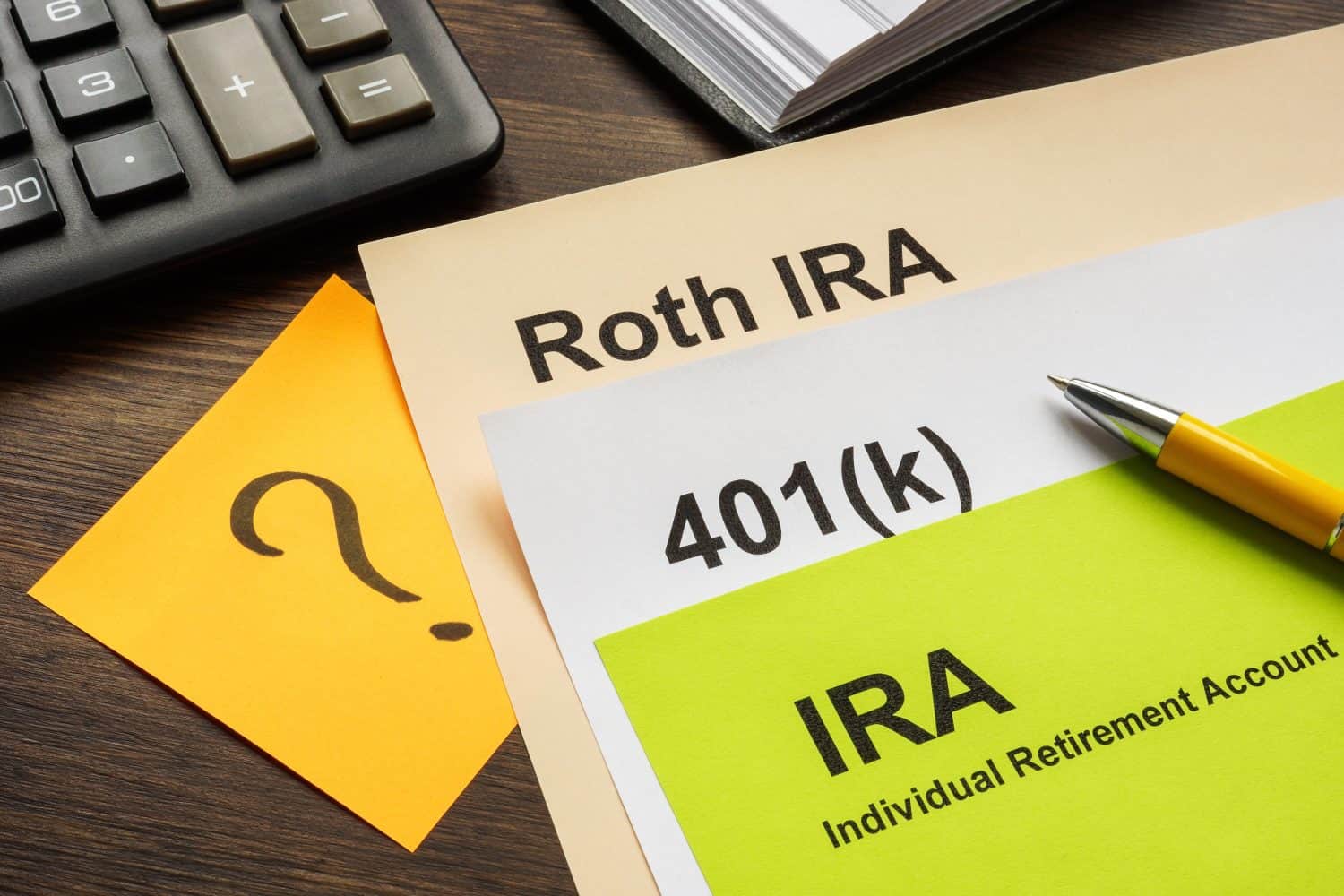
Before diving into the Mega Backdoor Roth, it's crucial to understand that not all 401(k) plans are created equal. This strategy hinges on two non-negotiable features within your employer's plan. First, the plan must explicitly permit after-tax contributions. This is distinct from Roth 401(k) contributions, which are also made with after-tax dollars but fall under the employee deferral limit. The after-tax contributions for a Mega Backdoor Roth are a separate bucket, allowing you to fill the gap up to the total plan limit.

Second, your plan needs a mechanism for conversion. This means it must allow either "in-plan Roth conversions," where the after-tax money is moved into a Roth sub-account within the same 401(k) plan, or "in-service distributions," which allow you to roll the after-tax funds out of the 401(k) and into an external Roth IRA. Without one of these conversion paths, your after-tax contributions would only grow tax-deferred, meaning earnings would still be taxed upon withdrawal, significantly diminishing the strategy's benefit.

To confirm your plan's compatibility, your first step should be to request your plan's Summary Plan Description (SPD) from your HR department or plan administrator. Carefully review this document for phrases like "after-tax contributions," "in-plan Roth conversion," or "in-service distribution." If both key provisions are present, you have full access to the strategy. If only after-tax contributions are allowed but no conversion mechanism, the strategy is less effective. If neither is mentioned, it's worth asking your plan sponsor if an amendment is possible, as some employers are willing to add these features to remain competitive with benefits.

Another important consideration is the potential for tax liabilities during the conversion process. While the after-tax contributions themselves are not taxed again, any earnings that have accumulated on those after-tax funds before the conversion will be subject to income tax. It is generally advisable to convert these funds as quickly as possible after contributing to minimize any taxable gains. Consulting a qualified tax professional is highly recommended to ensure proper setup and avoid unexpected tax bills, especially if you have significant earnings on your after-tax contributions.

Can Self-Employed Individuals Leverage a Solo 401(k) for Similar Benefits?

Absolutely. For self-employed individuals and owner-only businesses, the Solo 401(k) stands out as one of the most powerful retirement plans available, offering similar, if not greater, flexibility and contribution potential compared to an employer-sponsored Mega Backdoor Roth. The core advantage of a Solo 401(k) is that you get to wear two hats: you are both the employee and the employer, allowing you to make contributions in both capacities, significantly boosting your annual savings.

As the "employee," you can contribute up to the standard elective deferral limit, which is $24,500 for 2026 if you're under 50. If you're age 50 or older, you can add an $8,000 catch-up contribution, bringing your employee total to $32,500. For those aged 60-63, an enhanced catch-up of $11,250 allows for a $35,750 employee contribution. These employee contributions can be made as traditional pre-tax or Roth contributions, depending on your plan and tax strategy.

As the "employer," your business can make a profit-sharing contribution, typically up to 25% of your net self-employment income (or W-2 wages for S-Corp owners). The IRS limits the amount of compensation that determines these contributions, set at $360,000 for 2026. When you combine your employee deferrals with these employer profit-sharing contributions, the total can reach the same high limits as a traditional 401(k) – up to $72,000 for those under 50, $80,000 for those 50+, and $83,250 for those 60-63.

For example, a self-employed individual under 50 with $200,000 in net earnings could contribute $24,500 as an employee. As the employer, they could contribute 25% of their adjusted net earnings, which would be approximately $50,000. This totals $74,500, but since the overall limit for under 50 is $72,000, they would be capped there. This dual contribution mechanism provides immense potential for tax-advantaged savings, allowing self-employed individuals to rapidly build their retirement wealth.

What Are the Tax Implications and Strategic Benefits?

The tax implications of these advanced 401(k) strategies are a significant part of their appeal. For traditional pre-tax contributions (both employee and employer), your contributions reduce your taxable income in the current year, and your investments grow tax-deferred until retirement. This means you pay taxes only when you withdraw the money in retirement, ideally when you're in a lower tax bracket. Employer profit-sharing contributions are also tax-deductible for the business, offering a direct benefit to the company's bottom line.

However, the real strategic benefit, especially with the Mega Backdoor Roth, lies in the power of tax-free growth. Once after-tax contributions are converted to a Roth account, all future earnings and qualified withdrawals are completely tax-free. This is a monumental advantage, as your wealth can compound exponentially without ever being subject to income tax again. This benefit becomes even more pronounced over long investment horizons, potentially saving hundreds of thousands, if not millions, in future taxes.

Beyond tax-free growth, Roth accounts offer several other compelling advantages. Unlike traditional IRAs and 401(k)s, Roth accounts are not subject to required minimum distributions (RMDs) during the original owner's lifetime. This provides unparalleled control over your retirement income, allowing you to decide when and how much to withdraw, or even to let the money continue growing for your entire life. This flexibility is invaluable for estate planning, as Roth accounts can be passed on to heirs as a tax-free inheritance, providing a powerful financial head start for the next generation.

For high earners, particularly those who are phased out of direct Roth IRA contributions, the Mega Backdoor Roth and Solo 401(k) with a Roth option are essential tools. They offer a legitimate and powerful way to circumvent income limitations and build a substantial tax-free nest egg. The ability to diversify your retirement savings across both pre-tax and Roth accounts also provides flexibility to manage your tax burden in retirement, allowing you to draw from tax-free sources when tax rates are high, and taxable sources when rates are lower.

Actionable Steps for Maximizing Your Retirement Savings in 2026

For those looking to capitalize on these advanced strategies in 2026, a clear action plan is essential. First, if you're an employee, immediately request your 401(k) plan's Summary Plan Description (SPD) from your HR department. Scrutinize it for language permitting "after-tax contributions" and either "in-plan Roth conversions" or "in-service distributions." If your plan has these features, you're in a prime position to execute a Mega Backdoor Roth.

Next, calculate your available after-tax contribution room. Start with the total plan limit for your age group ($72,000 for under 50, $80,000 for 50+, or $83,250 for 60-63). Subtract your planned employee deferrals (up to $24,500, plus catch-ups) and any expected employer contributions. The remaining balance is your maximum after-tax contribution for the year. Aim to contribute and convert these funds as early and frequently as your plan allows to minimize any taxable earnings prior to conversion.

For self-employed individuals, establishing a Solo 401(k) is the foundational step. This plan allows you to contribute both as an employee and an employer, maximizing your annual contributions up to the combined limits. Ensure your plan offers a Roth option if you desire tax-free growth. Consult with a financial advisor or plan provider to correctly calculate your maximum contributions based on your business structure and net earnings, avoiding common errors like miscalculating self-employment tax deductions.

Finally, remember that these strategies, while powerful, involve complexities. Tax laws can change, and individual circumstances vary. Always consult with a qualified financial advisor and tax professional to tailor these strategies to your specific situation, ensuring compliance and optimizing your long-term financial outcomes. The effort invested today can yield substantial tax-free wealth in retirement.

Unlocking the full potential of your 401(k) or Solo 401(k) requires proactive planning and a deep understanding of the rules. By leveraging the Mega Backdoor Roth and the dual contribution power of a Solo 401(k), high earners can build a retirement nest egg that is not only substantial but also largely immune to future tax hikes, securing a truly financially independent future.


Want deeper research on any stock? Try Kavout Pro for AI-powered analysis, smart signals, and more. Already a member? Add credits to run more research.

SHARE THIS ON:

Related Articles

Category

You may also like

Stock News7 hours ago

The 401(k) Trick That Lets Executives Contribute Up to $69,000 a Year

The "mega backdoor Roth" 401(k) strategy allows some executives to contribute up to $69,000 annually, exceeding standard employee deferral limits. This mechanism utilizes a third contribution bucket o...
Stock News1 week ago

Why high earners are the most likely to run out of money in retirement

Financial planners report that six-figure earners are among the most financially fragile retirees, despite decades of high earnings. This counterintuitive trend suggests high income does not guarantee...
Stock News1 months ago

Is IonQ Stock Your Ticket to Becoming a Millionaire?

IonQ, a quantum computing company, is highlighted as an intriguing investment due to its reported lead in accuracy within the emerging sector.
Stock News2 months ago

Could Using 401(k)s as Down Payments Make Saving for Retirement Even Harder?

Skepticism arose late last week regarding a proposal allowing 401(k) funds to cover home down payments. The proposal's benefits and risks concerning retirement savings accessibility are now under revi...

Breaking News

View All →

Top Headlines

View More →
Stock News1 hour ago

Alphabet Just Introduced Its Newest AI Advantage, and It's Another Reason to Buy the Stock

Stock News1 hour ago

Apple Recruits Google Shopping Exec to Lead AI Marketing

Stock News6 hours ago

Got $5,000? 2 Stocks the Fed's Rate Decision Just Made More Attractive

Stock News7 hours ago

Nvidia Is Credit Personified While The Fed Is A Pointless Distraction

Stock News7 hours ago

Nvidia Just Announced Hardware for AI Data Centers in Space. Here Are the Very Real Implications.