The Power Duo: Nvidia and Google Quantum AI
A Synergistic Approach to Innovation
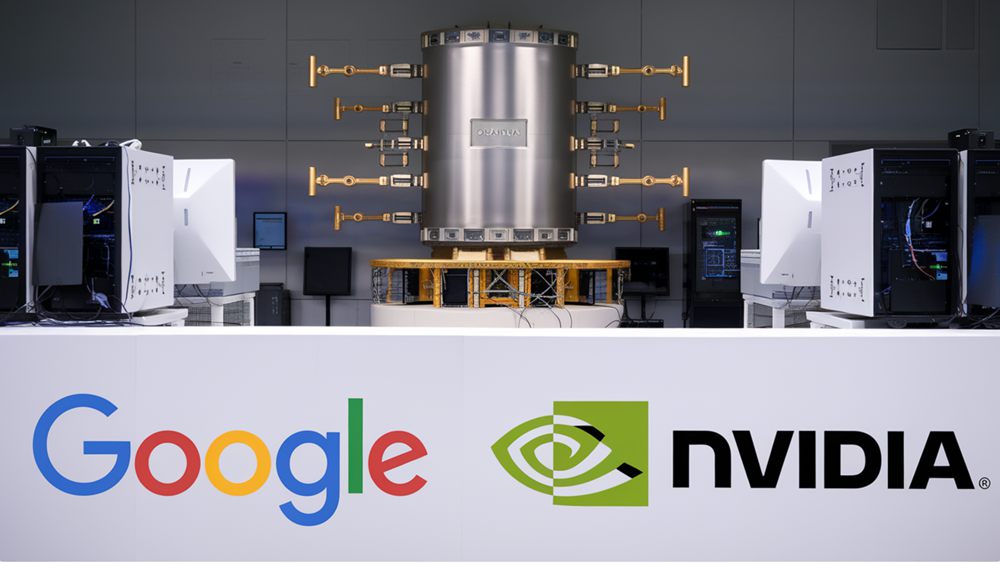
Nvidia, known for its prowess in graphics processing units (GPUs) and AI, has teamed up with Google Quantum AI, a leader in quantum research. This collaboration aims to address some of the most pressing challenges in quantum computing, notably the issue of “noise” which limits the number of operations a quantum processor can perform. By utilizing Nvidia’s Eos supercomputer and the CUDA-Q platform, the partnership seeks to simulate the intricate physics of quantum processors, thereby advancing their design and functionality.
Harnessing the Eos Supercomputer
Central to this collaboration is Nvidia’s Eos supercomputer, a powerhouse equipped with 1,024 NVIDIA H100 Tensor Core GPUs. This formidable setup allows for large-scale, high-accuracy simulations of quantum dynamics, a feat that was previously unmanageable due to time and computational constraints. The capability to simulate systems with up to 40 qubits in mere minutes, compared to weeks, marks a significant leap forward in quantum research.
Overcoming Quantum Computing Challenges
The Noise Conundrum
One of the primary hurdles in quantum computing is “noise”—unwanted disturbances that can disrupt quantum states, leading to errors in computation. The collaboration between Nvidia and Google aims to mitigate these challenges by simulating quantum device physics on an unprecedented scale. By understanding how qubits interact with their environment, researchers can develop strategies to manage noise, paving the way for more stable and reliable quantum processors.
Public Accessibility and Democratization
An exciting aspect of this partnership is the decision to make the software tools developed through this collaboration publicly available. By doing so, Nvidia and Google are democratizing access to advanced quantum simulation tools, empowering engineers and researchers worldwide to innovate and scale quantum hardware designs. This move not only accelerates research but also fosters a collaborative environment that could lead to breakthroughs across various fields.
Implications for Investors and the Tech Industry
Market Dynamics and Stock Movements
The announcement of this collaboration has already impacted the stock market, with Nvidia’s shares experiencing a slight dip while Google’s shares saw a modest rise. This reaction reflects the market’s anticipation of the potential long-term benefits of this partnership, even as it acknowledges the inherent risks and challenges associated with quantum computing.
A Long-Term Vision for Quantum AI
While the immediate commercial applications of quantum computing might still be years away, the groundwork laid by Nvidia and Google is crucial for future advancements. As they continue to refine quantum processor designs and tackle noise management, the potential for revolutionary applications in fields such as medicine, cryptography, and financial modeling becomes increasingly tangible.
The Road Ahead: Opportunities and Challenges
A Catalyst for Innovation
The Nvidia-Google partnership serves as a catalyst for innovation in quantum computing, with the potential to unlock new capabilities and applications. By combining Nvidia’s expertise in AI and supercomputing with Google’s quantum research, this collaboration is poised to drive significant advancements in the field.
Remaining Challenges
Despite the promising outlook, challenges remain. The high computational costs associated with quantum simulations and the inherent limitations of current quantum hardware are hurdles that need to be addressed. Moreover, the path to commercially viable quantum computers requires sustained research and development efforts.
Conclusion: A Quantum Leap Forward
In the grand tapestry of technological progress, the collaboration between Nvidia and Google Quantum AI is a significant thread weaving the future of quantum computing. By addressing fundamental challenges and making advanced tools accessible, this partnership not only pushes the boundaries of what is possible but also lays the foundation for a new era of innovation.
For investors and tech enthusiasts alike, keeping an eye on developments in this space could offer valuable insights into the future of computing and AI. As Nvidia and Google continue to pioneer advancements in quantum AI processors, the potential for transformative applications grows, promising a future where quantum technology becomes an integral part of our digital ecosystem.
In the ever-evolving world of technology, staying informed and adaptable is key. As Nvidia and Google forge ahead in their quest to enhance quantum computing, the opportunities for growth and innovation are boundless. Whether you’re an investor, a tech enthusiast, or simply curious about the future, this partnership is a story worth following. Subscribe for more insights and stay ahead of the curve in this exciting journey towards quantum computing’s full potential.