NVIDIA's Political Headache Shadows Undiminished AI Dominance

Key Takeaways
- Recent NVIDIA (NVDA) stock sales by prominent members of Congress, while fueling media narratives, represent a negligible fraction of the company's $5.13 trillion market capitalization and daily trading volume.
- These sales appear primarily driven by heightened political scrutiny of congressional stock trading and increasing regulatory pressure on the AI sector, rather than a fundamental shift in NVIDIA's market position.
- Despite emerging competition in AI inference and antitrust overhangs, NVIDIA's core business continues to deliver hyper-growth and expanding margins, with Q2 FY2027 revenue guided to $91 billion, suggesting the market may be overly discounting its near-term earnings power.
Congress Members Trim NVIDIA Amid AI Ascent
In an environment where NVIDIA (NVDA) consistently posts record-shattering financial results, a different kind of headline has captured attention: several members of the U.S. Congress have disclosed sales of their NVIDIA shares. These trades, though numerically insignificant against the backdrop of the company's massive scale, have fueled narratives about political insiders cashing out at the peak of the AI boom. With NVIDIA trading at $211.94 as of August 04, 2026, near its 52-week high of $236.54, and its stock having surged over 940% in the last five years, any activity by politically sensitive holders draws scrutiny.
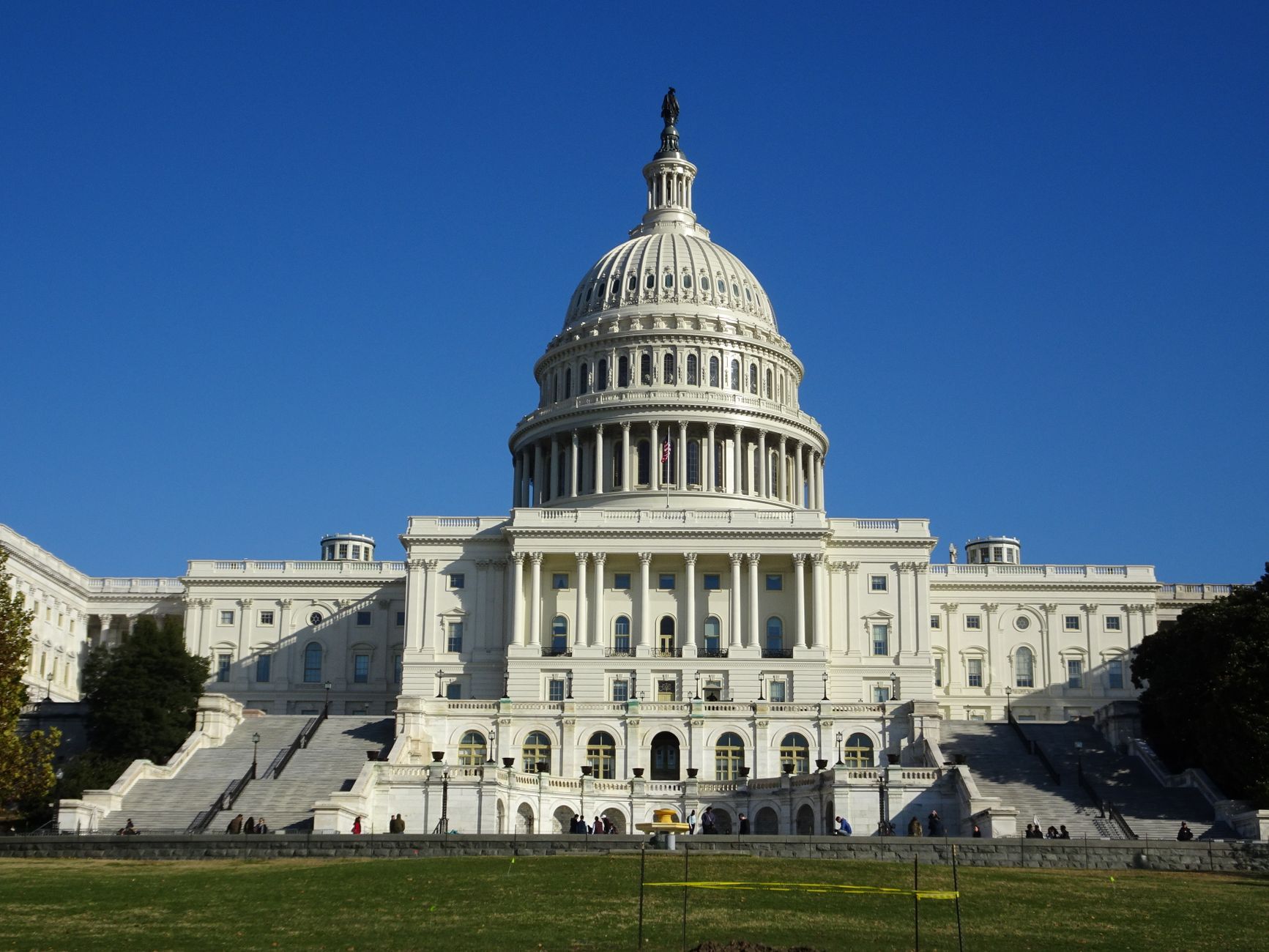
Senator Sheldon Whitehouse (D-RI), a member of the Senate Judiciary Committee with oversight on antitrust, made multiple sales in 2026. These included two separate transactions on May 08, each valued between $100,001 and $250,000, and a further sale between $15,001 and $50,000 on June 30. Separately, Representative Sam Liccardo (D-CA-16), serving on the House Financial Services Committee, sold 100 shares of NVIDIA from his Roth IRA on July 21 for $15,001 to $50,000. These transactions occurred amidst escalating discussions around banning individual stock trades by lawmakers and increasing regulatory scrutiny of big tech's dominance in AI. While these sales collectively total hundreds of thousands of dollars for the year, NVIDIA’s market capitalization is $5.13 trillion, underscoring the minuscule financial impact of these individual trades on the stock's overall trajectory. The real story behind these sales appears to be less about a bearish fundamental call on NVIDIA, and more about navigating the complex landscape of political optics and personal portfolio risk management.
What the Numbers Actually Say
NVIDIA's financial performance continues to defy expectations, with its data center segment driving unprecedented growth and profitability. The first quarter of fiscal year 2027, which ended April 26, 2026, delivered record revenue of $81.6 billion, an 85% year-over-year increase and a 20% sequential jump from Q4 FY2026. This performance was largely propelled by the data center segment, which recorded $75.2 billion in revenue, accounting for approximately 92% of the total and growing 92% year-over-year.
The company's gross margins have also expanded impressively, reaching 74.9% GAAP in Q1 FY2027, up from 60.5% in Q1 FY2026. This margin expansion, coupled with surging revenue, led to GAAP net income of $58.32 billion and diluted EPS of $2.39 in Q1 FY2027. Looking ahead, NVIDIA has issued aggressive guidance for Q2 FY2027, projecting revenue of $91.0 billion, plus or minus 2%, while maintaining GAAP gross margins around 74.9%. Importantly, this guidance explicitly assumes no data center compute revenue from China due to ongoing export license uncertainties, highlighting the resilience of demand from other regions.
NVIDIA’s robust cash generation is also reflected in its shareholder return program. During fiscal 2026, the company returned $41.1 billion to shareholders through share repurchases and cash dividends. In Q1 FY2027 alone, it returned $20.0 billion, and the board approved an additional $80.0 billion share repurchase authorization in May 2026. The quarterly dividend also saw a significant increase, from $0.01 to $0.25 per share, a 25-fold hike. This aggressive capital allocation strategy signals management's confidence in the company's future cash flows and suggests they view the current valuation as attractive.
| Metric (GAAP) | Q1 FY2026 | Q2 FY2026 | Q3 FY2026 | Q4 FY2026 | Q1 FY2027 |
|---|---|---|---|---|---|
| Total Revenue | $44.062 billion | $46.743 billion | $57.006 billion | $68.127 billion | $81.615 billion |
| YoY Growth | +69% | +56% | +62% | +73% | +85% |
| QoQ Growth | — | +6.1% | +22.0% | +19.5% | +19.8% |
| Gross Margin | 60.5% | 72.4% | 73.4% | 75.0% | 74.9% |
| Net Income | $18.775 billion | $26.422 billion | $31.910 billion | $42.960 billion | $58.321 billion |
| Diluted EPS | $0.76 | $1.08 | $1.30 | $1.76 | $2.39 |
| Data Center Rev | $39.1 billion | $41.1 billion | $51.2 billion | $62.3 billion | $75.2 billion |
Note: YoY and QoQ growth rates are my calculation from reported figures.
Political Optics, Not Fundamental Signals
The recent NVIDIA stock sales by members of Congress are less indicative of a bearish outlook on the company's fundamentals and more a reflection of the intense political climate surrounding lawmaker stock trading. Senator Sheldon Whitehouse, whose NVDA sales in May 2026 were widely publicized, even famously stated, "I don't trade stocks" when confronted, despite his official disclosures showing multiple transactions. This disconnect highlights the pressure lawmakers face regarding their personal investments.
The dollar amounts involved in these congressional trades are notably small in the context of NVIDIA's valuation. While Senator Whitehouse’s sales in 2026 collectively range from $216,003 to $565,000, and Representative Liccardo’s single sale was between $15,001 and $50,000, these figures are de minimis compared to NVIDIA’s $5.13 trillion market capitalization. The average daily trading volume for NVIDIA is over 130 million shares, dwarfing the total shares traded by these politicians. This implies that these sales are unlikely to move the market or reflect a superior insight into NVIDIA’s future.
Instead, these trades are likely driven by a combination of factors: personal portfolio diversification after massive gains, and a desire to avoid the appearance of conflicts of interest. The House of Representatives has already passed a bill to ban members from trading individual stocks, and a similar bill awaits Senate action. Public scrutiny of politicians trading in high-profile, AI-exposed names like NVIDIA is at an all-time high, especially when those members sit on committees with oversight of technology, antitrust, or export controls.
It's also worth noting that congressional trading in NVIDIA is not unidirectional. While Whitehouse and Liccardo were sellers, other members, such as Representative Cleo Fields (D-LA-6), have made multiple purchases of NVIDIA stock, totaling up to $45,000 in June 2026 alone. This suggests a mixed sentiment rather than a universal consensus among lawmakers that NVIDIA is overvalued or facing imminent fundamental headwinds.
The Overlooked Insider Exodus
While congressional stock trades grab headlines, the more substantial and economically meaningful activity has been from NVIDIA's corporate insiders. These larger, often multi-million-dollar transactions dwarf the sales made by politicians and offer a different perspective on "smart money" sentiment. For instance, in June 2026, NVIDIA director Mark A. Stevens executed significant open-market sales, disposing of 1,000,000 shares for a total of $221.10 million. These sales occurred at prices ranging from $217.66 to $222.38 per share, slightly above NVIDIA's current trading price of $211.94.
This large-scale selling by a corporate insider, following NVIDIA's surge to its all-time high close of $235.47 on May 14, 2026, suggests that long-tenured board members are taking profits after a period of extraordinary growth. Over the past year, NVIDIA insiders have collectively sold substantial amounts of stock, with Reuters reporting over $1 billion in insider sales during a prior 12-month period in 2025. More recently, the past 90 days have shown a net negative value of approximately $413.8 million in insider activity across 13 transactions.
This pattern of significant profit-taking by corporate insiders, occurring at elevated price levels and after a near-thousand-percent gain over five years, is a more conventional signal of valuation caution than the comparatively small-dollar congressional trades. It reflects a rational decision to monetize a portion of accumulated wealth rather than a panicked flight based on new, undisclosed negative information. The sheer scale difference—a single insider transaction in the hundreds of millions versus congressional trades in the tens or hundreds of thousands—underscores that the real "insider selling" story is a corporate, not political, one.
The Bear Case Nobody Wants to Own
Despite NVIDIA's stellar performance, several material risks could challenge its premium valuation and are far more significant than individual stock sales by politicians. These risks are centered around regulatory pressure, geopolitical tensions, and intensifying competition.
First, regulatory antitrust overhang remains a critical concern. The U.S. Department of Justice (DOJ) launched an antitrust investigation into NVIDIA's AI chip market dominance in 2024, which remains ongoing. NVIDIA commands approximately 80% of the AI accelerator market by revenue, with its data center segment generating $193.7 billion in revenue in fiscal year 2026. An adverse DOJ outcome, such as structural remedies or restrictions on bundling its CUDA software with hardware, could impact a segment representing roughly 90% of NVIDIA's total revenue. For a company with a $5.13 trillion market cap, a 10% multiple compression from such an event could erase $513 billion in market value. The recent scrutiny around NVIDIA's $20 billion Groq licensing deal further intensifies antitrust concerns, with senators calling it a potential "reverse acquihire" to stifle competition.
Second, China export controls pose a persistent geopolitical risk. Jensen Huang, NVIDIA's CEO, explicitly stated that the company is "not including any China data center compute revenue in our outlook" for Q2 FY2027, despite U.S. government approvals for H200 chip exports to China. This uncertainty underscores the binding nature of existing restrictions and the potential for further tightening. China has historically represented a substantial market opportunity, with Huang himself estimating a $50 billion annual market. Any renewed or stricter export prohibitions could cap or substantially reduce this potential revenue stream, impacting NVIDIA's long-term growth optionality.
Finally, competitive erosion in AI inference represents a growing threat. While NVIDIA dominates AI training, its share in the inference market is lower, estimated at 60-75%. Competitors like AMD, with its open-source ROCm stack and MI300/MI400 series GPUs, are aggressively targeting inference workloads. AMD claims its GPUs offer 25-40% lower per-token inference costs and 1.4x more tokens-per-dollar compared to NVIDIA's offerings. Hyperscalers are increasingly diversifying their AI infrastructure with custom silicon (Google TPUs, AWS Trainium, Microsoft Maia) and AMD GPUs. OpenAI and Anthropic, key NVIDIA customers, have already signed deals to deploy 8 GW of AMD Instinct GPUs. If AMD captures even 5% of NVIDIA’s projected FY2027 data center revenue, this could translate to tens of billions of dollars in annualized revenue erosion. NVIDIA's upcoming Vera Rubin platform aims to defend this segment with claims of 10x lower inference token costs, but the competitive landscape is undeniably intensifying.
Wall Street's Split Verdict
Despite the myriad of external pressures and the optical noise from congressional trading, Wall Street analysts maintain an overwhelmingly bullish stance on NVIDIA. The consensus reflects a strong belief in the company's enduring dominance in the AI revolution, with most firms issuing "Buy" or "Strong Buy" ratings.
According to major aggregators, the median 12-month price target for NVIDIA is $300.00, with the average target standing at $308.69. This implies a substantial upside of approximately 45.6% from the current price of $211.94. Even the lowest analyst target, at $180.00, sits only about 15% below the current price, suggesting limited perceived downside risk among the professional analyst community. Conversely, the highest target reaches an optimistic $743.10, indicating the extreme tail-end of bullish sentiment.
This broad consensus, drawn from dozens of analysts covering the stock, contrasts sharply with the narrative of congressional selling. Recent reports from firms like Bernstein and Wells Fargo reiterated "Buy" ratings with targets of $315 on August 03, 2026 and July 31, 2026 respectively. KeyBanc even raised its target from $310 to $330 on July 14, 2026. This unwavering bullishness, coupled with a minimal percentage of "Hold" or "Sell" ratings (e.g., TipRanks reports 36 Buy, 1 Hold, 0 Sell out of 37 analysts), indicates that professional investors largely dismiss the political optics as a material fundamental threat to NVIDIA's core business.
| Firm | Rating | Price Target ($) | Date |
|---|---|---|---|
| Bernstein | Buy | 315 | 2026-08-03 |
| Wells Fargo | Buy | 315 | 2026-07-31 |
| KeyBanc | Buy | 330 | 2026-07-14 |
| Citi | Buy | 300 | 2026-07-14 |
| Morgan Stanley | Buy | 288 | 2026-07-10 |
| TD Cowen | Buy | 275 | 2026-07-08 |
| Oppenheimer | Buy | 265 | 2026-06-12 |
| DBS | Buy | 250 | 2026-06-05 |
| RBC Capital | Buy | 300 | 2026-06-03 |
| Wolfe Research | Buy | 275 | 2026-06-02 |
| Median Target | 294.00 | ||
| Average Target | 291.30 | ||
| Note: Targets from selected analysts with numeric figures available in the dossier. A broader consensus (64 ratings) shows a median of $300.00 and an average of $314.29. |
The spread between the lowest target of $180 and the highest of $743.10 (from the broader consensus) reflects the high conviction and growth uncertainty inherent in a stock at the forefront of a transformative technology. However, the overwhelming skew towards "Buy" ratings and significant implied upside suggests that Wall Street fundamentally believes NVIDIA's strong earnings momentum will continue to overpower these external headwinds.
Weighing the Strongest Objection
The most compelling argument against a bullish stance on NVIDIA, and one that gives some credence to the insider selling narrative, is that the stock's current valuation already prices in a sharp deceleration of its hyper-growth. With a trailing 12-month P/E ratio of approximately 31.7x, and a forward P/E of roughly 23.5x based on FY2027 consensus EPS of $9.00, NVIDIA trades significantly below its own 10-year historical average P/E of around 54x and its 2023 peak of 131x. This compression implies that the market is anticipating a rapid normalization of growth rates, perhaps expecting emerging competition in AI inference or regulatory pressures to bite harder than current forecasts. The substantial corporate insider selling, exemplified by Mark Stevens' $221 million disposition in June 2026, could be interpreted as tacit agreement with this view – taking profits at a perceived peak before anticipated headwinds materialize.
However, this objection, while numerically plausible, falters against NVIDIA's persistent execution and current guidance. The company's Q1 FY2027 revenue surged 85% year-over-year and 20% sequentially, with Q2 FY2027 guidance pointing to another 11% sequential increase to $91.0 billion, all while maintaining a 75% gross margin. This level of sustained acceleration materially exceeds what typical "normalized growth" scenarios would imply for a company of NVIDIA's scale. Moreover, institutional investors, far from liquidating, increased their NVIDIA ownership by approximately 13.85% from year-end 2025 to Q1 2026. This divergence suggests that while the market is baking in deceleration, it may be overestimating the speed or severity of that slowdown.
Therefore, my thesis narrows: the market is indeed pricing in a future growth slowdown, but it has not yet fully appreciated the tenacity of NVIDIA's near-term earnings momentum. The congressional and corporate insider selling, while optically notable, is best viewed as portfolio rebalancing and risk mitigation after historic gains, rather than a signal of imminent fundamental collapse. The true test of this thesis will arrive with NVIDIA's Q2 FY2027 earnings report, specifically whether actual revenue and Q3 FY2027 guidance meet or exceed the robust $91.0 billion figure projected. A significant miss would confirm the market's implied pessimism; a beat would demonstrate that NVIDIA's premium, though under pressure, still has room to run on the back of undiminished AI demand.
The Verdict on NVIDIA's Premium
NVIDIA (NVDA) remains the unequivocal leader in the AI infrastructure buildout, a position reinforced by its phenomenal financial performance and robust Q2 FY2027 guidance. While congressional stock sales generate headlines and highlight growing political scrutiny, these minimal transactions are immaterial to NVIDIA's core business trajectory. The genuine risks lie in escalating antitrust actions, persistent export controls affecting the China market, and intensifying competition from AMD and custom ASICs in the high-growth AI inference segment. However, NVIDIA's continuous over-delivery on guidance, strong margins, and aggressive capital return program indicate a company executing flawlessly in the face of these challenges.
For investors, the current market pricing of NVIDIA, with a forward P/E around 23.5x that sits well below its historical average, presents a nuanced opportunity. It suggests that while some growth deceleration is anticipated, the market may be underestimating the resilience and scale of NVIDIA's continued expansion. We maintain a bullish stance on NVIDIA, viewing the recent political noise as a distraction from compelling fundamentals.
Our recommended entry zone for NVDA is between $205 and $215, aligning with recent consolidation and the lower end of analyst price targets, while still allowing for appreciation towards consensus. Our 12-month price target is $300, reflecting the median analyst consensus and substantial upside potential of around 41.5% from current levels. This target is predicated on NVIDIA continuing to meet or slightly exceed its ambitious revenue guidance and maintaining strong profitability.
The invalidation level for this thesis is a sustained break below $164.07, the 52-week low. A move below this level would signal a more severe impairment to NVIDIA's growth outlook or a significant shift in its competitive or regulatory landscape, warranting a re-evaluation of its long-term prospects. Until then, NVIDIA appears poised to continue its dominance, making the political noise a sideshow to its powerful performance.
Want deeper research on any stock? Try Kavout Pro for AI-powered analysis, smart signals, and more. Already a member? Add credits to run more research.
Related Articles
Category
You may also like

Silicon Valley CEO Says Nvidia Has One Weakness — and He Plans to Exploit It

NVIDIA Earnings Anticipated Wednesday Amid Supply Constraints and China Uncertainty

While NVDA Dominates Headlines, Here's Where the Real AI Economics Are Hiding
Breaking News
View All →Featured Articles
Top Headlines
Alphabet Is Worth $4.6 Trillion. Here's What Has to Happen for the Stock to Double by 2032.

Advanced Micro Devices Q2 Earnings Call Highlights

Early August Rally Brings Record Closing Highs

3 Reasons to Buy Apple Stock on the Dip as CEO Tim Cook Steps Down