MarketLens
Red Cat's Innovation Day: A High-Stakes Bet on All-Domain Defense

Key Takeaways
- Red Cat Holdings' recent Innovation Day showcased a strategic pivot towards an "all-domain" defense portfolio, integrating aerial drones with new Unmanned Surface Vessels (USVs).
- Recent Pentagon contract wins and follow-on orders from Asia-Pacific allies provide crucial validation for Red Cat's defense-centric technology.
- Despite significant year-to-date stock gains, RCAT's premium valuation demands concrete financial specifics and clear execution timelines from management to justify future growth.
Red Cat Holdings (NASDAQ: RCAT) has been making waves, both literally and figuratively, in the defense technology sector. The company's inaugural Innovation Day on February 27, 2026, held at its West Palm Beach facilities, was more than just a product showcase; it was a high-stakes attempt to solidify its position as a critical player in the rapidly evolving landscape of unmanned systems. Investors, analysts, and defense customers alike were watching closely, seeking tangible proof that Red Cat’s ambitious "all-domain" strategy is ready to translate into scalable revenue and a durable competitive edge.
The event followed a symbolic moment just a week prior, when Red Cat's COO, Christian Ericson, rang the Nasdaq Opening Bell on February 20, 2026. This pre-event publicity was designed to amplify visibility, but the market's reaction was telling. Shares initially popped nearly 8% in early trading, only to give back most of those gains, closing down 10.32% at $11.65 on the day of the Innovation Day. This volatility underscores the market's cautious optimism: while the narrative is compelling, investors are keenly awaiting concrete financial details and execution timelines to justify the stock's current valuation.
The defense drone market is projected to grow at a 12.9% CAGR to $28.2 billion by 2030, a significant tailwind for companies like Red Cat. However, the company's current valuation, with a market capitalization of $1.04 billion on trailing twelve-month revenue of just $7.44 million, implies that substantial future growth is already priced in. This leaves little room for disappointment if the Innovation Day's revelations or subsequent earnings reports fail to deliver on the promised potential. The event needed to move beyond conceptual demonstrations and provide a clear roadmap for how Red Cat plans to capture a meaningful share of this expanding market.
What Did Red Cat's Innovation Day Reveal?
Red Cat's Innovation Day was designed to be a pivotal moment, offering an exclusive look at the company's strategic vision and technological advancements. The event, held in West Palm Beach, Florida, from 9:30 a.m. ET to 2:30 p.m. ET, featured corporate updates, an overview of the product roadmap, market opportunity discussions, and crucially, live demonstrations from its new maritime division, Blue Ops. This was not merely a ceremonial gathering; it was a direct appeal to institutional investors and defense customers, aiming to showcase how Red Cat's integrated platforms, spanning air and sea, are positioned for future growth.
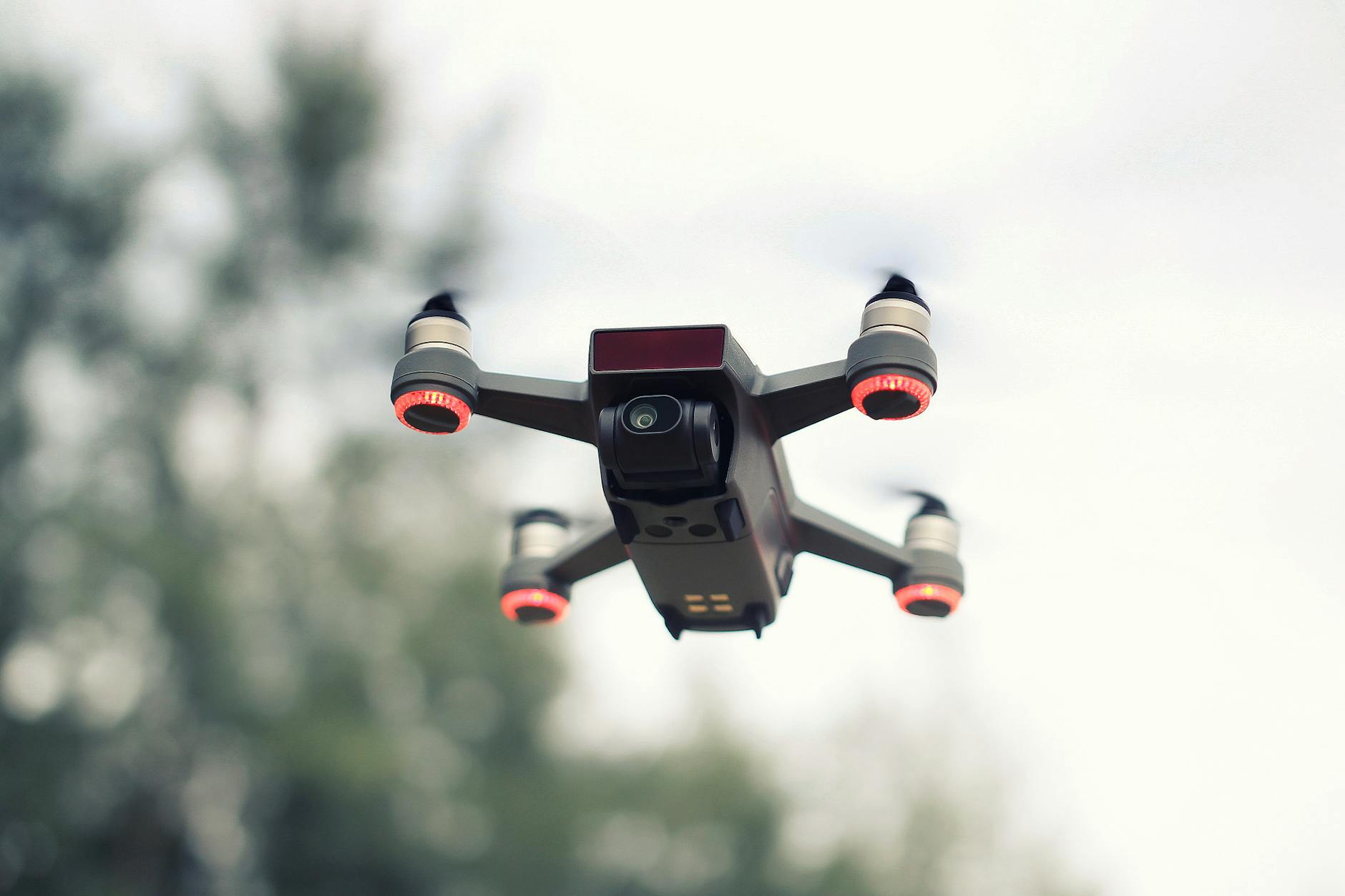
The core message from the Innovation Day was clear: Red Cat is evolving into an "all-domain" provider of unmanned systems for defense and national security. This expansion goes beyond its established aerial drone offerings, such as the Black Widow™ ISR system and Edge 130 vertical take-off and landing drone. The live demonstrations of Unmanned Surface Vessels (USVs) from Blue Ops were a central highlight, aiming to provide defense customers with a clearer view of how these systems work together across different operational environments. This integrated approach is critical in an era of rising global security concerns and accelerated Pentagon modernization programs.
However, the market's initial reaction to the Innovation Day announcements was mixed, reflecting the high expectations already baked into Red Cat's stock. While the company's COO ringing the Nasdaq Opening Bell on February 20 generated buzz, the subsequent stock performance on February 27 saw shares decline by over 10%. This suggests that while the product showcases were impressive, investors are still looking for more concrete financial details, such as production timelines, initial order values, and clearer paths to profitability. The event successfully highlighted Red Cat's technological prowess, but the challenge now lies in demonstrating how this innovation translates into sustained revenue growth and improved financial performance.
How is Red Cat Expanding Beyond Aerial Drones?
Red Cat's strategic pivot towards an "all-domain" portfolio marks a significant evolution for the company, moving beyond its foundational aerial drone systems. This expansion is primarily driven by the launch of Blue Ops, Inc., its dedicated maritime division, which was officially unveiled on August 26, 2025. Blue Ops is tasked with designing, building, and deploying modular Unmanned Surface Vessels (USVs) to support multi-domain missions across military and security applications, effectively extending Red Cat's reach from air to sea.
The Blue Ops division has already introduced a family of USV offerings, including the Variant 5 (a 5-meter vessel) and the Variant 7 (a 7-meter vessel), with hints of other variants like the 6 and 11. These USVs are engineered for speed, stealth, and precision, featuring modular payload bays that can accommodate a wide range of munitions, ISR (Intelligence, Surveillance, and Reconnaissance) packages, and electronic warfare (EW) tools. The Variant 7, in particular, is designed for extended range, endurance, and increased payload capacity, crucially supporting integrated UAV launch and recovery capabilities. This means Red Cat's aerial drones, like the Black Widow, can be deployed directly from its USVs, enabling seamless multi-domain operations.
This strategic move aligns perfectly with the U.S. Navy's plan to scale robotic and autonomous systems, aiming to integrate more platforms at speed to enhance readiness by 2027. By offering "Made in the USA" USVs, Red Cat is tapping into national efforts to strengthen domestic defense manufacturing and accelerate the deployment of autonomous capabilities for U.S. and allied forces. The integration of these maritime platforms with Red Cat’s existing aerial systems creates a unified command and control structure, offering a decisive tactical edge in contested maritime environments, particularly in regions like the Asia Pacific. This expansion is not just about new products; it's about building an interconnected ecosystem of unmanned solutions.
What Recent Contract Wins Validate Red Cat's Defense Focus?
Red Cat Holdings has secured significant validation for its defense-centric strategy through a series of recent contract wins and orders, underscoring its growing traction with military and government clients. A major catalyst was the selection of its subsidiary, Teal Drones, for the Pentagon's "Drone Dominance Program." This program, which carries a total potential value of $1 billion across four phases, represents a substantial opportunity. The initial tranche alone involves 25 vendors competing for a $150 million award to supply 30,000 drones, positioning Teal Drones at the forefront of this critical defense initiative.
Beyond the Pentagon, Red Cat has also demonstrated its international appeal. In early February 2026, the company announced a follow-on order for its Black Widow™ drone system from an allied nation in the Asia-Pacific region. This order, which stemmed from a December 2025 tender process, marks the second military customer from that region to deploy the Black Widow system. Such repeat business from a key geopolitical area highlights the effectiveness and reliability of Red Cat's technology in real-world operational scenarios, particularly in environments where tactical capabilities are paramount.
These contract successes are more than just revenue streams; they are powerful endorsements of Red Cat's technology and its alignment with current U.S. and allied defense priorities. The Pentagon contract, in particular, links Red Cat's story directly to concrete programs rather than just product announcements, broadening its appeal beyond airborne drones into maritime systems. This could potentially make Red Cat's offerings comparable to those of more diversified defense peers like AeroVironment, Lockheed Martin, or Northrop Grumman. The challenge now is to convert these initial wins into larger, longer-term awards and to efficiently scale manufacturing to meet the anticipated demand for both drones and USVs.
What Are the Key Risks and Opportunities for RCAT Investors?
Investing in Red Cat Holdings presents a compelling blend of high growth potential and significant risks, demanding a nuanced perspective from investors. The primary opportunity lies in the burgeoning defense drone market, projected to reach $28.2 billion by 2030. Red Cat's "all-domain" strategy, integrating aerial drones with new USVs, positions it uniquely to capture a share of this expanding pie, especially given the heightened global security concerns and the Pentagon's modernization efforts. Recent contract wins, including the Pentagon's Drone Dominance Program and follow-on orders from Asia-Pacific allies, provide tangible validation of its technology and market fit.
However, the risks are equally pronounced. Red Cat's current valuation, with a market cap of $1.04 billion against trailing revenue of $7.44 million, is exceptionally high. This premium valuation already prices in substantial future growth, leaving little margin for error or disappointment. The Innovation Day, while showcasing impressive technology, lacked concrete financial specifics, production timelines, or initial order values for its new USV systems. Without clear visibility on how these demonstrations translate into sustained revenue and profitability, the stock could face immediate pressure. The company is still expected to be losing money years from now, making the conversion of sales into profits a critical, unanswered question.
Another significant risk factor is execution. Scaling production for both drones and USVs, especially with the company's stated commitment to U.S.-based manufacturing, will require substantial capital and operational expertise. Red Cat has an active S-3 shelf registration filed on September 15, 2025, which provides a framework for future securities offerings. While this offers financial flexibility, it also raises concerns about potential shareholder dilution if additional funding is needed. Investors must closely monitor how management addresses production ramp-up, any further partnerships around software or AI for targeting and autonomy, and how it navigates potential volatility and dilution from future financing decisions.
What Does This Mean for Investors Going Forward?
For investors tracking Red Cat Holdings, the path forward hinges on the company's ability to translate its technological innovation and strategic vision into tangible financial results. The Innovation Day successfully painted a picture of an ambitious, all-domain defense technology provider, but the market is now demanding proof in the form of revenue growth, contract specifics, and a clear trajectory towards profitability. The stock's current price of $11.65, trading within a 52-week range of $4.58 to $18.02, reflects both the excitement and the inherent volatility of a company in a high-growth, high-stakes sector.
The immediate focus for investors should be on the conversion rate of Innovation Day demonstrations into signed USV and drone contracts, particularly from U.S. and Asia-Pacific defense buyers. Any announcements regarding contract values, production ramp schedules, or initial delivery dates for the Teal sUAS contract or Blue Ops USVs will be critical catalysts. Furthermore, the upcoming Q4 and full-year 2025 earnings release, scheduled for February 18, 2026, will provide the first opportunity for management to offer concrete financial updates that either confirm the bullish thesis or expose the valuation as ahead of the facts.
Ultimately, Red Cat Holdings is at a pivotal juncture. Its strategic expansion into maritime systems, coupled with validated defense contracts, positions it favorably within a growing market. However, the premium valuation demands flawless execution and transparent communication of financial milestones. Investors should approach RCAT with a long-term perspective, closely monitoring contract awards, production scaling, and the company's progress towards sustainable profitability.
Red Cat's journey from a niche drone manufacturer to a broader defense technology platform is underway, but the market will demand more than just compelling demonstrations. Concrete financial performance and disciplined execution will be the true arbiters of its long-term investment viability.
Want deeper research on any stock? Try Kavout Pro for AI-powered analysis, smart signals, and more. Already a member? Add credits to run more research.
Related Articles
Category
You may also like


Where Will Rigetti Computing Be by 2030?

Ericsson Federal Awarded Seat on Missile Defense Agency's SHIELD IDIQ Contract to Accelerate Secure 5G/6G Innovation for Homeland Defense

Tesla Makes Its Largest Investment Bet Yet in Its Own Vision
Breaking News
View All →Featured Articles
Top Headlines

Amazon says drone strikes damaged 3 facilities in UAE and Bahrain

This AI Stock Is Up 11% in Just 1 Week. Time to Buy?

Down 18% This Year, Is Microsoft's Stock in Trouble?

Why Lockheed Martin & Palantir Technologies Should Be in Your Portfolio Right Now