MarketLens
SpaceX's Low Float Sets Up a Rare Nasdaq-100 Squeeze

Key Takeaways
- SpaceX's fast-track Nasdaq-100 inclusion on July 7, 2026, is a mechanical buying event, with J.P. Morgan estimating $4.3 billion in forced institutional inflows.
- Despite historical data suggesting a weakening of the "index inclusion effect," SpaceX's exceptionally low free float of 4-5% creates a unique supply-demand imbalance that could amplify near-term price volatility.
- While a short-term price target of $172.00 is plausible, investors must balance this against SpaceX's current $2.12 trillion valuation as a money-losing entity and the impending insider lockup expirations.
The Countdown to Forced Buying
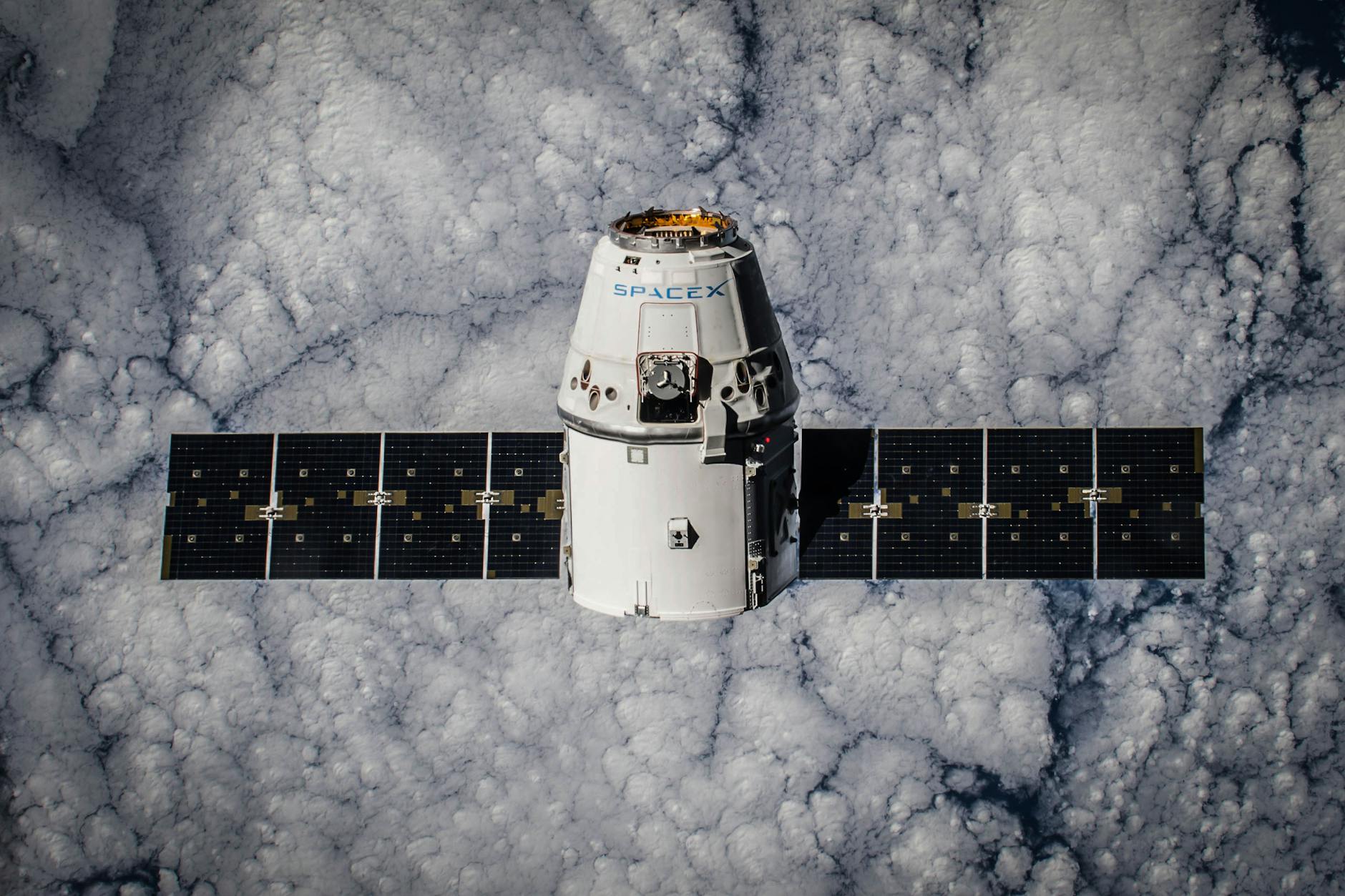
Space Exploration Technologies Corp. (NASDAQ: SPCX) is on the cusp of a defining moment, with its inclusion in the Nasdaq-100 index set for July 7, 2026. This event, occurring just 15 trading days after its record-setting June 12 IPO, marks one of the quickest additions in the index's history, enabled by recent changes to Nasdaq-100 methodology. Trading at $162.00 as of July 2, 2026, SpaceX commands a staggering market capitalization of $2.12 trillion, making it one of the most valuable companies to enter a major benchmark so swiftly.
The significance of this inclusion lies in its mechanical nature. Unlike an analyst upgrade or a shift in investor sentiment, Nasdaq-100 entry triggers a "forced buy" event. Every institution, ETF, and derivative vehicle tracking the Nasdaq-100 index, including the massive Invesco QQQ Trust with over $300 billion in assets under management (AUM), will be mandated to purchase SpaceX shares at their respective index weights. J.P. Morgan estimates this forced buying could amount to approximately $4.3 billion, a substantial inflow that must occur irrespective of price or prevailing market conditions. This immediate, non-discretionary demand sets the stage for a unique market dynamic as the rebalance date approaches.
The Index Inclusion Effect: History vs. SpaceX's Reality
Historically, the phenomenon known as the "index inclusion effect" describes a tendency for a stock's price to spike upon news of its addition to a widely followed benchmark, only to see those gains fizzle shortly after the change takes effect. This pattern is typically fueled by a flurry of activity from index funds, benchmark-beholden active managers, and opportunistic front-runners. However, recent research suggests this effect has significantly weakened, if not disappeared entirely, over the past decade.
A study by S&P Global, cited by Morningstar, compared the median excess returns of new S&P 500 additions across three distinct periods: 1995-99, 2000-10, and 2011-20. The findings revealed that "what was once a pronounced pattern has not only softened, but disappeared entirely" in the most recent period. Similarly, post-inclusion tumbles, once a hallmark of the effect, have largely vanished, with the up-and-down trajectory now resembling a flat line. While some studies, like one from the National Bureau of Economic Research (NBER) on Russell indexes, still find that index inclusion can affect demand, the consensus for broad-market benchmarks like the S&P 500 points to a diminished impact. This historical context raises a critical question: will SpaceX's entry follow this muted trend, or is there a unique factor at play?
The Low-Float Catalyst: A Supply Squeeze in the Making
Despite the general weakening of the index inclusion effect, SpaceX presents a compelling counter-narrative due to a critical structural factor: its exceptionally low free float. With only approximately 4-5% of its shares available for public trading, the vast majority of SpaceX stock remains locked up following its IPO. This limited supply creates a unique scenario where even a moderately sized index rebalancing event can have an outsized impact on price.
As TradingKey analyst Arslan Ali noted in a June 29, 2026, report, this "low-float-plus-index-inclusion squeeze situation has consistently produced larger-than-expected stock price moves." The recent addition of Rocket Lab (RKLB) to the Nasdaq-100 on June 22, 2026, serves as a pertinent example, with RKLB outperforming SPCX in the month leading up to its inclusion, partly due to similar structural dynamics. The New York City Comptroller, Mark Levine, has also highlighted the risks associated with low-float stocks, stating that such companies "would be expected to exhibit structurally higher volatility than other index members, because any meaningful buying or selling pressure is concentrated into a fraction of the shares available for comparable companies." This inherent volatility, combined with the forced buying from index funds, positions SpaceX for a potential short-term price surge that could temporarily defy broader historical trends. Crucially, the July 7 Nasdaq-100 rebalance will occur before any significant insider lockup expirations begin, further constraining supply.
Valuation and Fundamental Headwinds
While the mechanical tailwinds from index inclusion are significant, investors must contend with SpaceX's underlying financials and lofty valuation. The company, despite its innovative prowess in launch services and satellite operations, is currently a money-losing entity. Its $2.12 trillion market capitalization places it among the world's most valuable companies, a valuation that many consider "wild" for a firm yet to achieve consistent profitability.
On the positive side, SpaceX recently completed a $25 billion bond offering on June 26, 2026, which successfully extinguished a September 2027 bridge loan, removing a key structural burden. Furthermore, the company is securing substantial revenue streams, including a reported $920 million per month compute arrangement with Google. This annualizes to over $11 billion per year, surpassing SpaceX's total 2026 Starlink revenue and supplementing deals with Anthropic and ReflectionAI for its xAI segment. However, these impressive revenue figures still exist within the context of a company that is not yet generating net profits. The current neutral Relative Strength Index (RSI) of 42.53 suggests the stock has room for movement in either direction, but the fundamental valuation remains a significant point of contention for long-term investors.
The Bear Case: Volatility Beyond Inclusion
Despite the immediate tailwinds from Nasdaq-100 inclusion, several factors present a substantial bear case for SpaceX. Foremost among these is the company's "wild valuation" of $2.12 trillion for a business that is not yet profitable. While growth prospects are undeniable, the current price may already discount years of future success, leaving little margin for error.
Moreover, the very characteristic that could drive a short-term squeeze—SpaceX's low free float—also portends "structurally higher volatility" in the long run. As the NYC Comptroller Mark Levine warned, any meaningful buying or selling pressure will be concentrated into a fraction of available shares, leading to amplified price movements. The historical "index inclusion effect" may have weakened, but the risk of a post-inclusion fizzle, where the stock retreats to pre-announcement levels, cannot be entirely dismissed, especially given the high expectations. A more concrete risk looms with the upcoming lockup expirations. Approximately 20% of insider shares will become available for sale following the August 6, 2026, first earnings report, with further portions unlocking between 70 and 180 days post-IPO. This influx of new supply could significantly dilute the scarcity-driven squeeze and exert downward pressure on the stock. Finally, the broader trend of rising passive investing has been linked to increased asset-price volatility, reduced liquidity, and heightened market concentration, suggesting that SpaceX's journey within the Nasdaq-100 may be anything but smooth.
Analyst View: A Cautious Institutional Embrace
SpaceX's rapid ascent into public markets has been met with a measured, rather than enthusiastic, institutional reception thus far. Argus Research initiated its first formal analyst rating on the stock with a Hold on Friday, June 27, 2026. This initiation, coming just weeks after the IPO, signals that SpaceX is "maturing toward the institutional analyst coverage stage," as noted by TradingKey. However, the absence of a strong "Buy" rating or a specific price target from Argus reflects a cautious stance, likely balancing the company's immense potential against its current valuation and the inherent risks of a newly public, high-growth entity.
From a technical perspective, SpaceX shares have been consolidating within a horizontal channel following a $25 billion bond offering. The stock has found support around $149.66 and faces resistance at $163.27. The current RSI of 42.53 indicates neutral momentum, characteristic of a pre-break pattern with low trading volume. Technical analysis suggests that a decisive close above the $163.30 resistance level could trigger a move towards a short-term target of $172.00, driven by the anticipated index-related buying. This technical setup aligns with the narrative of a short-term squeeze, but the broader institutional view remains tempered by fundamental considerations.
The Verdict: Riding the Squeeze, Mind the Exit
SpaceX's imminent Nasdaq-100 inclusion on July 7, 2026, represents a rare market event where mechanical buying pressure meets an exceptionally constrained supply. While the historical "index inclusion effect" has largely faded, SpaceX's low free float of 4-5% creates a unique setup for a significant, albeit potentially transient, price surge. J.P. Morgan's estimate of $4.3 billion in forced buying, coupled with the stock's current consolidation, suggests a near-term breakout is plausible.
However, investors must approach this opportunity with a clear understanding of the risks. SpaceX's $2.12 trillion market cap for a money-losing company is a substantial valuation hurdle, and the impending insider lockup expirations starting August 6, 2026, will introduce significant new supply into the market, likely diluting the current squeeze. The "Hold" rating from Argus Research underscores the cautious institutional sentiment. For those looking to capitalize on the short-term dynamics, an entry zone around the current price of $162.00 is reasonable. A 12-month target of $172.00 is a realistic short-term objective if the technical breakout occurs. However, this thesis is invalidated if the stock closes below the key support level of $149.66. This is a speculative play on market mechanics, not a long-term fundamental bet.
Want deeper research on any stock? Try Kavout Pro for AI-powered analysis, smart signals, and more. Already a member? Add credits to run more research.
Related Articles
What's Behind CoStar Group's Nasdaq-100 Exit
Is SpaceX Really Going Public in 2026
Is PayPay's Nasdaq IPO a Smart Bet for Investors
Category
You may also like

A Third of SpaceX's Tradable Shares Are Now Betting Against It. The Squeeze Math Is Wild

Market Story: Monetary Policy, Not Rockets
Wall Street Funding Squeeze Hits SpaceX's $75 Billion Debut
Breaking News
View All →Featured Articles
Top Headlines

Nvidia (NVDA) Stock Falls Amid Market Uptick: What Investors Need to Know

Investors Have Been Giving Tech Stocks a Hard Time Lately, Despite Strong Earnings

Meta disregarded its own research on teen harm, Tennessee tells jury

Nvidia's potential new deal with OpenAI would revive a spooky tech-bubble habit, analyst warns