Kavout

MarketLens

Log in

The 2026 Precious Metals Crash: Causes and Consequences

Feb 04, 2026
SHARE THIS ON:

20260204.jpg

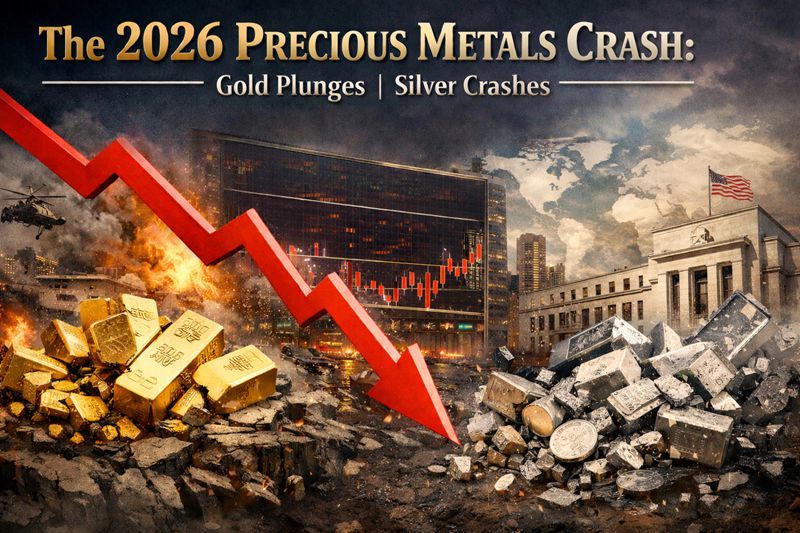
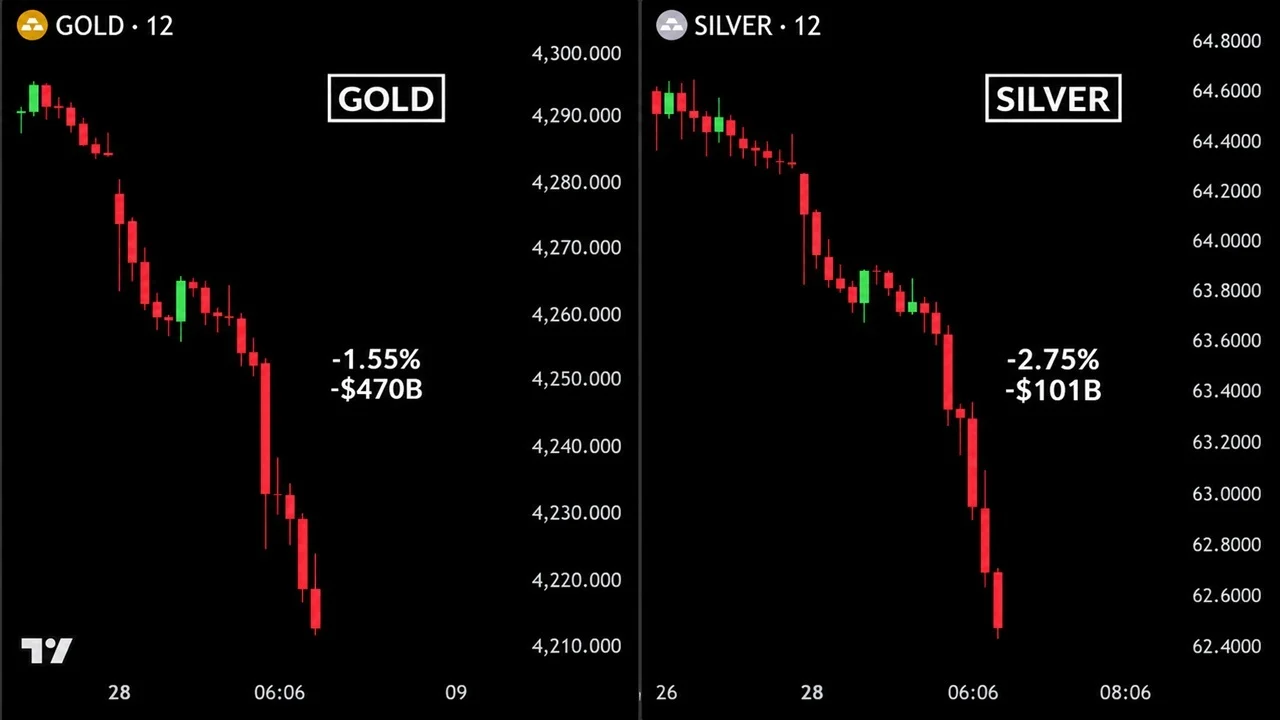
The 2026 precious metals market crash, characterized as a "systemic liquidity rupture," was not triggered by a single event but by a convergence of hawkish monetary policy signals, geopolitical de-escalation, and mechanical market failures. On January 30, 2026, gold prices plunged approximately 11% to 12%, while silver experienced a staggering 31% to 36% decline, marking the worst single-day drop for the sector since 1980.

The primary causes of this historic volatility can be categorized into macroeconomic catalysts, geopolitical shifts, and structural market mechanics.

1. The "Warsh Shock" and Monetary Policy Pivot

The immediate trigger for the selloff was President Donald Trump's nomination of Kevin Warsh to replace Jerome Powell as Chairman of the Federal Reserve.

  • Hawkish Signal: Warsh is viewed as a "monetary hawk" known for advocating central bank independence and warning against inflation risks. His nomination signaled a pivot toward tighter monetary policy and reduced balance sheet expansion, effectively reversing the "debasement trade" that had fueled the rally throughout 2025.

  • Dollar Strength: This announcement caused an immediate repricing of interest rate expectations and a rally in the U.S. dollar. As the dollar strengthened and real yields rose, the opportunity cost of holding non-yielding assets like gold increased, prompting institutional investors to exit positions.

2. Structural Contagion: Crypto and Margin Calls

While the political news provided the narrative, a significant portion of the crash—estimated at 79% of the price decline—was driven by mechanical factors unrelated to the fundamental value of the metals.

  • Crypto-Metal Correlation: A massive $1.68 billion liquidation in the cryptocurrency markets occurred simultaneously, with Bitcoin dropping from $88,000 to below $85,000. Because modern hedge funds often use "portfolio margin" accounts (pooling crypto and metals as collateral), the crypto crash triggered margin calls that forced traders to sell their most liquid assets—gold and silver—to raise cash immediately.

  • Regulatory Margin Hikes: In the days leading up to the crash, exchanges aggressively raised the cost of trading to curb speculation. The CME Group hiked maintenance margins for silver by 25% and gold by 10%, while the Shanghai Gold Exchange and Chinese securities regulators also tightened leverage requirements. These regulatory moves forced over-leveraged traders, or "weak hands," to liquidate positions involuntarily.

3. Geopolitical De-escalation (The "Greenland Gambit")

The rally leading up to the crash had been fueled by a "fear premium" resulting from U.S. threats of 25% tariffs on European allies following failed negotiations to purchase Greenland.

  • Dissipation of Fear: Just prior to the crash, tensions cooled following a meeting at the World Economic Forum in Davos. President Trump and NATO Secretary-General Mark Rutte discussed a "Golden Dome" missile defense system as an alternative to the forced land sale.

  • Profit Taking: The withdrawal of immediate tariff threats reduced the geopolitical risk premium, removing a key support level for gold and encouraging institutional desks to lock in profits from the record highs.

4. Speculative Excess and the "Rescue Operation"

The market had entered a "vertical" or parabolic phase prior to the crash, driven by retail "FOMO" (fear of missing out) and momentum chasing, particularly in silver.

  • Algorithmic Selling: As prices breached key technical support levels (such as $5,100 for gold), algorithmic trading bots triggered cascading sell orders, exacerbating the speed of the collapse.

  • Short Covering: Some analysis suggests the crash may have facilitated a "rescue operation" for bullion banks. Reports indicate that entities like JPMorgan may have utilized the panic to close approximately $10 billion in silver short positions at the exact market bottom, preventing a potential systemic failure of the CME clearing system due to unlimited losses on those shorts.

In summary, the 2026 crash was a "liquidity event" where a fundamental shift in Fed expectations collided with a leveraged market structure, forcing a violent deleveraging of paper assets despite sustained demand for physical metal in Asia.

SHARE THIS ON:

Related Articles

Category

You may also like

No related articles available

Breaking News

View All →

No topics available at the moment