MarketLens
What's Behind TotalEnergies' $1 Billion Offshore Wind Exit

Key Takeaways
- TotalEnergies' $1 billion exit from US offshore wind projects signals a significant shift in the renewable energy landscape, driven by political uncertainty and cost concerns.
- The Trump administration's "all-of-the-above" energy strategy is actively reshaping the US energy mix, prioritizing fossil fuels and offering financial incentives for companies to divest from renewables.
- This move by TotalEnergies, a major global energy player, could further erode investor confidence in the long-term stability of US clean energy policy, despite ongoing legal challenges to the administration's actions.
What's Behind TotalEnergies' $1 Billion Offshore Wind Exit?
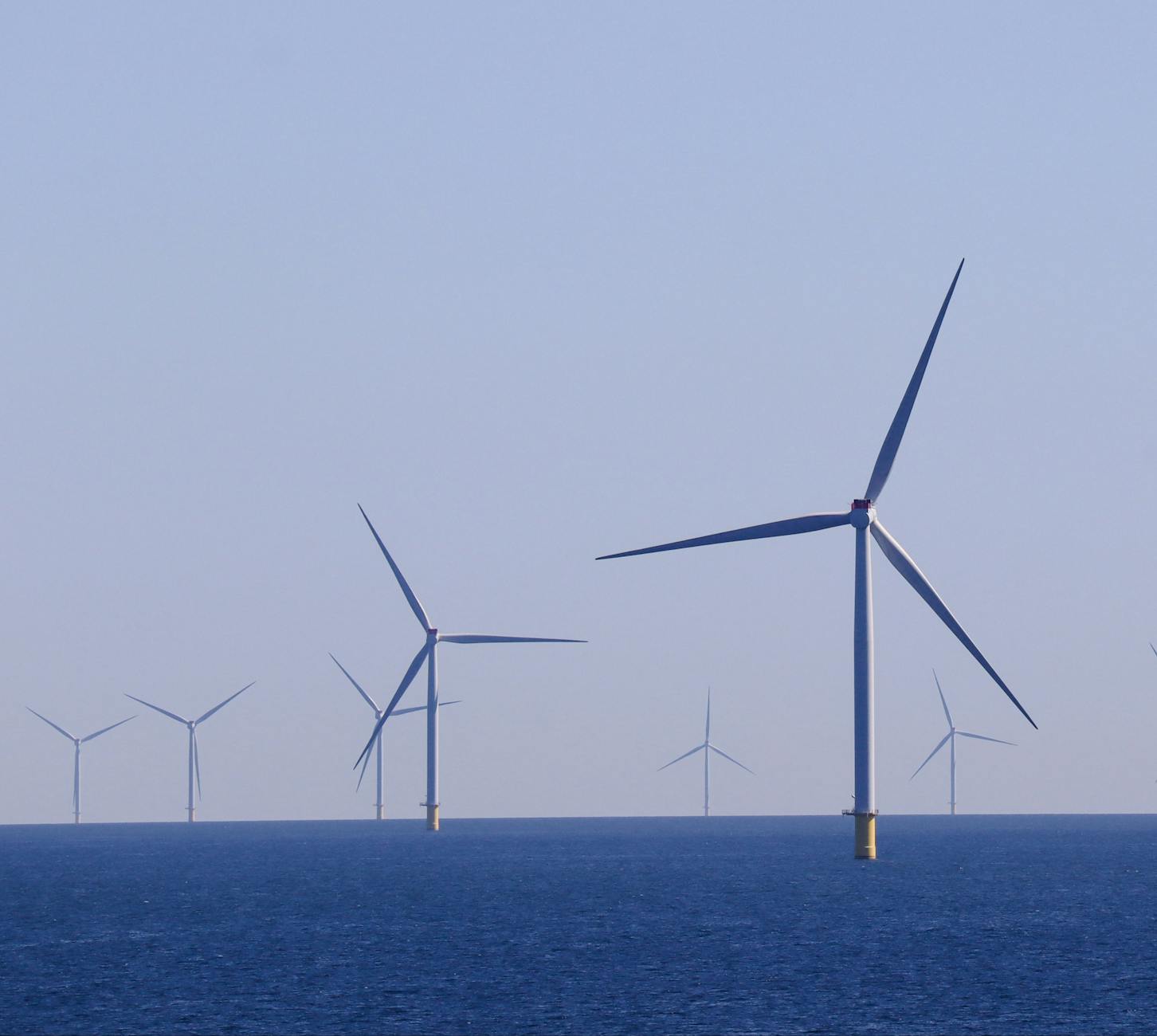
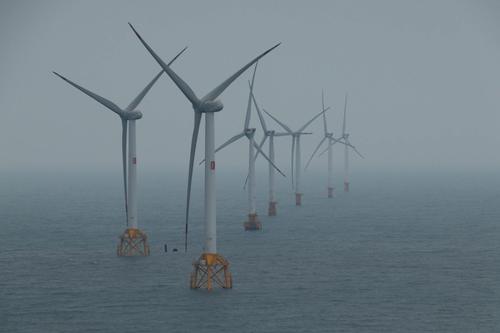
TotalEnergies (NYSE: TTE), the French energy giant, has made a decisive move to abandon its US offshore wind projects, reaching an agreement with the Interior Department for a reported $1 billion payment. This landmark deal, which sees the company relinquish its leases off New York and North Carolina, marks a significant turning point in the US renewable energy sector. It underscores the profound impact of shifting political winds and economic realities on large-scale clean energy investments.
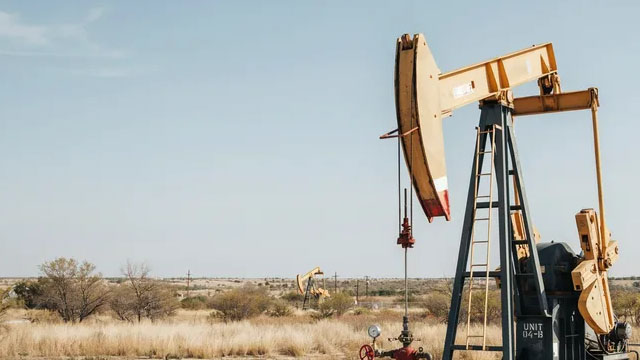
The agreement, confirmed on March 23, 2026, involves the US Justice Department reimbursing TotalEnergies for its winning bids in prior federal lease sales, totaling over $928 million. In exchange, TotalEnergies will not only cancel its offshore wind ambitions but also commit to "accelerated investments" in US natural gas projects, particularly in Texas. This strategic pivot aligns with the Trump administration's broader energy agenda, which has consistently championed fossil fuel expansion over renewable development.
TotalEnergies' CEO, Patrick Pouyanné, stated that the company's studies revealed US offshore wind developments were "too costly" and could negatively impact power affordability for consumers, unlike projects in Europe. This sentiment, coupled with the political uncertainties following the US presidential election, led the company to pause its Attentive Energy project in New York Bight as early as November 2024. The current administration's offer to buy out the leases provided a clear path for TotalEnergies to de-risk its US portfolio and reallocate capital.
This divestment is not an isolated incident but rather a stark illustration of the comprehensive rollback of federal support for offshore wind under the current administration. From withdrawing all areas of the US Outer Continental Shelf (OCS) from wind-energy leasing in January 2025 to canceling $679 million in federal funding for 12 offshore wind projects in August 2025, the government has consistently signaled a shift away from clean energy. For TotalEnergies, a company with a market capitalization of $197.57 billion and a global footprint, this offered a clear incentive to cut its losses and pivot to more politically favored investments.
Why Did TotalEnergies Deem US Offshore Wind "Too Costly"?
TotalEnergies' decision to label US offshore wind as "too costly" is multifaceted, stemming from a combination of economic challenges inherent to the sector and the heightened regulatory and political risks introduced by the current administration. While offshore wind globally has seen significant growth, the US market presents unique hurdles that have made large-scale projects financially precarious for developers. These include supply chain bottlenecks, inflationary pressures on materials and labor, and higher financing costs.
The company's initial investments were substantial. TotalEnergies, through its Attentive Energy unit, won a lease in the New York Bight for $795 million in 2022, intended to develop over 3 gigawatts of offshore wind power. It also secured a 1-gigawatt lease offshore North Carolina for $160 million in the same year. These figures represent significant upfront capital commitments, which become increasingly difficult to justify when project economics are squeezed by rising costs and policy uncertainty. The cancellation of New York's third competitive offshore wind solicitation in October 2023 due to "technical and commercial complexities" further highlighted the financial fragility of these projects.
Beyond direct costs, the political environment has injected an unprecedented level of risk. The Trump administration's "all-of-the-above" energy strategy, while initially showing some ambivalence towards offshore wind in its first term, has become overtly hostile in its second. This shift includes de-designating over 3.5 million acres of federal waters previously targeted for offshore wind development and issuing a Presidential Memorandum in January 2025 that paused new offshore wind projects. Such actions create a climate of regulatory uncertainty that makes long-lead, capital-intensive investments in renewables extremely challenging to finance and execute.
The company's CEO, Patrick Pouyanné, explicitly stated that "since other technologies are available to meet the growing demand for electricity in the United States in a more affordable way, TotalEnergies considers there is no need to allocate capital to this technology in the U.S." This statement reflects a strategic calculation that the risk-adjusted returns from US offshore wind no longer meet the company's internal thresholds, especially when compared to the more favorable environment for natural gas. The $1 billion payout effectively de-risks TotalEnergies' position, allowing it to redeploy capital into areas with clearer policy support and potentially higher returns.
What Are the Broader Implications for US Offshore Wind and Renewables?
TotalEnergies' high-profile exit from US offshore wind projects carries significant implications for the broader renewable energy sector, particularly for the nation's ambitious clean energy transition goals. This move, orchestrated by the Trump administration, sends a chilling message to other developers and investors considering large-scale renewable infrastructure in the United States. It fundamentally undermines the predictability and stability required for such capital-intensive, long-term investments.
Experts have voiced strong concerns that this decision will erode investor confidence in the US government's commitment to clean energy policy. As Princeton University professor Elie Bou-Zeid noted, "no investor or company will ever again trust the U.S. government again and make investments in green energy infrastructure" if such deals become commonplace. This sentiment is already reflected in market data, with capital inflows to the US renewable energy sector falling by over 36 percent in the first half of 2025 compared to the prior six months. The perceived risk of policy reversal now weighs heavily on investment decisions.
The administration's actions, including the de-designation of Wind Energy Areas and the suspension of permitting, directly complicate existing project pipelines and deter new leasing. This comprehensive rollback comes at a time when many analysts expected an acceleration of offshore wind development, which is considered the nation's "largest untapped clean energy resource." Without offshore wind, achieving net-zero emissions in the US would become "more expensive and complex," according to Bou-Zeid. The current strategy risks stranding billions already committed to the domestic supply chain, from turbine manufacturing to port upgrades.
Moreover, the move has prompted strong pushback from coastal states that have invested heavily in offshore wind infrastructure and tied their clean energy and job growth strategies to these projects. Governors from states like Rhode Island, Massachusetts, Connecticut, New York, and New Jersey have collectively cautioned that abrupt policy reversals undermine not only state clean energy goals but also public trust and private reliance. This fragmented policy landscape, with federal and state objectives at odds, creates further uncertainty and inefficiency, potentially slowing the overall pace of renewable energy deployment across the nation.
How Does This Deal Impact TotalEnergies' Strategic Direction?
TotalEnergies' decision to exit US offshore wind, while seemingly a retreat from renewables in one market, is a calculated strategic pivot that reinforces the company's "multi-energy" approach, particularly its strong focus on natural gas and LNG. The $1 billion reimbursement for its wind leases will be directly reinvested into accelerating US natural gas production and export infrastructure, notably the Rio Grande LNG plant under construction in Texas. This move solidifies TotalEnergies' position as a major player in the global LNG market, a segment it views as critical for energy security and transitioning away from coal.
The company's CEO, Patrick Pouyanné, explicitly stated that these new investments will contribute to supplying Europe with much-needed LNG from the US and provide gas for US data center development. This highlights a dual strategic benefit: addressing European energy demand, especially in light of geopolitical tensions, and capitalizing on the growing domestic demand for reliable power sources, including for energy-intensive AI infrastructure. TotalEnergies is already the largest exporter of US LNG, and this deal further entrenches that leadership.
While divesting from US offshore wind, TotalEnergies has affirmed its commitment to wind power in other nations, indicating a selective rather than a wholesale abandonment of renewables. This suggests a strategic allocation of capital to regions where policy support is more stable, project economics are more favorable, or the company holds a stronger competitive advantage. The company's beta of 0.28 suggests a relatively low sensitivity to broader market movements, reflecting its diversified energy portfolio and integrated operations across various segments: Integrated Gas, Renewables & Power; Exploration & Production; Refining & Chemicals; and Marketing & Services.
For investors, this pivot could be seen as a pragmatic response to an unfavorable regulatory environment, allowing TotalEnergies to de-risk its US exposure and reallocate capital to more certain, and potentially more profitable, ventures. The company's stock, currently trading at $88.72, near the higher end of its 52-week range of $52.78 – $91.38, suggests that the market is largely absorbing these strategic shifts without significant alarm. The ability to recover nearly $1 billion in lease fees and immediately redeploy it into a core strategic area like LNG demonstrates financial agility and a clear direction, even if it means stepping back from a high-profile renewable sector in one country.
What Are the Legal and Political Headwinds Still Facing US Offshore Wind?
Despite TotalEnergies' exit, the US offshore wind sector remains embroiled in significant legal and political battles, highlighting the deep divisions over energy policy. The Trump administration's sweeping rollback of offshore wind development has not gone unchallenged, leading to a series of court rulings that have, at times, thwarted the administration's efforts. This ongoing litigation creates a complex and unpredictable landscape for any remaining or future clean energy projects.
A landmark ruling on September 22, 2025, saw the US District Court for the District of Columbia grant Ørsted's motion for a preliminary injunction, lifting the administration's halt on the Revolution Wind project and allowing construction to resume. The court found that Ørsted was "likely to suffer irreparable harm" without the injunction, emphasizing the company's substantial financial commitments. This ruling, along with others that have struck down work stoppages and vacated executive orders, demonstrates that challenging federal actions in court can effectively protect renewable energy projects, at least temporarily.
However, these legal victories have not deterred the administration from finding "creative ways" to discourage wind energy. The Interior Secretary, Doug Burgum, has directed his agency to scrutinize wind and solar permits, demanding projects produce as much energy per acre as fossil fuels or nuclear power. In another instance, the administration halted a wind farm off New York, citing a Defense Department report that called it a threat to national security, a move later struck down by a judge. These actions, despite court losses, inject significant regulatory uncertainty and increase the cost and complexity for developers.
The political headwinds are equally formidable. President Trump has been a vocal critic of wind power, making unsubstantiated claims about its health impacts and effects on wildlife. This ideological opposition, coupled with a policy agenda that prioritizes fossil fuel expansion, creates an environment where offshore wind is an "easy target," particularly since siting often occurs in federal waters. The administration's willingness to pay nearly $1 billion to cancel existing leases underscores its aggressive stance, signaling that it is not just slowing new development but actively clearing the pipeline of existing projects, regardless of the economic and environmental costs.
What's the Investor Outlook for TotalEnergies and the US Energy Sector?
For investors tracking TotalEnergies, the recent divestment from US offshore wind presents a clearer, albeit more fossil-fuel-centric, strategic direction for its US operations. The company's immediate reinvestment of the $1 billion reimbursement into natural gas projects, particularly LNG, aligns with its existing strengths and the current administration's energy priorities. This move could be seen as a de-risking strategy, allowing TTE to focus on areas with less political friction and potentially more stable returns in the short to medium term.
TotalEnergies' stock, trading at $88.72 with a market cap of $197.57 billion, has shown resilience, hovering near its 52-week high of $91.38. This suggests that the market largely approves of the company's pragmatic approach to navigating complex energy policy landscapes. The emphasis on LNG, a commodity with strong global demand, particularly from Europe, provides a clear growth vector for the company. Investors should watch for updates on the Rio Grande LNG project and other natural gas investments for signs of accelerated development and production capacity.
Looking at the broader US energy sector, the outlook for offshore wind remains challenging under the current political climate. While legal challenges offer some protection for individual projects, the overarching policy uncertainty and active discouragement from the federal government will likely continue to deter new, large-scale investments. This creates a bifurcated market: a federally supported fossil fuel sector and a renewable sector facing significant headwinds, often relying on state-level initiatives and court interventions for progress.
Investors interested in US clean energy must now factor in a heightened political risk premium. The TotalEnergies deal highlights the potential for abrupt policy reversals and the willingness of the administration to use financial incentives to reshape the energy landscape. While global renewable energy continues to grow, the US market, particularly for offshore wind, faces a unique set of challenges that demand careful consideration of both economic fundamentals and political realities.
TotalEnergies' strategic pivot underscores the complex interplay of economics and politics in the energy transition. For investors, TTE offers a clear, fossil-fuel-heavy strategy in the US, while the future of US offshore wind remains a high-stakes gamble against persistent political headwinds.
Want deeper research on any stock? Try Kavout Pro for AI-powered analysis, smart signals, and more. Already a member? Add credits to run more research.
Related Articles
Category
You may also like


US weighs settlement of about $1 billion with TotalEnergies for blocking wind farms, NYT reports

This $64 Million Biotech Exit Seemingly Missed a 77% One-Day Surge on Gilead Takeover Deal

1.6T SHIB Coins Left Exchanges: What's Cracking Here?
Breaking News
View All →Featured Articles
Top Headlines

Alphabet's Solution Is A Gift For Micron's Memory Sales

Nvidia Stock Rises. This New Customer Has Big Spending Plans.

Why I Just Bought This Magnificent AI Stock Hand Over Fist

3 Reasons I'm Buying Amazon Stock Hand Over Fist Right Now