MarketLens

Log in

Beyond the F-35: GCAP's $6.14 Billion Contract Signals a New Era of Global Defense Collaboration

1 week ago
SHARE THIS ON:

Beyond the F-35: GCAP's $6.14 Billion Contract Signals a New Era of Global Defense Collaboration

Key Takeaways

  • The $6.14 billion Global Combat Air Programme (GCAP) contract solidifies a long-term, multi-national alternative to U.S.-led fighter jet development.
  • For BAE Systems, Leonardo, and Mitsubishi Heavy Industries, this deal represents a significant strategic upgrade, particularly for MHI, moving from F-35 partner to sixth-generation co-leader.
  • GCAP's progress, contrasted with the struggling Franco-German FCAS, underscores a growing trend towards defense autonomy and cost-sharing among key allies.

A New Dawn for Global Combat Air

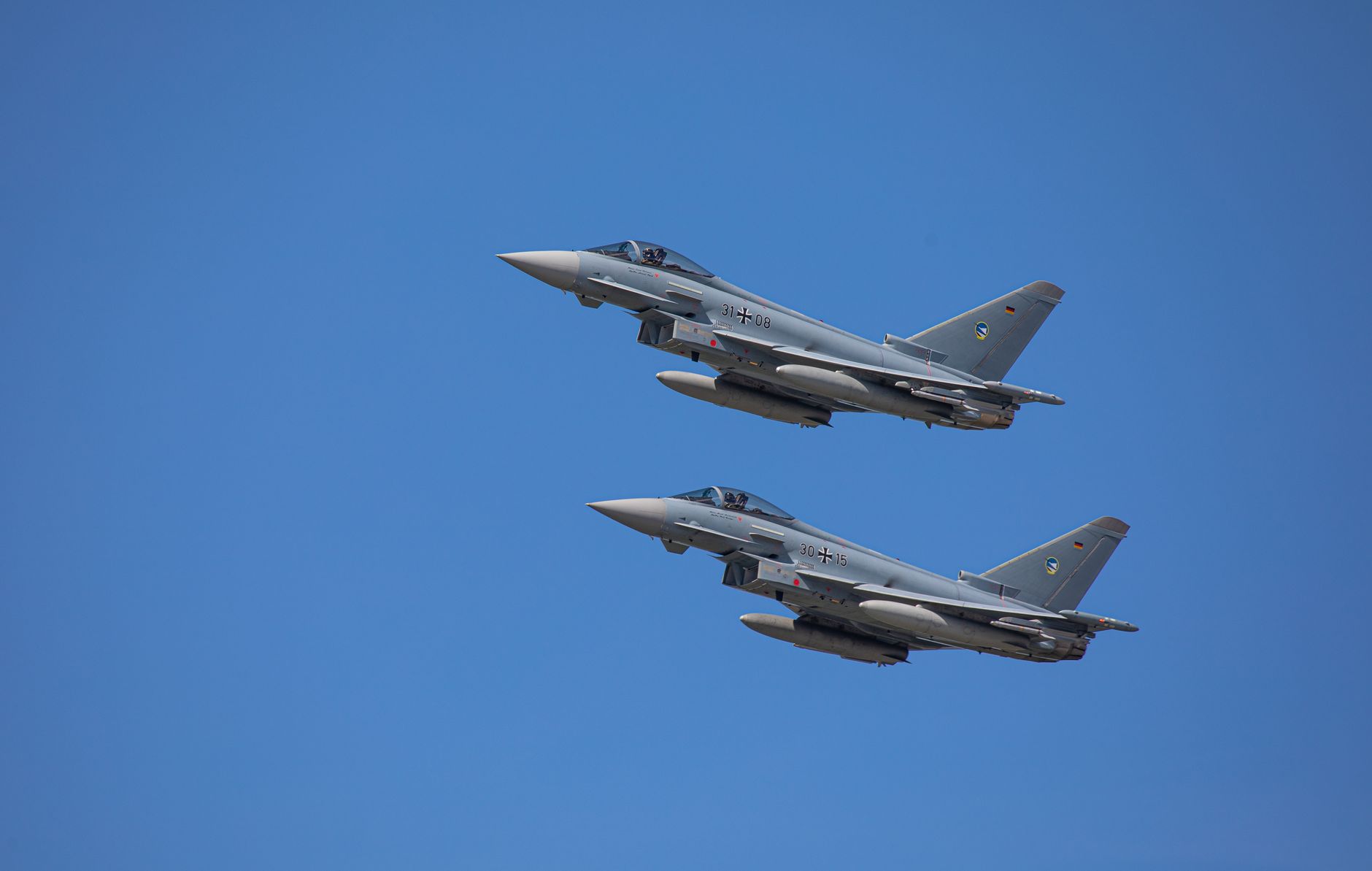
A landmark $6.14 billion contract has been awarded to the Edgewing joint venture, a trilateral partnership between the U.K.'s BAE Systems, Italy's Leonardo, and Japan's Mitsubishi Heavy Industries. This significant funding, announced on July 3, 2026, propels the Global Combat Air Programme (GCAP) into its next phase of advanced concept, assessment, detailed design, and development for a new sixth-generation stealth fighter jet. The program aims to deliver an operational aircraft by 2035, replacing existing platforms like the Eurofighter Typhoon and Japan's Mitsubishi F-2.

This contract is more than just a financial transaction; it represents a strategic pivot in global defense, fostering deeper collaboration among key allies and potentially reshaping the landscape of advanced combat aircraft development. BAE Systems, with a market capitalization of $77.80 billion, Leonardo at $30.31 billion, and Mitsubishi Heavy Industries, valued at ¥12.74 trillion, are now at the forefront of an initiative designed to secure their nations' air superiority for decades to come. As of July 2, 2026, BAE Systems shares traded at $106.11, Leonardo at $52.53, and MHI at ¥3792.00, reflecting the market's initial positive reaction to this development.

The Financial Commitment: Fueling a Multi-Decade Program

The $6.14 billion (£4.6 billion) contract, spanning 18 months, is a critical injection of long-term funding for the Edgewing joint venture. This follows an earlier £686 million ($857 million) "first international contract" awarded in April 2026, which covered initial design and engineering activities until June 2026. The new, larger contract ensures continuity and accelerates the program's momentum, transforming it from political agreement into a tangible engineering project.

National commitments underpin this ambitious undertaking. The U.K. government, after resolving internal budget disputes, committed £8.6 billion over four years to GCAP, with its Defence Investment Plan published on June 30, 2026. Japan's dedication is evident in its FY2026 defense budget of ¥9.04 trillion ($58 billion), marking its twelfth consecutive record outlay. Italy's parliament has also approved €8.8 billion for its share of the GCAP program, demonstrating a unified financial front.

For Mitsubishi Heavy Industries, the Aircraft, Defense & Space (ADS) segment already posted robust Q1-3 FY2025 revenue of ¥891.2 billion, an increase of ¥201.6 billion year-on-year, with business profit reaching ¥105.3 billion. This existing strength provides a solid foundation for absorbing the GCAP workshare. The table below summarizes the key financial commitments:

EntityCommitmentNotes
GCAP Contract$6.14 billion (£4.6 billion)18-month contract for design & development, awarded July 2026
UK Government£8.6 billion over 4 yearsCommitted via Defence Investment Plan (June 2026)
Japan¥9.04 trillion ($58 billion) FY2026 budgetTwelfth consecutive record defense outlay
Italy€8.8 billionApproved by parliament for GCAP program

From Junior Partner to Co-Leader: A Strategic Upgrade

The GCAP program represents a profound strategic shift for the participating companies, particularly for Mitsubishi Heavy Industries. Historically, MHI has played a supporting role in U.S.-led programs, such as its involvement with Lockheed Martin on the F-2 fighter and local F-35 final assembly. With GCAP, MHI transitions to a co-leadership position, collaborating with European primes BAE Systems and Leonardo on a frontier combat aircraft. This move is a significant upgrade, positioning MHI at the forefront of sixth-generation fighter development.

The Edgewing joint venture, headquartered in Britain with an Italian CEO, ensures shared workshare, with each of the three partners holding roughly 33.3% stakes. This collaborative model is designed to leverage diverse expertise while distributing the immense costs and risks associated with developing a cutting-edge combat system. Masami Oka, chief executive of the GCAP Agency, articulated the program's broader vision, stating, "The program is vital for global security and defeating future threats, while sharing costs, technological advantages and creating highly skilled jobs in all three nations. With this long-term funding, the future of GCAP has never been more assured." This long-term funding sets the stage for a "multi-decade revenue and capability runway" for the involved companies, with the aircraft targeted to enter service around 2035 and remain operational well beyond 2070.

Challenging the F-35 Paradigm

GCAP's emergence directly challenges the traditional dominance of U.S.-led defense programs, particularly Lockheed Martin's F-35. While Lockheed Martin, with its $125.82 billion market cap, commands a revenue base "multiples of MHI’s ADS segment," its programs are often constrained by U.S. export policies and national strategic decisions. GCAP, by contrast, offers an alternative developed through a trilateral structure, allowing the U.K., Italy, and Japan to collectively shape its design, capabilities, and future export potential.

The program aims to deliver a "system of systems," where the aircraft operates as part of a wider, integrated network across air, land, sea, space, and cyber domains. This reflects a broader shift in defense towards multi-domain operations, incorporating advanced technologies such as artificial intelligence, secure data networks, and next-generation sensors. This approach differentiates GCAP from previous fighter programs and positions it as a direct competitor to future U.S. efforts like the Next Generation Air Dominance (NGAD) program, especially in allied export campaigns where the three nations will pitch alternatives to American fifth and sixth-generation aircraft.

A Growing Alliance, A Shifting Landscape

The Global Combat Air Programme is not merely an industrial undertaking; it plays a crucial geopolitical role, strengthening relationships between Europe and the Indo-Pacific. By pooling resources and expertise, the U.K., Italy, and Japan are enhancing interoperability and reinforcing national sovereignty by developing their own advanced defense capabilities. This collaboration stands in stark contrast to the rival Franco-German Future Combat Air System (FCAS), which has been "bedeviled by disagreements between the companies involved" over workshare and intellectual property. GCAP's smoother progress makes it "more likely that another country could seek to join" its ranks.

Indeed, the program is already exploring expansion. Italy has signaled openness to additional members, including Canada, Germany, and Saudi Arabia, with both Saudi Arabia and Canada having previously expressed interest. Such expansion would further distribute development costs, accelerate innovation, and bolster supply chain resilience, solidifying GCAP's position as a leading international platform for next-generation combat air capability. This growing alliance reflects a wider global reassessment of defense partnerships and a move towards greater autonomy in an increasingly complex security environment.

The Bear Case: Navigating Geopolitical and Execution Risks

Despite the significant momentum, GCAP is not without its challenges. The program's history reveals potential vulnerabilities, particularly concerning funding and political stability. The U.K. government's Defence Investment Plan (DIP) faced repeated delays in late 2025 and early 2026 due to internal funding disagreements, causing "frustration for Japan" and raising concerns about the ambitious 2035 delivery timeline. This led to a £686 million stopgap contract in April 2026 to ensure work continuity.

Further underscoring these risks, disputes regarding the DIP's financing culminated in the resignation of U.K. defence secretary John Healey and Armed Forces Minister Al Carns in June 2026. Such political shifts and budgetary pressures could impact future funding commitments and program stability. Technically, developing a sixth-generation fighter by 2035 is an "ambitious by any standard" goal, especially when considering that the Eurofighter Typhoon took over two decades from concept to operational capability. Moreover, while export campaigns are planned for nations like Saudi Arabia, Australia, and other NATO members, reaching a consensus among the three founding members on transfer policy could prove contentious. Finally, despite the FCAS program's internal issues, the U.S. NGAD program remains a formidable competitor, potentially drawing away future allied export opportunities.

The Verdict: A Long-Term Bet on Collaborative Defense

The $6.14 billion GCAP contract is a definitive validation of the program's long-term viability and the strategic commitment of the U.K., Italy, and Japan. This initiative represents a significant pivot for BAE Systems, Leonardo, and Mitsubishi Heavy Industries, positioning them at the vanguard of next-generation combat air technology and fostering greater defense autonomy for their respective nations. While execution risks, political headwinds, and the inherent technical challenges of such an ambitious project remain, the strong national funding commitments and the program's advanced, collaborative design provide a compelling foundation for a multi-decade revenue stream.

For investors seeking exposure to this evolving defense landscape, the GCAP partners offer distinct opportunities. Given the long-term nature of this program and the potential for future expansion, continued program momentum and increased investor confidence are key drivers.

  • Entry Zone: For BAE Systems, a pullback to the $100-$102 range could offer an attractive entry point. Leonardo could be considered in the $50-$51 range. Mitsubishi Heavy Industries, with its broader industrial portfolio, benefits from the strategic upgrade of its defense segment.
  • 12-Month Target: We set a 12-month target of $120.00 for BAE Systems, $60.00 for Leonardo, and ¥4200.00 for Mitsubishi Heavy Industries, reflecting anticipated progress and growing market confidence in the GCAP program.
  • Invalidation Level: A sustained close below $95.00 for BAE Systems, $47.00 for Leonardo, or ¥3500.00 for Mitsubishi Heavy Industries would signal significant program delays or a major partner withdrawal, invalidating the current thesis.

GCAP is not just building a fighter jet; it is forging a new model for international defense collaboration that promises to redefine global air power.


Want deeper research on any stock? Try Kavout Pro for AI-powered analysis, smart signals, and more. Already a member? Add credits to run more research.

SHARE THIS ON:

Related Articles

Category

You may also like

News1 week ago

U.K.-Italian-Japanese Fighter Jet Venture Wins $6.14 Billion Contract

BAE Systems, Leonardo, and Japan Aircraft Industrial Enhancement Co. won a $6.14B contract to develop a new stealth fighter jet, advancing the U.K.-Italian-Japanese partnership.
Stock News1 week ago

Billions Pour into Defense Drone Technology as Drones-as-a-Service Gains Momentum

Defense drone technology is attracting billions in investment as Drones-as-a-Service gains global military adoption, driven by cost and operational advantages.
Stock News2 weeks ago

$35 Billion THAAD Seven-Year Procurement Award Propels Acceleration of Critical Missile Defense Interceptor Production

Lockheed Martin received a $35 billion seven-year UCA to quadruple THAAD interceptor production, one of the first major contracts under the Department of War's Acquisition Transformation Strategy.
Stock News2 months ago

Canada is still reviewing plan to buy US fighter jets, defence minister says

Canada is currently reviewing its procurement plan for 88 Lockheed Martin F-35 fighter jets, according to Defence Minister David McGuinty. Ottawa may consider purchasing additional foreign interceptor...

Breaking News

View All →

Top Headlines

View More →
Stock News28 minutes ago

Meta discontinues AI image feature days after launch

Stock News59 minutes ago

Missed Nvidia's Run? SMH Holders Made 113% Over 12 Months Anyway

Stock News1 hour ago

Apple Lawsuit Claims OpenAI is Developing AI Devices Using Stolen Tech

Stock News1 hour ago

Apple vs. Broadcom: Is Either Stock a Buy After Their $30 Billion Chip Partnership?

Stock News1 hour ago

Apple sues OpenAI, alleging artificial intelligence company stole trade secrets