MarketLens
BYD's 1,500 kW Flash Charge: The Hardware Revolution Threatening Tesla's Charging Crown

Key Takeaways
- BYD's new Flash Charging technology delivers a staggering 1,500 kW peak output, offering a six-fold power advantage over Tesla's fastest 500 kW Superchargers and adding 400 kilometers of range in just five minutes.
- BYD is aggressively deploying this hardware-centric solution, aiming for 20,000 stations in China by year-end 2026, a stark contrast to Tesla's software-focused approach to managing charging queues.
- While Tesla maintains a significant market capitalization and established global network, BYD's innovation could redefine EV charging benchmarks and intensify competition in international markets, particularly in Europe and Southeast Asia.
The Charging Wars: A New Front Opens for Tesla
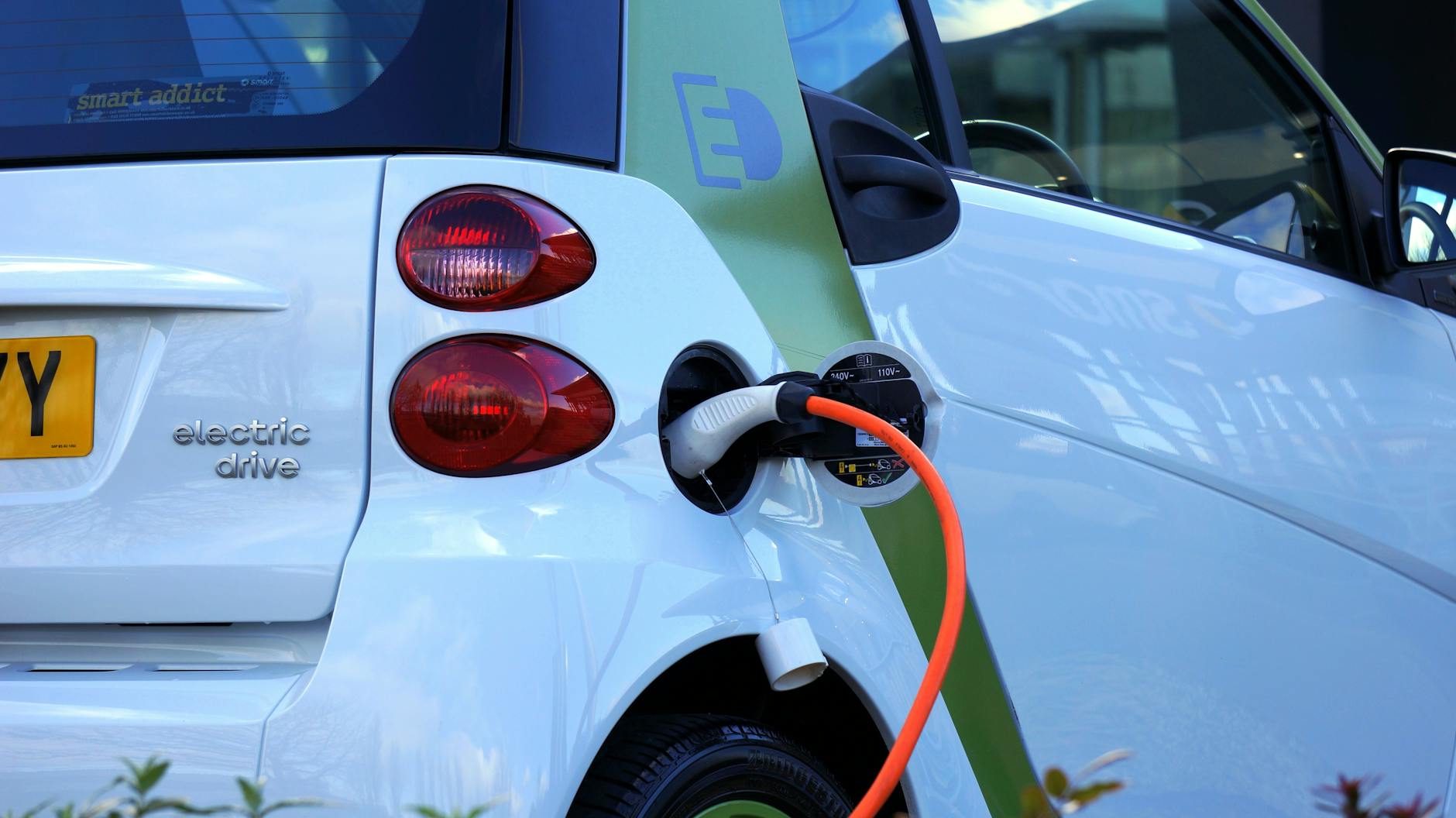
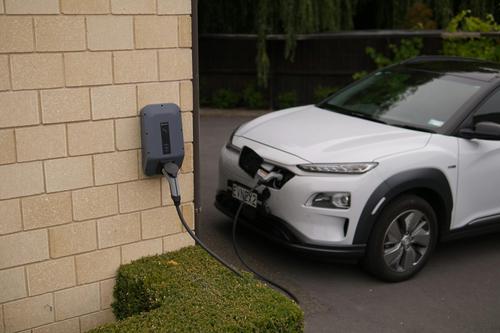
The electric vehicle (EV) industry is at a critical juncture, with charging infrastructure emerging as the next battleground for market dominance. For years, Tesla, Inc. (NASDAQ: TSLA) has leveraged its proprietary Supercharger network as a key competitive advantage, offering unparalleled convenience and reliability. However, a formidable challenger has emerged from China: BYD Company Limited (FSX: BY6.F), which is now deploying a revolutionary "Flash Charging" technology that promises to redefine the speed and accessibility of EV power. This aggressive move by BYD, a company with a market capitalization of $91.04 billion compared to Tesla's $1.48 trillion, is not merely an incremental upgrade; it represents a fundamental shift in charging philosophy that could reshape the global EV landscape.
As of today, July 16, 2026, Tesla shares trade at $392.82, near the midpoint of its 52-week range of $297.82 to $498.83. BYD, meanwhile, trades at $9.99 on the FSX, having recently rallied over 6% following its charging announcement, reaching a new 52-week high within its $8.06 to $14.79 range. The catalyst for this renewed tension is BYD's "Super e-Platform," which boasts charging speeds that dwarf current industry standards. This technological leap directly challenges Tesla's long-held advantage in charging convenience, forcing a re-evaluation of what constitutes a "fast" charge and how EV owners perceive range anxiety. The core question for investors is whether BYD's hardware revolution can truly unseat Tesla's established infrastructure and software-driven experience.
BYD's Flash Charging: A Six-Fold Power Leap
BYD's new Flash Charging system is a technological marvel, fundamentally altering the calculus of EV charging speed. At its core is a peak charging speed of 1,500 kilowatts (kW), a figure that dramatically outpaces Tesla's current offerings. To put this into perspective, Tesla's V3 Superchargers deliver up to 250 kW, while its newer V4 models push the limit to 350 kW, with some hardware capable of 500 kW for specific vehicles like the Cybertruck. This means BYD's system offers roughly six times the raw power output of Tesla's fastest chargers today, a difference that translates directly into user experience.
The practical implications are profound: BYD claims its vehicles can gain up to 400 kilometers (approximately 249 miles) of range in a mere five minutes. This rapid power delivery is enabled by a sophisticated technology stack, including a 1,000-volt vehicle architecture—compared to Tesla's common 400-volt system—and advanced 10C Blade Batteries. This combination allows for significantly faster charging without excessive heat, leading to more efficient energy transfer.
BYD is not just showcasing a prototype; it is aggressively deploying this infrastructure. The company launched its Flash Charging network on March 5, 2026, and by early May, it had already grown to 5,715 stations across more than 300 Chinese cities. The ambition is even greater, with a target of 20,000 stations in China by the end of 2026. This deployment rate is staggering; as Fred Lambert of Electrek noted on June 10, 2026, "BYD is deploying 2.4x more charging power per month than Tesla." This rapid expansion, coupled with the superior technology, positions BYD to set a new global benchmark for EV charging.
| Feature | Tesla Supercharger (V4) | BYD Flash Charging |
|---|---|---|
| Peak Power Output | 500 kW | 1,500 kW |
| Range in 5 Min | N/A (275 km in 15 min) | 400 km (249 miles) |
| Charging Time | 10-80% in 18-20 min | 10-70% in 5 min |
| Vehicle Arch. | 400V | 1,000V |
| Network Size | >50,000 connectors | 5,715 stations (May '26) |
| 2026 Target | N/A | 20,000 stations (China) |
Tesla's Software Evolution vs. BYD's Hardware Revolution
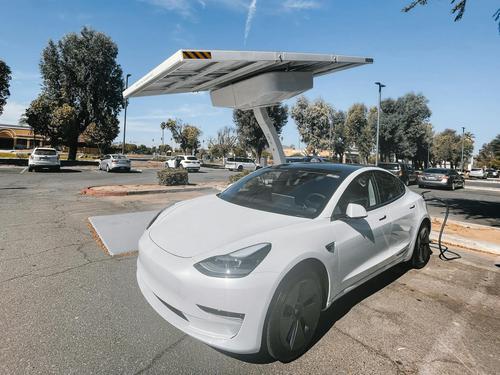
The competitive dynamic between Tesla and BYD in the charging space boils down to two fundamentally different philosophies: Tesla's software evolution versus BYD's hardware revolution. Tesla has long focused on optimizing the charging experience through software, introducing features like its Virtual Supercharger Queue. This app-based system uses geofencing to digitize the first-come-first-served model, allowing drivers to join a queue, receive real-time wait estimates, and be notified when a stall is available. This approach requires no new hardware investment, deploying globally via over-the-air (OTA) updates, and leverages Tesla's deep integration across its vehicles and app ecosystem. Its strength lies in its speed of deployment and ability to manage the "human friction" of charging congestion immediately and at scale. However, it still requires a significant charging stop, typically 18-20 minutes for a 10-80% charge.
BYD, conversely, is making a massive capital investment in new infrastructure to eliminate the wait entirely. Its Flash Charging system, with its 1,500 kW chargers, 1,000-volt vehicle architecture, and 10C Blade Batteries, is a hardware-intensive solution designed to make charging as fast as refueling a gasoline car. As Rio from Tesery.com articulated in an April 28, 2026, article, "Tesla is wagering that a better waiting experience is sufficient for today's market. BYD is wagering that the ultimate user experience is no need to wait at all." This hardware revolution redefines the EV ownership experience by addressing the physical root of congestion, but it necessitates a phased rollout and requires new vehicles, batteries, and chargers to be fully compatible.
This philosophical divergence highlights the core bet each company is making on the future of EV adoption. Tesla believes that intelligently managing the existing wait is sufficient, while BYD is betting that eliminating the wait altogether will be the decisive factor for mass market appeal. If BYD's Flash Charging scales globally, it could establish a new industry benchmark that compels every competitor, including Tesla, to respond with significant hardware innovation rather than just software enhancements.
Global Ambitions and Market Dynamics
BYD's Flash Charging technology is not merely a domestic play; the company has clear global ambitions. While its initial rollout is concentrated in China, with a target of 20,000 stations by the end of 2026, BYD has already opened its first overseas stations in Europe, with further expansion planned for the continent and Southeast Asia. This international push will directly challenge Tesla's established global network of over 50,000 connectors and its dominant position in many markets.
The impact on the Chinese EV market is already palpable, placing immense pressure on local competitors like Nio, Li Auto, Xpeng, and Zeekr. These companies, which have been investing heavily in their own charging infrastructure, may be forced to accelerate their R&D efforts to keep pace with BYD's advancements. Crucially, BYD is rolling out this advanced charging technology to its best-selling EVs, not just luxury models. For instance, the updated Yuan Plus (Atto 3), one of the world's best-selling EVs with 224,000 units sold in 2025, now supports Flash Charging at a starting price of around $17,700 in China. This democratization of ultra-fast charging could significantly increase BYD's market share by alleviating "charging anxiety" for a broader range of consumers.
However, the global landscape presents complex challenges. While BYD and Tesla do not directly compete in the United States due to high tariffs on Chinese-made EVs, the battle for market share in Europe and emerging markets is intensifying. The regulatory environment, including technical standards like Europe's CCS and North America's NACS, along with local manufacturing requirements and grid stability issues in regions like Latin America, will play a significant role in BYD's global success. The competition is forcing both companies to innovate faster, ultimately benefiting the EV consumer.
The Bear Case: Hurdles for Both EV Giants
Despite the impressive technological strides, both BYD and Tesla face significant hurdles that could temper their ambitions in the charging wars.
The Bear Case for BYD
BYD's hardware revolution, while powerful, demands massive capital investment and a complex infrastructure build-out. Scaling its 1,500 kW Flash Charging network beyond China presents formidable challenges. Regulatory environments in markets like Europe, for instance, impose stringent requirements such as CE certification and Germany's Eichrecht (Calibration Law), which demands extremely high billing accuracy. Building local service capabilities and ensuring equipment reliability in diverse climates, from the high temperatures of the Middle East to the low temperatures of Central Asia, will be crucial. Furthermore, geopolitical risks and competition over technical standards could impede BYD's global expansion, particularly in markets where local manufacturing is incentivized through tariffs or subsidies. The integration of energy storage batteries at each station, while mitigating grid overload, adds to the complexity and cost of deployment.
The Bear Case for Tesla
For Tesla, the primary bear case revolves around its response to BYD's hardware leap. While its software-driven approach to managing queues is efficient for its existing network, it does not fundamentally address the desire for ultra-fast charging. Tesla's current vehicles, apart from the Cybertruck, generally max out at 250 kW, meaning they cannot fully utilize the 500 kW capability of the latest V4 Superchargers, let alone BYD's 1,500 kW. This creates a hardware gap that could erode Tesla's charging convenience advantage over time. The company's sales in China have already struggled against intense competition from BYD and other local EV startups, and a failure to launch a compelling hardware response, such as a "V5 Supercharger," could further pressure its global EV sales and service revenue. Internal factors, including product strategy and management focus under Elon Musk, have also been cited as potential sources of pressure.
The Verdict: Redefining the EV Charging Landscape
BYD's aggressive deployment of 1,500 kW Flash Charging technology marks a pivotal moment in the EV industry, directly challenging Tesla's long-held dominance in charging infrastructure. This hardware-driven revolution, capable of adding 400 kilometers of range in just five minutes, represents a significant leap over Tesla's 500 kW Superchargers and its software-centric approach to managing charging queues. While Tesla's global network and market capitalization remain substantial, BYD's innovation is poised to redefine consumer expectations for charging speed and convenience, particularly as it expands into Europe and Southeast Asia.
For investors, this dynamic creates a compelling narrative of technological disruption. The long-term success of BYD's Flash Charging hinges on its ability to overcome significant infrastructure and regulatory hurdles outside China. Conversely, Tesla's ability to maintain its competitive edge will depend on a swift and substantial hardware response to BYD's challenge.
Entry Zone: Investors keen on BYD's disruptive potential should monitor its global expansion progress, particularly successful deployments and adoption rates in Europe. A sustained push beyond China, indicated by consistent station rollout and positive market reception, would suggest an entry zone for BYD shares above its current $9.99, perhaps targeting a break above its 52-week high of $14.79. For Tesla, a proactive announcement of a next-generation Supercharger (V5) with significantly higher power output would signal a strong defense, potentially stabilizing its stock around the $390-$400 range.
12-Month Target: If BYD successfully executes its 20,000-station target in China by year-end 2026 and demonstrates clear traction in international markets, its shares could see a substantial re-rating, potentially targeting $18.00 as the market prices in its redefined competitive moat. This would reflect a growing belief that its hardware revolution is indeed setting a new industry standard. Conversely, if Tesla fails to announce a comparable hardware upgrade within the next 12 months, its valuation could face downward pressure, potentially seeing its stock drift towards the lower end of its 52-week range, around $320.00, as its charging advantage erodes.
Invalidation Level: The thesis of BYD's charging revolution significantly challenging Tesla would be invalidated if BYD's global expansion stalls due to regulatory or infrastructure complexities, or if its deployment rate outside China falls significantly short of expectations. A failure to achieve its 20,000-station target in China by year-end 2026 would be a critical red flag. For Tesla, the thesis would be invalidated if it launches a V5 Supercharger network that matches or exceeds BYD's 1,500 kW capability and can be widely adopted by its existing fleet, effectively neutralizing BYD's technological lead. The charging wars are just beginning, and the winner will ultimately be determined by which company can deliver the most seamless and efficient experience at scale.
Want deeper research on any stock? Try Kavout Pro for AI-powered analysis, smart signals, and more. Already a member? Add credits to run more research.
Related Articles
Category
You may also like


The Latest Way BYD Is Topping Tesla

Shell Recharge and SINEXCEL Launch Joint Innovation Lab to Accelerate EV Charging Innovation

onsemi and NIO Expand Strategic Collaboration to Accelerate Next-Generation 900V EV Platforms
Breaking News
View All →Featured Articles
Top Headlines

Japan's Enterprises and Startups Build Industry-Specialized AI With NVIDIA Nemotron Open Models
My 3 Favorite AI Stocks to Buy on the Continued Chip Sell-Off

Apple Could Buy an AI Chip Company. Its Hot Stock Just Set a Fresh Record High

Why QQQM's 0.15% Fee Crushes QQQ for Long-Term Growth Investors