MarketLens

Log in

The Prediction Market Paradox: Innovation vs. Regulation

1 hour ago
SHARE THIS ON:

The Prediction Market Paradox: Innovation vs. Regulation

Key Takeaways

  • Prediction markets like Kalshi and Polymarket are navigating a complex regulatory landscape, caught between federal claims of derivative oversight and state assertions of gambling laws.
  • CFTC Chairman Michael Selig is actively defending prediction markets as legitimate financial instruments, reversing prior restrictions and pushing for federal preemption over state-level bans.
  • Despite record trading volumes and growing institutional interest, the sector faces significant legal uncertainty with over 20 federal lawsuits and a potential Supreme Court showdown by 2027.

The Prediction Market Paradox: Innovation vs. Regulation

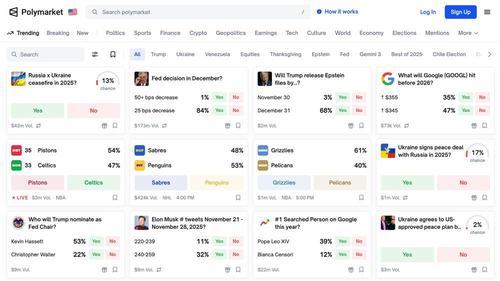
The world of prediction markets, where users trade contracts on future events, is experiencing explosive growth, yet it remains mired in a contentious legal battle for its very existence. Platforms like Kalshi and Polymarket are at the forefront of this paradox, demonstrating immense user engagement and trading volumes while simultaneously fighting for regulatory clarity across the United States. This dynamic creates a high-stakes environment for investors and participants, where the promise of a trillion-dollar market clashes directly with the specter of state-level prohibitions.

Consider Kalshi, which reported a record $10.4 billion in monthly trading volume in February, with estimates suggesting March could exceed that figure. By March 9, trading volume had already reached $3.6 billion for the month, with approximately $1.5 billion stemming from basketball-related contracts alone. This surge in activity underscores the market's appeal, attracting a diverse range of participants eager to trade on outcomes from elections to sports. However, this rapid expansion has also drawn the ire of state regulators, who view these platforms as unlicensed gambling operations, setting the stage for a defining legal showdown.

The core of the conflict lies in classification: are these "event contracts" legitimate financial derivatives falling under federal commodities law, or are they simply wagers subject to state gambling statutes? This fundamental disagreement has created a confusing legal landscape, with courts across the country reaching different conclusions. For investors, understanding this jurisdictional tug-of-war is paramount, as it directly impacts the operational viability and future growth trajectory of these innovative, albeit controversial, platforms. The stakes are incredibly high, promising either a new era of information aggregation or a fragmented, heavily restricted market.

The intense legal scrutiny faced by prediction markets stems from a fundamental clash between federal and state regulatory frameworks. At the federal level, the Commodity Futures Trading Commission (CFTC) asserts jurisdiction, classifying event contracts as derivatives under the Commodity Exchange Act. However, many states view these same contracts, particularly those related to sports, as a form of gambling, subject to their individual licensing and taxation regimes. This overlapping authority creates a "gray zone" where legality is constantly debated and challenged.

The recent Ohio district court ruling against Kalshi exemplifies this conflict, finding that state gambling laws apply to sports-related prediction contracts offered on the platform. This decision directly contradicts an earlier ruling in Tennessee, which blocked state regulators from forcing Kalshi to comply with local gambling regulations. Such conflicting judgments highlight the lack of a clear, unified legal status for prediction markets nationwide. For Kalshi, sports contracts are particularly critical, having accounted for approximately 89% of its trading fee revenue in 2025, though this reliance has slightly declined to around 80% of trading volume in recent months.

States are aggressively pushing back, arguing that prediction markets bypass local licensing requirements and consumer protections designed for traditional sports betting. This has led to a proliferation of lawsuits, with over 20 federal cases now challenging the platforms' federal status. The American Gaming Association, representing traditional gambling interests, actively lobbies for state-level control, contending that prediction markets are functionally indistinguishable from regulated sports betting. This sustained pressure from state officials and the established gambling sector ensures that prediction markets will remain a hotbed of legal contention for the foreseeable future.

How is the CFTC Shaping the Future of Prediction Markets?

The Commodity Futures Trading Commission (CFTC), under the leadership of Chairman Michael Selig, is actively shaping the future of prediction markets by asserting federal authority and defending these platforms against state crackdowns. Selig has consistently argued that prediction markets fall under federal derivatives law, not state gambling rules, framing them as legitimate economic functions that allow businesses to hedge against risks. This stance marks a significant reversal from the previous Biden administration, which had taken a harder line on the sector.

Selig has taken concrete steps to support prediction markets, including rescinding several Biden-era proposals. Notably, a 2024 draft rule that would have effectively banned political and sports-related event contracts has been withdrawn. Furthermore, a 2025 staff letter warning operators about potential state enforcement risks has been nullified. In a clear signal of federal intervention, the CFTC filed an amicus brief in February 2026 in the United States Court of Appeals for the Ninth Circuit, backing Crypto.com in its dispute with Nevada regulators. Selig argued that states lack the authority to prohibit federally regulated event contracts, emphasizing that a patchwork of state bans would undermine the integrity of federally supervised derivatives markets.

While defending the legality of prediction markets, Selig has also made it clear that the CFTC will not tolerate misconduct. He has promised a "minimum effective dose" regulatory framework aimed at promoting lawful innovation while maintaining market safeguards. The agency is reportedly deploying AI-based monitoring tools to identify suspicious trading patterns and is collaborating with sports leagues and trading platforms to detect insider trading and market manipulation risks. This dual approach—defending federal jurisdiction while enhancing market integrity—is crucial for the long-term legitimacy and growth of the prediction market sector.

The legal landscape for prediction markets is a complex web of ongoing battles, with significant implications for their operational future. Currently, there are ongoing legal challenges against prediction market platforms in at least 18 states, with some lawsuits also brought by tribal gaming groups and users. These cases often involve states suing platforms for offering sports trading, or platforms suing states that attempt to block their operations. The outcomes have been anything but consistent, creating a confusing patchwork of legality across the country.

For instance, while an Ohio court recently ruled against Kalshi, classifying its sports contracts as sports betting, a Tennessee court previously sided with Kalshi, blocking state regulators from enforcing local gambling laws. Similarly, Polymarket faced a setback in Michigan, where a judge referenced the lack of clear legal status for sports prediction markets and declined to grant a temporary restraining order. These conflicting decisions underscore the judicial divergence that is making a unified regulatory approach difficult. New York and Connecticut have already moved to leverage the Ohio ruling to bolster their own cases against Kalshi, indicating a domino effect of legal challenges.

Many legal experts believe that this growing inconsistency across jurisdictions makes eventual Supreme Court involvement a realistic pathway. Lawyer Andrew Kim, who has closely followed the litigation, suggests a Supreme Court decision could come as early as 2027, though he acknowledges it could be much later, potentially even 2029. The ultimate ruling from the nation's highest court would likely provide the definitive clarity that the industry desperately needs, determining whether federal commodities law preempts state gambling statutes or if states retain significant authority to regulate these markets. Until then, the legal uncertainty will continue to fuel volatility and strategic compliance decisions by platform operators.

What Does This Mean for Investors and Market Participants?

For investors and market participants, the current regulatory flux in prediction markets presents both significant opportunities and considerable risks. On the bullish side, the sector is attracting substantial institutional interest, signaling a potential shift towards mainstream adoption. Companies like Robinhood and Interactive Brokers are already offering event contracts through CFTC-regulated partner exchanges, covering a wide range of topics from politics to crypto. Cboe Global Markets is launching a new prediction market framework in the second quarter, and Nasdaq has sought SEC approval for binary index options. Notably, ICE, the parent company of the New York Stock Exchange, has invested up to $2 billion in Polymarket, underscoring the perceived long-term value of these markets.

The bullish narrative is further supported by the CFTC's proactive stance under Chairman Selig, who is pushing for a clear federal framework that supports lawful innovation. This could lead to a more stable operating environment, allowing platforms to scale without constant legal threats from individual states. Grayscale's 2026 Digital Asset Outlook also highlights prediction markets as a key driver for stablecoin demand, suggesting deeper integration into the broader crypto ecosystem. If regulatory clarity materializes, prediction markets could indeed become a credible venue for information and risk transfer, as predicted by Coinbase Institutional.

However, the bear case remains compelling due to the ongoing legal battles and the potential for a fragmented market. The current environment of conflicting court decisions means that platforms may face different rules in different states, complicating nationwide operations and potentially limiting market liquidity. A high-profile scandal involving insider trading or market manipulation could also trigger emergency freezes or broad prohibitions, as the CFTC is actively monitoring for such risks. Furthermore, the possibility of a Supreme Court ruling that favors state authority could severely curtail the growth of sports-related contracts, which are a major revenue driver for platforms like Kalshi. Investors must weigh the significant upside potential against the very real and unresolved regulatory hurdles.

The Insider Trading Conundrum: Maintaining Market Integrity

Beyond the jurisdictional tug-of-war, prediction markets face a critical challenge in maintaining market integrity, particularly concerning insider trading and manipulation. The CFTC has explicitly acknowledged this problem, issuing a "Prediction Markets Advisory" that signals increased scrutiny on these issues. The agency is concerned that while some prediction markets effectively aggregate crowd wisdom, others, particularly "micro-markets" tied to specific, narrow events, are highly vulnerable to exploitation by insiders or directly involved actors.

Concrete examples highlight this risk. The CFTC has cited two Kalshi disciplinary cases involving traders who appeared to hold decisive informational edges: a California gubernatorial candidate who bet on his own race, and a YouTube editor who traded contracts tied to "Mr. Beast" while likely possessing material nonpublic information. Such instances erode public trust and raise questions about the fairness of these markets. The CFTC is actively asking whether asymmetric information can ever truly serve the public interest in these contexts and whether prediction markets are especially vulnerable to cross-market manipulation.

To address these concerns, the CFTC is exploring various guardrails, including tougher scrutiny of single-person markets, more explicit restricted-trader lists, stronger settlement-source requirements, and heavier exchange surveillance. They are also considering measures like self-exclusion programs, monetary or time limits, advertising restrictions, and disclaimers to protect retail customers. While broad macro, election, and full-game contracts are likely to survive, the most integrity-sensitive micro-markets could be squeezed or even prohibited. The ability of prediction market platforms to effectively implement and enforce robust integrity measures will be crucial in securing their long-term regulatory acceptance and fostering sustained participant confidence.

The future of prediction markets hinges on a delicate balance between fostering innovation and establishing clear, consistent regulatory guardrails. While the CFTC is championing federal oversight, the ongoing state-level legal battles and the looming possibility of a Supreme Court decision inject significant uncertainty. Investors should closely monitor these legal developments and the industry's efforts to enhance market integrity, as these factors will ultimately determine whether prediction markets fulfill their promise as a new frontier in finance or remain confined to a regulatory gray zone.


Want deeper research on any stock? Try Kavout Pro for AI-powered analysis, smart signals, and more. Already a member? Add credits to run more research.

SHARE THIS ON:

Related Articles

Category

You may also like

Stock News2 weeks ago

Will Regulating AI Cripple AI Stocks?

The US AI sector faces two main challenges that could impede its growth, despite the transformative nature of the technology.
Crypto News4 weeks ago

Here's what happened in crypto today – BTC, Harvard, crypto ETPs & more

The CFTC is clashing with several states regarding oversight authority over crypto-related prediction markets. This regulatory conflict may slow the launch or operation of these specific financial pro...
News1 months ago

The Rise of Prediction Markets

Prediction markets on platforms like Polymarket and Kalshi are seeing billions of dollars trade as users bet on diverse future events, including election outcomes.
Stock News2 months ago

Bitcoin in 2026: Speculative Mania or Strategic Allocation?

Bitcoin's role in 2026 portfolios faces a split between speculative volatility and perceived legitimacy, driven by ETF adoption, regulatory progress, and significant outstanding risks.

Breaking News

View All →

Top Headlines

View More →
Stock News40 minutes ago

Nvidia Says Company Firing Up H200 Production for China

Stock News43 minutes ago

Samsung Elec plans to produce Tesla chips starting late 2027

Stock News53 minutes ago

LTM Named NVIDIA Partner Network ‘Rising Star Consulting Partner of the Year' at NVIDIA GTC 2026

Stock News1 hour ago

Nvidia Just Reported $68 Billion in Revenue. Here's Why It Matters.

Stock News1 hour ago

Chinese authorities approve Nvidia's H200 AI chip sales, source says