Kavout

MarketLens

Log in

Warren Buffett Steps Down: What Investors Need to Know About Berkshire Hathaway's Leadership Transition

Jan 05, 2026
SHARE THIS ON:

20260105.jpg

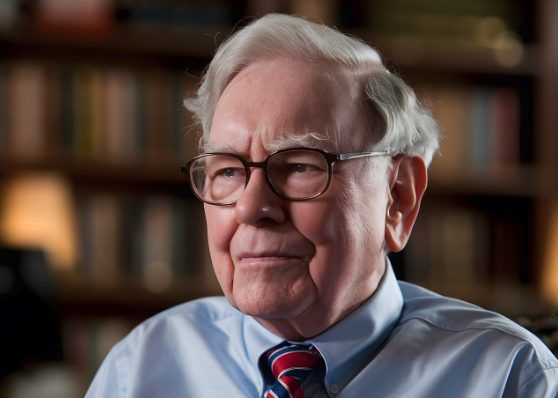
Warren Buffett officially ended his 61-year tenure as CEO of Berkshire Hathaway on December 31, 2025, handing the reins to Greg Abel. This transition marks the end of the most successful investment career in modern financial history and raises critical questions about Berkshire's future direction under new leadership.

Who Is Taking Over Berkshire Hathaway From Warren Buffett?

Greg Abel became CEO of Berkshire Hathaway on January 1, 2026. Abel previously served as Vice Chairman of Non-Insurance Operations, where he oversaw Berkshire's vast portfolio of operating businesses including BNSF Railway, Berkshire Hathaway Energy, and dozens of manufacturing and retail subsidiaries.

Unlike Buffett, who built his reputation as a stock picker and capital allocator, Abel is fundamentally an operations manager. He rose through the ranks at Berkshire Hathaway Energy, demonstrating expertise in large-scale infrastructure projects and utility management. Industry analysts expect Abel to take a more hands-on approach with subsidiary operations rather than the arm's-length management style Buffett preferred.

The leadership restructuring also includes several other key appointments. Charles Chang, formerly CFO of Berkshire Hathaway Energy, becomes the conglomerate's new Chief Financial Officer. Michael O'Sullivan, previously General Counsel at Snap Inc., takes on the same role at Berkshire. Nancy Pierce moves from COO to CEO at GEICO, while Ajit Jain continues overseeing insurance operations.

Warren Buffett remains as Chairman, creating a formal separation between the Chairman and CEO roles for the first time in Berkshire's history under his leadership.

What Is Warren Buffett's Investment Track Record?

Warren Buffett's performance at Berkshire Hathaway produced a compounded annual gain of 19.9% from 1965 to 2025, compared to the S&P 500's 10.4% return including dividends over the same period. This seemingly modest difference in annual returns translates into an extraordinary gap in total wealth creation.

Berkshire Hathaway's cumulative return over Buffett's 60-year tenure reached 5,502,284%. By comparison, the S&P 500 returned 39,054% during the same timeframe. A $10,000 investment in Berkshire in 1965 would have grown to approximately $550 million by 2025, while the same amount in an S&P 500 index fund would have reached roughly $3.9 million.

The consistency of this outperformance is equally remarkable. Berkshire beat the S&P 500 in 40 out of 60 years during Buffett's tenure. However, the data reveals an important trend: as Berkshire's market capitalization grew to exceed $1 trillion, finding investments large enough to meaningfully impact returns became increasingly difficult.

During the 2015-2025 decade, Berkshire's growth in book value per share averaged 12.5% annually, actually trailing the S&P 500's 14.8% return. This "size penalty" reflects the mathematical reality that a company managing over a trillion dollars cannot replicate the returns it achieved when managing billions.

How Did Warren Buffett's Investment Philosophy Evolve?

Warren Buffett's approach transformed significantly over his career, moving through three distinct phases that reshaped his understanding of value investing.

The Benjamin Graham Phase

In his early career, Buffett practiced what he called "cigar-butt" investing, a strategy learned directly from his mentor Benjamin Graham. This approach focused on finding companies trading below their net working capital—businesses so cheap that even a struggling company might offer one final profitable opportunity before closing. The original purchase of Berkshire Hathaway in 1964 exemplified this strategy: a failing textile mill bought for less than its tangible asset value.

Buffett later acknowledged the limitations of this approach, recognizing that a low price cannot compensate for a fundamentally deteriorating business.

The Quality Revolution

The partnership with Charlie Munger transformed Buffett's thinking about value. Munger introduced the principle that buying a wonderful company at a fair price produces better long-term results than buying a fair company at a wonderful price. Philip Fisher's emphasis on management quality and growth potential further refined this view.

This shift moved Berkshire away from asset-heavy, low-margin businesses toward capital-light companies with durable competitive advantages—what Buffett terms "economic moats."

The Four-Pillar Framework

Buffett's mature investment philosophy rests on four criteria that guide every major investment decision.

Circle of Competence requires understanding a business thoroughly before investing. Buffett avoided technology stocks for decades because rapid change made future cash flows impossible to predict reliably.

Economic Moat refers to structural advantages protecting a company's profits from competitors. These advantages take various forms: powerful brands like Coca-Cola, low-cost production structures like GEICO, high switching costs in specialized software, or network effects enjoyed by American Express.

Management Quality demands executives who think and act like owners, consistently generating high returns on equity while allocating capital rationally.

Margin of Safety requires buying at prices significantly below intrinsic value, providing protection against errors in judgment or unforeseen economic problems.

What Is Insurance Float and Why Did It Matter to Berkshire's Success?

Insurance float represents the secret engine behind Berkshire Hathaway's extraordinary returns. This mechanism allowed Buffett to compound capital at rates that would have been impossible through traditional investment approaches alone.

Insurance companies collect premiums upfront but pay claims later, sometimes years or decades afterward. During this interval, the insurer holds a substantial pool of cash that can be invested. Most insurance companies invest this float conservatively in bonds. Buffett recognized a different opportunity.

If Berkshire's insurance operations could generate an underwriting profit—meaning premiums exceeded claims and expenses—the float becomes better than free capital. The company is effectively paid to hold other people's money with no restrictions on how to invest it. Berkshire's float grew from $16 million in 1967 to over $164 billion by 2022. Unlike traditional debt, this capital has no fixed maturity date, requires no interest payments, and comes with no investment restrictions. Buffett deployed this float to acquire entire businesses, which then generated additional cash to reinvest, creating a self-reinforcing compounding cycle.

This structural advantage explains why Berkshire could grow without issuing new shares or taking on conventional debt, avoiding both shareholder dilution and interest expenses that burden most growing companies.

How Is Berkshire Hathaway Approaching Artificial Intelligence?

Berkshire Hathaway's stance on artificial intelligence has evolved considerably as the technology matures. In 2024, Buffett expressed concern about AI's potential for enabling fraud and scams, comparing it to nuclear weapons as a technology that, once released, cannot be contained. By 2025, his perspective had become more nuanced.

Buffett acknowledged that Berkshire already benefits from AI advancement through its holdings in technology leaders including Amazon and Apple. More significantly, Berkshire's Q3 2025 regulatory filing revealed a new $4.3 billion stake in Alphabet, representing approximately 17.8 million shares.

This investment signals that Berkshire views Google's parent company as a defensible position in the AI era. Despite competition from AI chatbots, Google's search business maintains substantial competitive advantages through its massive data center infrastructure and proprietary AI chips. The company's deep integration with advertising revenue provides the kind of durable cash flow Berkshire seeks.

The Alphabet investment represents an important evolution: the willingness to invest in companies where AI capability is central to competitive advantage, provided they meet traditional criteria for moat strength and cash generation.

Why Did Berkshire Hathaway Reduce Its Apple Position?

Berkshire Hathaway reduced its Apple holdings by approximately 56% between 2023 and 2024, continuing smaller trims into 2025. This decision surprised many investors given Buffett's previous statements about Apple's strength.

The reduction reflected tactical portfolio management rather than concerns about Apple's business quality. Three primary factors drove the decision.

Valuation compression limited future upside as Apple's price-to-earnings ratio approximately doubled after the market fully recognized its recurring revenue model and services growth.

Concentration risk had become a systemic concern. At its peak, Apple represented nearly 50% of Berkshire's public equity portfolio—an uncomfortable level of single-stock exposure for a conglomerate of Berkshire's size.

Tax strategy favored realizing gains at current rates. Buffett anticipated potential increases in corporate tax rates and preferred locking in gains at the existing 21% federal rate rather than risking higher future rates.

Apple remains Berkshire's largest equity position with over 238 million shares, but the reduction demonstrates the discipline to trim even successful positions when prudent portfolio management requires it.

What Challenges Does Greg Abel Face as New CEO?

Greg Abel's most immediate challenge involves deploying Berkshire's cash reserves, which reached approximately $382 billion by late 2025. This unprecedented cash position reflects years of Buffett's reluctance to pay elevated prices during a prolonged bull market.

Abel's operational background suggests several likely strategic directions. Industrial acquisitions in energy and infrastructure represent his area of deepest expertise, potentially enabling large-scale deals that align with his management experience. Increased share buybacks could return capital to shareholders if attractive acquisition targets remain scarce. Some analysts speculate the Abel era might introduce regular dividends—something Buffett consistently resisted—as a mechanism for managing the massive cash position.

Beyond capital allocation, Abel must preserve Berkshire's distinctive culture. The company's reputation for integrity has been a competitive advantage, enabling acquisitions of family-owned businesses whose owners would not sell to any other buyer. Maintaining this culture represents an intangible but critical asset.

The market's stable reaction to the transition suggests confidence in the preparation that went into this succession. Years of planning and Abel's visibility in the Vice Chairman role have familiarized investors with his approach and capabilities.

What Can Investors Learn From the Buffett Era?

The Buffett Era offers principles that remain relevant despite technological disruption and changing market conditions.

Time creates leverage in investing. The primary engine of Buffett's wealth was not superior intelligence but sustained time in the market. Compounding works most powerfully when left undisturbed across decades, not years.

Price and value are distinct concepts. In an environment dominated by algorithmic trading, the difference between market price and underlying business value remains the most important distinction for investors to maintain.

Discipline means saying no. Berkshire's success derived as much from rejected deals as from completed ones. Waiting for opportunities with clear advantages—what Buffett called "fat pitches"—separates exceptional results from average performance.

Reputation compounds like capital. Buffett's honesty created opportunities unavailable to others, enabling acquisitions from owners who trusted no other buyer. Intangible assets can be as valuable as financial ones.

The 5,502,284% return that Berkshire achieved is unlikely to be replicated by any individual investor in the coming century. However, the framework underlying that performance—quality focus, margin of safety, structural advantages, and patient capital allocation—provides a durable approach for investors seeking to preserve and grow wealth regardless of market conditions.

As Greg Abel takes the helm, investors worldwide will watch whether Berkshire can sustain the consistent, disciplined approach that made Warren Buffett the most successful capital steward in financial history.

How Should Investors Think About Berkshire Hathaway in 2026?

The transition to Greg Abel creates both uncertainty and opportunity for investors evaluating Berkshire Hathaway. Understanding the company's structural advantages helps clarify what changes and what remains constant.

Berkshire's insurance float, now exceeding $160 billion, continues generating investment capital regardless of who leads the company. The decentralized operating model, where subsidiary CEOs run their businesses with minimal interference from headquarters, requires no adjustment under new leadership. The company's fortress balance sheet, with hundreds of billions in cash and minimal debt, provides resilience against economic shocks.

What may change is the velocity and character of capital deployment. Abel's operational background suggests comfort with large industrial transactions that Buffett might have avoided. Energy infrastructure, manufacturing capacity, and utility expansion represent sectors where Abel has demonstrated expertise and may pursue aggressive growth.

Investors should also monitor whether Berkshire's valuation changes relative to its intrinsic value. During Buffett's tenure, the company frequently traded at a discount to the sum of its parts, reflecting market skepticism about conglomerate structures. Under Abel, this discount could narrow if the market gains confidence in the operational focus, or widen if doubts emerge about investment selection.

The fundamental question is whether Berkshire's competitive advantages are institutional or personal. The evidence suggests primarily institutional: the insurance float mechanism, the collection of moat-protected businesses, and the culture of rational capital allocation exist independently of any individual. Greg Abel's task is stewardship of these advantages, not recreation of Buffett's specific stock-picking success.

For long-term investors, the Buffett-to-Abel transition represents continuity wrapped in change—the same underlying machine with a new operator at the controls.

Want to Invest Like Buffett? Follow the Smart Money.

Warren Buffett built his fortune by understanding what separates great investments from good ones. But here's what most investors miss: you don't have to guess what the pros are buying—you can see it in real time.

Subscribe to Kavout Pro Smart Money and get the same visibility into institutional moves that hedge funds pay millions for.

What You Get With Smart Money:

📈 Analyst Stock Ratings — See what Wall Street analysts really think. Catch upgrades the moment they happen, find stocks with 20%+ upside potential, and know when the smart money changes their mind.

👔 Insider Hot Stocks — When CEOs and executives buy their own stock with their own money, they know something you don't. Spot when 3+ executives are buying the same stock and see the exact amounts they're investing.

🏛️ Congress Trades — Politicians know about policy changes before anyone else. Track what Congress is buying right now—when both parties are buying the same stock, that's a strong signal.

💎 Guru Holdings — Copy trades from 100+ billionaire investors including the moves Berkshire Hathaway discloses in their 13F filings. See new positions before everyone else and learn what the top 1% are actually doing.

We track 10,000+ insiders, analysts, and billionaire investors so you don't have to.

Start Following the Smart Money →

SHARE THIS ON:

Related Articles

Category

You may also like

No related articles available

Breaking News

View All →

No topics available at the moment