MarketLens

Log in

Why is ValueAct Capital Betting Big on Toast (TOST)

1 hour ago
SHARE THIS ON:

Why is ValueAct Capital Betting Big on Toast (TOST)

Key Takeaways

  • ValueAct Capital's significant stake increase in Toast signals strong institutional confidence in the restaurant technology sector, despite recent stock volatility.
  • Toast's integrated platform, robust recurring revenue growth, and strategic AI adoption position it for continued market share expansion in a competitive landscape.
  • While profitability challenges and a premium valuation persist, Toast's long-term potential is underpinned by high switching costs and a vast addressable market.

Why is ValueAct Capital Betting Big on Toast (TOST)?

ValueAct Capital's significant increase in its stake in Toast during Q4 2025 underscores a strategic conviction in the digital transformation of the food service industry, viewing TOST as a key enabler. This move by the "soft activist" hedge fund, known for working collaboratively with management to unlock value, suggests a long-term belief in Toast's market position and growth trajectory. ValueAct boosted its holdings by 4,618,077 shares, bringing its total to 8,015,277 shares, a clear vote of confidence in the restaurant technology platform.

This isn't an isolated bet for ValueAct. The firm also significantly increased its investments in other fintech players like Rocket Companies and established new positions in BlackRock and Liberty Live Holdings during the same quarter. This broader portfolio restructuring highlights a strategic pursuit of diversification with a strong emphasis on the fintech sector, while conversely reducing its stake in traditional media like Disney. Such institutional backing often signals that a company, despite its current challenges, possesses underlying strengths and a compelling long-term narrative that seasoned investors are willing to capitalize on.

For Toast, this institutional endorsement comes at a critical juncture. The stock has experienced considerable volatility, trading near its 52-week low of $25.91 at a current price of $27.66, a stark contrast to its 52-week high of $49.66. This price action reflects broader market concerns around tech valuations and specific challenges within the restaurant industry. However, ValueAct's decision to deepen its investment suggests they see past the near-term noise, focusing instead on Toast's fundamental competitive advantages and its potential to capture a larger share of the restaurant technology market.

The investment firm's approach is typically to identify companies with strong competitive moats and significant growth potential that may be undervalued by the broader market. Their increased position in Toast implies a belief that the company's integrated platform and strategic initiatives will drive substantial value creation over time, making it a compelling long-term play despite the current market sentiment. This institutional conviction provides a powerful counter-narrative to the stock's recent struggles, inviting investors to look closer at Toast's underlying business.

What is Toast's Core Business Model and Competitive Edge?

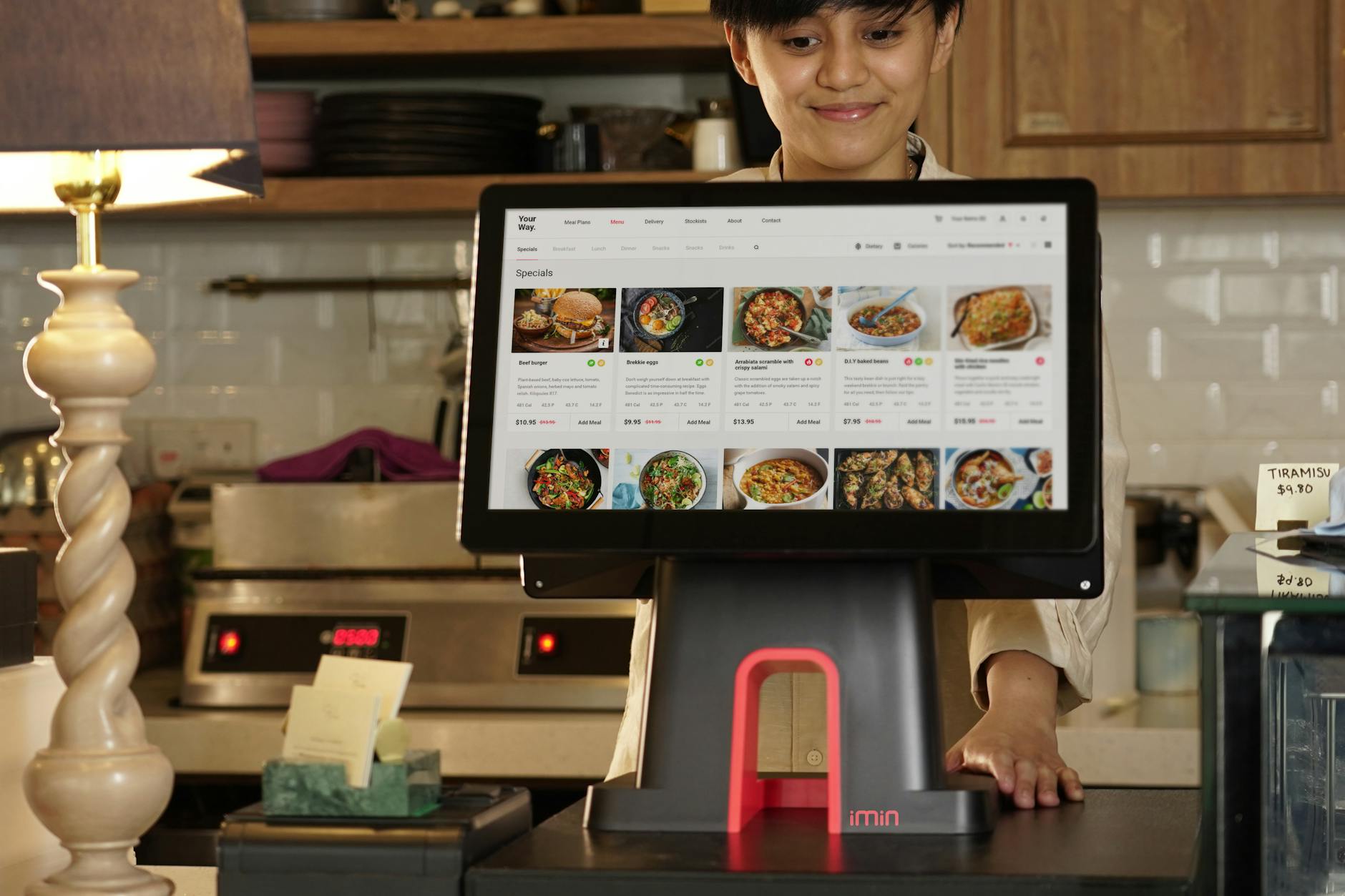
Toast, Inc. operates a comprehensive, cloud-based digital technology platform specifically designed for the restaurant industry, offering an end-to-end solution that integrates point-of-sale (POS) software, payment processing, and purpose-built hardware. This all-in-one approach is a core differentiator, streamlining operations for restaurants across the United States and Ireland. Unlike broader technology providers, Toast's exclusive focus on the food service sector allows for the development of highly specialized features and workflows that directly address the unique challenges of restaurant management, from menu configuration and employee permissions to payroll and loyalty programs.

The company's business model is primarily driven by recurring income, generated through software subscriptions and payment processing take-rates. This is complemented by hardware sales and leases, professional services fees, and even small business loan origination. This integrated platform creates significant switching costs for its customers. Once a restaurant has configured its entire operation—including menu data, employee permissions, payroll history, and loyalty programs—within the Toast ecosystem, the administrative burden and cost of migrating to a different system become immense. This "stickiness" is a powerful competitive advantage, fostering strong customer retention over long periods.

Toast's market position is further reinforced by its proprietary hardware and advanced AI-driven analytics, such as Toast IQ. This technology allows restaurants to leverage data for better personalization, such as creating loyalty coupons for frequent diners, and provides owners with insights into what's selling and what isn't. The platform's ability to offer a unified solution, rather than fragmented applications, enhances operational efficiency and customer satisfaction. This dedicated industry specialization and integrated platform advantage are key reasons why many businesses transition from competitors like Clover to Toast, despite complaints about pricing.

In a crowded competitive landscape that includes Square, Lightspeed, Clover, Revel Systems, and even legacy players like Oracle's Micros, Toast has carved out a strong niche. It currently holds an estimated 23.25% market share as the second-largest cloud POS provider in North America, behind Square's 27.93%. This strong market penetration, combined with high switching costs and a continuous investment in product innovation, forms the bedrock of Toast's competitive moat, making it a formidable player in the evolving restaurant technology space.

How Strong is Toast's Growth Trajectory and Financial Performance?

Toast has demonstrated a robust growth trajectory, marked by expanding profitability and accelerating product innovation, which were prominently highlighted in its Q4 and full-year 2025 earnings call. The company ended 2025 with an impressive 164,000 locations, having added more than 30,000 net locations during the year. This aggressive expansion has nearly doubled its market share in the U.S. SMB and mid-market restaurant segment over the past three years, now powering 20% of these establishments.

Financially, Toast's performance in 2025 was strong. Recurring gross profits grew by 33%, and Annual Recurring Revenue (ARR) jumped 26% to "over $2 billion." Gross Payment Volume (GPV) for the year reached $195 billion. Adjusted EBITDA expanded significantly to $633 million, with margins reaching 34%, while free cash flow stood at $608 million. GAAP operating income also saw a substantial increase to $292 million from $16 million the prior year, attributed to strong adjusted EBITDA and tight management of stock-based compensation.

Looking ahead to 2026, management has provided an optimistic outlook, guiding for 20% to 22% growth in recurring gross profit streams, projecting a range of $2.27 billion to $2.30 billion. Adjusted EBITDA is expected to be between $775 million and $795 million, implying margins "slightly up year-over-year." For Q1 2026, Toast forecasts total fintech and subscription gross profit growth of 22% to 24% year-over-year and adjusted EBITDA of $160 million to $170 million. These projections indicate continued strong operational performance and a commitment to disciplined investment.

The company's TTM (Trailing Twelve Months) financials further underscore this growth. Revenue reached $10.46 billion, with a healthy 24.1% year-over-year growth in FY2025. Net income growth was an astounding 1700.0%, and EPS grew by 1639.1%. Operating cash flow surged 83.6%, and free cash flow increased by 98.7%. These figures, coupled with a strong balance sheet featuring no debt and $1.4 billion in cash and equivalents as of the end of fiscal 2024, provide a solid foundation for continued expansion and strategic flexibility.

What are the Profitability Challenges and Valuation Concerns for TOST?

Despite its impressive growth, Toast faces significant profitability challenges and valuation concerns that warrant investor scrutiny. The company's TTM P/E ratio stands at a lofty 47.56, significantly higher than the market average, indicating that investors are paying a premium for its growth potential. While its P/S ratio of 2.65 and EV/Sales of 3.32x are somewhat below market averages, this discount is often tied to the lower margins associated with its hardware business and the substantial investments required for growth.

One of the primary concerns is the company's path to consistent GAAP profitability. While adjusted EBITDA and free cash flow have shown strong expansion, Toast remains unprofitable on a GAAP basis due to significant investments aimed at market share gains and product development. This aggressive investment strategy, while crucial for long-term growth, presents execution risks if the business model fails to scale effectively or if economic downturns reduce consumer spending and slow new restaurant openings. The stock's beta of 1.93 highlights its high volatility, making it sensitive to market fluctuations and economic sentiment.

Recent analyst reassessments reflect these concerns. Goldman Sachs, for instance, cut its price target on Toast from $43 to $31 and maintained a "neutral" rating, implying only an 11.7% upside from current levels. This downgrade followed Toast's Q4 earnings, where the company reported $0.16 EPS, missing the consensus estimate of $0.24, despite revenue of $1.63 billion slightly beating expectations. Canaccord also lowered its price target from $54 to $37, while maintaining a "Buy" rating, acknowledging the consistent performance but adjusting for market realities.

Furthermore, Toast faces cost headwinds, including higher tariff costs and an additional hardware headwind from memory chip costs, which are expected to have a 150 basis point negative impact on gross profit. These pressures, weighted towards the second half of 2026, could impact margins. The ongoing supply chain issues, particularly chip shortages, could lead to hardware bottlenecks, extended implementation times, and delayed customer onboarding, further hindering growth. These factors contribute to the stock's recent decline, with shares falling 13.27% over the past 52 weeks, significantly lagging the S&P 500's 14.73% gain.

What Role Does AI Play in Toast's Future Growth?

Artificial intelligence is poised to be a pivotal driver of Toast's future growth, transforming both its internal operations and its customer-facing products. The company is strategically integrating AI across its platform, moving beyond mere automation to leverage it as a tool for understanding and anticipating customer needs. This shift is critical in an industry where restaurants are increasingly recognizing that being "tech-led" is not a burden but a necessity in today's AI-driven world, as highlighted by industry experts.

Toast's AI initiatives are already yielding tangible benefits. Internally, AI has reimagined Toast Support, with over half of customer interactions now starting digitally through an AI agent, and an impressive 70% of those never reaching a human. This efficiency gain contributes directly to margin expansion, as noted by CFO Elena Gomez. The rapid adoption of Toast IQ, used by over half of its locations with more than 1 million queries, demonstrates the practical value AI brings to restaurant operators, providing actionable insights for menu optimization and operational improvements.

Looking ahead, Toast plans to expand its AI roadmap, with a mid-2026 Investor Day expected to focus on new AI tools like "Sous Chef." These innovations aim to unify data across the entire restaurant ecosystem—loyalty programs, social media engagement, and POS systems—allowing restaurants to identify patterns in real-time and deliver genuinely personalized experiences. This capability to predict and shape customer behavior, rather than simply react to it, represents a significant competitive advantage and a powerful growth lever.

Beyond AI, Toast is actively pursuing other strategic growth avenues. The company is expanding into new Total Addressable Markets (TAMs), including enterprise restaurants, international markets (currently active in the UK, Ireland, and Canada, with a recent win in Australia), and food and beverage retail. Strategic partnerships, such as its tie-up with Uber and Instacart, further enhance its platform's reach and seamless customer experience. These initiatives, combined with its AI-led product differentiation, are designed to ensure durability and sustain healthy margins while capturing a larger share of the evolving restaurant technology market.

What Does ValueAct's Investment Mean for Long-Term Investors?

ValueAct Capital's increased stake in Toast signals a strong belief in the company's long-term potential, despite the current market volatility and valuation concerns. For long-term investors, this institutional endorsement suggests that Toast's integrated platform, high switching costs, and strategic focus on AI and market expansion are compelling enough to warrant a significant position. ValueAct's "soft activist" approach implies they see opportunities to unlock further value through collaboration with management, rather than through aggressive overhauls.

Toast's current valuation, with a P/E of 47.56, certainly prices in significant future growth. However, its robust revenue growth of 24.1% and impressive net income growth of 1700.0% in FY2025, alongside a projected 20-22% recurring gross profit growth for 2026, provide a fundamental basis for this premium. The company's strong free cash flow generation, reaching $608 million in 2025, and its debt-free balance sheet offer financial flexibility to continue investing in innovation and market expansion.

The bull case for Toast hinges on its ability to continue expanding its market share in the vast U.S. restaurant sector, which it currently only powers 20% of SMB and mid-market establishments. Its foray into enterprise and international markets, coupled with the deepening adoption of its SaaS modules and AI-driven tools, presents substantial growth levers. The high switching costs inherent in its integrated platform ensure customer stickiness, translating into predictable recurring revenue streams over time.

However, investors must remain cognizant of the risks. The restaurant industry is inherently cyclical and sensitive to economic pressures, labor shortages, and rising input costs. Hardware cost headwinds and intense competition could pressure margins. While analysts have a "Moderate Buy" consensus, with an average price target of $36.50 (representing a 33.6% upside from the current $27.66), the wide range of targets (from $30.00 to $65.00) reflects the uncertainty. ValueAct's investment provides a layer of confidence, but individual investors should conduct thorough due diligence, weighing Toast's compelling growth story against its premium valuation and operational challenges.


Toast remains a high-growth, high-volatility play in the essential restaurant technology sector. ValueAct Capital's increased conviction underscores the company's strategic positioning and long-term potential, making it a compelling consideration for investors with a high-risk tolerance and a long-term horizon. The blend of strong market share, integrated platform advantages, and AI-led innovation positions Toast for continued relevance in the evolving food service industry.


Want deeper research on any stock? Try Kavout Pro for AI-powered analysis, smart signals, and more. Already a member? Add credits to run more research.

SHARE THIS ON:

Related Articles

Category

You may also like

No related articles available

Breaking News

View All →

No topics available at the moment