MarketLens

Log in

Is the US Dollar's Dominance Truly Fading in 2026

1 day ago
SHARE THIS ON:

Is the US Dollar's Dominance Truly Fading in 2026

Key Takeaways

  • The U.S. dollar is undergoing a significant, albeit quiet, retreat in 2026, driven by a confluence of monetary policy divergence, aggressive government spending, and shifting global investor sentiment.
  • Domestic-only portfolios face increased risk from a weakening dollar, as imported goods become more expensive and inflation pressures rise, eroding purchasing power.
  • Savvy investors can capitalize on this trend by diversifying into international equities and commodities, with specific ETFs offering broad exposure to non-U.S. markets.

Is the US Dollar's Dominance Truly Fading in 2026?

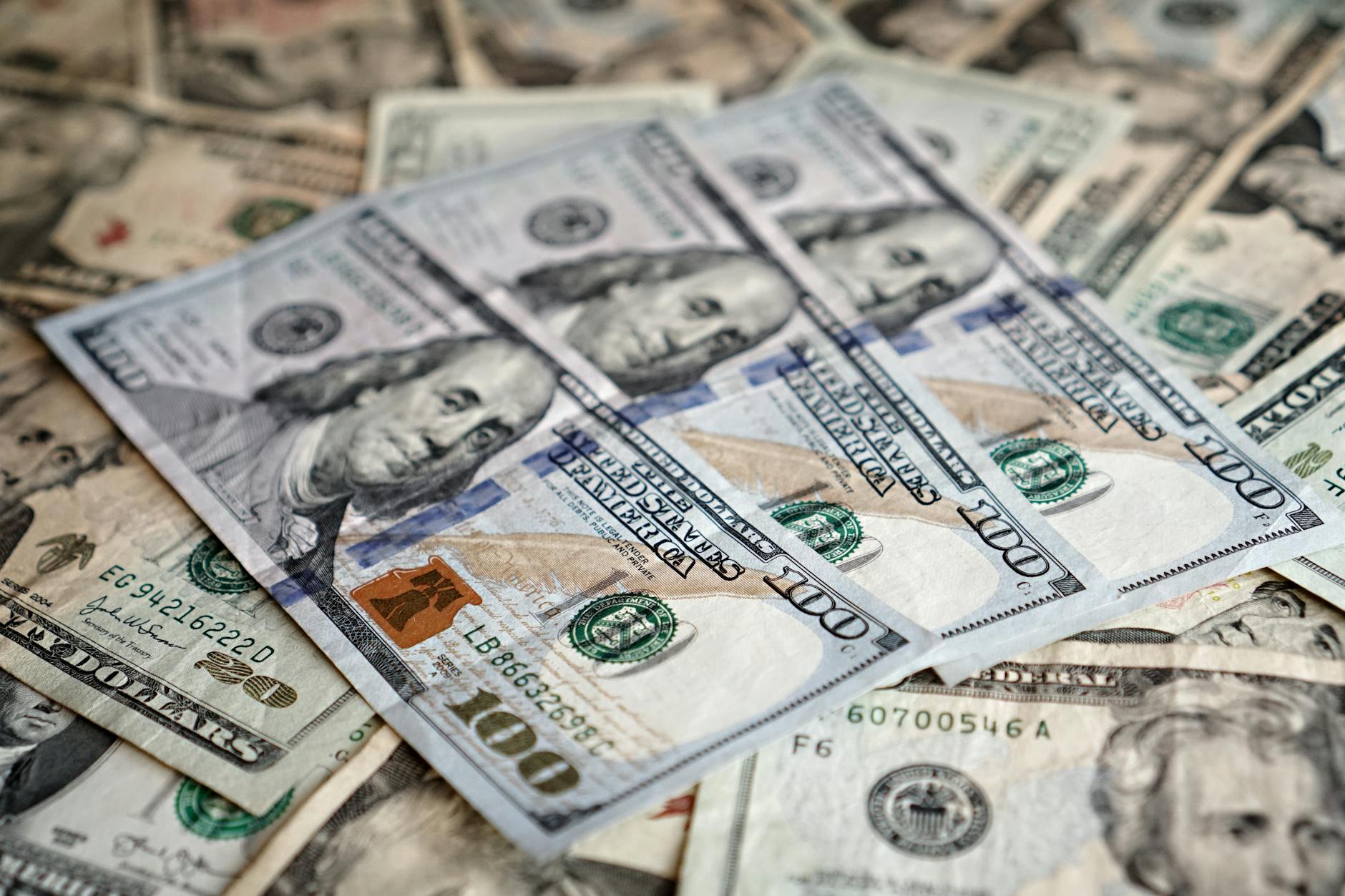
The U.S. dollar, long the undisputed king of global finance, is indeed experiencing a quiet but consequential retreat in 2026. This isn't a sudden collapse, but rather a deeper geo-politiconomic shift – a fusion of geopolitics and geoeconomics – that signals a rebalancing of global trust, power, and incentives. After a historic 11% dive in the first half of 2025, marking its worst first-half performance since the 1973 oil crisis, the dollar's weakness has persisted, with the US Dollar Index (DXY) down more than 10% since the start of 2025.

This decline follows a 15-year bull cycle, with analysts now widely predicting continued pressure on the greenback throughout 2026. While some experts forecast a "V-shaped" year for the currency, expecting a dip in the first six months before a rebound, the underlying narrative points to a more fundamental erosion of its primacy. The "sell America" trade, where global investors move money out of U.S. assets, has gained traction, driven by concerns over rising debt and trade policy uncertainties.

The current market sentiment, reflected in currency movements, shows a mixed picture but generally supports the weakening trend. The Euro, for instance, has strengthened against the dollar, with EUR/USD trading at 1.1538, up 0.08% recently, and having a 52-week range up to 1.2083. Conversely, the British Pound has seen some recent weakness against the dollar, with GBP/USD at 1.3269, down 0.42%, though it strengthened 7.7% in 2025. These fluctuations underscore the volatility, but the broader consensus points to a dollar facing sustained headwinds.

This isn't to say the dollar's dominance is destroyed; most global debt, contracts, and trade remain dollar-denominated. However, its influence is certainly diluted. The lack of a fully convertible yuan, the euro's fragmented fiscal backing, and the volatility of cryptocurrencies mean no immediate alternative matches the dollar's liquidity or legal infrastructure. Yet, the gradual erosion is reshaping global landscapes, demanding a proactive approach from investors.

What Key Factors Are Driving the Dollar's Depreciation?

The dollar's current depreciation is a complex interplay of domestic policy conflicts, aggressive government spending, and evolving global economic dynamics. At the heart of it is a major disagreement between the Federal Reserve and market expectations. The Fed plans to keep interest rates relatively high, around 3.4%, through the end of 2026 to combat inflation. However, investors are betting on deeper cuts, potentially down to 3.0%, to stimulate a slowing economy. This divergence creates significant volatility, especially as the economy is expected to look weak in the first half of the year, likely forcing the Fed to cut rates earlier than planned, possibly in January and April, which would temporarily push the dollar down.

Adding to the pressure is the U.S. government's aggressive fiscal policy, particularly the new "One Big Beautiful Bill" Act (OBBBA). While this massive spending bill is expected to ensure the U.S. economy grows faster than its rivals in the second half of 2026, it also contributes to record-high government debt. Concerns about widening budget deficits and mounting national debt erode investor confidence, diminishing demand for U.S. assets. This "fiscal story" is a significant risk, as persistent large deficits and heavier Treasury issuance could further erode the perceived safety of U.S. assets.

Political risks also loom large. The debt ceiling fight, which returned on January 2, 2026, introduces significant uncertainty. While such standoffs paradoxically often strengthen the dollar temporarily as investors seek safe haven, the long-term impact of political instability and policy flashpoints, such as potential changes to trade policy or a new Fed Chair pick, could weigh heavily. President Trump's open support for a weaker dollar, evident in its 12% fall since he took office in January 2025, further signals a political motivation for depreciation, aiming to boost exports and manufacturing.

Finally, the "sell America" trade reflects a broader loss of confidence in "U.S. exceptionalism." Global investors are increasingly choosing to move money out of U.S. assets, driven by factors like trade policy uncertainties and potential threats to the Federal Reserve's independence. This reduced demand for U.S. assets translates directly into a weaker dollar, higher yields on U.S. bonds, and potentially a rising price of gold.

How Does a Weaker Dollar Impact US Investors and the Economy?

A weaker U.S. dollar carries significant implications for both the broader American economy and individual investors, creating a dual effect that can be both challenging and opportunistic. On one hand, it makes imported goods more expensive for American consumers and businesses. This can spur inflation, taking a toll on household budgets and cutting into the profits of companies reliant on foreign supplies and components. Essential commodities like oil, natural gas, and metals, typically priced in dollars, become pricier, directly impacting energy costs and manufacturing inputs.

For investors, holding a portfolio solely concentrated in domestic assets becomes riskier. The purchasing power of dollar-denominated assets diminishes, and the value of savings can be eroded by inflation. Consider the scenario where the dollar weakens by 10% against the Euro; your purchasing power for European goods or travel effectively drops by the same margin. This erosion of value is a quiet but persistent threat to long-term wealth accumulation for those without international diversification.

Conversely, a weaker dollar offers substantial advantages for U.S. exporters and companies with significant international operations. American products become cheaper and more competitive in global markets, boosting export volumes and supporting domestic manufacturing. U.S. multinational companies see their foreign earnings translate into higher dollar values when repatriated, directly enhancing their reported profits. This dynamic was evident in 2025, when international stocks (MSCI World ex USA Index) returned 32.55%, almost double the 17.37% return on U.S. stocks (Russell 1000 Index), partly due to dollar weakness.

Moreover, a less valuable currency encourages more foreign tourists to visit and spend money in the United States, providing a boost to the service sector. For investors, foreign assets gain value when converted back to dollars, offering a natural hedge against domestic currency depreciation. This dynamic underscores why understanding dollar dynamics is crucial: it influences the availability of capital worldwide, drives cross-border investment flows, and shapes relative asset performance.

What Investment Strategies Can Hedge Against a Weakening Dollar?

For U.S. investors, the most effective strategy to hedge against a weakening dollar and potentially profit from its decline is to diversify internationally. This means looking beyond domestic borders to capture growth and returns denominated in strengthening foreign currencies. When the dollar weakens, the dollar value of international stocks tends to go up, as foreign companies' revenues, earned in their local currencies, translate into more dollars.

One of the most straightforward ways to gain this exposure is through international Exchange Traded Funds (ETFs). The Vanguard Total International Stock ETF (VXUS) is a prime example, offering exposure to thousands of stocks around the world. VXUS has demonstrated its hedging capability, gaining 32% in the past year, significantly outperforming the S&P 500's 15% and the Nasdaq-100's 19% over the same period. Currently, VXUS trades at $74.69, with a 52-week range of $54.98 to $84.28, indicating its robust performance amidst dollar weakness.

Another compelling option is the Vanguard FTSE Europe ETF (VGK), which focuses specifically on European equities. VGK has already gained 5% this year and is up more than 30% over the last 12 months, attracting $243 million in fund flows year-to-date. For those seeking higher growth potential, the iShares MSCI Emerging Markets ETF (EEM) is an excellent choice. This cap-weighted ETF, with $27 billion in assets, has rallied 7% this year and surged over 38% in the past 12 months, drawing $4 billion in year-to-date fund flows. Emerging markets often benefit significantly from a softer dollar, as it lowers their debt loads and encourages capital inflows.

Beyond equities, commodities also tend to perform well when the dollar weakens. Since most commodities are priced in U.S. dollars, a weaker dollar makes them more affordable for international buyers, increasing demand and pushing prices higher. This provides another layer of diversification and a natural hedge against dollar depreciation. Incorporating a mix of international equities and commodity exposure can significantly fortify a portfolio against the dollar's quiet retreat.

What Could Counter the Dollar's Decline and Strengthen It?

While the prevailing sentiment points to continued dollar weakness in the first half of 2026, several factors could unexpectedly bolster the greenback, challenging the current bearish outlook. The most significant counter-narrative revolves around the concept of "U.S. exceptionalism" and the dollar's enduring safe-haven status. Despite its recent struggles, the U.S. economy is still expected to outperform many of its global rivals, particularly Europe, which faces stagnation and deep structural issues. This uneven economic growth, coupled with the delayed effects of Fed rate cuts and fiscal stimulus from the "One Big Beautiful Bill" Act, could sustain economic momentum and reinforce a narrative of U.S. resilience.

A rebound in U.S. interest rates could also provide strong support for the dollar. If the Fed's cutting cycle ends sooner than expected, or if stronger-than-anticipated economic growth pushes rates higher, the dollar would benefit significantly. Higher rates attract foreign capital seeking better yields, amplifying support for the currency and curbing carry trades that are unfavorable to the dollar. For instance, the USD/JPY rate, currently at 160.1600, up 0.33%, reflects the dollar's strength against a low-interest-rate currency like the Yen, demonstrating how interest rate differentials can still drive dollar demand.

Paradoxically, global crises or instability in other regions could also trigger a flight to the dollar. While a U.S. sovereign debt crisis would be disastrous, experts believe it's more likely that a debt crisis could hit Europe or developing nations. In such scenarios, investors typically rush to buy U.S. dollars for safety, given its unparalleled liquidity and legal infrastructure, making the dollar stronger. This "safe haven" demand has historically been a powerful force, even amidst domestic political drama like debt ceiling fights, which often temporarily strengthen the dollar.

Finally, a shift in investor and corporate hedging behavior could provide a tailwind. If confidence in the dollar returns, corporates and investors might reduce their hedges against its depreciation, effectively increasing demand for the currency. This could be spurred by a stabilization in policymaking or a renewed focus on growth-friendly measures ahead of the 2026 midterm elections, restoring investor confidence and maintaining inflows into U.S. assets.

The U.S. dollar's quiet retreat in 2026 presents both challenges and opportunities for investors. While domestic-only portfolios face inflation risks and eroding purchasing power, strategic international diversification into equities and commodities offers a robust hedge. Staying informed about the interplay of monetary policy, government spending, and global economic shifts will be crucial for navigating this evolving landscape and positioning your portfolio for resilience and growth.


Want deeper research on any stock? Try Kavout Pro for AI-powered analysis, smart signals, and more. Already a member? Add credits to run more research.

SHARE THIS ON:

Related Articles

Category

You may also like

News1 week ago

Is ‘de-dollarization' real?

The U.S. dollar's dominance as the world's reserve currency is currently being tested after decades of use. Data is being examined to determine if the euro presents a viable alternative.
News1 months ago

Will Stocks Crash in 2026?

The possibility of a stock market crash in 2026 is being questioned, representing a $64 trillion concern for investors. The snippet frames this as a major, open question regarding near-term market sta...
Crypto News2 months ago

Can Dogecoin Price Reach $1 In 2026? Analysts Reveal What To Expect

Dogecoin price momentum faded through 2025, placing the meme coin under pressure entering the new year. Analysts are now focusing on potential price performance forecasts for 2026.
Stock News3 months ago

Why the Dollar Isn’t as Strong as It Used to Be

Analysts project the U.S. dollar will weaken modestly by 2026 because global growth is expected to hold up and Federal Reserve rate cuts will diminish its relative appeal.

Breaking News

View All →

Top Headlines

View More →
Stock News25 minutes ago

Why NVIDIA's $2B Bet Validates Marvell

Stock News25 minutes ago

Will Microsoft (MSFT) Beat Estimates Again in Its Next Earnings Report?

Stock News35 minutes ago

The Big 3: VST, C, AAPL

Stock News47 minutes ago

Amazon and Delta announce agreement to offer improved in-flight Wifi

Stock News48 minutes ago

Nasdaq 100 and S&P 500: Tech Stocks Surge as US Indices React to Powell, Trump